
Authorized Generics List: Which Drugs Offer This Option
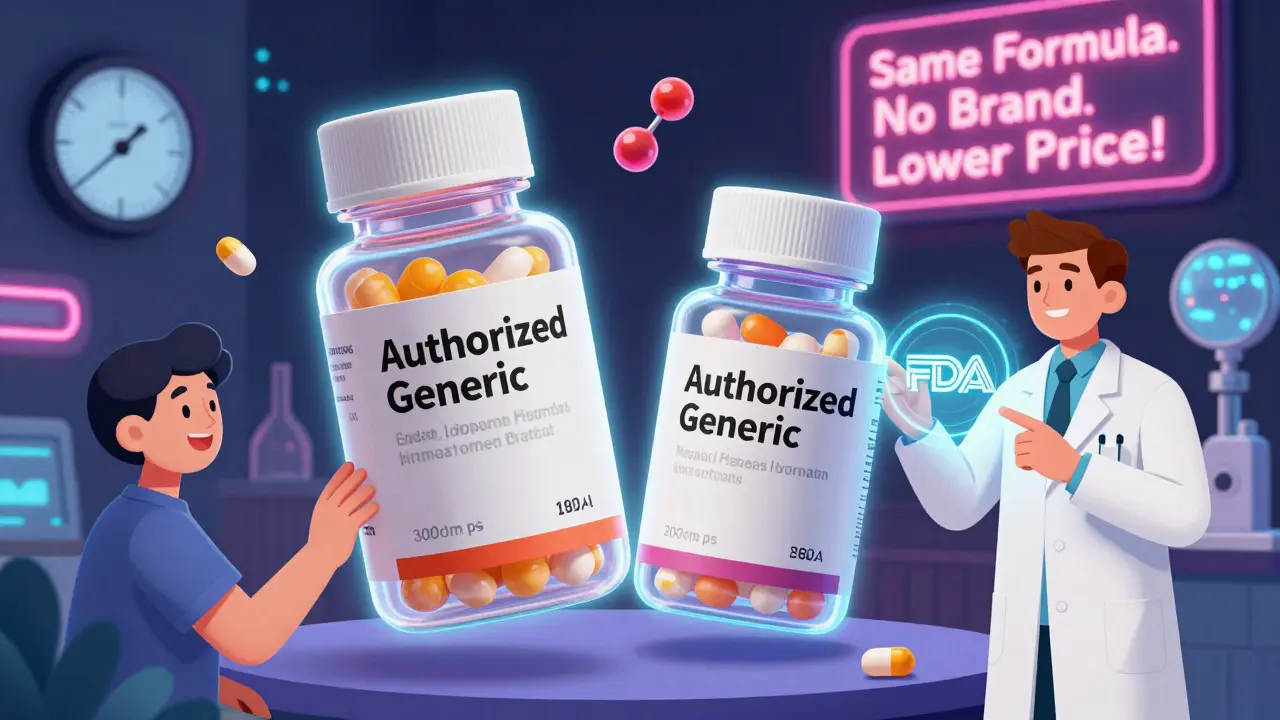
When your prescription runs out and you see a new pill in the bottle-different color, different shape, no brand name-you might wonder: is this the same medicine? For many people, the answer is yes. That’s because of something called an authorized generic. It’s not just another generic drug. It’s the exact same medication your doctor prescribed, made by the same company, with the same ingredients, but sold without the brand name on the label. And it’s often cheaper.
What Exactly Is an Authorized Generic?
An authorized generic is a brand-name drug that’s sold under a generic name. The FDA defines it clearly: it’s identical to the original product in every way-active ingredients, inactive ingredients, dosage form, strength, and how it’s made. The only difference? No brand name on the bottle. You’re getting the exact same pill, just without the marketing.This isn’t the same as regular generics. Traditional generics only need to prove they’re "bioequivalent" to the brand-meaning they deliver about the same amount of medicine into your bloodstream. But they can use different fillers, dyes, or coatings. For most people, that’s fine. But for others, those tiny differences matter. A patient on levothyroxine (for thyroid replacement) might feel worse switching to a regular generic because of a change in filler. With an authorized generic, that’s not a risk. It’s the same formula, same factory, same everything.
How Do Authorized Generics Get Made?
There are two main ways. First, the brand-name company itself makes the authorized generic and sells it under a generic label. Second, they license the exact formula to another manufacturer, who then produces it under contract. Either way, the product is made under the original brand’s FDA approval (called an NDA), not under a new generic application (ANDA). That means no extra testing is needed. If the brand drug works, the authorized generic works too.Because of this, authorized generics don’t show up in the FDA’s "Orange Book," where traditional generics are listed. Instead, the FDA keeps a separate, updated list of authorized generics. As of October 2025, it includes over 200 products. The list grows every year-17 new ones were added in late 2025 alone.
Which Drugs Have Authorized Generics?
Not every brand has one. Only about 10% of brand-name drugs offer an authorized version. But for many common and critical medications, they’re available. Here are some real examples:- Colcrys (colchicine) → Authorized generic by Prasco Laboratories - Used for gout. Patients who had stomach issues with regular generics often report better tolerance with this version.
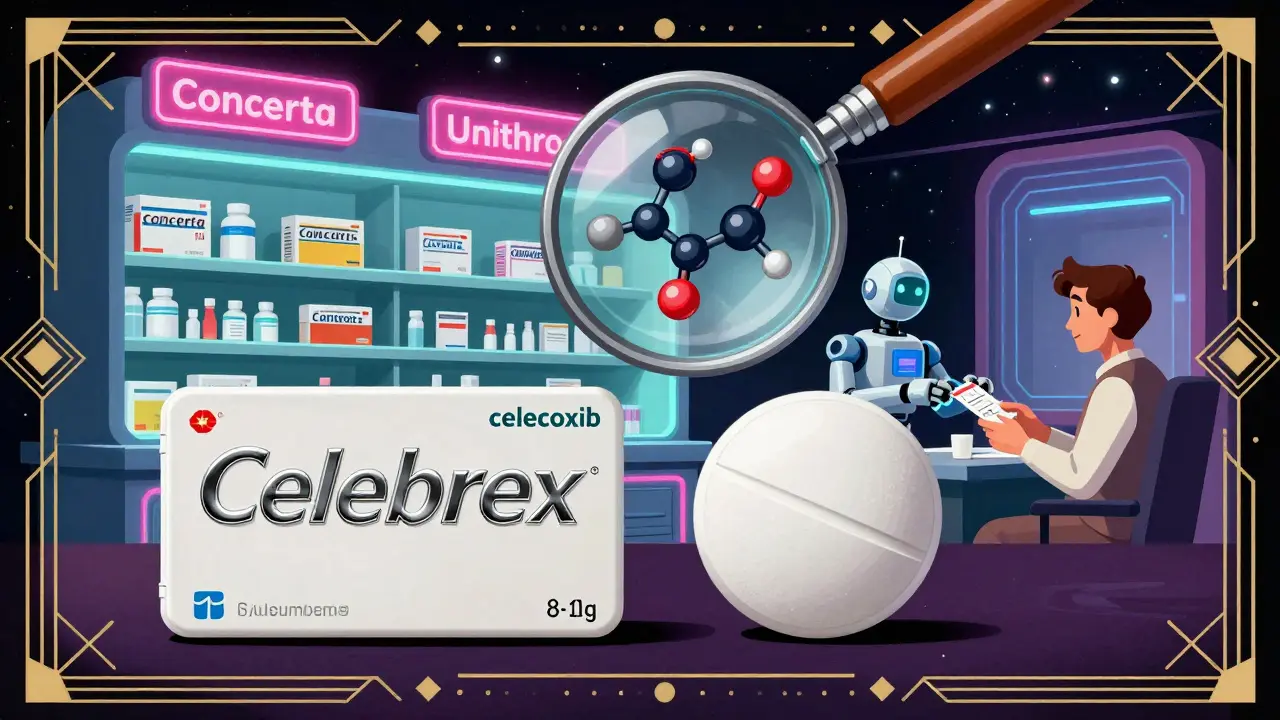
- Concerta (methylphenidate ER) → Authorized generic by Watson/Actavis - ADHD treatment. The extended-release formulation is hard to replicate, so the authorized version helps avoid inconsistent effects.
- Celebrex (celecoxib) → Authorized generic by Greenstone Pharmaceuticals - A COX-2 inhibitor for pain and inflammation. Many patients switched to the authorized version after price hikes on the brand.
- Unithroid (levothyroxine) → Authorized generic by Jerome Stevens Pharmaceuticals - Thyroid replacement. This is one of the most common cases where authorized generics matter-tiny changes in inactive ingredients can throw off thyroid levels.
- ProAir HFA (albuterol) → Authorized generic by Teva - Asthma inhaler. After the brand’s patent expired, this authorized version helped keep supply stable and prices lower.
- Jardiance (empagliflozin) → Authorized generic added in October 2025 - Diabetes medication. Its inclusion shows this trend is still growing.
These aren’t random picks. They’re all on the FDA’s official list. And they’re all drugs where consistency matters-whether it’s for thyroid function, heart rhythm, or asthma control.
Why Do Companies Make Authorized Generics?
At first glance, it seems odd: why would a brand company sell its own drug under a cheaper label? The answer is strategy.When a drug’s patent expires, generic competitors rush in. Prices drop fast. But if the brand company launches its own authorized generic, it can still capture part of that market. In fact, about 70% of authorized generics launch during-or right before-the 180-day exclusivity period granted to the first generic maker. That lets the brand company undercut competitors while keeping control over quality.
Studies show that markets with authorized generics see 15% less price reduction in the first year after patent expiry. That’s because the brand company is now competing with itself. It’s not always bad for patients-it can mean faster access to low-cost versions. But it also means less pressure on other generic makers to slash prices.
Why Should You Care?
If you take medications with a narrow therapeutic index-like warfarin, levothyroxine, or digoxin-small changes in how your body absorbs the drug can be dangerous. Regular generics may work fine for most people, but for some, even a slight difference in filler can cause side effects or make the drug less effective.Patients on levothyroxine who switched from a regular generic to the authorized version have reported fewer symptoms like fatigue, weight gain, or brain fog. Pharmacists see this often. One study found that switching to an authorized generic improved lab results for thyroid patients who had struggled with inconsistent levels on other generics.
Even if you don’t have a sensitive condition, authorized generics can save money. They’re often priced lower than the brand, and sometimes even cheaper than traditional generics because there’s no marketing cost. In 2023, the average authorized generic cost 30% less than the brand-name version.
What You Need to Know as a Patient
If your pharmacist hands you a new pill that looks different, don’t panic. Ask: "Is this an authorized generic?" If yes, you’re getting the exact same medicine. The FDA and the American Pharmacists Association both recommend clear communication: "The pill may look different, but the medicine inside is identical to what you’ve been taking. It’s safe to switch."Some states allow pharmacists to substitute generics automatically. But authorized generics aren’t always flagged the same way in pharmacy systems. So if you’re switching and feel different, speak up. Ask for the authorized version if it’s available. Your doctor can write "Do Not Substitute" on the script if needed, but for authorized generics, that’s rarely necessary.
The Big Picture
Between 2010 and 2019, there were 854 authorized generic launches. That’s about 15% of all generic drugs introduced in that time. The trend is still growing. More companies are using this model-not just to compete, but to give patients a reliable, low-cost option.But it’s not perfect. Some critics say authorized generics reduce competition, slowing price drops. The Congressional Budget Office found that drugs with authorized generics saw 12% less price reduction than those without. Still, for patients who need consistency-especially those on thyroid, heart, or seizure meds-the benefits outweigh the drawbacks.
Bottom line: If you’re taking a brand-name drug that’s expensive or you’ve had trouble with regular generics, ask your doctor or pharmacist if an authorized generic exists. It might be the closest thing to the original-without the brand price tag.
Are authorized generics the same as brand-name drugs?
Yes, authorized generics are identical to their brand-name counterparts in every way: same active and inactive ingredients, same dosage, same manufacturing process, and same quality control. The only difference is the label-they don’t carry the brand name. The FDA considers them exact copies.
Why aren’t all drugs available as authorized generics?
Only about 10% of brand-name drugs have authorized generic versions. It’s a business decision by the manufacturer. Companies may choose not to offer one if they don’t see enough financial benefit, or if they prefer to let traditional generics dominate the market. Some drugs are also too complex or expensive to replicate under the same manufacturing setup.
Can I ask my pharmacist for an authorized generic?
Absolutely. You can ask if an authorized generic is available for your prescription. Pharmacists can check the FDA’s official list and their supplier catalogs. If it’s available and your insurance covers it, they can usually fill your prescription with it. Some pharmacies even have it as a default option.
Do authorized generics cost less than regular generics?
Sometimes yes, sometimes no. Authorized generics are often priced lower than the brand name, but they may cost the same as-or slightly more than-traditional generics. That’s because they’re made by the original manufacturer, and there’s no competitive pressure to cut prices further. Still, they’re almost always cheaper than the brand version.
How do I find out if my drug has an authorized generic?
The FDA maintains an official "Listing of Authorized Generic Drugs," last updated in October 2025. You can search it online through the FDA’s website. Your pharmacist can also check their system or contact the manufacturer directly. If your drug is on that list, an authorized version exists.
Betsy Silverman
March 4, 2026 AT 03:55Just got my levothyroxine refill and noticed the pill looked different. Asked my pharmacist - turns out it’s the authorized generic. No side effects, same energy, same sleep. Honestly? I’m shocked it’s cheaper and identical. Why don’t more people know about this?
Ivan Viktor
March 5, 2026 AT 17:02So let me get this straight - the brand company makes a generic version of their own drug just to undercut other generics? Brilliant. Or sinister. Depends if you’re the investor or the patient.
Pankaj Gupta
March 6, 2026 AT 19:25Authorized generics represent a fascinating intersection of regulatory policy and market dynamics. The FDA’s classification as identical under NDA rather than ANDA ensures therapeutic equivalence without the need for bioequivalence trials. This is not merely a cost-saving measure - it is a patient safety innovation for drugs with narrow therapeutic indices. The absence of variability in excipients eliminates a significant source of clinical instability, particularly in endocrine and cardiovascular pharmacotherapy.
Chris Beckman
March 7, 2026 AT 22:37Ugh I hate when pharmacists switch my meds without telling me. I had a panic attack last month cause my Concerta looked different. Turns out it was an authorized generic. Still scared. Why can’t they just leave it alone? I don’t need no fancy version. I just want my pill to look the same damn it.
Stephen Vassilev
March 9, 2026 AT 14:56Is it just me, or does this whole system feel like a corporate loophole? The same company that charges $500 for a brand-name drug then sells the exact same pill for $30 under a different label? And the FDA just… allows this? What’s next - a generic version of the generic? I’m starting to think Big Pharma invented this to trick patients into thinking they’re getting a deal.
Mike Dubes
March 11, 2026 AT 08:07Been using the authorized generic for Celebrex since it came out. Saved me over $200/month. My knees feel the same, no weird side effects. Seriously, if you’re on a brand-name drug that’s expensive - ask your doc or pharmacist. It’s not magic, it’s just the same pill with a boring label. Easy win.
Helen Brown
March 12, 2026 AT 07:59I read online that authorized generics are secretly used to track patients. The FDA has a database and your pharmacy sends your name every time you get one. I think they’re building a profile for insurance companies. I stopped taking mine. Better safe than sorry.
John Cyrus
March 12, 2026 AT 14:49People act like this is some breakthrough but it’s not. The brand company still owns the patent. They’re just pretending to be a generic. It’s a scam. Real generics should be the only option. This just lets big pharma keep their grip on the market while pretending to help you.
John Smith
March 12, 2026 AT 20:49Y’all actin’ like this is some kinda miracle but let me tell you - if your thyroid’s acting up and your doc says switch to the authorized version, DO IT. I was on regular generics for a year and felt like a zombie. Switched to the authorized one? Energy back, brain working, no more weight gain. It’s the same damn pill. Stop overthinkin’ it.
Tildi Fletes
March 14, 2026 AT 12:18While the clinical equivalence of authorized generics is well-documented, the regulatory distinction between NDA and ANDA pathways warrants deeper scrutiny. The absence of these products from the Orange Book creates informational asymmetry for prescribers and patients. Moreover, the commercial incentive structure - wherein originators deploy authorized generics to preempt competitive pricing - raises ethical concerns regarding market manipulation under the guise of patient benefit.
Siri Elena
March 15, 2026 AT 01:48Oh wow, so the drug company that charges $800 for a pill now sells it for $50… but only if you don’t know it’s the same thing? How clever. Truly, the pinnacle of capitalist innovation - making you feel smart for choosing the cheaper version of the exact same product they already sold you for six times the price.
Matt Alexander
March 15, 2026 AT 07:22My mom’s on levothyroxine. Switched to authorized generic last year. Her TSH levels went from all over the place to rock solid. Pharmacist said it’s the same pill. She’s not paying $150 a month anymore. Simple as that.
Shivam Pawa
March 15, 2026 AT 22:56Authorized generics operate within the regulatory framework of NDA de facto licensing. The absence of ANDA submission eliminates bioequivalence uncertainty. For narrow therapeutic index drugs, this is not merely preferable - it is clinically imperative. The market mechanism, while economically complex, delivers tangible therapeutic stability. Patient outcomes improve. The system functions as designed.
Diane Croft
March 16, 2026 AT 13:03You got this. If your med looks different, ask. If it’s authorized generic, you’re good. You’re saving money. You’re getting the same medicine. You’re not broken. You’re smart. Keep asking questions. You’re doing great.