
Automated Refills for Generic Medicines: How Online Pharmacies Make Chronic Care Easier
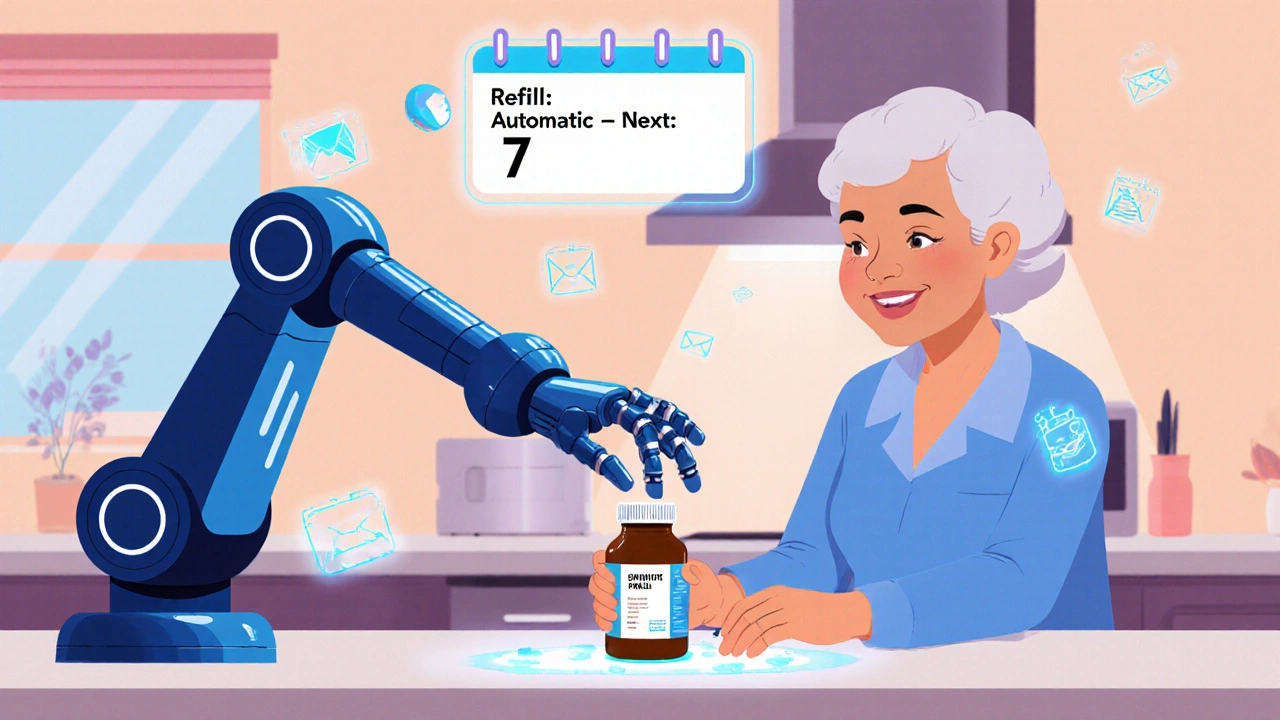
Running out of your blood pressure or cholesterol meds shouldn’t be a surprise. Yet, for millions of people taking daily generic drugs, it happens all the time. Between busy schedules, forgetfulness, or just not wanting to call the pharmacy, doses get missed. That’s where automated refills come in - a simple, quiet system that quietly keeps your medicine flowing without you lifting a finger.
How automated refills actually work
It’s not magic. It’s software. When you sign up for an automated refill program at an online pharmacy or retail chain like CVS or Amazon Pharmacy, the system tracks your prescription start date and dosage. It then schedules your refill to be ready about 5 to 7 days before you run out. No calls. No app taps. No reminders you ignore. The pharmacy just processes it automatically.These systems connect directly to your electronic health record and pharmacy database. If your doctor changes your dose or stops the prescription, the system should catch it - but it doesn’t always. That’s why you still need to review your medication list every few months. The automation handles the routine, but you still need to stay aware.
Most programs send a notification - via text, email, or app alert - asking if you want to proceed. You can skip it if you’re switching meds, going on vacation, or just don’t need it yet. But if you don’t respond, the refill ships anyway. That’s the trade-off: convenience over control.
Why generic medicines are the perfect fit
Automated refills work best with generic drugs. Why? Because they’re cheap, stable, and rarely change. If you’re on lisinopril for hypertension or metformin for diabetes, your dose probably stays the same for years. That makes them ideal for automation.Brand-name drugs? Often need prior authorizations, have formulary changes, or get pulled from stock. Generics? They’re predictable. Pharmacies know exactly how many pills to send, when to send them, and how much to charge. That’s why 89% of national pharmacy chains prioritize automated refills for generic medications - they’re low-risk, high-reward.
Even better, programs like Amazon Pharmacy’s RxPass let you get 60 common generic medications for $5 a month. No copays. No surprises. Just steady access. That kind of pricing makes it easier to stick with your meds - and that’s the whole point.
Real impact: adherence goes up
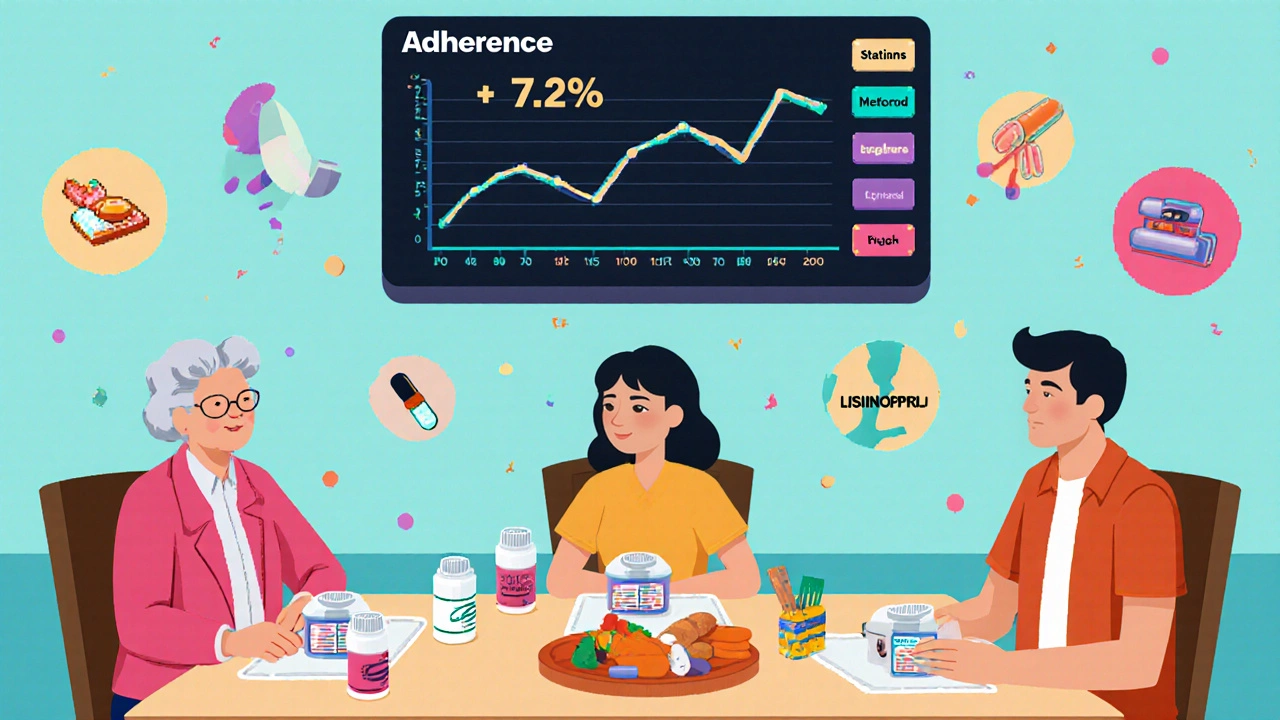
It’s not just about convenience. It’s about survival. The World Health Organization says nearly half of people with chronic conditions don’t take their meds as prescribed. That leads to hospital visits, complications, and higher costs.Studies show automated refills change that. In a 2016 analysis of Medicare Part D data, patients using automatic refills had:
- 7.2% higher adherence for statins
- 6.8% higher adherence for diabetes drugs
- 3.9% higher adherence for blood pressure meds
That might sound small, but in a population of millions, it means fewer heart attacks, fewer strokes, fewer ER trips. Pharmacies and insurers care because Medicare Star Ratings - which determine billions in bonus payments - reward high adherence. So they’re not just doing this to be nice. They’re doing it because it saves money and lives.
Where things can go wrong
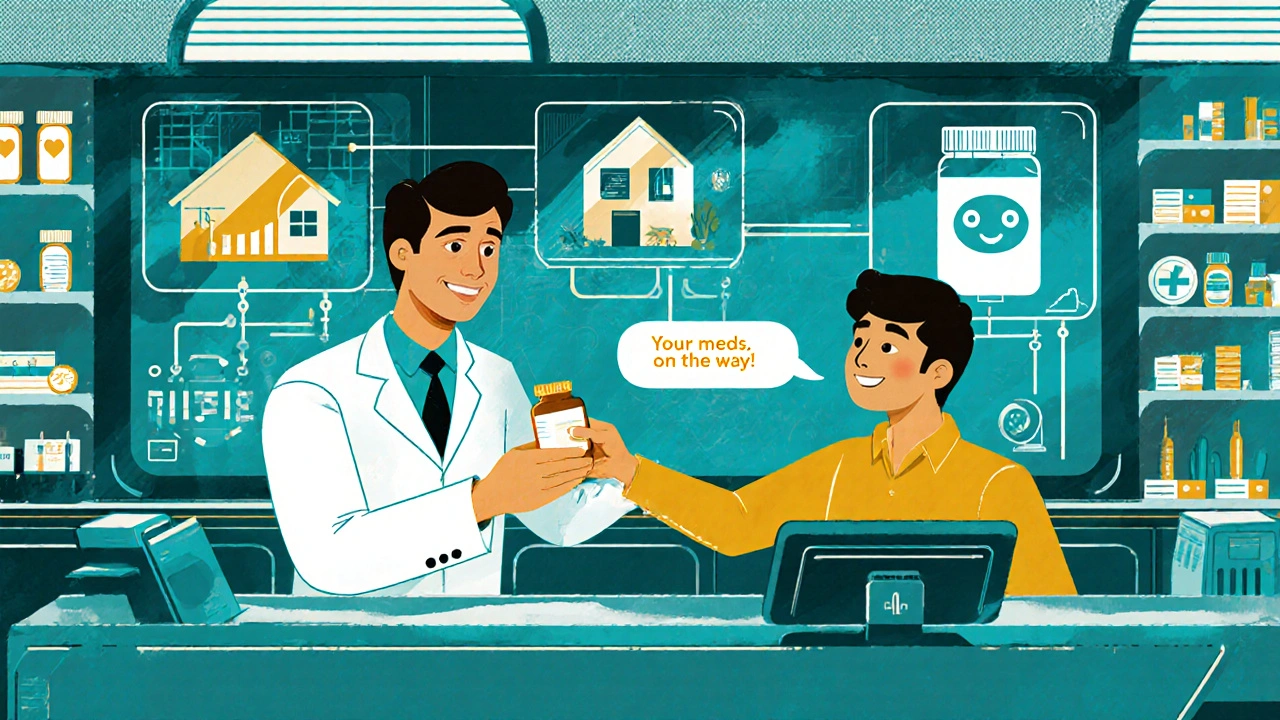
Automation isn’t perfect. The biggest risk? Dose changes. If your doctor increases your diltiazem from 240 mg to 360 mg, but the pharmacy’s system hasn’t been updated, you’ll keep getting the old dose. That’s not hypothetical - Consumer Medication Safety documented cases where patients got wrong doses for months because the refill system didn’t sync with the doctor’s note.Another issue: overfilling. Some pharmacy benefit managers (PBMs) trigger refills at 60 days into a 90-day prescription just to boost revenue. That means you get pills you don’t need, waste money, and clutter your medicine cabinet. It’s legal, but it’s not helpful.
And then there’s the silent side effect: fewer conversations. When a pharmacist doesn’t see you every 30 days, they miss cues. A patient might say, “I’m skipping my pills because they make me dizzy,” but if the refill just ships automatically, that warning never gets heard.
Who benefits the most?
Not everyone needs this. But if you fit one of these profiles, automated refills are a game-changer:- You take 2+ daily meds for a chronic condition
- You forget to refill prescriptions
- You’re over 65 and juggling multiple medications
- You live far from a pharmacy
- You have memory issues or cognitive challenges
One study found patients with memory problems maintained 95%+ adherence with automated refills. That’s not just convenient - it’s life-saving.
On Reddit’s r/Pharmacy community, 68% of users said they’d never go back to manual refills. One person wrote: “I used to miss doses because I’d forget. Now I just open the box and see pills there. It’s peace of mind.”
How to get started
Signing up takes less than 15 minutes. Here’s how:- Log into your pharmacy’s website or app (CVS, Walgreens, Amazon Pharmacy, etc.)
- Find “Refill Settings” or “Auto-Refill” in your prescription list
- Select which meds you want automated - start with your top 2 chronic meds
- Choose your notification method: text, email, or call
- Confirm consent - HIPAA rules require you to opt in
If you’re unsure, walk into your local pharmacy. Most national chains offer in-person help during off-hours. Staff are trained to walk you through it. You don’t need to be tech-savvy.
Pro tip: Check your medication list every quarter. Make sure the doses still match what your doctor prescribed. If you’ve changed meds, call the pharmacy to pause or update the auto-refill.
What to look for in a pharmacy
Not all automated refill systems are equal. Here’s what to ask for:- Multi-channel alerts: You should get text, email, and phone options. 92% of top systems offer all three.
- Easy pause/cancel: Can you stop a refill with one click? If not, find another pharmacy.
- Integration with health apps: CVS now syncs with Apple Health. If you track meds in your phone, that’s a big plus.
- Clear documentation: Look for step-by-step guides. 92% of big chains provide them.
Independent pharmacies? Only 47% offer automated refills. The setup costs too much. If you want reliability, stick with national chains or major online players like Amazon or OptumRx.
The future: smarter, not just faster
The next wave isn’t just about sending pills on schedule. It’s about personalization. By 2026, two-thirds of pharmacy automation systems will use AI to adjust refill timing based on your actual behavior. If you usually refill on Thursday, but skipped last month, the system might nudge you earlier. If you refill every 28 days on a 30-day script, it’ll learn that too.Some systems are even talking to smart pill bottles. If your bottle stays closed for three days straight, you get a call - not just a text. That’s the future: not just automation, but intervention.
But here’s the catch: the more automated it gets, the less human contact there is. And sometimes, that’s the most important part. A pharmacist asking, “How are you feeling on this new dose?” can catch a side effect before it becomes a crisis.
So use automation - but don’t let it replace conversation. Keep your doctor and pharmacist in the loop. Let the system handle the logistics. You handle the life part.
Final thoughts
Automated refills for generic medicines aren’t about replacing humans. They’re about removing friction. They’re for the person who works two jobs and forgets to call the pharmacy. They’re for the grandparent who’s tired of juggling 10 bottles. They’re for anyone who just wants to feel safe knowing their meds are covered.The data doesn’t lie: adherence goes up. Costs go down. Hospital visits drop. And the best part? It’s free to join. No extra fees. No hidden charges. Just better health, one automatic refill at a time.
Do automated refills cost extra?
No. Most pharmacies offer automated refills at no extra charge. You still pay your normal copay or subscription fee - like Amazon’s $5/month RxPass - but the refill automation itself is free. Some mail-order services may charge for shipping, but that’s separate from the automation feature.
Can I turn off auto-refills anytime?
Yes. Every legitimate pharmacy system lets you pause, skip, or cancel a refill with one click in your account. You should also get a notification before the refill is processed, giving you a chance to change your mind. If you can’t find the option, call the pharmacy - they’re required to help you opt out.
What if my doctor changes my dose?
Always notify your pharmacy when your prescription changes. Even though systems are supposed to sync with your doctor’s records, mistakes happen. In 2024, there were documented cases where patients kept receiving old doses because the pharmacy system didn’t update. Don’t assume it’s automatic - speak up.
Are automated refills safe for seniors?
Yes - and often, they’re essential. Seniors are more likely to forget refills and have multiple medications. Studies show automated refills improve adherence by over 6% in patients over 65. Many pharmacies offer free in-person help for seniors to set up the system. If a family member helps enroll them, even better.
Why do some people say automated refills don’t help?
Some critics argue that if you’re not taking your meds, you’re probably not going to care about a refill reminder. But studies show it’s not about motivation - it’s about friction. If you don’t have to remember to call, you’re more likely to get the pills. The data shows higher adherence rates. The issue isn’t the system - it’s when pharmacies abuse it by triggering early refills to make more money.
Do I need a smartphone to use automated refills?
No. While apps make it easier, you can enroll and manage refills by phone. Pharmacies still offer automated refill programs via phone calls and mail. If you don’t use smartphones, ask the pharmacy to set up SMS alerts or even weekly phone confirmations. The goal is access, not tech.
Tina Dinh
December 1, 2025 AT 11:07OMG YES THIS!! 🙌 I used to forget my metformin all the time… now I just open my drawer and there they are. No more panic at 2am wondering if I took it. Automated refills saved my A1C. Thank you for this post!! 💖
tushar makwana
December 1, 2025 AT 23:02i never thought about this before but now i see… my dad in india takes 5 pills every day and he forgets. if this system work here too, it will be very good. simple thing but so important. thank you for sharing.
Richard Thomas
December 3, 2025 AT 16:11While the premise of automated pharmaceutical refills is ostensibly pragmatic, one must interrogate the underlying structural incentives that drive such systems. The conflation of convenience with clinical efficacy is a fallacy perpetuated by corporate pharmacy benefit managers who prioritize margin over mindfulness. The very notion that algorithmic fulfillment substitutes for patient-provider dialogue represents a dangerous erosion of the therapeutic alliance - one that, statistically, correlates with increased polypharmacy risks and diminished health literacy.
Matthew Higgins
December 4, 2025 AT 17:55bro this is literally the only thing keeping me alive right now. i’m on 4 meds, work 60 hours a week, and my brain is mush. i used to throw pills in the trash by accident. now? they just show up. no stress. no guilt. no drama. i don’t even think about it. that’s peace. 🤘
Brandy Johnson
December 6, 2025 AT 17:18This is yet another example of American healthcare commodification disguised as innovation. Automated refills are a Trojan horse for PBMs to maximize revenue through unnecessary overfilling and predatory pricing. We are not patients - we are data points in a profit algorithm. This isn’t care. It’s corporate surveillance with pills.
Peter Axelberg
December 8, 2025 AT 15:04My grandma signed up for Amazon RxPass last year. She’s 78, doesn’t use a smartphone, but they mailed her a printed guide and called her every time a refill was due. She says it’s the first time in 10 years she hasn’t missed a dose. That’s not tech - that’s dignity. The system works if you let it. Just don’t let the big guys twist it into a money grab.
Monica Lindsey
December 9, 2025 AT 14:21People who use this are just lazy. If you can’t remember to refill your meds, maybe you shouldn’t be in charge of your own health. Automation doesn’t fix poor habits - it enables them.
Jennifer Wang
December 11, 2025 AT 01:52It is imperative to underscore that automated refill systems must be integrated with real-time clinical decision support and direct communication channels with prescribers. While adherence metrics improve, the absence of pharmacist-led medication therapy management (MTM) consultations remains a critical gap. Regulatory frameworks must mandate bidirectional EHR-pharmacy synchronization and require documented patient acknowledgment of dose changes prior to automated fulfillment. Without these safeguards, systemic risk persists.
stephen idiado
December 12, 2025 AT 23:07Automation = dependency. Pharma-industrial complex wins. Patient autonomy loses. You think you’re saving time? You’re just outsourcing responsibility to a black-box algorithm. This isn’t progress - it’s surrender.
Richard Thomas
December 14, 2025 AT 10:34While Ms. Johnson’s critique regarding corporate incentives is not without merit, it fails to acknowledge the empirical data demonstrating significant reductions in hospitalization rates among populations utilizing automated refill programs - particularly among elderly and cognitively impaired cohorts. The ethical imperative to reduce preventable morbidity and mortality supersedes ideological objections to systemic efficiency. One may lament the commodification of care, but one cannot deny its life-saving efficacy when implemented with oversight.