
Best Reliable Online Resources for Generic Drug Information
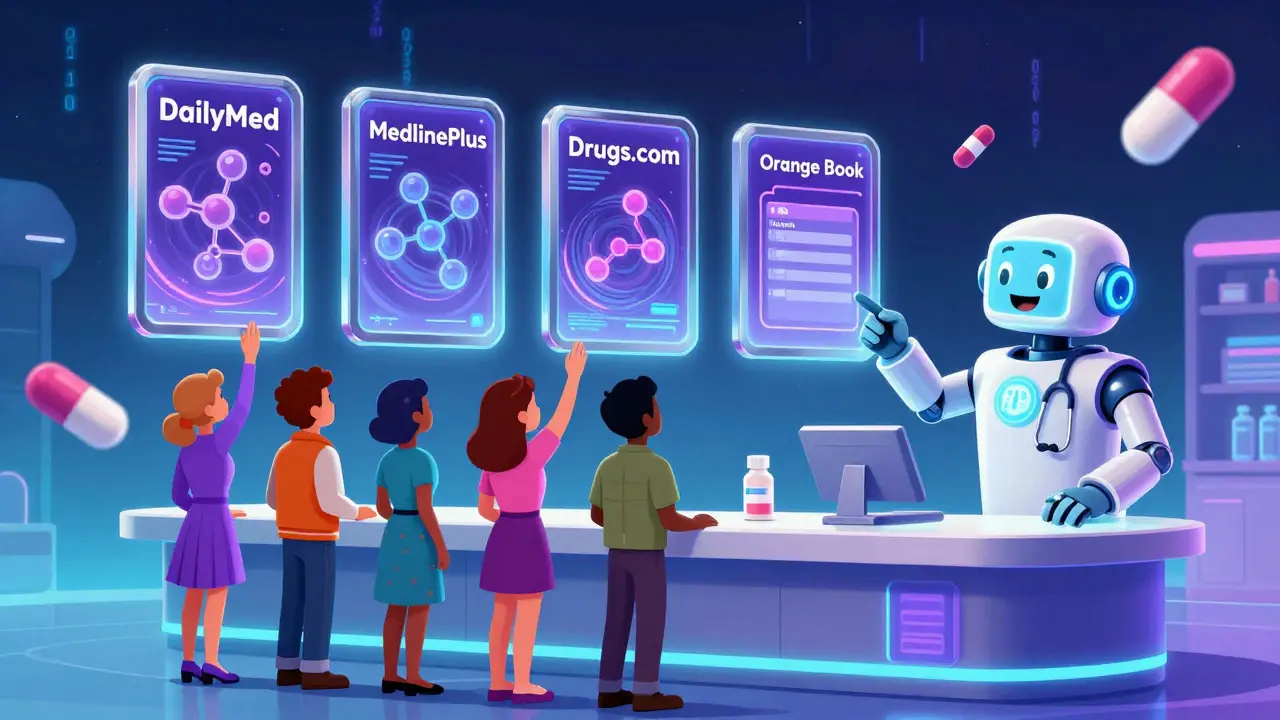
When you or a loved one takes a generic drug, you deserve to know exactly what you’re taking - not just the name on the bottle, but how it works, what it interacts with, and whether it’s truly equivalent to the brand-name version. With over 78% of all prescriptions in the U.S. filled with generic medications, having access to accurate, up-to-date information isn’t just helpful - it’s essential for safety.
Why Generic Drug Info Matters
Generic drugs save patients and the healthcare system billions each year. But not all generics are created equal. Some have minor differences in how they’re absorbed by the body, especially for drugs with a narrow therapeutic index - like levothyroxine, warfarin, or phenytoin. A small change in dose can mean the difference between effective treatment and dangerous side effects. The Institute for Safe Medication Practices found that 7.4% of medication errors reported in 2022 were tied to confusion over generic drug equivalence or dosing. That’s why using trusted sources isn’t optional - it’s a safety habit.DailyMed: The Official Source for FDA Drug Labels
If you need the exact wording the FDA approved for a drug - including warnings, dosing, ingredients, and clinical studies - DailyMed is your only official source. Run by the National Library of Medicine and updated within 72 hours of any FDA label change, DailyMed holds over 92,000 drug listings as of late 2023. It’s the go-to for pharmacists, hospital staff, and anyone needing regulatory accuracy. Every product label is formatted in Structured Product Labeling (SPL), a machine-readable standard used by electronic health records. That means if your doctor’s system pulls up a drug’s info, it’s likely coming from DailyMed. But here’s the catch: it’s not designed for patients. The language is technical. You’ll find phrases like “pharmacokinetic parameters” and “bioequivalence criteria.” It’s not user-friendly, but it’s the most complete and legally recognized source available.MedlinePlus: Patient-Friendly Drug Info You Can Trust
If you’re a patient, caregiver, or someone helping a loved one understand their meds, MedlinePlus is the best place to start. It’s free, government-run, and written at a 6th-to-8th-grade reading level. No jargon. No fluff. Just clear explanations. It covers over 17,500 drugs, including generics, and offers info in both English and Spanish. Each monograph explains what the drug is used for, how to take it, possible side effects, and what to avoid. It even includes warnings about interactions with food, alcohol, and other meds. A 2023 NIH usability study showed that 94% of patients could find what they needed on MedlinePlus without help. It’s also trusted by the Institute for Safe Medication Practices as the only consumer resource they consistently recommend. The downside? It doesn’t cover every specialty generic - only about 65% of what DailyMed does. For most common drugs, though, it’s perfect.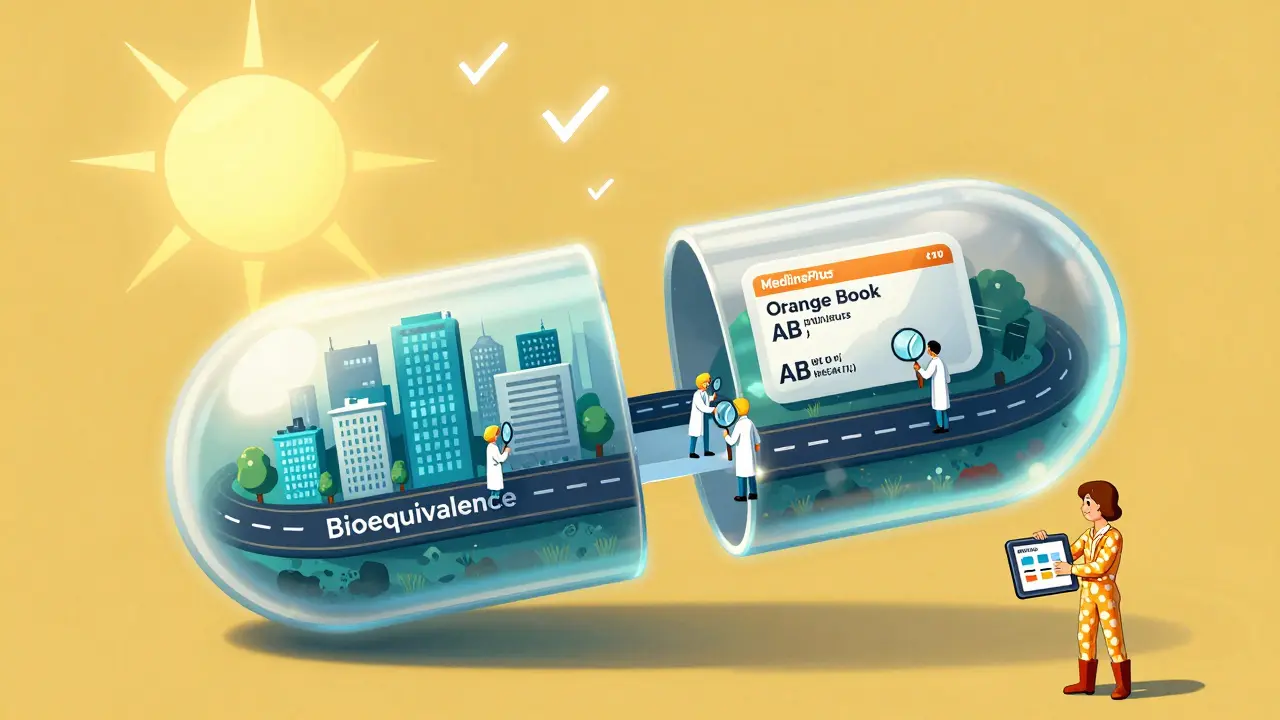
Drugs.com: The Go-To for Quick Checks and Interaction Alerts
For fast answers - especially when you’re on the go - Drugs.com is the most popular free tool among patients and frontline providers. It handles 12 million daily searches, and its pill identifier tool matches 89.3% of unknown pills based on color, shape, and imprint. Its interaction checker is one of the best free tools available. In a 2023 Johns Hopkins study, it caught 92.4% of major drug-drug interactions - better than RxList and close to paid services. It also includes patient reviews, pricing info, and reminders. The trade-off? Ads. It’s free because it runs ads, and some users find the interface cluttered. But for quick, reliable answers - especially for common medications - it’s hard to beat.The FDA Orange Book: Know Which Generics Are Truly Equivalent
Not all generics are interchangeable. The FDA Orange Book - officially titled Approved Drug Products with Therapeutic Equivalence Evaluations - tells you which ones are. It lists over 20,000 approved generic products and assigns them ratings like “AB” (therapeutically equivalent) or “BX” (not equivalent). If you’re switching between brands or generics and want to be sure you’re getting the same effect, check the Orange Book. It’s updated monthly and includes data on bioequivalence studies. It’s especially critical for drugs like thyroid meds, seizure drugs, or blood thinners, where even small changes can matter. The Orange Book is free to use and now has an improved search tool since its 2023 update. It’s not flashy, but it’s the only official source that tells you whether a generic is legally interchangeable with the brand.How Professionals Use These Tools Together
Pharmacists don’t rely on just one resource. A 2023 survey by the American Pharmacists Association found that 89% use DailyMed for labeling, 76% use Lexicomp (a paid service) for complex cases, and 68% use MedlinePlus to explain things to patients. Community pharmacists - the ones you talk to at your local pharmacy - rely more on free tools. 84% use DailyMed, 61% use MedlinePlus, and 57% use Drugs.com daily. Doctors use different tools. A 2022 JAMA survey found that 63% of physicians prefer Epocrates for quick lookups because it loads in under 30 seconds. But when they need to check a label or confirm an interaction, they switch to DailyMed or Drugs.com. The pattern is clear: Use DailyMed for accuracy. Use MedlinePlus for patient education. Use Drugs.com for speed and interaction checks. Use the Orange Book to confirm interchangeability.
What’s Missing - and What’s Coming
Free resources have limits. They don’t offer alerts for new safety warnings, pharmacogenomic data (how your genes affect drug response), or integration with your personal health record. Paid tools like Lexicomp and Clinical Pharmacology do - but they cost hundreds per year. That’s why the government is stepping up. In 2023, Congress allocated $15 million to improve MedlinePlus, including multilingual alerts in 15 languages by late 2024. DailyMed now has a public API, making it easier for apps and EHRs to pull real-time data. Experts warn that while AI-powered tools are rising, free, government-backed sources remain essential for equity. As Dr. Adam Kesselheim of Harvard put it in a 2023 JAMA editorial: “If we let drug information become a paid service, we leave vulnerable patients behind.”What to Do Right Now
Here’s your simple plan for safe generic drug use:- When you get a new generic prescription, check the FDA Orange Book to confirm it has an “AB” rating.
- Use MedlinePlus to understand what the drug does, how to take it, and what side effects to watch for.
- Before mixing it with other meds or supplements, run a quick check on Drugs.com for interactions.
- If something seems off - like a new side effect or a change in how the pill looks - look up the exact label on DailyMed.
Are all generic drugs the same as brand-name drugs?
By law, generic drugs must contain the same active ingredient, strength, dosage form, and route of administration as the brand-name version. They must also be bioequivalent - meaning they work the same way in the body. However, inactive ingredients (like fillers or dyes) can differ, and for some drugs - especially those with a narrow therapeutic index - even small differences in absorption can matter. Always check the FDA Orange Book for therapeutic equivalence ratings (AB = equivalent, BX = not equivalent).
Is DailyMed free to use?
Yes, DailyMed is completely free and requires no registration. It’s funded by the U.S. government through the National Library of Medicine and is the official source for FDA-approved drug labeling. Anyone can access it from any device with an internet connection.
Can I trust Drugs.com for drug information?
Yes, Drugs.com is widely trusted by patients and healthcare providers. It pulls data from FDA labels, AHFS DI, and Micromedex - all authoritative sources. Its interaction checker and pill identifier are among the most accurate free tools available. However, because it’s ad-supported, the interface can be cluttered. Always cross-check critical information with government sources like MedlinePlus or DailyMed if you’re unsure.
Why doesn’t MedlinePlus have every generic drug listed?
MedlinePlus focuses on the most commonly prescribed drugs and those most relevant to patient education. It covers over 17,500 drugs, but it doesn’t include every niche or newly approved generic. For complete coverage - especially for specialty medications - DailyMed is more comprehensive. MedlinePlus prioritizes clarity and safety over completeness, which is why it’s recommended for patients.
Should I use a paid drug database like Lexicomp?
If you’re a healthcare professional managing complex cases - like patients on five or more medications, with kidney or liver disease, or taking high-risk drugs - paid tools like Lexicomp offer deeper insights, real-time alerts, and pharmacogenomic data. For most patients and even many pharmacists, free resources like DailyMed, MedlinePlus, and Drugs.com are sufficient. Paying for a subscription is only necessary if you need advanced clinical decision support.
How often are these resources updated?
DailyMed updates within 72 hours of FDA label changes and often faster. MedlinePlus is updated 15-20 times daily. Drugs.com pulls updates from FDA labeling daily and from Micromedex hourly. The FDA Orange Book is updated monthly. For the most current safety info, DailyMed and Drugs.com are your fastest options.
Next Steps for Patients and Caregivers
If you’re managing medications for yourself or someone else, start today:- Bookmark DailyMed, MedlinePlus, and Drugs.com in your browser.
- Keep the FDA Orange Book open in a tab when switching generics - especially for thyroid, seizure, or blood thinner meds.
- Ask your pharmacist: “Is this generic rated AB by the FDA?” If they hesitate, look it up yourself.
- Share MedlinePlus links with family members who may not understand their meds.
Paul Mason
January 7, 2026 AT 05:18Man, I’ve been using Drugs.com for years and never knew about the Orange Book. Just checked my dad’s blood thinner and sure enough, the generic they switched him to is BX. No wonder he’s been dizzy. Thanks for this.
Anastasia Novak
January 9, 2026 AT 02:34Ugh. Of course the government’s ‘trusted’ sites are a mess. DailyMed looks like it was coded in 1998. And MedlinePlus? It’s like they hired a middle schooler to write patient info. Meanwhile, paid tools do this right - but you gotta pay to not be lied to. Welcome to American healthcare.
Christine Joy Chicano
January 9, 2026 AT 12:21This is one of the most lucid, meticulously researched pieces on generic drug transparency I’ve read in years. The way you contrasted DailyMed’s regulatory rigor with MedlinePlus’s patient-centric clarity is brilliant - it’s not about which is better, but which is appropriate for the context. And kudos for spotlighting the Orange Book’s AB/BX ratings; that’s the secret sauce most patients never even know exists. The 7.4% medication error stat? Chilling. We need this kind of public health literacy baked into every pharmacy visit.
Adam Gainski
January 9, 2026 AT 16:52Just wanted to add - if you’re a caregiver, print out the MedlinePlus sheets for your loved one. I did it for my mom with dementia, and she actually started asking questions about her meds instead of just swallowing pills. No fancy app needed. Just clear words on paper. Also, pharmacists are usually happy to walk you through the Orange Book if you bring it up. Don’t be shy.
Katrina Morris
January 11, 2026 AT 10:59thank you so much for this i bookmarked all 4 sites and showed my sister who’s on seizure meds she cried she said no one ever explained it this clearly before
Emma Addison Thomas
January 11, 2026 AT 14:18I’m from the UK and we don’t have DailyMed, but our NHS Digital site has something similar - though it’s not nearly as detailed. Interesting how the US system relies so heavily on public, free resources. In Europe, we lean more on pharmacists to interpret the data. Still, this is a great model. I’ll be sharing it with my local patient advocacy group.
Mina Murray
January 13, 2026 AT 13:18Let me guess - DailyMed is run by the NIH, which is funded by the same people who approved the drugs in the first place. And Drugs.com? They take money from pharma to show their ads first. This whole thing is a polished lie. You think the FDA really cares if your thyroid med is 2% off? They’re too busy collecting bribes from big pharma to even look at the data.
steve rumsford
January 15, 2026 AT 12:04bro i just typed my pill’s imprint into drugs.com and it told me it was a 10mg lisinopril. i was about to panic thinking i got the wrong thing. saved my ass. thanks for the post.