
Chronic Sinusitis: How Allergies, Infections, and Surgery Affect Your Breathing
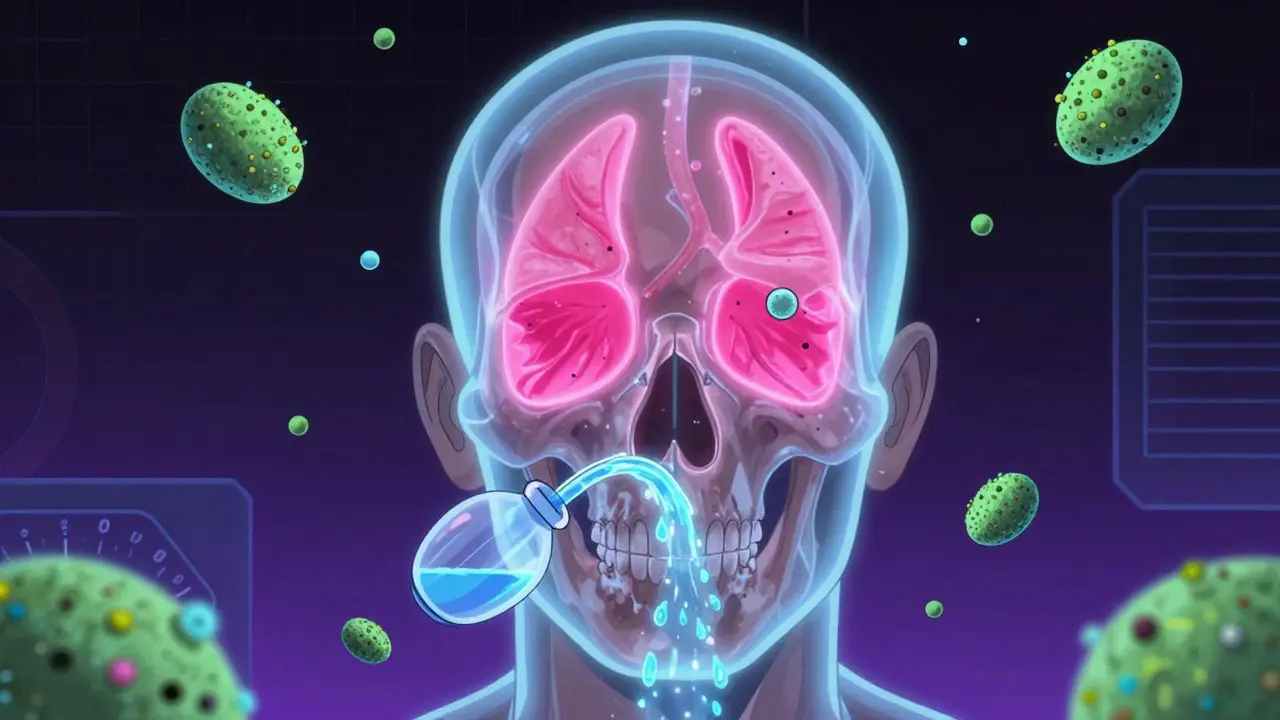
When your nose stays stuffed up for months-not just a few days-you’re not dealing with a cold. You might have chronic sinusitis. It’s not just a bad cold that won’t quit. It’s ongoing inflammation deep in your sinuses that makes breathing hard, dulls your sense of smell, and leaves you feeling like you’re always fighting a low-grade infection. And the worst part? Many people try antibiotics for weeks, only to find out they don’t work. That’s because chronic sinusitis isn’t usually caused by bacteria. It’s driven by allergies, structural problems, or your body’s own inflammatory response.
What Exactly Is Chronic Sinusitis?
Chronic sinusitis, also called chronic rhinosinusitis, means your sinuses-the hollow spaces behind your forehead, cheeks, and eyes-are swollen and blocked for 12 weeks or longer, even with treatment. Unlike acute sinusitis, which flares up after a cold and clears up in a couple of weeks, chronic sinusitis sticks around. You might feel pressure around your eyes or cheeks, have thick nasal discharge, or struggle to breathe through your nose. Some people lose their sense of smell entirely. Others just feel tired all the time, like they’re dragging through the day.
Doctors diagnose it when you have at least two of these symptoms for three months or more: nasal blockage, thick nasal discharge, facial pain or pressure, or reduced smell. Confirmation usually comes from a nasal endoscopy-where a thin camera checks for pus or polyps-or a CT scan showing inflamed tissue inside your sinuses.
It’s more common than you think. About 9% of people worldwide have it. In the U.S., 31 million people get diagnosed each year. It’s one of the top reasons people visit their primary care doctor.
Three Main Types of Chronic Sinusitis
Not all chronic sinusitis is the same. There are three main types, and knowing which one you have changes your treatment plan.
- Chronic sinusitis without nasal polyps-This is the most common form. Inflammation blocks your sinus openings, but there are no visible growths inside your nose.
- Chronic sinusitis with nasal polyps-About 25-30% of cases include soft, grape-like growths in the nasal passages. These polyps don’t hurt, but they block airflow and smell. People with this type often also have asthma or aspirin sensitivity.
- Allergic fungal rhinosinusitis-This happens when your immune system overreacts to harmless fungi in the air. It’s rare but causes thick mucus, nasal congestion, and sometimes bone erosion if left untreated.
If you have asthma, your risk of chronic sinusitis jumps 3-4 times. If you have allergies, your risk is 2.5 times higher. The inflammation in your nose and lungs often travels together.
What’s Really Causing It?
For years, doctors thought chronic sinusitis was just a bacterial infection that wouldn’t go away. That’s not true anymore. In fact, about 70% of cases have no active bacterial infection. The real culprits are:
- Allergies-Dust mites, pollen, mold, and pet dander trigger immune responses that swell your nasal lining.
- Nasal polyps-These growths physically block drainage, letting mucus sit and irritate tissue.
- Structural issues-A deviated septum, narrow sinus openings, or enlarged turbinates can trap mucus.
- Environmental irritants-Smoking, secondhand smoke, pollution, and dry air worsen inflammation. Smokers are 35% more likely to develop chronic sinusitis.
- Immune system overreaction-Some people’s bodies just produce too much inflammation in response to minor triggers.
Doctors don’t fully understand why some people get it and others don’t. But they know it’s not about germs. It’s about your body’s response to things it shouldn’t be reacting to.
First-Line Treatment: Saline and Steroids
Before anything else, you need to clean out your sinuses and calm the inflammation. That’s where two simple treatments come in:
- Nasal saline irrigation-Using a neti pot or squeeze bottle with saltwater flushes out mucus, allergens, and irritants. Studies show it improves symptoms in over 80% of people when used daily.
- Intranasal corticosteroid sprays-Fluticasone (Flonase), mometasone (Nasonex), and budesonide (Rhinocort) reduce swelling directly in the nasal lining. These aren’t steroids like the ones athletes take. They’re local, low-dose, and safe for long-term use. About 60-70% of patients see major improvement within 4-8 weeks.
But here’s the catch: most people stop using these sprays too soon. They don’t feel better right away, so they quit. The problem? These sprays take weeks to build up their effect. Only 55-65% of patients use them consistently. If you’re not using yours every day, you’re not giving it a fair shot.

What About Allergies and Antibiotics?
If allergies are driving your sinusitis, antihistamines like loratadine (Claritin) or cetirizine (Zyrtec) can help. They reduce sneezing and runny nose, but they don’t fix the swelling. For allergic sinusitis, they’re a sidekick-not the main treatment.
Antibiotics? Don’t waste your time unless you have clear signs of a bacterial infection-like thick yellow-green mucus, fever, or worsening symptoms after 10 days. Even then, antibiotics only help in about 15-20% of chronic cases. Amoxicillin-clavulanate is the go-to if needed, but it’s not a long-term fix. The American Academy of Allergy, Asthma & Immunology says antibiotics usually don’t help in chronic cases. They’re for acute flare-ups, not the ongoing problem.
Biologics: The New Game-Changer for Polyps
If you have nasal polyps and nothing else is working, there’s a breakthrough treatment: biologics. These are injectable drugs that target specific parts of your immune system.
Dupilumab (Dupixent), approved by the FDA in 2019, blocks inflammation signals tied to polyps. In clinical trials, it reduced polyp size by 50-60% and improved breathing and smell in 30-40% of patients. Many report they can finally breathe through their nose again after years of struggle.
Other options like omalizumab (Xolair) and mepolizumab (Nucala) help too, especially if you have asthma along with polyps. These aren’t cures, but they can cut your symptoms in half and reduce how often you need oral steroids or surgery.
They’re expensive-over $3,000 a month-but many insurance plans cover them if you’ve tried other treatments first. And they’re changing how doctors treat severe cases. By 2027, experts predict biologics will be used in 25-30% of the most severe cases.
Surgery: When Medical Treatment Isn’t Enough
If you’ve tried saline, steroids, and maybe even biologics for 12 weeks with no real improvement, surgery becomes an option. It’s not the first step. It’s the next step when everything else fails.
The gold standard is Functional Endoscopic Sinus Surgery (FESS). A thin camera and tiny tools are inserted through your nose to remove blockages, open up sinus passages, and clear out polyps. No cuts on your face. No scars. Recovery takes about a week. Success rates? 75-90% of patients report lasting relief.
Another option is balloon sinuplasty. A tiny balloon is inflated inside your blocked sinus to widen it. It’s less invasive, with recovery in just 3-5 days. But it’s not as effective long-term for people with large polyps or severe structural issues. It works best for mild to moderate cases.
If you have a deviated septum, your surgeon might combine FESS with septoplasty. That fixes the crooked wall between your nostrils. About 65-75% of people with both issues see big improvements after this combo surgery.
Polypectomy-removing the polyps themselves-helps 85% of patients. But here’s the catch: without ongoing steroid sprays, polyps come back in 40-50% of cases within 18 months. Surgery fixes the blockage, but you still need to manage the inflammation.
What You Can Do at Home
Surgery and meds help-but lifestyle changes make a huge difference.
- Use a humidifier-Dry air dries out your nasal lining. Adding moisture helps your cilia (tiny hairs) move mucus out. People in dry climates like Colorado report 40% fewer symptoms with daily humidifier use.
- Avoid smoke and pollution-Even secondhand smoke worsens inflammation. If you smoke, quitting is the single best thing you can do.
- Stay hydrated-Thinner mucus drains better. Drink water throughout the day.
- Check your environment-Wash bedding weekly in hot water. Use allergen-proof pillowcases. Clean air filters regularly. Reduce dust and mold.
Some people try saline sprays with added ingredients like xylitol or tea tree oil. There’s no strong evidence they work better than plain saltwater. Stick with what’s proven.

When to Worry About Complications
Most people with chronic sinusitis don’t develop serious problems. But if you start having:
- Severe headache or swelling around your eyes
- Fever with confusion or stiff neck
- Double vision or eye pain
-you need to see a doctor right away. In less than 0.5% of cases, the infection can spread to your eyes, bones, or even your brain. It’s rare, but it’s serious.
Also, if your sense of smell doesn’t improve after 6 months of treatment, talk to your doctor. Long-term loss of smell can affect your appetite, safety (you won’t smell smoke or gas), and even your mood.
Why a Team Approach Works Best
Chronic sinusitis isn’t just an ENT problem. It’s often tied to allergies, asthma, immune issues, or environmental triggers. The best outcomes come from a team: an allergist to test for triggers, an ENT for surgery and endoscopy, and sometimes an immunologist if biologics are involved.
A 2022 Cleveland Clinic study of 1,200 patients found that those who saw both an allergist and an ENT had 35-45% better symptom control than those who saw only one specialist. Coordinated care matters.
And if you have Samter’s triad-asthma, nasal polyps, and aspirin sensitivity-ask about aspirin desensitization. It’s not for everyone, but for those who qualify, it reduces polyp recurrence by 70-80%.
What’s Next for Treatment?
Research is moving fast. Scientists at Johns Hopkins are testing probiotics that target the nasal microbiome. Early results show certain strains reduce inflammation in 30-40% of patients. It’s still experimental, but it could one day be a simple pill you take daily.
Meanwhile, long-term studies on dupilumab show 45-55% of patients maintain symptom relief for two years or more. That’s a big win for people who’ve struggled for years.
By 2027, biologics could cut surgical rates by 15-20%. The goal isn’t just to fix your sinuses-it’s to keep you from needing surgery at all.
Bottom Line: It’s Manageable
Chronic sinusitis isn’t a death sentence. It’s not something you just have to live with. You don’t need to be stuck with a stuffy nose forever. Start with saline rinses and nasal steroids. Give them time. If that doesn’t help, get tested for allergies and polyps. If you have polyps and nothing’s working, ask about biologics. If you’ve tried everything and still can’t breathe, surgery is safe, effective, and life-changing.
Most people find relief. You just need to follow the right path-one that matches your type of sinusitis, not a one-size-fits-all fix.
Ashley Porter
January 25, 2026 AT 11:46Chronic sinusitis is such a silent killer of quality of life. I’ve been living with it for 7 years, and the real game-changer wasn’t antibiotics-it was daily saline irrigation + fluticasone. People don’t realize how much the mucociliary clearance system matters. When your cilia are drowned in thick mucus, no drug can fix that. You gotta flush first, then treat.
Also, the stats on polyps and asthma comorbidity? Spot on. My ENT called it the ‘upper-lower airway axis.’ It’s not coincidence-your nose and lungs are wired together. If one’s inflamed, the other screams.
Henry Jenkins
January 26, 2026 AT 00:41Let’s be real-most docs still treat this like it’s a bacterial infection. I got prescribed amoxicillin three times before anyone even mentioned nasal endoscopy. It took me 4 years and a trip to a specialist to find out I had bilateral polyps and a deviated septum. FESS changed everything. Recovery was a breeze, and now I can smell coffee again. Which, honestly, is a spiritual experience after years of living in a fog.
The biologics? Dupilumab is wild. It’s like your immune system finally got a manual. It doesn’t just suppress-it recalibrates. But the cost? Insane. Insurance fights you like you’re trying to steal the moon. Still worth it if you’re drowning in steroid sprays and daily nasal congestion. This isn’t just a nose thing-it’s a whole-body inflammation disorder. We need more awareness.
Nicholas Miter
January 27, 2026 AT 17:53saline rinse works. i swear by it. i used to think it was just hippie nonsense until i tried it after a bad cold. no more morning gunk, no more headaches. just plain salt water. no fancy stuff.
also, humidifier. if you live in a dry place, get one. even if it's just a cheap one from walmart. your nose will thank you.
antibiotics? nah. unless you got a fever and green snot for like 10+ days, skip it. your gut hates that stuff anyway. and steroids? they're not the scary kind. they're like a tiny hug for your sinuses. give it 6 weeks. patience is key.
TONY ADAMS
January 28, 2026 AT 19:20bro i tried all that saline crap and sprays and nothing worked. then i just quit smoking and boom-i could breathe. why are we overcomplicating this? it’s smoke. it’s pollution. it’s your dumb lifestyle. fix that first. no magic pills needed. just stop poisoning yourself.
George Rahn
January 29, 2026 AT 23:55Let us not mistake the modern medical-industrial complex’s obsession with pharmaceutical intervention for true healing. Chronic sinusitis, in its essence, is a metaphysical symptom of a civilization that has severed its communion with nature. We breathe chemically treated air, consume processed foods, and then wonder why our mucosal linings rebel. The ancients knew: nasal purification was sacred. The neti pot is not a gadget-it is a ritual. The corticosteroid spray? A palliative for a culture that refuses to repent. We must return to elemental harmony: clean air, clean water, clean spirit. Until then, we are merely tending the symptoms of a dying ecology-inside and out.
Ashley Karanja
January 31, 2026 AT 11:43OMG YES. I’ve been on dupilumab for 8 months and I’m crying typing this. I hadn’t smelled my own perfume in 12 years. Now I can smell my cat’s fur. I can smell rain. I can smell toast. It’s like my brain rebooted.
Also, the asthma-sinusitis link? I had no idea they were connected until my allergist said, ‘Your nose is screaming because your lungs are in distress.’ Mind blown. And yes, the biologics are expensive, but my insurance covered it after I documented 3 failed steroid trials. If you have polyps + asthma, DO NOT wait. Ask for dupilumab. It’s not a cure, but it’s the closest thing to a miracle I’ve seen in medicine. 🙏💖
Karen Droege
February 1, 2026 AT 08:28Listen. I’m a nurse in Vancouver, and I’ve seen this over and over. People suffer for YEARS because they think it’s ‘just allergies’ or ‘they’re just sensitive.’ No. It’s chronic rhinosinusitis with or without polyps-and if you’re not doing daily saline irrigation AND a corticosteroid spray, you’re not even in the game. I had a patient who was on 4 antibiotics a year for 7 years. She didn’t have an infection. She had a clogged drain. You don’t fix a clogged drain with bleach-you flush it. Saline is your faucet. Steroids are your plumber. Stop chasing ghosts with antibiotics. The data is clear. Do the basics. Then escalate. Don’t wait until you’re on oral steroids and losing your smell. Start now. Your future self will hug you.
Napoleon Huere
February 2, 2026 AT 03:49It’s funny how we treat the body like a machine you fix with parts, when really it’s a symphony. Chronic sinusitis isn’t a problem with the nose-it’s the nose screaming because the whole orchestra is off-key. Allergies, pollution, stress, sleep deprivation-they’re all playing out of tune. Biologics? They’re like tuning a single string. Great, but if the whole instrument’s warped, you need to rebuild the whole thing. Maybe the real solution isn’t more drugs, but a return to rhythm: sleep, clean air, less stress, more time outside. We’ve forgotten how to breathe. Maybe that’s the root.
Shweta Deshpande
February 4, 2026 AT 00:07Hey everyone, I’m from India and I’ve had this for 10 years. I tried everything-Ayurveda, homeopathy, antibiotics, nasal sprays. Nothing worked until I started using plain saline rinse twice a day and sleeping with a humidifier. No fancy stuff. Just salt + water + moisture. I also stopped using scented candles and air fresheners. My nose finally feels free. It took patience, but it’s worth it. You’re not alone. Keep going. Small steps, big results. 💪🌸