
Congressional Efforts to Tackle Drug Shortages: What the New Laws Really Do
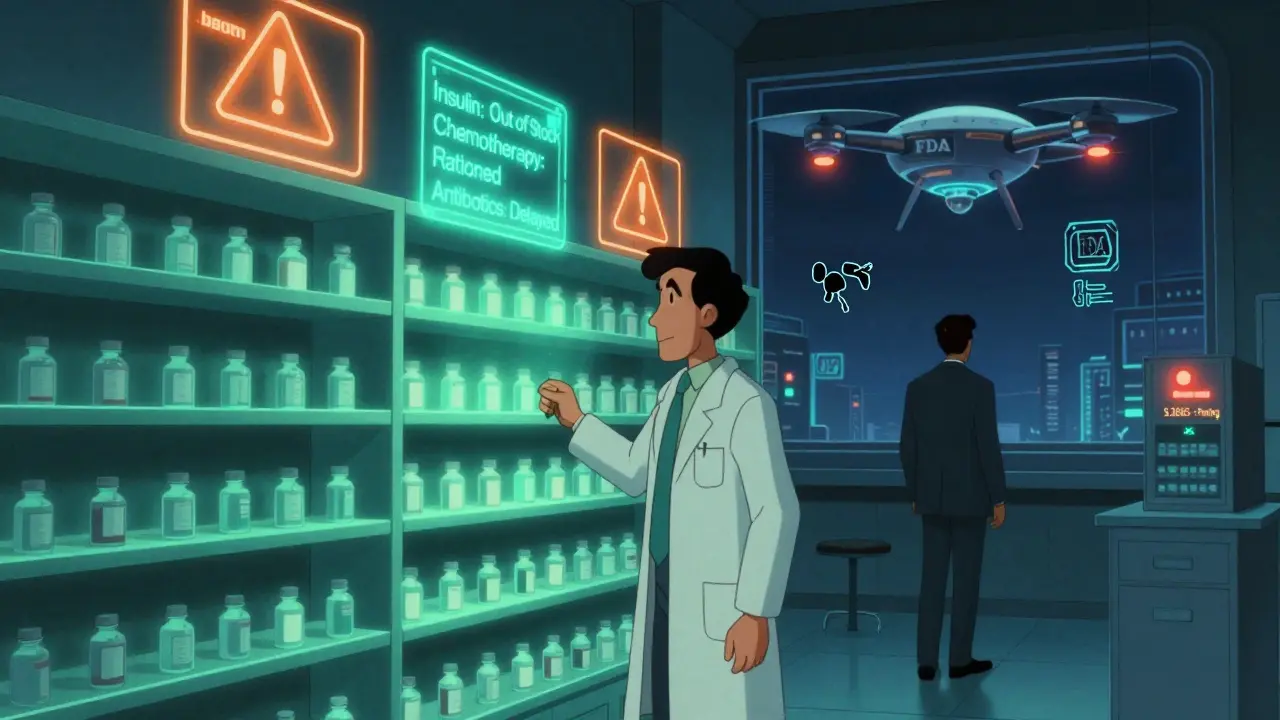
Right now, more than 287 drugs are in short supply across the United States. Among them, over 130 are critical medicines - the kind you need to survive. Think chemotherapy drugs, insulin, antibiotics, and heart medications. Hospitals are rationing doses. Patients are skipping treatments. And Congress? It’s finally responding - but not in the way most people expect.
Two Bills, One Crisis
In 2025, two bills were introduced to tackle the growing crisis. The first, Drug Shortage Prevention Act of 2025 (S.2665) is a Senate bill that requires pharmaceutical manufacturers to notify the FDA when they foresee a surge in demand for critical drugs, was introduced by Senator Amy Klobuchar on August 1, 2025. It’s designed to stop shortages before they start. Right now, companies aren’t legally required to say anything until a shortage is already happening - often too late.S.2665 would force manufacturers to report early warning signs: raw material delays, production line failures, or sudden spikes in orders. The goal? Give the FDA time to step in - find alternate suppliers, reroute shipments, or even temporarily waive import rules. But here’s the catch: the bill doesn’t define what counts as a "critical drug," and there’s no public draft of penalties for noncompliance. As of November 2025, it’s still stuck in the Senate Health, Education, Labor, and Pensions Committee.
The second bill, Health Care Provider Shortage Minimization Act of 2025 (H.R.1160) is a House bill aimed at reducing gaps in medical staffing, which indirectly worsens drug access, is even more mysterious. Public records show only its title. No sponsors listed. No committee assignment. No text. No details. It’s been introduced, but nobody knows what it actually does. Some assume it targets workforce shortages - like the 124,000 doctors the American Association of Medical Colleges says we’ll be missing by 2034. Others think it might expand loan forgiveness for nurses or speed up visa approvals for foreign-trained clinicians. But without a bill text, it’s all guesswork.
Why This Isn’t Just About Drugs
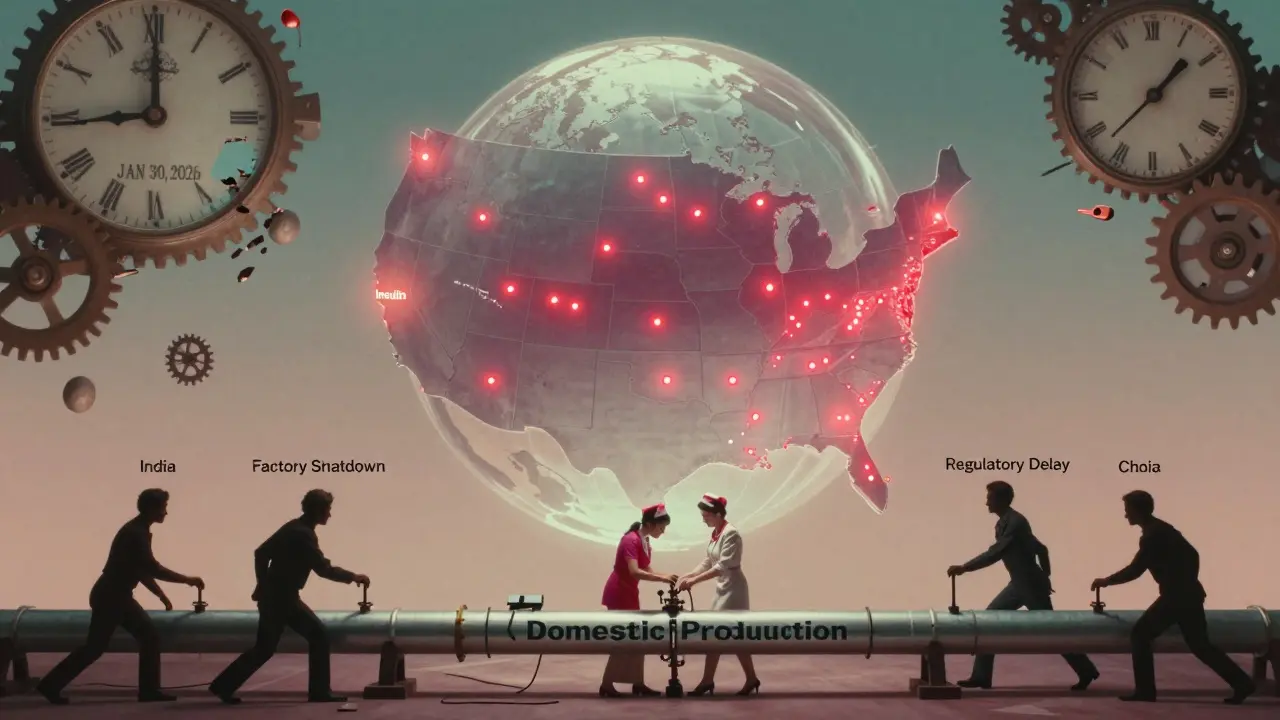
You can’t fix drug shortages without fixing the system behind them. Right now, 63% of shortages come from manufacturing delays, according to the Association for Accessible Medicines. Most of these happen overseas - in India and China - where a single factory can supply half the country’s supply of a life-saving drug. If that factory has a power outage, a regulatory inspection, or a labor strike, the ripple effect hits every hospital in America.And it’s not just manufacturing. The FDA’s Drug Shortage Portal, the main tool used to track and respond to shortages, has been barely functional since October 2025. Why? Because nearly 800,000 federal workers, including FDA inspectors and supply chain analysts, were furloughed during the longest government shutdown in U.S. history - which began on October 1, 2025 and lasted through November 13, 2025. No one was there to review manufacturer notices. No one was updating the public list. No one was coordinating with hospitals.
Meanwhile, 98% of hospitals reported at least one critical drug shortage in the third quarter of 2025, according to the American Hospital Association. And 87% of physicians say they’ve had to change patient care plans because a drug wasn’t available. That’s not a glitch. That’s a systemic failure.
The Real Roadblock: The Shutdown and the Budget
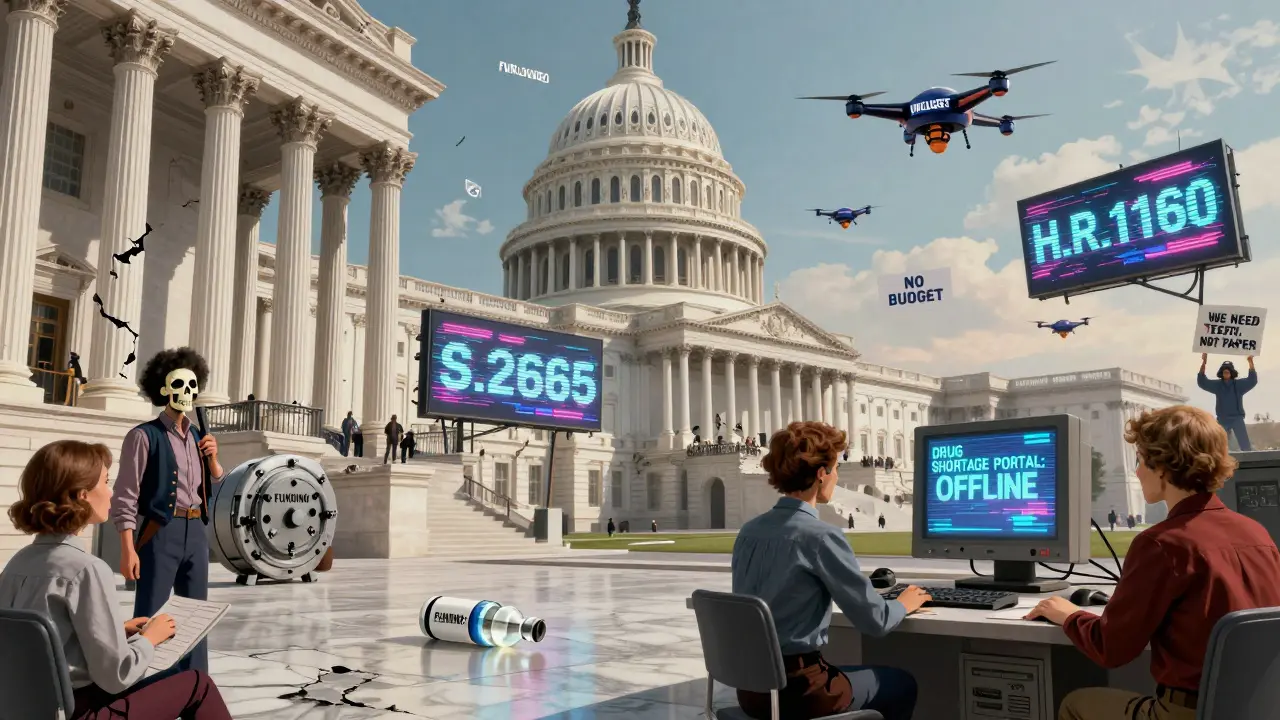
Even if S.2665 passed tomorrow, it wouldn’t work without funding. The Congressional Budget Office estimates it would cost $45 million a year just to staff the new reporting system and update the FDA’s tech. That’s less than 0.003% of the federal budget - but in a year where Congress approved $9 billion in cuts to foreign aid and public media, that money isn’t even on the table.The shutdown didn’t just pause oversight - it killed momentum. While lawmakers debated whether to let senators sue over phone records, hospitals were scrambling to find substitutes for insulin. The proposed continuing resolution that extended government funding through January 30, 2026, didn’t mention drug shortages once. Not a word. No funding. No action.
And here’s the irony: the very agencies that could help - the FDA, the Health Resources and Services Administration, the Centers for Medicare & Medicaid Services - are operating with skeleton crews. Their data systems are outdated. Their communication channels are broken. And they’re not allowed to hire new staff until the shutdown ends.
What’s Really Missing
What we need isn’t just a notification system. We need:- A clear definition of "critical drugs" - not left to bureaucratic interpretation
- Real penalties for manufacturers who hide supply risks
- Domestic backup production for at least 50 of the most essential drugs
- Real-time data sharing between hospitals, pharmacies, and the FDA
- A dedicated fund to cover emergency imports when domestic supply fails
S.2665 starts in the right direction - but it’s incomplete. H.R.1160 hasn’t even started. And without funding, transparency, or political will, both bills are just pieces of paper.
What’s Next?
If the shutdown ends before January 30, 2026, there’s a slim chance both bills get revived. But if Congress lets the government stay shut down past that date, the 119th Congress ends - and both bills die. They’d have to be reintroduced in January 2027, after the next election.Until then, patients are left to navigate a broken system. Nurses are calling pharmacies daily, begging for stock. Doctors are writing prescriptions they know won’t be filled. And the manufacturers? They’re still silent.
Why aren’t more people talking about these bills?
Because the bills lack details. S.2665 has no public draft text. H.R.1160 has no sponsors, no committee, no explanation. Without specifics, journalists can’t report on them. Advocacy groups can’t mobilize around them. And the public doesn’t know what to ask for. This isn’t an oversight - it’s a tactic. Bills with vague language are easier to bury.
Can the FDA fix shortages without new laws?
They’ve tried. Since 2010, the FDA has used its existing authority to fast-track approvals and waive import rules. But it’s reactive, not preventive. The agency can’t force manufacturers to report problems. It can’t demand backup supply chains. And with half its workforce furloughed, it can’t even update its public shortage list reliably. New laws aren’t just helpful - they’re necessary to change the incentives.
Are drug shortages getting worse?
Yes. In 2024, there were 215 reported shortages. By September 2025, that number jumped to 287 - a 34% increase in under a year. Critical shortages (those affecting life-saving drugs) rose from 78 to 135 in the same period. The trend is accelerating, not slowing. The longer Congress waits, the more lives are put at risk.
What can patients do right now?
Ask your pharmacist for alternatives. Check the FDA’s Drug Shortages page (when it’s updated). Join advocacy groups like the American Society of Health-System Pharmacists. Call your representative - even if the bill seems quiet, public pressure can force action. And if you’re on a critical drug, keep a 30-day supply on hand if your doctor allows it.
Why isn’t the U.S. making more drugs domestically?
Because it’s cheaper to outsource. Most active pharmaceutical ingredients are made in Asia. Building domestic factories costs billions. Private companies won’t invest without guaranteed contracts. The government hasn’t offered them. Until there’s a national strategy - not just a bill - shortages will keep happening.
Christopher Brown
February 25, 2026 AT 10:59Also, the FDA is a bloated bureaucracy. Let the market fix it.
Sanjaykumar Rabari
February 25, 2026 AT 14:40Kenzie Goode
February 25, 2026 AT 14:57Dominic Punch
February 26, 2026 AT 01:16What we need is a public dashboard - real-time, live updates - that shows every factory’s output, delay status, and supplier chain. If Pfizer’s Mumbai plant drops below 70% capacity, it auto-triggers an FDA alert and public notice. Transparency kills manipulation.
And yes, domestic production? Absolutely. But not just for patriotism - for resilience. One factory in China shutting down shouldn’t mean 100,000 Americans can’t get their heart meds. We’ve outsourced our survival. That’s not capitalism. That’s suicide.
Valerie Letourneau
February 26, 2026 AT 15:00Khaya Street
February 27, 2026 AT 02:16Fix the reimbursement model. Pay manufacturers to make these drugs. Or tax the ones that make $10B on cancer pills and fund domestic production. Stop pretending this is about 'transparency' - it’s about profit.
Brooke Exley
February 28, 2026 AT 23:16But here’s the thing - we’re not powerless. Every time you call your rep. Every time you share this. Every time you ask your doctor, 'Is there an alternative?' - you’re pushing back. This isn’t just policy. It’s human. And humans change things.
So don’t just rage. Reach out. Text your senator. Tell your story. Because silence? That’s what they’re counting on.
Lisandra Lautert
March 1, 2026 AT 06:43