
GERD Management: Diet, Lifestyle, and Acid Reflux Medications
If you’re dealing with heartburn more than twice a week, you’re not just having a bad meal-you might have GERD. Gastroesophageal reflux disease affects about 20% of adults in the U.S., according to the American College of Gastroenterology. It’s not just discomfort. Left untreated, it can damage your esophagus, lead to Barrett’s esophagus, and even raise your risk of esophageal cancer. The good news? Most people can get control of it without surgery-if they know what to do.
Start with Your Lifestyle
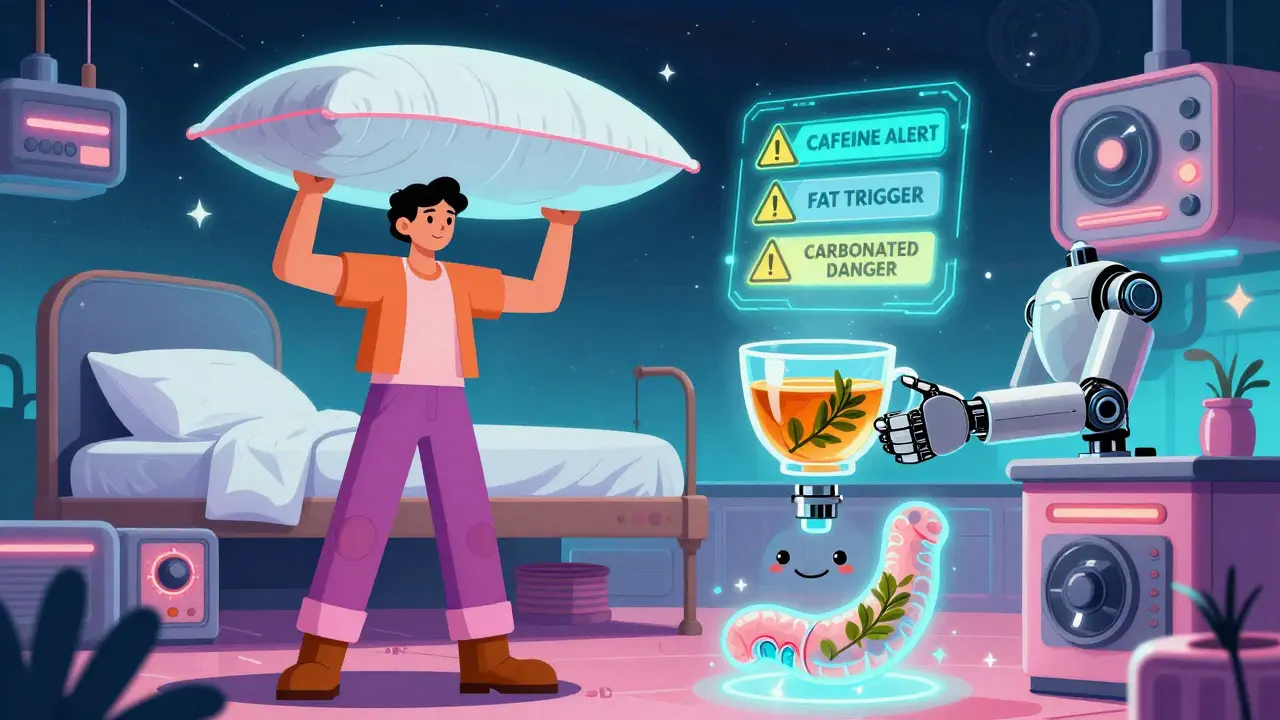
Before you reach for medication, the first and most powerful step is changing how you live. Many people think GERD is all about stomach acid. But it’s often about pressure, timing, and habits.Start by elevating the head of your bed by six inches. Not with extra pillows-that just bends your neck and makes reflux worse. Use blocks under the bed legs or a wedge pillow designed for GERD. This simple trick reduces nighttime reflux by up to 50%.
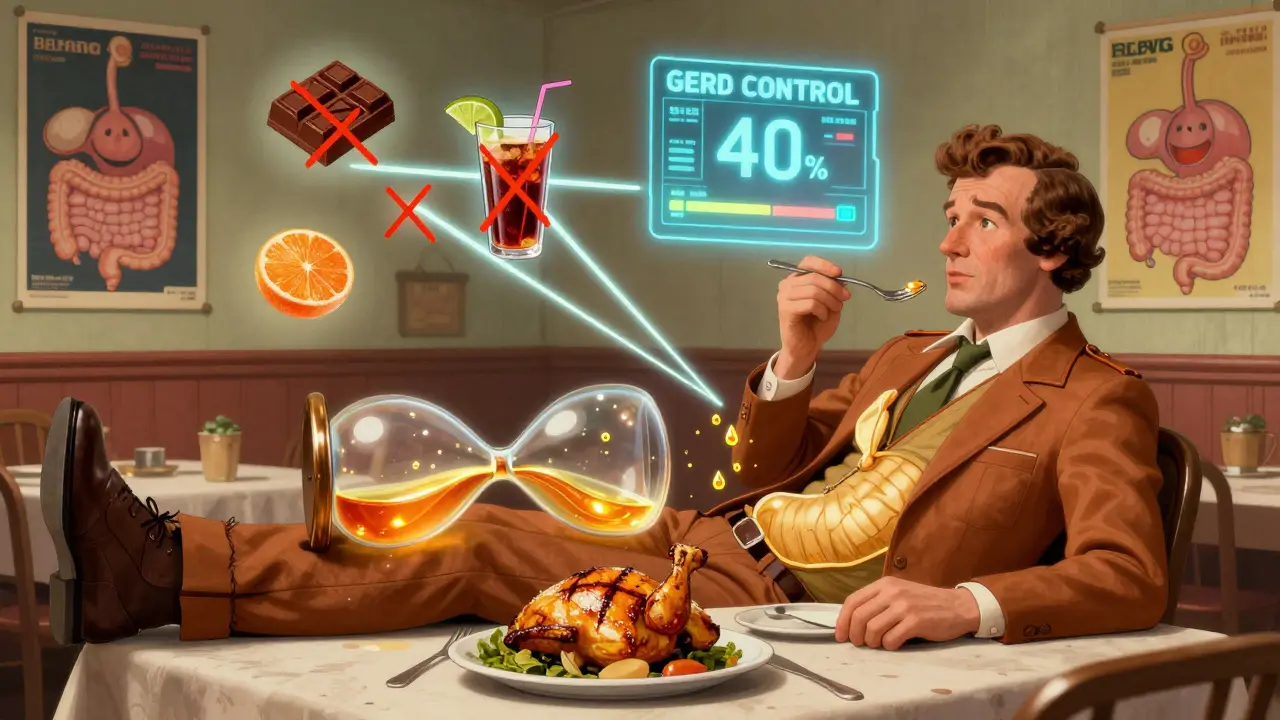
Wait at least three hours after eating before lying down. Lying down too soon lets gravity work against you. Studies show reflux episodes jump by 50% if you go to bed within an hour of dinner. Eat earlier. Give your stomach time to empty.
Weight matters. If you’re overweight, losing just 10% of your body weight can cut GERD symptoms by 40%. That’s not a guess-it’s from clinical data. You don’t need to lose 50 pounds. Even 10 to 15 pounds can make a big difference.
Smoking and alcohol are major triggers. Smoking lowers the pressure in your lower esophageal sphincter (LES) by 30-40% within minutes. Alcohol does the same, plus it irritates the esophagus. Cut back to less than two drinks a day. Better yet, quit. The benefits start fast.
What to Eat-and What to Avoid
Not all foods trigger GERD the same way for everyone. But some are almost universal troublemakers.Coffee, tea, energy drinks-caffeine increases stomach acid by 23% within 30 minutes. Dark roast? Doesn’t matter. It’s the caffeine. Switch to decaf or herbal teas like chamomile.
Chocolate? It contains methylxanthine, which relaxes the LES. Even a small piece can cause problems. Same with peppermint. It’s soothing for your stomach, but it loosens the valve that keeps acid down.
Fatty foods are sneaky. Meals with more than 30 grams of fat delay stomach emptying by 40 to 60 minutes. That means acid sits longer, sloshing back up. Skip fried chicken, creamy pasta, and full-fat dairy. Choose lean proteins, grilled veggies, and whole grains.
Tomatoes and citrus fruits are acidic. Orange juice (pH 3.5), lemon (pH 2.0), and tomato sauce (pH 4.2) don’t cause more acid-they irritate the lining of your esophagus directly. If you love tomato sauce, try cooking it longer to reduce acidity, or swap in roasted red peppers.
Carbonated drinks inflate your stomach. That increases pressure and pushes acid upward. Soda, sparkling water, even beer can trigger reflux. Stick to still water, herbal tea, or diluted apple cider vinegar (one tablespoon in a glass of water).
Spicy foods don’t cause GERD, but they make your esophagus more sensitive to acid. If you feel burning after salsa or hot curry, skip them. Your esophagus doesn’t need the extra irritation.
Keep a food diary for two weeks. Write down everything you eat, when you eat it, and if you get symptoms. Most people find 2 to 3 specific triggers. Once you know them, you can avoid them.
Medications: From Antacids to P-CABs
If lifestyle changes aren’t enough, medications step in. There’s a clear progression, and not all are created equal.Antacids like Tums (calcium carbonate) give quick relief by neutralizing acid. But they last only 30 to 60 minutes. They’re good for occasional heartburn, not daily GERD.
H2 blockers like famotidine (Pepcid) reduce acid production by 60-70%. They start working in about an hour and last 10 to 12 hours. Good for mild cases or as a backup when PPIs aren’t enough.
Proton pump inhibitors (PPIs) are the gold standard for moderate to severe GERD. Drugs like omeprazole (Prilosec), esomeprazole (Nexium), and pantoprazole (Protonix) block 90-98% of acid production. They’re most effective when taken 30 to 60 minutes before your first meal. Taking them after eating? You’ll get only 40% of the benefit.
PPIs heal erosive esophagitis in 80-90% of people within 8 weeks. But long-term use has risks. The FDA warns of higher chances of pneumonia, C. diff infection, kidney problems, and low magnesium. If you’ve been on a PPI for over a year, ask your doctor about checking your magnesium levels every six months.
Now there’s a newer option: potassium-competitive acid blockers (P-CABs). Vonoprazan (Voquezna), approved in December 2023, works faster and stronger than PPIs. It keeps stomach pH above 4 for 24 hours in 95% of users-compared to 65% with PPIs. It’s especially helpful for nighttime reflux, which affects 70% of PPI users. As of mid-2024, over 120,000 prescriptions were filled in the U.S.
Surgery: When Medication Isn’t Enough
About 10-15% of people with GERD need surgery. That’s not failure-it’s a smart next step.The most common procedure is laparoscopic Nissen fundoplication. Surgeons wrap the top of your stomach around the lower esophagus to reinforce the LES. Success rates are 90-95% at five years. But 5-10% of patients develop trouble swallowing, and 15-20% get gas-bloat syndrome-feeling full and bloated after meals.
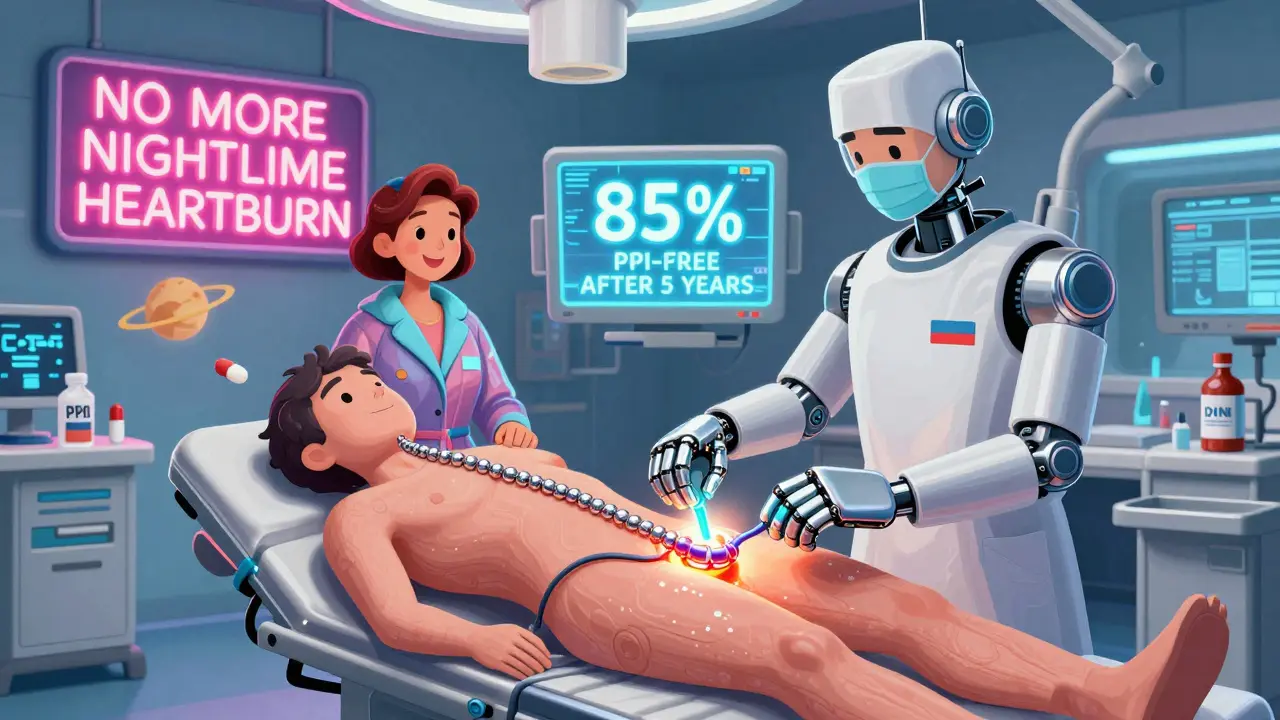
The LINX device is a small ring of magnetic titanium beads implanted around the LES. It lets food pass through but closes tightly to block acid. It’s FDA-approved since 2012 and updated in 2020. Eighty-five percent of patients stay off daily PPIs after five years. Only 2-3% need reoperation. But it’s not for everyone. If you’ve had prior stomach surgery or need future MRIs, skip it.
Transoral incisionless fundoplication (TIF) is an endoscopic procedure-no cuts, just a device inserted through your mouth. It’s less invasive but only 70-75% effective at three years. And there are only about 127 certified providers in the U.S. as of early 2025.
Some patients, like one Reddit user who went low-fat and elevated their bed, got rid of symptoms without meds. Others, like someone who tried PPIs for five years then got LINX, found freedom after years of discomfort. Your path may be different.
What Works for One Person Might Not Work for Another
GERD isn’t one-size-fits-all. Two people can have the same symptoms but completely different causes. One has excess acid. Another has a weak LES. Another has visceral hypersensitivity-where their nerves are overly sensitive to normal levels of acid.The American College of Gastroenterology says treatment should be personalized. If you have no visible damage in your esophagus (non-erosive reflux disease), PPIs might not help much. You might need a different approach-like behavioral therapy or diaphragmatic breathing.
Practicing diaphragmatic breathing for 15 minutes after meals can reduce symptoms by 35%. It’s simple: breathe slowly into your belly, not your chest. But only 30% of people stick with it long-term. Consistency matters.
Also, don’t assume your triggers are the same as your friend’s. One person can’t touch chocolate. Another eats pizza daily with no issues. Your food diary is your best tool. Track, adjust, repeat.
What’s Next for GERD Treatment?
The market for GERD treatments is growing. PPIs still make up 65% of sales, but new drugs like vonoprazan are gaining ground. The FDA approved vonoprazan for long-term use in May 2024, expanding its use beyond short-term relief.The LINX device got CE Mark approval in July 2024 for patients with BMI up to 40-meaning more people with obesity can now consider it. And by 2030, experts predict 15-20% of GERD patients will shift from long-term meds to surgery, especially as obesity rates climb.
The American College of Gastroenterology is updating its guidelines for November 2025. They’ll include more on non-acid reflux and tailored diets. That means your doctor will soon have even better tools to match treatment to your body.
Bottom Line: You Can Take Control
GERD is chronic, but it’s manageable. Start with lifestyle: elevate your bed, wait after meals, lose weight if needed, quit smoking, cut back on alcohol. Then track your food. Identify your triggers. Use antacids for quick relief, H2 blockers for mild cases, and PPIs or P-CABs for persistent symptoms. Surgery is an option-not a last resort, but a valid choice when meds fail.You don’t have to live with daily heartburn. Millions of people have found relief. You can too. The key isn’t finding the perfect pill-it’s building a plan that fits your life.
Can GERD be cured without medication?
Yes, for many people. Lifestyle changes alone-like losing weight, avoiding trigger foods, elevating the head of the bed, and not eating before bed-can eliminate symptoms. One study showed a 40% symptom reduction with just a 10% weight loss. Some people never need medication if they stick to these habits long-term.
Are PPIs safe for long-term use?
PPIs are effective but carry risks with long-term use. The FDA warns of increased chances of pneumonia, C. diff infection, kidney disease, and low magnesium. If you’ve been on a PPI for over a year, ask your doctor to check your magnesium levels every six months. Don’t stop suddenly-work with your provider to taper off safely.
What’s the difference between PPIs and vonoprazan?
PPIs block acid production by targeting proton pumps, but they need to be activated by stomach acid and take days to reach full effect. Vonoprazan (Voquezna) works faster and more completely-it blocks acid immediately and keeps stomach pH higher for longer. Studies show 95% of users maintain pH above 4 for 24 hours, compared to 65% with PPIs. It’s especially helpful for nighttime reflux.
Is LINX surgery worth it?
For the right candidate, yes. LINX has an 85% success rate at keeping patients off daily PPIs after five years. It’s less invasive than fundoplication and has fewer side effects like gas-bloat. But it’s not for everyone. You can’t have an MRI after implantation, and it’s not recommended if you’ve had prior stomach surgery. Talk to a specialist who’s done at least 50 procedures.
Why do some people’s GERD meds stop working?
There are a few reasons. One is tolerance-your body may adapt to the medication. Another is worsening disease, like developing a hiatal hernia or Barrett’s esophagus. Sometimes, the issue isn’t acid at all-it’s bile reflux or nerve sensitivity. If your meds stop working, don’t just increase the dose. See a gastroenterologist for an endoscopy and possible pH monitoring.
Can stress make GERD worse?
Yes. Stress doesn’t cause GERD, but it increases stomach acid and slows digestion. It also makes you more sensitive to pain. People under stress report worse heartburn, even with the same diet. Managing stress through breathing, exercise, or therapy can reduce symptoms by 20-30%.
How long does it take for lifestyle changes to help?
Most people notice improvement within two weeks if they’re consistent. Elevating the bed and avoiding late meals often help first. Dietary changes take a bit longer-up to four weeks-as your body adjusts. Keep a symptom log. You’ll see patterns. If nothing improves after a month, it’s time to talk to your doctor about medication.
Is there a best diet for GERD?
There’s no single "GERD diet," but the best approach is low-fat, low-acid, and non-carbonated. Focus on lean proteins (chicken, fish, tofu), vegetables (broccoli, green beans, spinach), whole grains (oats, brown rice), and non-citrus fruits (bananas, melons). Eat smaller meals. Avoid fried, creamy, or spicy foods. Keep a food diary to find your personal triggers.
Shanahan Crowell
January 1, 2026 AT 18:42Okay, I tried the bed-elevation trick-blocks under the legs, not pillows-and holy crap, it actually worked. No more midnight wake-ups gasping like a fish out of water! I was skeptical, but science doesn’t lie. Also, ditched coffee. Switched to chamomile. Life’s weirdly peaceful now.
Kerry Howarth
January 2, 2026 AT 04:07Weight loss isn’t optional. Losing 10% cut my symptoms in half. No magic pills. Just discipline. Eat early. Don’t lie down. Simple. Hard. Effective.
Tiffany Channell
January 2, 2026 AT 20:24Let’s be real-PPIs are a gateway drug. You think you’re fixing your reflux, but you’re just delaying the inevitable: kidney failure, pneumonia, or worse. The FDA warning is a footnote. The pharmaceutical industry doesn’t want you to know how easy it is to fix this naturally. They profit from your dependency.
Joy F
January 4, 2026 AT 10:22There’s a metaphysical layer to GERD that no one talks about. Acid reflux isn’t just physiological-it’s emotional stagnation manifesting somatically. When you suppress your voice, when you swallow your anger instead of expressing it, your LES tightens in existential protest. The esophagus becomes a metaphor for unspoken truths. Vonoprazan? It’s a chemical band-aid on a spiritual wound. You need to breathe. You need to feel. You need to stop numbing with food, with alcohol, with late-night scrolling. The body doesn’t lie. It refluxes what the soul refuses to release.
Haley Parizo
January 5, 2026 AT 17:11You people are so naive. You think eating less fat or sleeping with blocks under your bed is enough? You’re ignoring the real enemy: corporate food. Processed foods are engineered to trigger reflux. They load up on emulsifiers, preservatives, and hidden sugars that wreck your gut flora. And don’t get me started on the ‘low-acid’ diet-tomatoes aren’t the problem. It’s the glyphosate residue on them. Organic doesn’t fix it if the soil is dead. You need to grow your own food. Or move to a country that bans industrial agriculture. This isn’t lifestyle-it’s systemic oppression disguised as wellness advice.
Ian Detrick
January 7, 2026 AT 03:57Been on PPIs for 8 years. Tried quitting cold turkey-total nightmare. Acid reflux came back like a freight train. Tapered slowly with H2 blockers, added diaphragmatic breathing, and now I’m on minimal dose. It’s not about being perfect. It’s about progress. Some days I eat pizza. Some days I don’t. That’s life.
Angela Fisher
January 7, 2026 AT 10:29EVERYTHING IS A COVER-UP. The whole GERD narrative? It’s a distraction. Big Pharma doesn’t want you to know that reflux is caused by 5G radiation disrupting your vagus nerve. They’ve been hiding this since 2018. The FDA approved vonoprazan because it’s easier to sell a new pill than admit that cell towers are frying your digestive system. Check your router. Turn it off at night. Use a Faraday cage around your bed. And stop eating anything with ‘modified corn starch’-it’s laced with microchips that trigger acid production. I know because I used to work at Pfizer. I saw the emails. I’m not crazy. I’m the only one who’s awake.
Neela Sharma
January 8, 2026 AT 22:22My grandmother in Jaipur never took pills. She ate light, slept early, and drank warm water with ginger at dawn. No fancy wedges. No apps. Just rhythm. We lost the art of living gently. Modern life is too loud. The body whispers. We don’t listen. Then we scream for pills. The answer was always in the silence.
Shruti Badhwar
January 8, 2026 AT 23:11While lifestyle modifications are foundational, the clinical efficacy of P-CABs such as vonoprazan represents a paradigm shift in GERD management. Unlike PPIs, which require acid activation and exhibit delayed onset, P-CABs achieve rapid, sustained acid suppression with higher intragastric pH stability. This is particularly advantageous in nocturnal reflux, which remains a significant unmet clinical need. The 2024 FDA approval for long-term use aligns with emerging data demonstrating improved mucosal healing rates and reduced symptom recurrence. However, cost and accessibility remain barriers to widespread adoption.
Brittany Wallace
January 10, 2026 AT 02:50I used to think I was the only one who cried over heartburn. Then I found this community. It’s not just about food or pills. It’s about being seen. I lost 20 pounds. I stopped eating after 7 PM. I breathe before bed. And now, I sleep. Not just rest. Sleep. Thank you for writing this. I didn’t know I could feel this good again.
Michael Burgess
January 11, 2026 AT 09:26Biggest myth: "Spicy food causes GERD." Nah. It just makes your esophagus feel like it’s been set on fire. Same with citrus. They don’t make more acid-they just make your nerves scream louder. I eat spicy tacos every Friday now. No problems. Why? I wait 4 hours after eating before lying down. And I drink water. Not soda. Not wine. Water. Simple stuff. But it works. Also, the LINX device? My cousin got it. He’s been PPI-free for 3 years. No MRI? Fine. He’s not planning on going to space. 😎
Liam Tanner
January 11, 2026 AT 11:42For anyone thinking about surgery: don’t rush. Talk to at least three specialists. Ask how many procedures they’ve done. Ask about complications. Ask what happens if it fails. I had a friend who got fundoplication and now can’t burp. It’s not glamorous. It’s life-altering. Make sure it’s your path, not just your desperation.
Palesa Makuru
January 12, 2026 AT 19:50I’m sorry, but if you’re still using Tums like it’s candy, you’re doing it wrong. You think this is a diet problem? It’s a privilege problem. You have the time to cook, the money to buy organic, the access to a doctor. Most people don’t. GERD isn’t a lifestyle issue-it’s a poverty issue. The fact that we’re all over here debating wedge pillows while others can’t afford a single pill? That’s the real reflux. You’re not healing your esophagus. You’re just polishing your guilt.
Shanahan Crowell
January 14, 2026 AT 19:44Wait-so you’re telling me I’m not the only one who thinks vonoprazan is the real MVP? I’ve been on it for 3 months. No more nighttime awakenings. No more 6 AM burning. I used to dread mornings. Now I wake up and feel… normal. Like I didn’t spend the night drowning in acid. And the best part? No more daily H2 blockers. Just one pill before breakfast. Life-changing.