
How to Check Drug Coverage Tiers and Formulary Changes for Medicare Part D
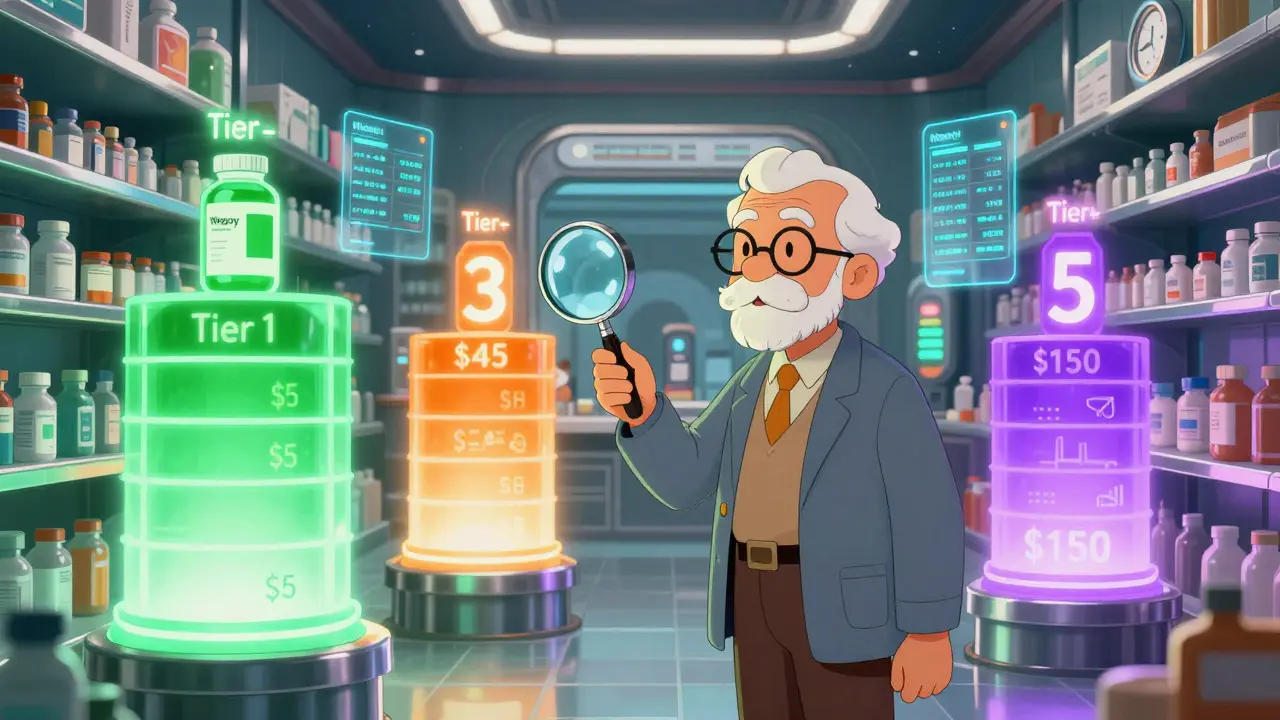
Every January, millions of seniors face a quiet but costly surprise: their monthly pill cost jumps from $10 to $55 overnight. It’s not a mistake. It’s a formulary change. If you’re on Medicare Part D or a private plan with drug coverage, your medications are grouped into tiers that determine how much you pay at the pharmacy. These tiers aren’t set in stone. They change every year-and sometimes mid-year-without warning. Knowing how to check them before you fill your prescription can save you hundreds, even thousands, a year.
What Is a Drug Formulary and Why Does It Matter?
A drug formulary is simply the list of medications your insurance plan covers. But it’s not just a list. It’s organized into tiers, each with its own price tag. Tier 1 usually has the cheapest generics. Tier 5 often includes expensive specialty drugs like those for diabetes or weight loss. The higher the tier, the more you pay. In 2023, Medicare Part D plans covered over 53 million people. Every single one of them relies on their plan’s formulary to know what they’ll pay for insulin, blood pressure pills, or cholesterol meds. The problem? The same drug can be in Tier 1 with a $5 copay on one plan and Tier 3 with a $45 copay on another. And if your plan changes the tier mid-year, you’re stuck paying the new price unless you act.How Tiers Work: 3, 4, or 5 Levels?
Not all plans use the same system. Most have either 3, 4, or 5 tiers. Here’s what you’re likely to see:- Tier 1: Preferred generics. These are the cheapest. Think metformin, lisinopril, atorvastatin. Copays are often $0-$10.
- Tier 2: Non-preferred generics or lower-cost brand-name drugs. Expect $10-$20.
- Tier 3: Higher-cost brand-name drugs. These are usually older brands without generic alternatives. Copays jump to $30-$60.
- Tier 4: Non-preferred brand-name drugs with alternatives available in lower tiers. Often requires prior authorization. Costs $60-$100.
- Tier 5: Specialty drugs. These include GLP-1 weight loss meds like Wegovy, injectable diabetes drugs, or treatments for rare conditions. Copays can be $150 or more, or you pay a percentage (coinsurance) of the full price.
Why does this matter? In 2023, about 17% of formulary changes involved moving a drug to a higher tier-meaning higher costs for you. A common example: when a new generic version of a brand-name drug hits the market, insurers often move the original brand to Tier 4 or 5 to push patients toward the cheaper version.
How to Check Your Drug’s Tier Right Now
You don’t need to wait for a letter. You can check your drug’s tier today. Here’s how:- Find your plan’s website. If you’re on Medicare Part D, go to Medicare.gov and use the Plan Finder tool. If you’re on a private plan like Cigna, Humana, or Excellus BCBS, search for “[Your Plan Name] formulary.”
- Use their online drug lookup tool. Most plans have a search box where you type in your medication’s name. Enter the exact brand or generic name-don’t use abbreviations.
- Look for the tier number. It’s usually listed right next to the drug name. Also check for any restrictions: “Prior Authorization Required” or “Step Therapy Required.”
- Check the cost. The tool will show your copay or coinsurance for that tier. Compare it to last year’s number.
Pro tip: Use GoodRx or SingleCare to compare cash prices too. Sometimes paying cash is cheaper than your copay, especially if your drug moved to a high tier.
What to Do When Your Drug Gets Moved to a Higher Tier
If your medication suddenly costs more, you’re not powerless. Here’s what to do:- Ask your doctor for an exception. You have the right to request that your plan cover your drug even if it’s not on the formulary-or if it’s in a higher tier. Your doctor fills out a form explaining why you need it. Approval rates range from 55% to 82%, depending on your plan and medical evidence.
- Ask for a therapeutic alternative. Your pharmacist can suggest a similar drug in a lower tier. For example, if your brand-name blood pressure pill moved to Tier 3, ask if a generic version like losartan is an option.
- Request a transition supply. If your plan removes your drug entirely, they must give you at least a 30-day supply while you work on a long-term solution.
- Call customer service. Don’t rely on the website alone. Ask: “Is this change final? When does it take effect? Can I get a temporary exception?”
Many seniors don’t know about exceptions. In a 2023 GoodRx survey, 31% of users said they didn’t understand how to request one. That’s how people end up skipping doses or paying too much.
When Do Formulary Changes Happen?
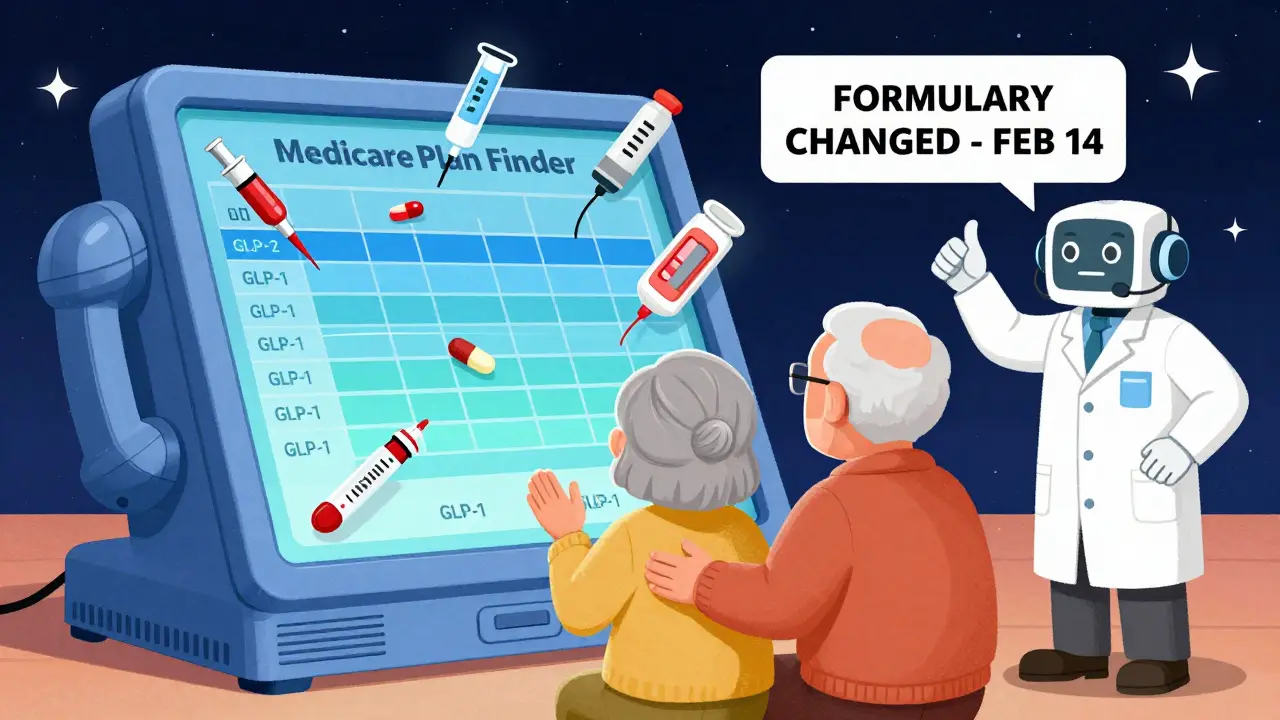
Most changes happen on January 1st, when new plan years begin. But changes can happen anytime. CMS allows plans to update formularies during the year if:- A new generic becomes available
- A drug is recalled or has new safety warnings
- A new, more effective drug is approved
By law, your plan must notify you in writing if a change affects a drug you’re taking. But here’s the catch: they only have to send the notice after the change takes effect. So if your insulin cost jumped in February, you might not get the letter until March.
That’s why you need to check your formulary every January-and again every June. Set a calendar reminder. Look up your top 3 medications. Don’t wait for a bill to tell you something changed.
GLP-1 Weight Loss Drugs Are the New Hotspot
In 2023 and 2024, drugs like Wegovy, Ozempic, and Mounjaro became wildly popular. But they’re also extremely expensive. Most plans now put them in Tier 5, with copays over $150. Some plans even require prior authorization or proof of obesity-related health issues before covering them.According to the Medicare Rights Center, this is the fastest-growing formulary change trend. If you’re on one of these drugs, check your tier every quarter. Plans are still adjusting coverage as new competitors enter the market. In September 2023, FepBlue admitted some 2026 formularies were still showing Wegovy in the wrong tier.
Who Can Help You Navigate This?
You don’t have to figure this out alone.- Your pharmacist. They see formulary changes daily. Ask them: “Is there a cheaper alternative?”
- SHIP (State Health Insurance Assistance Program). Free, local counselors help seniors with Medicare questions. They helped 1.7 million people in 2022. Find yours at shiptacenter.org.
- Medicare.gov’s 1-800-MEDICARE. Call anytime. They can look up your plan’s current formulary and explain your rights.
UnitedHealthcare and Cigna rank high for formulary clarity. Smaller regional plans? Not so much. If their website is confusing, call them. Don’t guess.

What to Do Before Open Enrollment
November is open enrollment season. This is your chance to switch plans before next year’s changes hit. Here’s how to pick the best one:- Make a list of all your medications, including dosages.
- Use Medicare’s Plan Finder tool to compare plans side-by-side.
- Look at the “Total Estimated Annual Cost” for each plan-not just the monthly premium.
- Check if your top 3 drugs are in Tier 1 or 2.
- Look for plans with $0 premiums but high drug costs. Sometimes the math doesn’t add up.
Plans with better drug coverage get higher Medicare Star Ratings. 4- and 5-star plans usually have lower tiers for common meds. Don’t just pick the cheapest premium. Pick the plan that covers your pills best.
Final Tip: Don’t Trust Last Year’s Info
Last year, your blood pressure pill cost $12. This year? $52. You didn’t miss a payment. You didn’t change plans. The formulary changed. And if you didn’t check, you paid more.Medicare Part D formularies aren’t designed to be simple. They’re designed to save insurers money. But you can win. By checking your tiers every January, asking for exceptions, and switching plans if needed, you control your costs-not your insurer.
Your health shouldn’t depend on a paperwork maze. Stay informed. Stay proactive. And never assume your drug’s price is fixed.
How often do Medicare Part D formularies change?
Most formulary changes happen on January 1st each year when new plan years begin. But plans can also make changes mid-year if a new generic becomes available, a drug is recalled, or safety concerns arise. By law, your plan must notify you if a change affects a drug you’re taking, but they’re only required to send the notice after the change takes effect.
Can I get my drug covered if it’s not on the formulary?
Yes. You can request a formulary exception. Your doctor must submit a letter explaining why you need the drug-for example, if lower-tier alternatives caused side effects or didn’t work. Approval rates vary from 55% to 82%, depending on your plan and medical evidence. Don’t give up if your first request is denied; you can appeal.
What’s the difference between a copay and coinsurance?
A copay is a fixed amount you pay-like $15-for a prescription. Coinsurance is a percentage of the drug’s total cost-for example, 30% of a $200 specialty drug, which would be $60. Higher-tier drugs often use coinsurance instead of copays, which means your cost can vary based on the drug’s price.
Why does the same drug cost different amounts on different plans?
Each insurance plan negotiates its own deals with drug manufacturers. One plan might have a better deal on a generic version and put it in Tier 1. Another plan might have a deal on the brand name and put the generic in Tier 2. There’s no national standard for tier placement-it’s all up to the insurer’s contract with the drugmaker.
Should I switch Medicare Part D plans every year?
Not necessarily-but you should review your plan every year. Your medications, prices, and coverage can change. If your top drugs moved to higher tiers or your premium increased, switching during open enrollment (October 15-December 7) could save you money. Use Medicare’s Plan Finder tool to compare your current plan with others before you decide.
What should I do if I can’t afford my medication after a tier change?
First, ask your doctor about a therapeutic alternative in a lower tier. Then, request a formulary exception. If that doesn’t work, check if the drug manufacturer offers a patient assistance program. Many big pharma companies have free or low-cost programs for seniors. Also, contact your local SHIP counselor-they can help you find financial aid or negotiate with your plan.
Next Steps: What to Do Today
1. Write down the names of all your medications, including doses. 2. Go to your plan’s website or Medicare.gov and search each one. 3. Note the tier and cost for each. 4. Compare this to last year’s costs. 5. If anything increased, call your pharmacist or doctor to ask about alternatives or exceptions. 6. Set a reminder for January 1st and June 1st every year to check again.Formularies aren’t going away. But you don’t have to be caught off guard. A few minutes each year can keep your out-of-pocket costs from skyrocketing.
Harshit Kansal
January 5, 2026 AT 21:47Just checked my insulin tier-went from $12 to $58. No warning. No mercy. I’m calling my pharmacist tomorrow. No more guessing.
Vinayak Naik
January 7, 2026 AT 15:52Man, I used to think Medicare was simple till I got hit with a Tier 5 surprise for my GLP-1 med. Turned out paying cash via GoodRx saved me $200/month. Wild, right? Pharma’s playing chess while we’re stuck with checkers.
Katelyn Slack
January 8, 2026 AT 17:08i wasnt even aware you could ask for an exception... i thought once it was moved up there was no going back. thanks for the tip. i’ll call my doc this week. 🙏
Kelly Beck
January 9, 2026 AT 20:18You’re not alone, and you’re not failing-this system is broken, not you. I’ve been there, crying in the pharmacy aisle because my blood pressure med jumped from $8 to $67. But guess what? I called my SHIP counselor, got a formulary exception approved in 10 days, and now I’m saving $800 a year. You’ve got this. One call at a time. 💪
Lily Lilyy
January 10, 2026 AT 00:36Thank you for this clear guide. I’m 72 and didn’t know how to check my tiers. Now I’ve looked up all my meds and found one that’s cheaper as cash. I feel empowered. Let’s help others find this too.
Gabrielle Panchev
January 10, 2026 AT 16:46Let me be perfectly clear-this isn’t just about formularies, it’s about the entire pharmaceutical-industrial complex weaponizing Medicare’s complexity to extract maximum profit while pretending to care about seniors, and yes, I’ve seen the internal emails from Humana’s Q3 strategy meeting where they openly discussed ‘tier-shifting’ as a revenue lever, and no, I don’t think you’re paranoid if you notice that every time a generic hits the market, the brand-name version gets shoved into Tier 5 within 90 days, and yes, I’ve documented 17 such cases in my own family’s records since 2021, and yes, I’ve filed complaints with CMS, and yes, they ignored me, and yes, I’m still waiting for a response from my senator’s office, and no, I don’t believe the ‘it’s just market dynamics’ excuse anymore, and yes, I think this is intentional, systemic abuse disguised as policy.
Brian Anaz
January 10, 2026 AT 19:19Why are we letting foreign drug companies dictate what we pay? America invented these pills, but now we’re paying 5x what Canada pays. Fix the system, don’t just tell seniors to check a website. This is national shame.
Saylor Frye
January 12, 2026 AT 01:19It’s fascinating how the entire formulary architecture functions as a behavioral nudge system-essentially, a Skinner box for elderly patients conditioned to accept escalating costs under the illusion of choice. The real innovation isn’t in the drugs-it’s in the financial engineering behind tier placement. One wonders if the actuaries even sleep at night.
Kiran Plaha
January 12, 2026 AT 12:35Just a quick question-when you call customer service, do they usually give you the real info or just the script? I’ve had reps tell me ‘no changes’ then find out later it was updated two weeks ago.
Venkataramanan Viswanathan
January 13, 2026 AT 16:15As someone who works in healthcare compliance in India, I see similar tiering systems in private insurance here. But what’s shocking is how the U.S. system turns simple medical access into a bureaucratic obstacle course. The fact that you must proactively check every six months is not healthcare-it’s a survival skill. This should be automated, not left to seniors.
Matt Beck
January 14, 2026 AT 22:13Every time I see someone say ‘just check your formulary’ I think: what if you’re blind? What if you’re illiterate? What if you’re 80 and your hands shake? This isn’t empowerment-it’s exclusion dressed up as advice. The system isn’t broken-it was designed this way. 🤔
Melanie Clark
January 16, 2026 AT 05:36They only notify you after the change because they know you won’t act in time. That’s not a loophole-it’s a trap. And don’t get me started on the fact that Medicare’s Plan Finder tool doesn’t even show you the real cost if you’re in the donut hole. This is all part of a larger plan to make seniors give up. I’ve seen it happen to my neighbor. She stopped taking her heart meds. Now she’s in the hospital. This isn’t coincidence. It’s calculated.
Molly McLane
January 16, 2026 AT 18:29To everyone who just found out their drug tier changed-breathe. You’re not alone. I’ve helped over 40 seniors navigate this mess through my volunteer work at SHIP. You can fight this. You have rights. Ask for the exception. Ask for the alternative. Ask again. And if you need someone to call with you, I’ll do it. No one should have to choose between pills and groceries. You matter. We’re in this together.