
How to Check REMS Requirements Before Starting a Medication
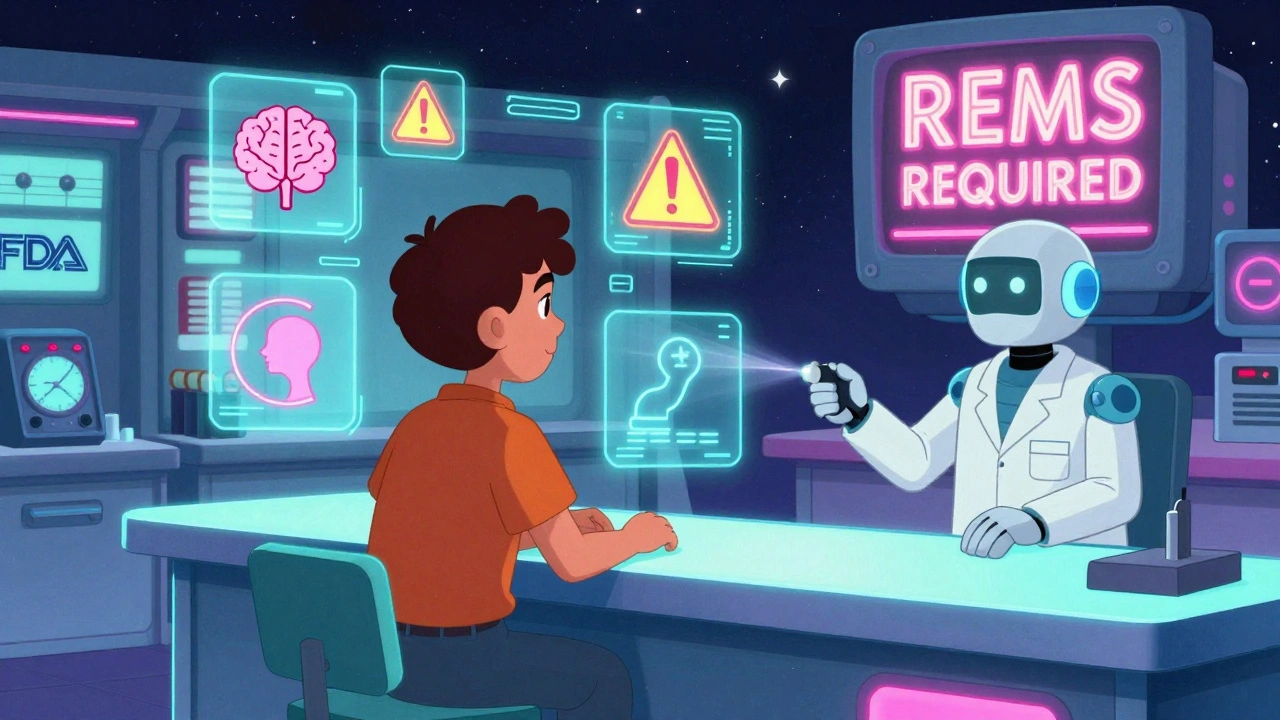
Before you start a new medication, especially one for a serious condition, you need to ask: Does this drug have REMS requirements? It’s not just a formality-it’s a safety checkpoint that could prevent life-threatening side effects. The FDA requires Risk Evaluation and Mitigation Strategies (REMS) for drugs with serious risks, like birth defects, severe infections, or sudden brain reactions. If you skip checking REMS, you might get stuck waiting days for a prescription, or worse, end up in the hospital because a simple step was missed.
What Exactly Is a REMS?
REMS stands for Risk Evaluation and Mitigation Strategies. It’s not a suggestion. It’s a legal requirement the FDA puts on certain medications to make sure the benefits outweigh the dangers. Think of it like a safety net. Some drugs are so powerful-or so risky-that the FDA won’t approve them unless doctors, pharmacists, and patients follow strict rules.
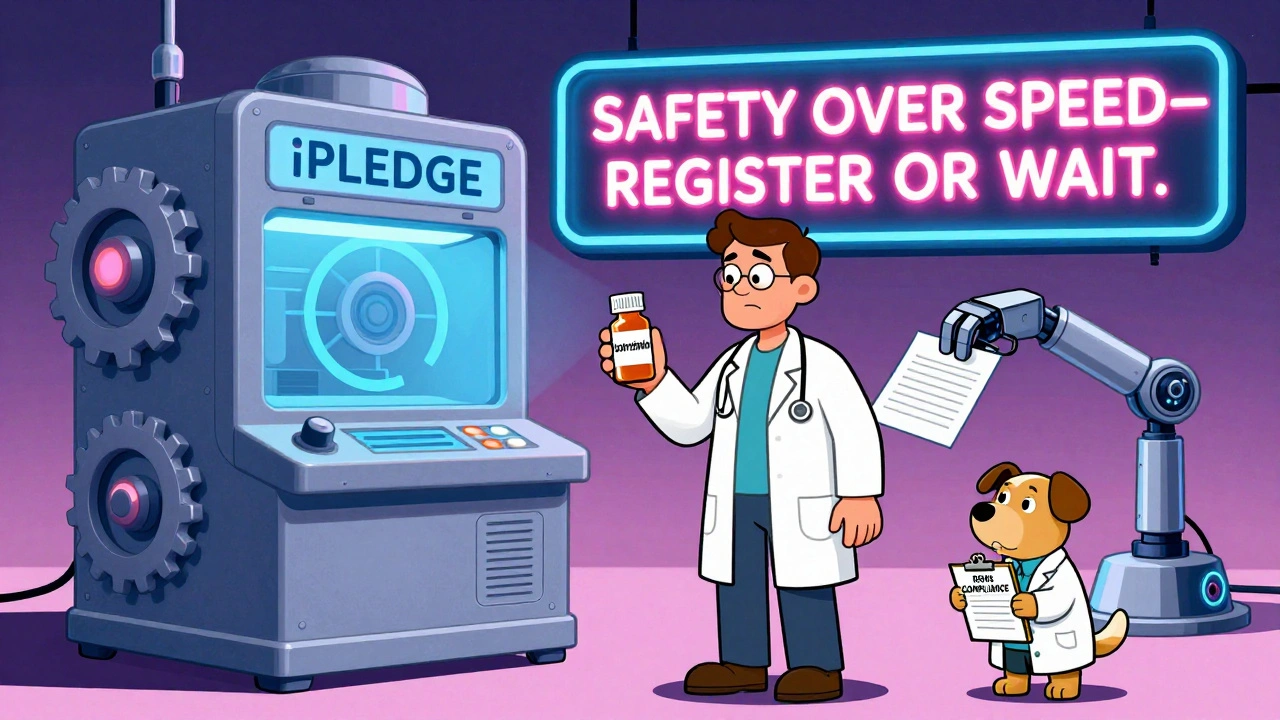
These programs started after the Food and Drug Administration Amendments Act of 2007. Since then, 76 REMS programs have been approved. Some are simple. Others? They’re complicated. For example, isotretinoin (Accutane) needs both the doctor and patient to register in the iPLEDGE system. Zyprexa Relprevv can only be given in a certified clinic where staff watch you for three hours after the shot. Why? Because some patients have sudden, dangerous reactions.
What Does a REMS Program Include?
Not all REMS are the same. They’re built around the specific danger of the drug. Here’s what you might run into:
- Medication Guides: A printed handout you get every time you fill the prescription. It explains risks in plain language. But don’t just take it and toss it-read it.
- Communication Plans: The drugmaker sends training materials to doctors and pharmacists. This isn’t optional. They need to know what to watch for.
- Elements to Assure Safe Use (ETASU): This is where things get serious. ETASU can mean prescriber certification, mandatory lab tests, patient registries, or even requiring the drug to be given in a hospital.
- Implementation Systems: How the whole system tracks who’s enrolled, who’s certified, and who’s been monitored.
Take mycophenolate, used after organ transplants. It can cause miscarriages. The REMS requires women of childbearing age to have a negative pregnancy test before each refill and to use two forms of birth control. If you skip this, you’re not just breaking a rule-you’re risking a baby’s life.
How to Check REMS Requirements Before Prescribing or Filling
You don’t have to guess. There are clear, official steps to follow.
- Look at the prescribing information. Every drug’s official label (available on DailyMed or the manufacturer’s site) says right at the top if a REMS applies. If it does, it lists exactly what’s required.
- Use the FDA REMS Public Dashboard. Go to fda.gov/drugs/rems. You can search by drug name, company, or condition. The dashboard shows if the REMS is active, what elements it has, and when it was last updated. Pro tip: The dashboard was upgraded in March 2023-it’s faster, clearer, and links directly to each REMS program’s website.
- Check the manufacturer’s REMS website. Many drugs have their own dedicated REMS pages. For isotretinoin, it’s ipleDGEprogram.com. For thalidomide, it’s Celgene’s REMS site. These sites have enrollment forms, training videos, and FAQs.
- Call the pharmacy. Pharmacists are on the front lines. If you’re unsure, call the pharmacy where you’ll pick up the prescription. They can tell you if the drug needs special paperwork or if the doctor needs to be certified. The Opioid Analgesic REMS FAQ even says: “Contact the pharmacy that dispensed the medication.”
- Verify prescriber certification. If the REMS requires the doctor to be certified, make sure they’ve completed the training. For opioids, this means taking a CME course. For thalidomide, it’s a 65-minute online module with a test. Ask your doctor if they’re certified-or help them find the training.

What Happens If You Ignore REMS?
It’s not just about paperwork. People get hurt.
A 2022 survey by the National Organization for Rare Disorders found that 42% of patients on REMS drugs faced delays-on average, over six business days-because someone didn’t complete a step. One patient waited three weeks to get her mycophenolate because her doctor didn’t know he needed to register. Another couldn’t get isotretinoin because her dermatologist hadn’t updated his iPLEDGE account.
Pharmacists report similar issues. On Reddit, a hospital pharmacist said they cut isotretinoin processing time from 45 minutes to 15 minutes just by making a checklist. Without that checklist? Mistakes happen.
And the FDA is watching. In 2022, they issued 27 warning letters to drug companies for REMS violations-up from 19 the year before. That means fines, delays in approvals, and public scrutiny.
Who’s Responsible for REMS Compliance?
Everyone plays a role.
- Doctors: Must be certified if required. Must complete training. Must document patient counseling.
- Pharmacists: Must verify certification, check registries, and give the Medication Guide. They’re the last line of defense.
- Patients: Must enroll in registries if required. Must follow monitoring rules. Must report side effects.
It’s not fair to put all the burden on patients. But if you’re prescribed a REMS drug, you’re part of the safety team. If your doctor says, “Just sign here,” push back. Ask: “Do I need to register? Do you need to be certified?”
How Long Does REMS Verification Take?
It varies. For a simple Medication Guide? Five minutes. For a drug like thalidomide? You’re looking at 65 minutes of training, plus filling out forms, plus waiting for certification to process. The American Society of Health-System Pharmacists recommends setting aside 8 to 12 minutes per new REMS prescription.
Some systems are getting better. Eight of the top ten pharmacy benefit managers now check REMS status automatically when a prescription is sent electronically. That means fewer phone calls and fewer delays.
What’s Changing in REMS?
REMS isn’t stuck in 2010. The FDA is trying to fix the problems.
In 2022, they modified 14 REMS programs to cut red tape-without cutting safety. They’re requiring all new REMS to include smartphone-friendly tools. That means apps you can use to check your status, get reminders, or upload lab results.
By 2026, blockchain might be used to track certification across hospitals and pharmacies. That could cut down on duplicate paperwork and false claims.
And the trend? REMS programs are growing. About 15-20% of new drugs need them. For cancer drugs? That number jumps to 85-90%. As treatments get more powerful, safety checks get more detailed.
Final Checklist Before Starting a REMS Medication
Before you take the first pill, run through this:
- ✅ Is the drug listed on the FDA REMS Public Dashboard?
- ✅ Did your doctor complete required training or certification?
- ✅ Do you need to register in a patient registry?
- ✅ Have you received and read the Medication Guide?
- ✅ Are lab tests or pregnancy checks required before each refill?
- ✅ Does the pharmacy know what’s needed? Did they confirm with the manufacturer?
If you answer no to any of these, stop. Don’t fill the prescription. Don’t take the drug. Call your doctor. Call the pharmacy. Get it sorted.
REMS isn’t about bureaucracy. It’s about keeping you safe. The system isn’t perfect. But skipping it? That’s not bravery. That’s risk.
How do I know if my medication has a REMS program?
Check the prescribing information that comes with the drug-either in the package insert or on DailyMed.gov. Look for a section titled "REMS" or "Risk Evaluation and Mitigation Strategy." You can also search the FDA’s REMS Public Dashboard at fda.gov/drugs/rems using the drug’s brand or generic name. If it’s listed, REMS requirements apply.
Do I need to register for REMS if I’m just taking the medication?
It depends on the drug. For medications like isotretinoin or thalidomide, yes-you must enroll in a patient registry. You’ll need to complete a form, agree to monitoring, and sometimes take a safety quiz. For others, like certain opioids, you only need to receive a Medication Guide and have your doctor certified. Always check the specific REMS requirements for your drug.
Can my pharmacist tell me if a REMS is needed?
Yes. Pharmacists are trained to check REMS status before dispensing. If a drug requires prescriber certification or patient enrollment, the pharmacy system will flag it. If you’re unsure, ask your pharmacist directly: “Does this medication have a REMS program? Do I need to do anything before I take it?”
What if my doctor doesn’t know about the REMS?
Many doctors don’t remember every REMS requirement, especially with new drugs. If your doctor says they don’t know, help them. Direct them to the FDA REMS Public Dashboard or the drug manufacturer’s REMS website. They can find training modules, certification forms, and contact info. It’s their responsibility-but you’re the one who’ll be affected if it’s missed.
How often do I need to renew my REMS certification?
It varies. For opioid REMS, prescribers must complete training every two years. For thalidomide, certification lasts one year. Patient registries like iPLEDGE require monthly or quarterly check-ins. Always check the specific program’s rules. The FDA doesn’t send reminders-you have to track it yourself or ask your provider.
Are REMS programs only for rare diseases?
No. While 63% of drugs for rare diseases have REMS, so do many common ones. Opioids, isotretinoin, mycophenolate, and even some antivirals and blood thinners have REMS. The risk level-not how common the disease-is what triggers REMS. Even if you’ve taken the drug before, always check: REMS can be added or changed after approval.
Webster Bull
December 12, 2025 AT 23:47John Fred
December 13, 2025 AT 21:07Harriet Wollaston
December 14, 2025 AT 02:06Lauren Scrima
December 16, 2025 AT 00:17nina nakamura
December 16, 2025 AT 14:59Hamza Laassili
December 17, 2025 AT 03:06Rawlson King
December 18, 2025 AT 21:07Cole Newman
December 19, 2025 AT 13:57Casey Mellish
December 19, 2025 AT 20:44