
How to Prevent Compounding Errors for Customized Medications: A Practical Guide for Pharmacists and Patients
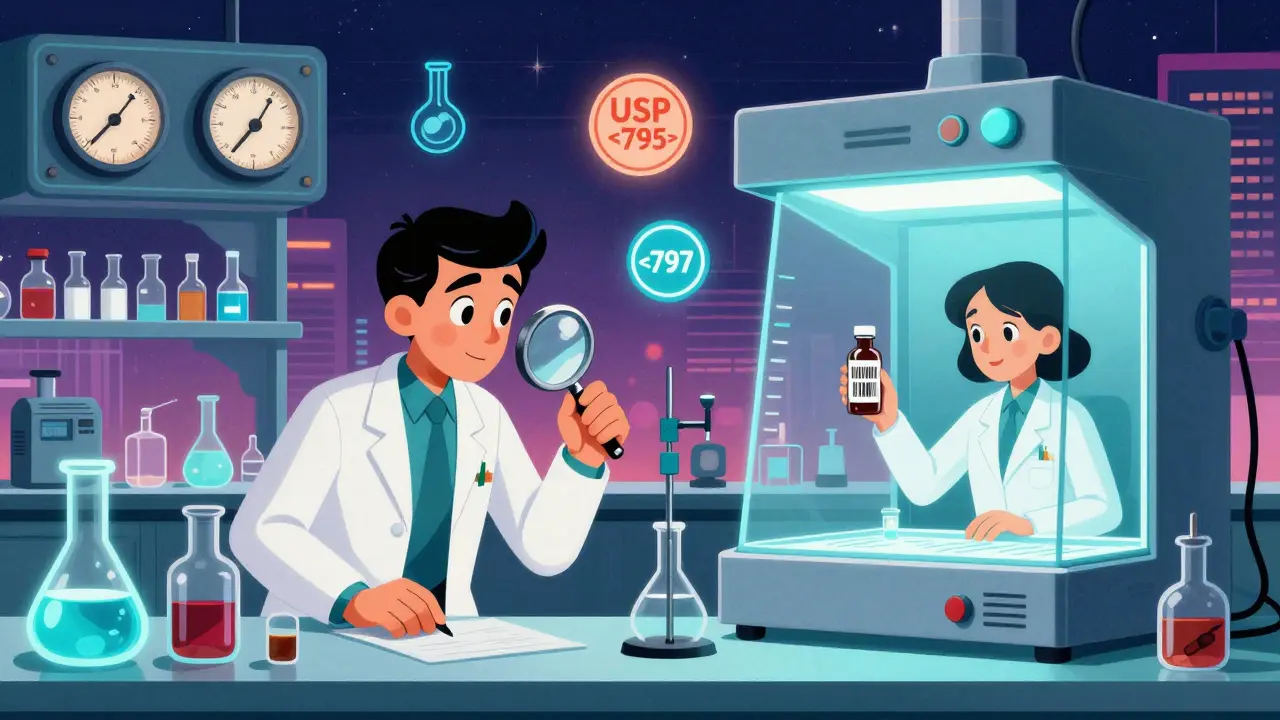
Customized medications aren’t just a convenience-they’re a lifeline for people who can’t take standard drugs. Maybe they’re allergic to dyes, need a tiny dose for a child, or can’t swallow pills. But when these medications are made wrong, the consequences can be deadly. In 2012, a contaminated steroid injection from a compounding pharmacy killed 64 people and sickened over 750. That wasn’t a fluke. It was the result of broken systems. Today, thousands of patients still rely on compounded drugs, but the risk of error hasn’t disappeared. The good news? You can prevent most of these mistakes-if you know how.
Why Compounding Errors Happen
Compounding isn’t mass production. It’s handmade medicine. Each batch is unique, made to order, often from raw ingredients. That means every step-from measuring powder to mixing liquids-depends on human action. And humans make mistakes. A 2021 study found that 3% to 15% of compounded medications have strength deviations. That might sound small, but for a child taking a steroid or a cancer patient on a chemotherapy base, even a 10% error can be dangerous. The biggest causes? Wrong calculations, mislabeled containers, contaminated environments, and skipping verification steps. One real case: a geriatric patient got a compounded tramadol solution labeled as ‘100 mg per container’ instead of ‘100 mg per mL.’ The caregiver gave the full container, thinking it was one dose. The patient ended up in the ICU with serotonin syndrome. That mistake happened because labeling didn’t follow clear standards.Core Safety Rules from USP Standards
The U.S. Pharmacopeia (USP) sets the gold standard for compounding safety. Two chapters-<795> for non-sterile and <797> for sterile preparations-are non-negotiable. For non-sterile compounding (like flavored liquids or topical creams), USP <795> requires:- A clean, dedicated workspace with ISO Class 8 air quality
- Verification of every ingredient’s identity using tools like FTIR or HPLC
- Accurate documentation of batch records, including lot numbers and expiration dates
- ISO Class 5 cleanroom with laminar airflow hoods
- Media fill testing twice a year for every technician
- Strict gowning procedures and air monitoring
The Dual-Check System: Your Most Powerful Tool
No single pharmacist should ever calculate, measure, and verify a compounded dose alone. That’s where the dual-check system comes in. The American Society of Health-System Pharmacists (ASHP) says this is the single most effective way to catch errors. Here’s how it works:- Pharmacist A calculates the dose and prepares the batch.
- Pharmacist B (or a trained pharmacy technician under supervision) independently recalculates, checks ingredients, and verifies the final product.
- Both sign off on the batch record.
Labeling That Saves Lives
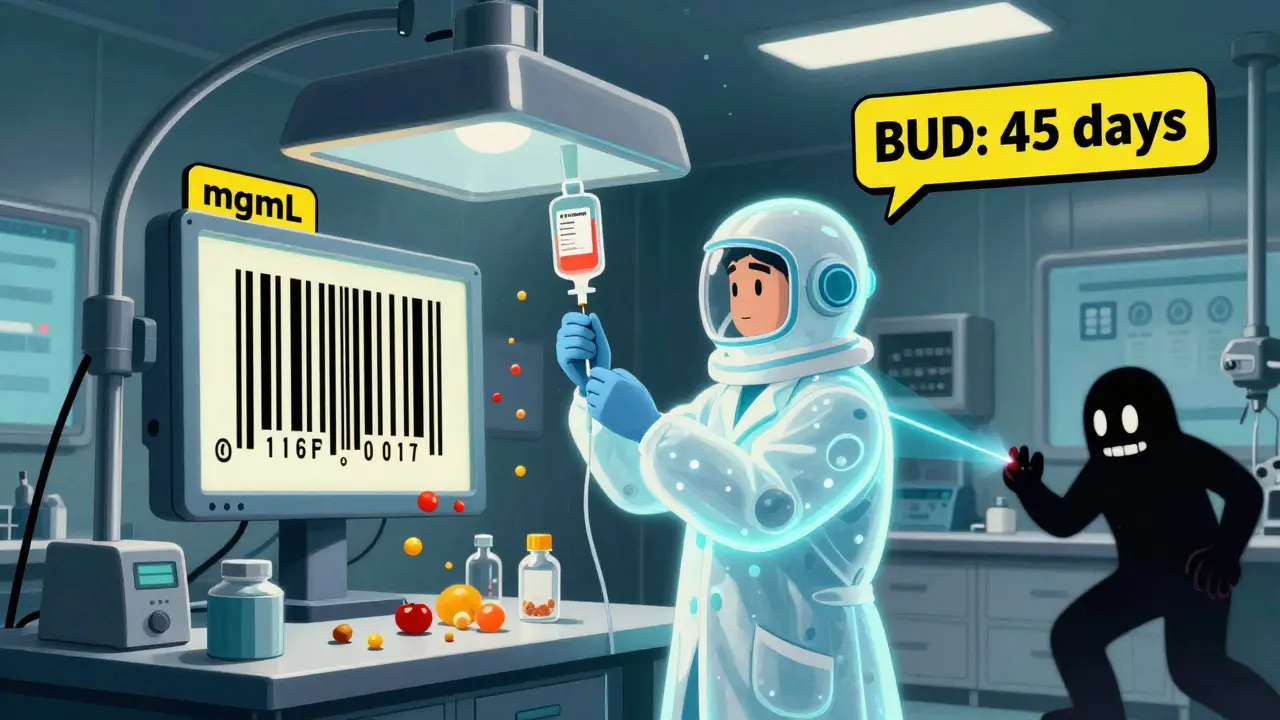
A bad label is like a time bomb. In 2022, the FDA reported 27 fentanyl overdose incidents linked to unclear labeling. Some labels said ‘5 mg/mL’-others said ‘5 mg per vial.’ Pharmacists assumed the vial was one dose. It wasn’t. New FDA guidance, effective 2023, requires all compounded medications to use standardized concentration labeling:- Always use ‘mg/mL’ or ‘units/mL’
- Never say ‘per container’ or ‘per dose’ unless it’s clearly defined
- Include the beyond-use date (BUD) in bold, clear text
Technology That Reduces Human Error
You can’t eliminate human error-but you can reduce it. Compounding software like Compounding.io and PharmScript now do more than just store recipes. These tools:- Auto-calculate doses based on weight, age, or renal function
- Flag incompatible ingredients before mixing
- Require digital signatures for each verification step
- Generate barcoded labels that link to batch records
Accreditation Isn’t Optional-It’s Essential
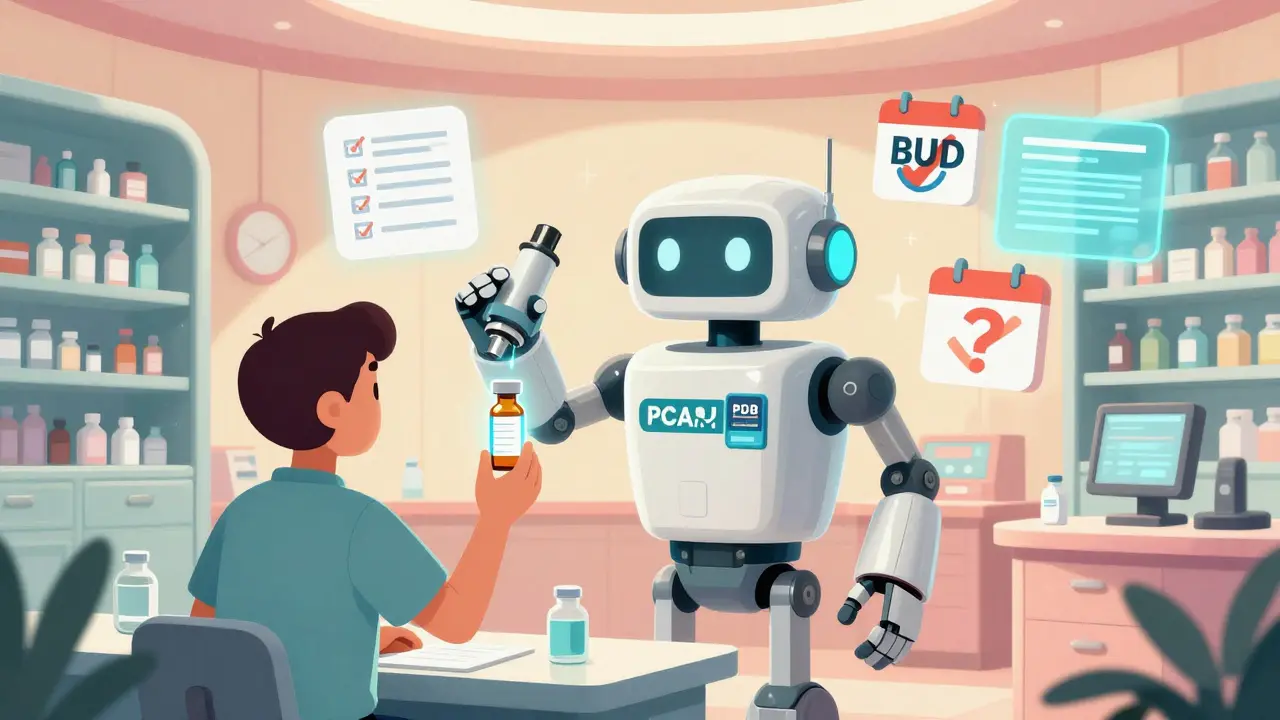
The Pharmacy Compounding Accreditation Board (PCAB) is the only independent body that certifies compounding pharmacies. Less than 18% of U.S. compounding pharmacies are PCAB-accredited. But here’s the truth: accredited facilities have error rates under 2%. Non-accredited ones? Up to 25%. PCAB accreditation means:- Strict adherence to USP <795> and <797>
- Quarterly competency assessments for all staff
- Annual third-party audits
- Documentation of 95%+ accuracy in dose verification tests
What Patients Should Ask
You don’t have to be a pharmacist to protect yourself. If you or a loved one is getting a compounded medication, ask:- Is this pharmacy PCAB-accredited?
- Do you use a dual-check system for every prescription?
- How do you verify the ingredients?
- What’s the beyond-use date, and how should I store it?
- Can I see the label before I leave?
The Bigger Picture: Why This Matters
Compounding isn’t going away. With drug shortages rising and personalized medicine growing, demand is expected to hit $22 billion by 2030. But without safety, this industry will lose public trust. The 2023 FDA Strategic Plan aims to cut compounding-related errors by 50% in five years. That means more inspections, stricter labeling rules, and mandatory training. Pharmacies that don’t adapt won’t survive. For patients, the message is simple: customized medicine can be safe. But only if it’s made right. For pharmacists, the choice is clear: follow the standards, use technology, train your team, and never skip a check. Lives depend on it.What is the most common cause of compounding errors?
The most common cause is human error in dosage calculations, especially when pharmacists skip the dual-check system. Mislabeling, poor ingredient verification, and untrained staff also contribute significantly. Studies show that 60% of errors occur during preparation, not formulation.
Are compounded medications FDA-approved?
No. Unlike mass-produced drugs, compounded medications are not reviewed or approved by the FDA before use. They’re made under exemptions in the Drug Quality and Security Act (DQSA) for individual patient needs. That’s why strict pharmacy-level controls and USP standards are critical-they’re the only safety net.
How long can a compounded medication be stored?
It depends on the type. Non-sterile preparations (like oral liquids or creams) usually last 30 to 180 days, depending on ingredients and storage. Sterile preparations (like injections) have much shorter windows: from 3 hours at room temperature to 45 days if refrigerated or frozen. The beyond-use date (BUD) must be based on stability testing-not guesswork.
Can I trust a compounding pharmacy that’s not accredited?
You can, but you shouldn’t assume they’re safe. Accredited pharmacies (PCAB) have error rates under 2%. Non-accredited ones can have rates as high as 25%. Ask about their verification process, training, and environmental controls. If they can’t show you proof, find another pharmacy. Your health isn’t worth the risk.
What should I do if I suspect a compounded medication is wrong?
Stop using it immediately. Contact your pharmacist and your prescriber. Report the issue to the FDA’s MedWatch program and your state board of pharmacy. Keep the container and packaging. Many errors are caught early-like a strange smell, color change, or unexpected side effect-but they’re often ignored. Trust your instincts.
Adarsh Dubey
December 22, 2025 AT 15:12Really well-structured piece. The dual-check system detail alone should be mandatory reading for every compounding pharmacy. I’ve seen labs skip it to save time, and it’s terrifying how often that leads to near-misses. USP standards aren’t bureaucracy-they’re the difference between a patient healing and a patient dying.
Also, barcode scanning? Non-negotiable. If your pharmacy still uses handwritten labels, you’re playing Russian roulette with someone’s life.
Bartholomew Henry Allen
December 22, 2025 AT 19:00USP standards are federal law. Any pharmacy not compliant is breaking the law. No excuses. No gray area. If you can’t meet these standards you shouldn’t be compounding. Period.
Wilton Holliday
December 23, 2025 AT 00:06This is exactly the kind of info we need more of! 🙌
Big shoutout to pharmacists doing the heavy lifting behind the scenes. I’ve got a cousin on a compounded chemo med-she didn’t even know about PCAB accreditation until I showed her this. Now she only uses accredited pharmacies. Small wins matter!
Also, the labeling rules? YES. I once saw a label that said ‘5mg per vial’-and the vial had 10ml. My heart stopped. This guide should be posted in every pharmacy waiting room.
Raja P
December 24, 2025 AT 11:17Man, I didn’t realize how sketchy some of these places are. My aunt got a compounded cream last year and it gave her a rash. She never thought to ask if they were accredited. Guess we’re switching pharmacies this week.
Also, dual-check system sounds so simple but so few do it. Kinda wild that it’s not standard everywhere.
Harsh Khandelwal
December 25, 2025 AT 09:18Let’s be real-this whole compounding thing is a loophole. FDA doesn’t approve it? So why are we trusting some guy in a basement with a scale and a bottle of glitter powder? 😏
And don’t get me started on ‘beyond-use dates.’ That’s just a fancy way of saying ‘we hope it doesn’t turn into science experiment by Tuesday.’
Also, AI tools? Yeah right. Probably just a bot that says ‘all good’ so the pharmacist can nap. I smell corporate cover-up.
Andy Grace
December 25, 2025 AT 22:02Interesting read. I work in a rural pharmacy that does compounding-no cleanroom, no accreditation. We do our best with what we have. The dual-check system is hard when you’re the only pharmacist on shift. Still, the point about labeling is spot on. We’ve started adding ‘per mL’ in bold now. Small change. Big difference.
Delilah Rose
December 27, 2025 AT 12:08I think what’s missing from this conversation is the emotional weight behind every compounded prescription. It’s not just chemistry-it’s a child who can’t swallow pills, an elderly person with dysphagia, a cancer patient whose body rejects every commercial formulation. These aren’t ‘products’-they’re lifelines. And when we cut corners, we’re not just risking error-we’re betraying trust. The dual-check system isn’t a policy-it’s a moral obligation. The barcode scanner isn’t tech-it’s a promise. The accreditation isn’t a badge-it’s a covenant. And if we treat it like paperwork, we’ve already lost.
Also, I cried reading the tramadol story. Just… cried.
Spencer Garcia
December 29, 2025 AT 06:22PCAB accreditation is the bare minimum. If your pharmacy isn’t accredited, don’t compound. Simple.
Lindsey Kidd
December 30, 2025 AT 10:34THIS. 🙏 I’m a nurse and I’ve seen so many weird labels. One time a compounded pain med looked like orange juice. No warning. No clear concentration. I had to call the pharmacy three times to confirm. 😫
PLEASE-every pharmacy, use the FDA’s ‘mg/mL’ rule. And if you’re a patient-ASK. Don’t be shy. Your life matters more than their convenience. 💪❤️
Austin LeBlanc
December 30, 2025 AT 23:49Wow. So you’re telling me pharmacists are still using paper logs and guesswork? How is this still legal? This isn’t medicine-it’s a carnival sideshow. And the fact that less than 20% are accredited? That’s not negligence. That’s criminal. Someone should be in jail for this.
Paula Villete
December 31, 2025 AT 07:46Wow. A whole article about how to not kill people with medicine. And you’re surprised it’s not mandatory? 🤡
Of course the FDA doesn’t regulate it-because then they’d have to admit they’ve been letting pharmacies play God with people’s lives for decades. But hey, at least we’ve got AI now to fix the mess we made, right? 😏
Also, ‘beyond-use date’ is just a polite way of saying ‘we have no idea how long this lasts but here’s a sticker anyway.’
Georgia Brach
January 1, 2026 AT 09:37USP standards are outdated. The entire compounding industry is a regulatory relic. Why should a pharmacy need an ISO Class 5 cleanroom for a topical cream? This is overkill. The real problem is overregulation driving up costs and limiting access. Patients need meds, not bureaucracy.
Katie Taylor
January 1, 2026 AT 17:39THIS IS WHY PEOPLE DIE. No one is holding these pharmacies accountable. I’ve seen it with my own eyes-my mom’s compounded med had mold in it. She almost died. And the pharmacy? They blamed ‘storage conditions.’ LIES. They didn’t even have a laminar hood. I’m going to the FDA today. And I’m tagging every politician I can. This ends now.
Payson Mattes
January 2, 2026 AT 07:42Did you know the FDA is secretly controlled by Big Pharma? That’s why they don’t regulate compounding-they want you dependent on their expensive drugs. Compounding pharmacies are the only real alternative. But now they’re being smothered by paperwork and accreditation nonsense. It’s all a setup. The dual-check system? Probably just to make you think you’re safe while they track your meds. 🤔
Isaac Bonillo Alcaina
January 4, 2026 AT 03:04It’s not the pharmacists’ fault. It’s the system. They’re overworked, underpaid, and drowning in liability. The real villain? The insurance companies that won’t cover compounded meds unless they’re ‘FDA-approved’-which they can’t be. So pharmacists are forced to cut corners just to keep the lights on. You want safety? Pay them properly. Stop blaming the people trying to save lives.