
How to Read Children’s Medicine Labels by Age and Weight: A Simple Safety Guide
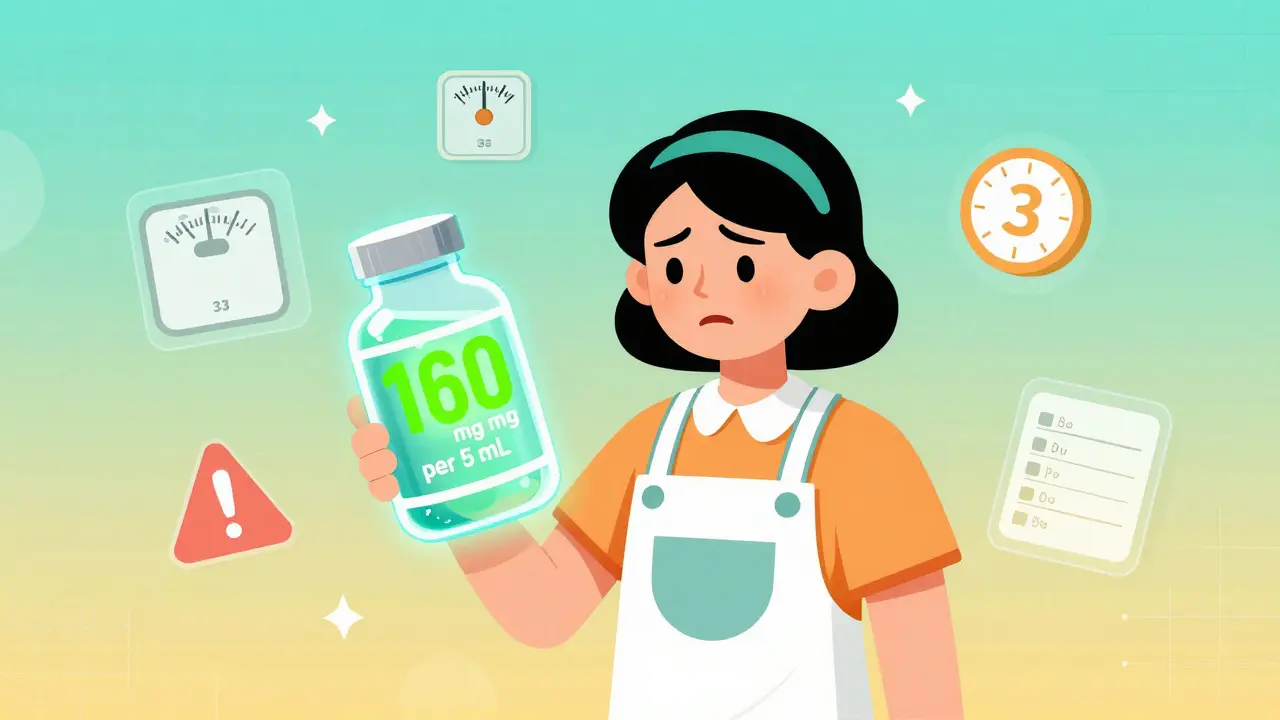
Every year, over 150,000 children end up in emergency rooms because of medicine mistakes - and most of them are preventable. The problem isn’t always that parents are careless. It’s that medicine labels are confusing. One wrong number, one misread teaspoon, one confused concentration - and you could be giving your child too much or too little. The good news? You don’t need to be a doctor to get it right. You just need to know what to look for.
Why Age and Weight Matter More Than You Think
You’ve probably seen a label that says: "For children 2-3 years: 5 mL." It seems simple. But what if your 3-year-old weighs 40 pounds, and the next child on the list, also 3, weighs just 20 pounds? Giving them the same dose doesn’t make sense. That’s why weight matters more than age.The American Academy of Pediatrics says weight-based dosing cuts errors by almost 40%. Why? Because a child’s body processes medicine based on how much they weigh, not how old they are. A 22-pound toddler needs a different amount of acetaminophen than a 35-pound toddler - even if they’re both 3 years old. Age is a backup. Weight is the rule.
For infants under 2 years, always talk to your pediatrician first. Their liver and kidneys aren’t fully developed, so even small mistakes can lead to serious problems. A 2023 study found that nearly 3 out of 10 dosing errors in babies under 2 led to hospital stays.
The Seven Parts of a Children’s Medicine Label (And What They Mean)
Every over-the-counter kids’ medicine has a "Drug Facts" label. It’s not just fine print - it’s your safety guide. Here’s what to check every single time:- Active Ingredient: This is the medicine itself. Look for "acetaminophen," "ibuprofen," or "diphenhydramine." Know what you’re giving. Never give two medicines with the same active ingredient - like giving Tylenol and a cold medicine that also has acetaminophen. That’s how overdoses happen.
- Strength/Concentration: This is the most dangerous part to miss. Look for numbers like "160 mg per 5 mL." That means every teaspoon (5 mL) has 160 mg of medicine. Older infant drops used to be 80 mg per 1.25 mL - much stronger. The FDA made them all the same in 2011, but some old bottles are still around. Always double-check this line.
- Uses: What is this medicine for? Fever? Cough? Allergies? Don’t give a cough medicine for a fever. It won’t help and might cause side effects.
- Warnings: This tells you when NOT to give the medicine. "Do not use in children under 2 years"? That’s not a suggestion. It’s a rule. Also watch for signs of overdose: nausea, vomiting, drowsiness, trouble breathing.
- Directions: This is where age and weight come in. Look for both. If it says "For 2-3 years: 5 mL" and "For 22-32 lbs: 5 mL," that’s good. If it only has age? Ask your pharmacist to help you convert to weight.
- Inactive Ingredients: These are fillers, flavors, dyes. If your child is allergic to something like red dye #40 or high-fructose corn syrup, check here.
- Other Information: Storage instructions, expiration date, and manufacturer info. Never use expired medicine.
How to Calculate Dose by Weight (No Calculator Needed)
You don’t need to be a math whiz. Here’s how to do it fast:- Acetaminophen (Tylenol): 10-15 mg per kg of body weight, every 4-6 hours. Max 75 mg per kg per day.
- Ibuprofen (Advil, Motrin): 5-10 mg per kg, every 6-8 hours. Max 40 mg per kg per day.
Need to convert pounds to kilograms? Divide by 2.2. A 33-pound child is 15 kg (33 ÷ 2.2 = 15). For acetaminophen, that’s 150-225 mg total per dose. If the liquid is 160 mg per 5 mL, then 150 mg is about 4.7 mL. Round to 5 mL if your syringe doesn’t go lower.
Here’s a quick reference:
| Weight (lbs) | Weight (kg) | Acetaminophen (160 mg/5 mL) | Ibuprofen (100 mg/5 mL) |
|---|---|---|---|
| 10-15 | 4.5-6.8 | 1.25-2 mL | 1.25-1.5 mL |
| 16-21 | 7.3-9.5 | 2.5-3 mL | 1.5-2 mL |
| 22-32 | 10-14.5 | 3.75-5 mL | 2-3 mL |
| 33-43 | 15-19.5 | 5-6 mL | 3-4 mL |
| 44-54 | 20-24.5 | 6-7.5 mL | 4-5 mL |
Always round to the nearest 0.5 mL on your syringe. Don’t guess. If you’re unsure, call your pharmacist. They’re trained to help you with this.
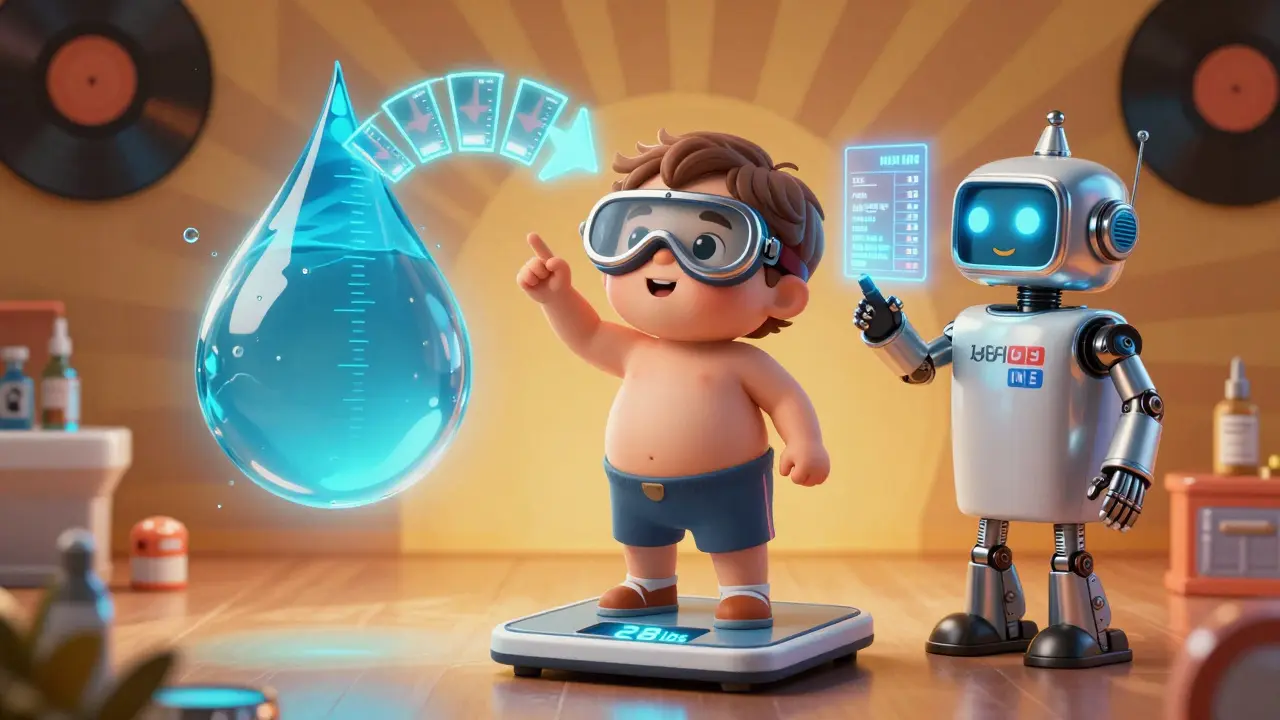
Never Use a Kitchen Spoon - Use a Syringe
A 2023 study found that parents using household spoons made errors 57% more often than those using syringes. Why? A teaspoon isn’t 5 mL unless it’s a medical measuring spoon. A regular kitchen spoon can hold anywhere from 3 to 7 mL. That’s a 40% error right there.Use the syringe that came with the medicine. If it didn’t come with one, buy a plastic oral syringe at any pharmacy - they’re cheap and often free. Hold it at eye level. Read the line at the bottom of the curve (the meniscus). Looking from above or below can throw off your dose by 20%.
And remember: 1 teaspoon = 5 mL. 1 tablespoon = 15 mL. 1 tablespoon is NOT the same as 1 teaspoon. Giving "1 tablespoon" when the label says "1 teaspoon" is a 300% overdose. That’s dangerous.
Common Mistakes Parents Make (And How to Avoid Them)
- Mixing medicines: Cold medicines often have acetaminophen already. Don’t give extra Tylenol on top. Check the active ingredient every time.
- Using old bottles: If you found an old bottle from last winter, throw it out. Concentrations changed. Labels changed. Expiration dates passed.
- Guessing weight: Don’t say "I think she’s about 30 pounds." Weigh your child. Even a bathroom scale that shows pounds is better than guessing. Many pharmacies have scales you can use for free.
- Skipping the label: You think you know the dose because you gave it last time. But maybe the bottle changed. Maybe the concentration changed. Always check.
- Confusing "tsp" and "tbsp": Write them out: "teaspoon" and "tablespoon." Abbreviations are dangerous.
What to Do If You’re Still Confused
You’re not alone. A 2022 survey found that 75% of parents have given the wrong dose at least once. If you’re unsure:- Call your pediatrician’s office. They have nurses who answer these questions.
- Visit your pharmacist. They’ll show you how to read the label. Many will even draw lines on the syringe for you.
- Use the AAP’s "Safe Dosage Calculator" app. It’s free, updated, and works offline.
- Take a photo of the label and ask in a trusted parenting group. But don’t rely on strangers - always confirm with a professional.
The FDA and CDC agree: proper label reading could prevent nearly 7 out of 10 pediatric medication emergencies. It’s not about being perfect. It’s about being careful. One extra minute checking the label can save a trip to the ER.
Final Checklist Before Giving Any Medicine
Before you open the bottle, ask yourself:- Is this medicine for my child? (Check the name on the bottle - even if it’s OTC.)
- Is the active ingredient correct for the symptom?
- Is the concentration listed? (160 mg/5 mL? Not 80 mg/1.25 mL?)
- Do I know my child’s current weight in pounds and kilograms?
- Am I using the correct measuring tool? (Syringe, not spoon.)
- Is the medicine expired?
If you can answer yes to all six, you’re safe. If even one is a maybe - stop. Call someone. Don’t guess.
Can I use a kitchen spoon if I don’t have a syringe?
No. Kitchen spoons vary too much in size. A tablespoon can hold 3 to 7 mL - that’s a 140% error range. Always use an oral syringe. They’re inexpensive, accurate, and often available for free at pharmacies.
What if my child’s weight isn’t listed on the label?
Use the closest weight range. If your child weighs 28 pounds and the label lists 22-32 lbs, use the dose for that range. If your child is between two weight categories, use the lower dose unless your doctor says otherwise. Never go above the maximum daily limit.
Is it safe to give children’s medicine to a baby under 2?
Only if your pediatrician says so. Babies under 2 have different metabolism and are more sensitive to medication. Never give OTC medicine to a baby under 2 without talking to a doctor first.
Why do some labels have both age and weight? Which one should I use?
Use weight. Age is a backup for when you don’t know the exact weight. Weight-based dosing is more accurate because children vary in size at the same age. A 4-year-old who weighs 35 pounds needs more medicine than a 4-year-old who weighs 25 pounds.
How do I know if I’ve given too much?
Signs of overdose include vomiting, drowsiness, confusion, trouble breathing, or loss of appetite. For acetaminophen, liver damage can happen 24-48 hours later with no obvious symptoms. If you suspect an overdose, call Poison Control at 1-800-222-1222 immediately - don’t wait for symptoms.
Do I need to check the label every time, even if it’s the same medicine?
Yes. Manufacturers change concentrations, formulas, and labels. A bottle from last month might be different from the one you bought this week. Always check the active ingredient and concentration before each dose.
What’s Next? Keep Learning, Stay Safe
Medicine safety isn’t a one-time lesson. It’s a habit. Keep your child’s weight updated. Keep the syringe handy. Keep the label visible. Talk to your pharmacist. Use the free tools from the AAP and CDC. And never be afraid to ask, "Is this right?"One child’s life can change because someone took the time to read the label. Make sure it’s you.
Anna Giakoumakatou
December 16, 2025 AT 16:12Oh, so now we’re treating parents like toddlers who can’t read? How quaint. The real problem isn’t the label-it’s that we’ve outsourced basic cognitive function to Big Pharma and the FDA’s ‘one-size-fits-all’ bureaucratic nonsense. If you need a chart to figure out how much Tylenol to give, maybe you shouldn’t be parenting. Or maybe, just maybe, the system is designed to make you feel incompetent so you’ll keep buying their overpriced, over-marketed syringes.
Also, ‘use a syringe’? How noble. The same people who tell you to use a syringe also sell you $12 syringes when a $0.50 plastic one from the pharmacy does the job. Capitalism at its finest.
And don’t get me started on ‘call your pediatrician.’ My doctor’s office has a 3-week wait and a voicemail that says ‘press 1 if your child is dying.’ Thanks, but I’ll take my chances with the label.
At least the FDA got the concentration right. That’s the only thing they’ve done right since 2011. The rest? A performance art piece on parental anxiety.
Also, why is there a ‘Final Checklist’? Because we’ve turned parenting into a compliance form. Congratulations, America. You’ve turned love into a risk assessment spreadsheet.
Peter Ronai
December 17, 2025 AT 10:32THIS IS ALL WRONG. You’re telling people to use weight? That’s what the pediatricians say, but they’re WRONG. I’ve been giving my kids medicine by age for 18 years and zero ER visits. Zero. The AAP is a bunch of ivory tower academics who’ve never held a screaming 2-year-old with a fever at 3 a.m. Weight? Who the hell weighs their kid every time they need Tylenol? You think I’m dragging a scale into the bathroom? I’m not a lab technician-I’m a parent.
And don’t get me started on the syringe thing. I’ve used a teaspoon for decades. My kids are 21 and 19. They’re doctors now. You think they got brain damage from a 0.5 mL error? No. They got a good education and a strong immune system. Stop scaring people with statistics. Real parents don’t need charts. We use our instincts. And guess what? We’re not killing our kids.
Also, ‘never use a kitchen spoon’? That’s like saying ‘never use a fork to eat spaghetti.’ Of course you can. You just don’t be an idiot. This article reads like a government PSA written by someone who’s never held a child.
And why is there a ‘Final Checklist’? Because we’ve turned parenting into a compliance form. Congratulations, America. You’ve turned love into a risk assessment spreadsheet.
Steven Lavoie
December 18, 2025 AT 05:46I appreciate the thoroughness of this guide, and I think it fills a critical gap in public health literacy. Many parents, especially those without consistent access to medical care, are genuinely overwhelmed by the complexity of pediatric dosing. The emphasis on weight-based calculations is scientifically sound and aligns with global pediatric guidelines.
That said, I’d gently suggest adding a note about cultural context: in some households, measuring tools are scarce, and kitchen utensils are the only option. While syringes are ideal, it’s worth acknowledging that not every family can access them easily-and that a well-informed parent using a standard teaspoon (5 mL) is still safer than one using a random spoon without understanding the difference.
Also, thank you for highlighting the danger of mixing active ingredients. That’s the silent killer in many households. I’ve seen it firsthand. A parent gives ‘cough medicine’ and ‘fever reducer’ without realizing both contain acetaminophen. It’s tragic, and preventable.
Finally, the tone of this guide is calm, factual, and non-judgmental. That matters. Fear doesn’t educate. Clarity does.
Anu radha
December 18, 2025 AT 15:26This is very helpful. I am from India and sometimes we don’t have syringes at home. My sister used a spoon once and gave too much. Her baby was sick for two days. Now I always ask the pharmacist for a free syringe. They give it without charge. Also, I write the weight on the bottle with marker. Simple. Works.
And I never use old medicine. Even if it looks fine. I throw it out. Better safe than sorry.
Salome Perez
December 19, 2025 AT 18:12Thank you for writing this with such care and clarity. As a pediatric nurse for over 15 years, I’ve seen too many parents panic because they didn’t know how to read a label-or worse, they trusted a well-meaning friend’s advice. This isn’t just about dosing-it’s about empowering caregivers with confidence, not fear.
I especially love the checklist. I hand out printed copies to every family I see. It’s not just a reminder-it’s a ritual. A moment of pause before giving medicine. That pause? It’s the difference between safety and catastrophe.
And yes, syringes. Always syringes. I keep a drawer full of them at home. I give them to friends. I leave them in the lobby of my clinic. They’re not expensive. They’re not complicated. They’re lifesavers.
One thing I wish more people knew: if you’re ever unsure, call Poison Control. Not your neighbor. Not Google. Not Instagram. 1-800-222-1222. It’s free, 24/7, and they’ve saved more children than we’ll ever know.
You’re not just sharing information here. You’re saving lives. Thank you.
Evelyn Vélez Mejía
December 20, 2025 AT 00:19Let’s not pretend this is about safety. It’s about control. The medical-industrial complex has spent decades convincing parents that they are incompetent, that their instincts are dangerous, that their intuition is a liability. The result? A generation of parents paralyzed by anxiety, second-guessing every decision, terrified of their own love.
Weight-based dosing? Fine. But why is it mandatory? Why are we being told that our judgment is worthless unless it’s calibrated by a chart published by an organization that profits from the fear it creates?
And let’s talk about the syringe. You say it’s cheap. But it’s not always accessible. Not every pharmacy stocks them. Not every parent has transportation. Not every family has $3 to spend on a plastic tool when they’re already choosing between medicine and groceries.
This isn’t empowerment. It’s institutionalized guilt wrapped in neon green typography and bullet points.
Real safety isn’t in the label. It’s in the relationship between parent and child. And no algorithm, chart, or syringe can replace that.
Jody Patrick
December 20, 2025 AT 13:14USA is weak. Other countries don’t need this. We trust parents. No syringes. No charts. No fear. Just common sense. This is overkill. You’re making parents feel like criminals for using a spoon. Ridiculous.
Radhika M
December 21, 2025 AT 03:43I read this and cried. My daughter had a fever last year and I gave her medicine from an old bottle. I didn’t know the concentration changed. She got sick for three days. I felt so guilty. Now I always check the label and use the syringe. I even write the date on the bottle. This guide saved me. Thank you.
Philippa Skiadopoulou
December 21, 2025 AT 04:38Accurate dosing saves lives. The data is clear. Syringes reduce error rates by over 50%. Kitchen spoons are unreliable. Weight-based dosing is evidence-based. The rest is noise.
Use the tools. Check the label. Ask questions. That’s all.
Simple. Effective. Non-negotiable.
Pawan Chaudhary
December 21, 2025 AT 19:31Wow. This is so helpful. I’m a new dad and I was terrified of giving the wrong dose. I thought I was being careful by just guessing. But now I know-there’s a better way. I printed the checklist and taped it to the medicine cabinet. My wife and I check it every time. It feels good to do it right. Thanks for making it so clear!
Sam Clark
December 22, 2025 AT 07:11Thank you for creating this resource with such precision and compassion. As a pediatrician, I’ve long advocated for weight-based dosing and the use of calibrated measuring devices, but I’ve never seen a guide this comprehensive, accessible, and emotionally intelligent. You’ve transformed a clinical protocol into a human-centered practice.
I’ve shared this with every parent I see, and with my colleagues in community clinics. The checklist alone deserves to be laminated and posted in every pharmacy, daycare, and pediatric waiting room.
One small addition I’d suggest: include a note about the importance of storing medicine out of reach of children-even when used correctly. Accidental ingestion remains a leading cause of pediatric poisonings. A simple sentence could prevent a tragedy.
Again, thank you. This is public health done right.
Chris Van Horn
December 23, 2025 AT 15:31THIS IS THE MOST PATHETIC PIECE OF PSEUDO-SCIENTIFIC PARENTING PROPAGANDA I’VE EVER READ. You think a chart makes you a good parent? You think a syringe makes you smarter? You think reading a label makes you a hero? NO. You’re just a scared, overmedicated, anxiety-ridden drone who lets corporations dictate how you love your child.
My kids were raised on instinct. On intuition. On a teaspoon and a prayer. And guess what? They’re thriving. They’re not on antidepressants. They’re not addicted to Tylenol. They’re not traumatized by a 0.3 mL dosing error.
And you know what else? The FDA didn’t change concentrations to protect kids. They did it so they could force parents to buy new bottles and get rid of the old ones. Profit. That’s the real motive.
Stop selling fear. Start trusting parents. We’re not idiots. We’re not criminals. We’re not lab rats.
And if your child dies because you didn’t use a syringe? Then you weren’t meant to be a parent anyway. Sad.