
How to Store Medications Safely in Hot Climates While Traveling
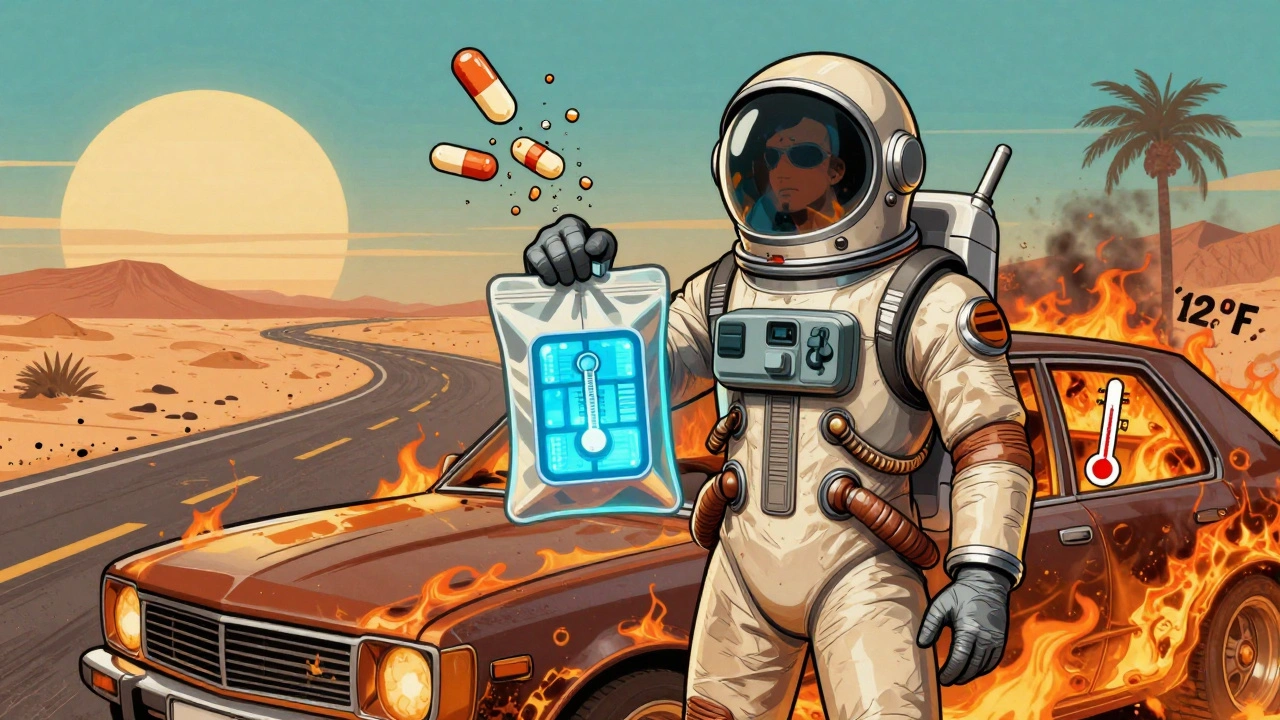
Leaving your pills in the car glove compartment on a 90°F day isn’t just careless-it could be dangerous. Medications aren’t like snacks or sunscreen. They’re precision-engineered chemicals that can break down fast in heat, losing their power or turning harmful. If you’re traveling to a hot place-whether it’s a beach resort in Florida, a desert road trip in Arizona, or a tropical island in Southeast Asia-how you store your meds matters more than you think.
Why Heat Destroys Medications
Most pills, capsules, and liquids are designed to stay stable between 68°F and 77°F (20°C to 25°C). That’s not room temperature as most people think of it-especially in summer. A typical house in Texas or Florida can hit 85°F by noon. Your car? Even worse. On an 85°F day, the inside of a parked car can hit 120°F in under 20 minutes. That’s enough to wreck insulin, EpiPens, birth control, and even antibiotics.
Insulin, for example, starts degrading above 86°F. One nurse on Reddit shared that a patient’s birth control failed after being left in a car for two days during a road trip-resulting in an unexpected pregnancy. Albuterol inhalers have been reported to stop working after heat exposure, forcing users to the ER during asthma attacks. These aren’t rare cases. The American Pharmacists Association confirmed that heat can reduce the potency of hormone-based meds by up to 32% after just 24 hours at 104°F.
What Medications Are Most at Risk?
Not all meds are equally sensitive, but these are the big ones:
- Insulin - Loses effectiveness quickly above 86°F. Can become clumpy or cloudy.
- EpiPens - Epinephrine degrades in heat. A weakened EpiPen could fail during a life-threatening reaction.
- Hormonal contraceptives - Birth control pills, patches, and rings can lose potency, increasing pregnancy risk.
- Antibiotics - Some, like doxycycline and amoxicillin, break down faster in heat, leading to treatment failure.
- Anti-seizure meds - Even small drops in potency can trigger seizures.
- Inhalers - Propellant pressure changes with heat, altering dosage delivery.
- Thyroid meds - Levothyroxine can degrade, causing fatigue, weight gain, or mood swings.
If your medication is refrigerated at home, it’s especially vulnerable. That includes insulin, some biologics, and certain chemotherapy drugs. The cold chain breaks fast if you don’t plan ahead.
What Not to Do
Here are the most common mistakes-and why they’re dangerous:
- Leaving meds in the car - Glove compartments, center consoles, and trunks get hotter than ovens. Even shade doesn’t help.
- Putting them in checked luggage - Airplane cargo holds can drop below freezing or spike above 120°F. Insulin can freeze and become useless.
- Storing them in direct sunlight - Even a beach bag on the sand can turn into a sauna.
- Using regular coolers without insulation - Ice melts fast. Water contact can ruin pills or labels.
- Assuming ‘room temperature’ means your hotel room - If your room hits 82°F, you’re already outside the safe zone.
How to Pack Medications for Hot Weather
Follow this simple system to keep your meds safe:
- Use an insulated medication bag - Look for ones with phase-change materials that maintain 59°F-77°F for 48-72 hours. The MedActiv Travel Case and Frio Insulated Wallet are both tested and trusted.
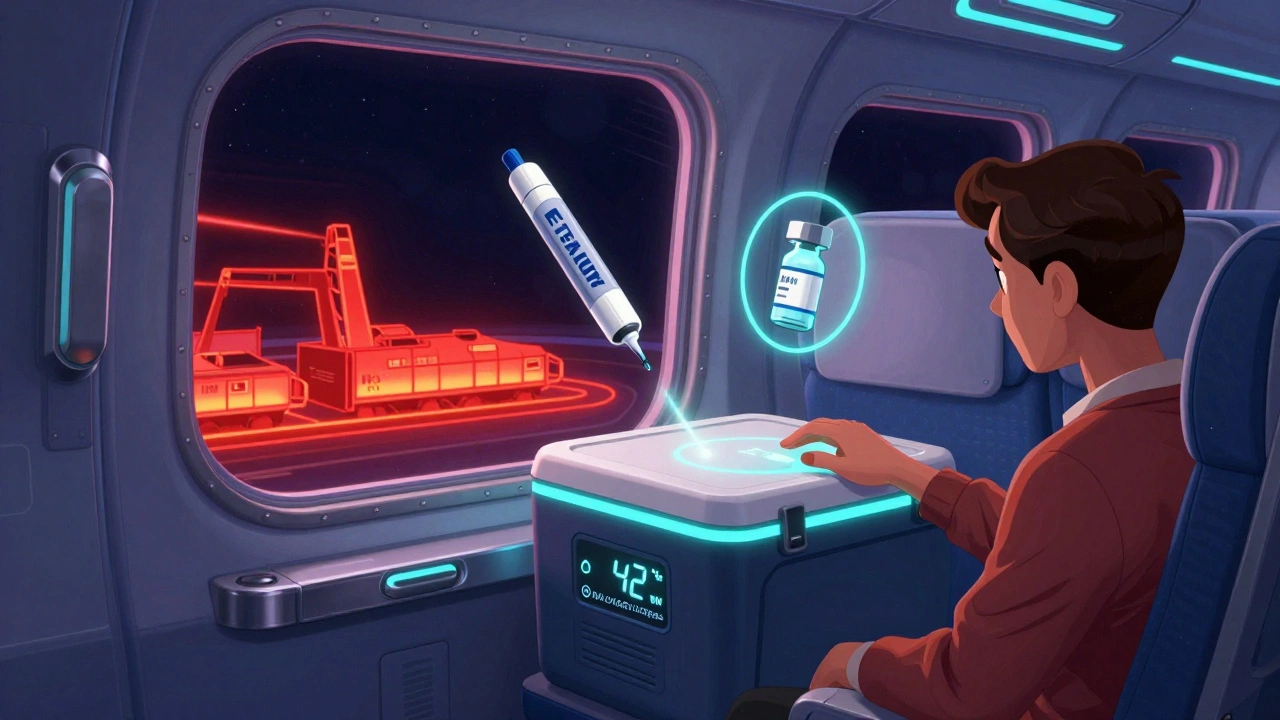
- For refrigerated meds, use a pharmaceutical-grade cooler - The MyMediCarrier uses ice bricks and keeps insulin at 42°F even in 102°F heat. Avoid cheap coolers-they fluctuate too much.
- Wrap cold packs in towels - Never let ice packs touch pills directly. Condensation can ruin labels and make pills stick together.
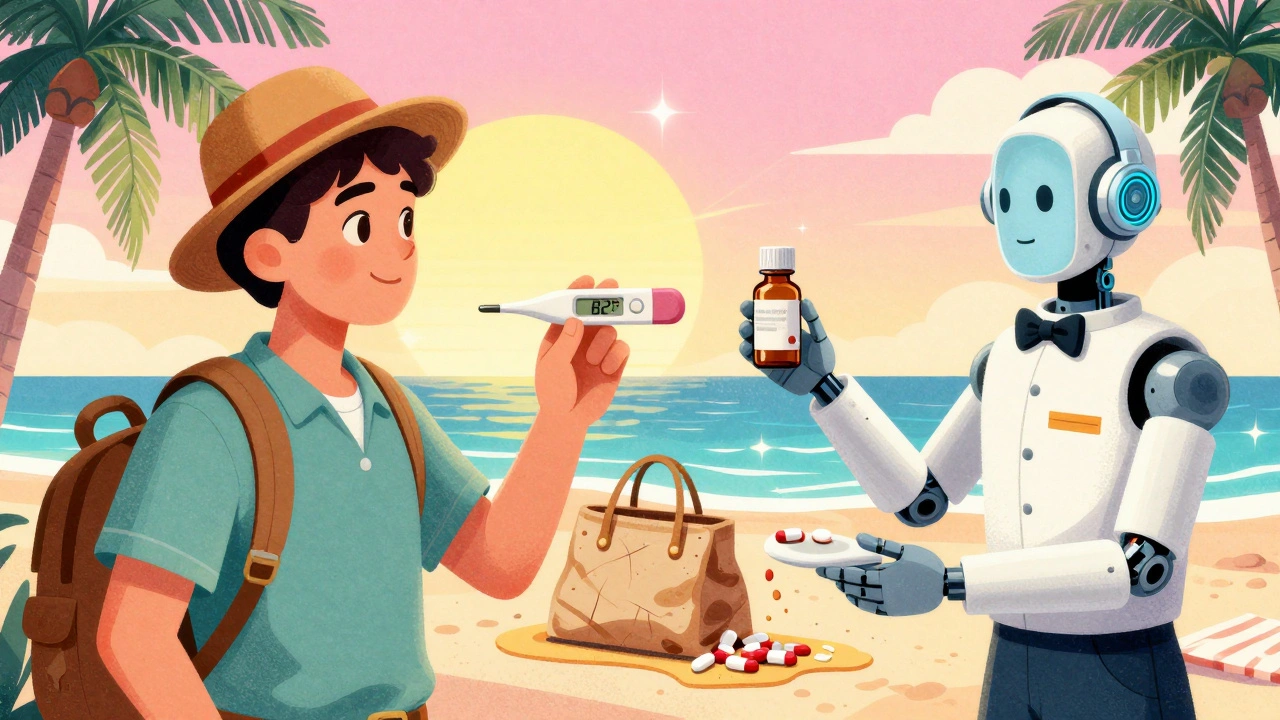
- Carry a small thermometer - The American Society of Health-System Pharmacists now recommends this. A $10 digital thermometer lets you check your bag’s internal temp. If it’s above 80°F, take action.
- Keep meds with you - Always carry them in your carry-on. Never check them. TSA allows medications through security, and you’re legally protected to carry them in original containers.
Smart Tech for Medication Storage
Technology is catching up. Smart medication coolers now exist with Bluetooth temperature tracking. The TempSure Medication Cooler and TempTraq Monitor send alerts to your phone if temps go out of range. Sales of these devices jumped 220% in Q2 2023. They’re pricier-$50 to $130-but worth it if you rely on life-saving meds like insulin or EpiPens.
Some newer models even have built-in alarms and backup batteries. If you’re flying for more than 5 hours, this tech isn’t a luxury-it’s insurance.
Air Travel Tips
Planes are tricky. Cabin temps are fine (68°F-75°F), but cargo holds aren’t. Checked bags can freeze or overheat. Always carry meds in your personal item. TSA requires them to be in original bottles with pharmacy labels. You don’t need a doctor’s note for most meds, but if you’re carrying injectables or controlled substances, bring a copy of your prescription.
For refrigerated meds, use a cooler with two frozen ice packs wrapped in towels. Place the cooler near your feet or under the seat-not overhead bins where heat builds up. Some airlines are testing temperature-controlled compartments for meds by late 2024, but don’t count on it yet.
What to Do If Your Meds Get Too Hot
If you suspect your meds were exposed to extreme heat:
- Check for visible damage - Is insulin cloudy? Are pills cracked or discolored? If yes, don’t use them.
- Don’t guess - Even if they look fine, potency may be reduced. The FDA says any exposure over 24 hours above recommended temps requires a pharmacist consultation.
- Call your pharmacy - Most will replace damaged meds, especially if you have a prescription on file. Travel insurance companies like Allianz now cover medication replacement due to heat exposure.
- Get a backup - If you’re abroad, ask your hotel concierge for a local pharmacy. Many countries stock common U.S. medications.
Preparation Before You Leave
Don’t wait until the day of your trip. Do this 1-2 weeks ahead:
- Check your meds’ storage instructions on the label or from your pharmacist.
- Buy your cooler or insulated bag in advance-don’t wait for last-minute Amazon delivery.
- Ask your pharmacist for extra prescriptions or samples if you’re traveling long-term.
- Take a photo of your prescriptions and store them on your phone.
- Know the nearest pharmacy at your destination. Use Google Maps to find one before you land.
The global market for travel medication storage is growing fast-projected to hit $2.5 billion by 2030. Why? Because more people are traveling, and the planet is getting hotter. What used to be a niche concern is now a mainstream health issue.
Final Rule: When in Doubt, Replace It
Medications are not worth risking. If you’re unsure whether your insulin, EpiPen, or birth control was damaged by heat, replace it. A new EpiPen costs $300. A hospital visit for anaphylaxis costs $10,000. A missed birth control dose can change your life.
Heat doesn’t care if you’re on vacation. It doesn’t care if you’re tired or distracted. It just does its job-breaking down chemistry. Your job? Stay ahead of it. Pack smart. Check temps. When in doubt, replace it. Your health isn’t something you can afford to gamble with.
Can I keep my insulin in the fridge on a plane?
No. Airplane refrigerators aren’t designed for medications and can freeze them, making insulin ineffective. Always use a temperature-controlled cooler with ice packs wrapped in towels. Keep insulin in your carry-on, not checked luggage. Cabin temperature is safe (68°F-75°F), so a well-insulated bag is enough.
What if my pills get wet from melting ice?
If pills are exposed to water, don’t use them. Moisture can cause them to break down, stick together, or lose potency. Always wrap ice packs in towels before placing them in your cooler. Use a sealed, waterproof container for your meds. If your pills are wet, discard them and get replacements.
Do I need a doctor’s note to fly with medications?
Not for most prescriptions. TSA only requires that medications be in original containers with pharmacy labels. But if you’re carrying injectables, controlled substances (like opioids or ADHD meds), or large quantities, bring a copy of your prescription or a letter from your doctor. It speeds up security and avoids questions.
Can I use a regular cooler from the store?
You can, but it’s risky. Standard coolers don’t maintain steady temps-they swing up and down. Insulin can degrade if it goes above 86°F or freezes. Pharmaceutical-grade coolers like MyMediCarrier or MedActiv are designed to hold stable temperatures for 72+ hours. For critical meds, don’t risk it with a grocery store cooler.
How do I know if my medication is still good after heat exposure?
You can’t always tell by sight. Insulin might look cloudy, but other meds show no signs. The only safe rule: if your meds were above 86°F for more than 24 hours, assume they’re compromised. Contact your pharmacist. Don’t take a chance-especially with EpiPens, insulin, or birth control. Replacement is cheaper than a medical emergency.
Taya Rtichsheva
December 8, 2025 AT 17:15Chris Marel
December 9, 2025 AT 00:51Evelyn Pastrana
December 10, 2025 AT 05:33Arun Kumar Raut
December 11, 2025 AT 00:42Sabrina Thurn
December 11, 2025 AT 19:12iswarya bala
December 12, 2025 AT 07:03Simran Chettiar
December 13, 2025 AT 21:08Philippa Barraclough
December 14, 2025 AT 12:00Tim Tinh
December 15, 2025 AT 20:15