
Immunizations and Generic Prescriptions: How Pharmacists Are Leading Healthcare Change
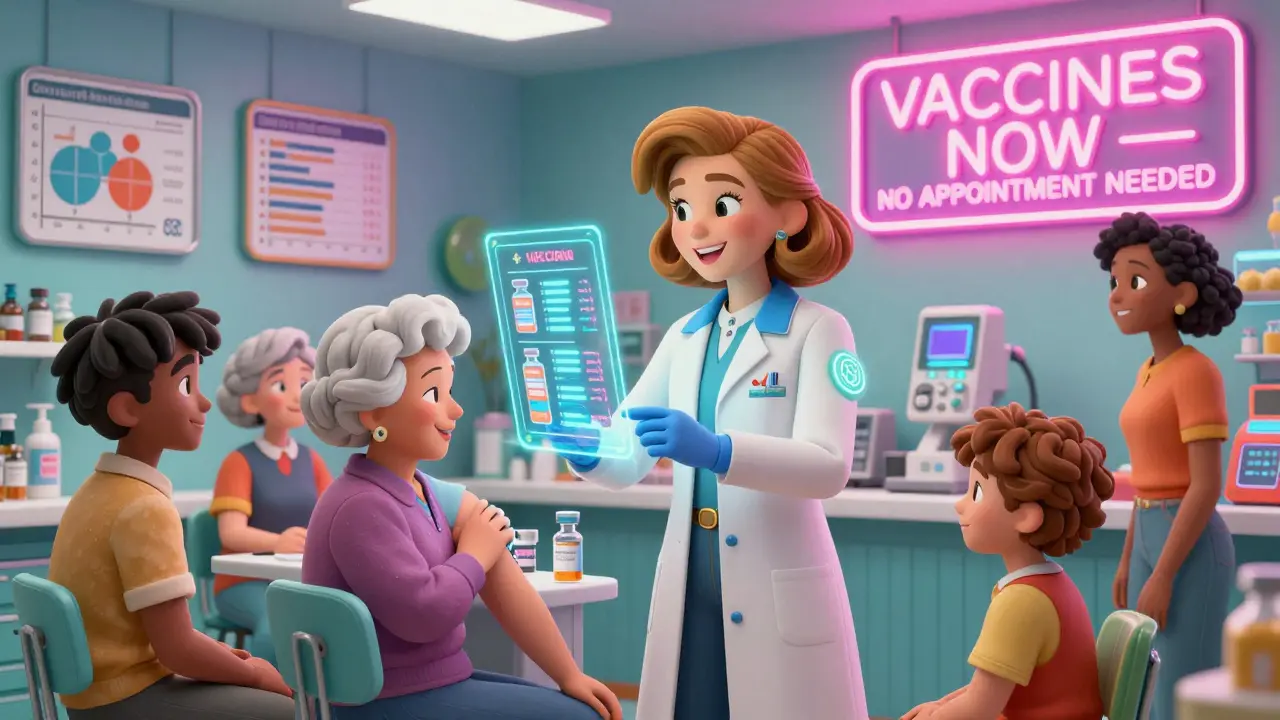
When you walk into a pharmacy for a cold medicine or a refill, you might think the pharmacist is just filling orders. But today, they’re doing far more - and in ways that are reshaping how America stays healthy. Pharmacists are now on the front lines of immunizations and affordable medication access, quietly becoming one of the most trusted and underappreciated parts of the healthcare system. They’re not just handing out pills. They’re giving shots, correcting billing errors, calming vaccine fears, and helping people choose lower-cost generic drugs that work just as well as brand names. And they’re doing it all while standing behind a counter in a strip mall, often with no appointment needed.
Pharmacists Are the Most Accessible Vaccine Providers
Think about the last time you got a flu shot. Did you go to a doctor’s office? Chances are, you didn’t. In 2023, community pharmacies gave out nearly 40% of all adult flu vaccines in the U.S. That’s more than urgent care centers, clinics, and even some hospitals combined. Why? Because pharmacies are open longer, don’t require appointments, and are within five miles of 93% of Americans. A single pharmacy in a small town might be the only place where a parent can get their teen a Tdap shot without taking half a day off work.
The change didn’t happen overnight. In 1995, only nine states let pharmacists give vaccines. Today, every state, plus Puerto Rico and D.C., allows it. States like California have gone even further - pharmacists there can now initiate and administer any FDA-approved vaccine for people aged three and up, including travel shots, shingles, and even HPV. They’re also allowed to order and interpret certain lab tests. This isn’t just convenience. It’s public health strategy.
During the COVID-19 pandemic, pharmacies became the backbone of vaccine distribution. Chain stores like CVS and Walgreens administered over 35 million flu vaccines in 2022-2023 alone. Independent pharmacies, though smaller, now offer immunizations in 92% of locations - up from 65% in 2015. These aren’t just sales. They’re clinical services backed by training. Over 98% of pharmacy schools now include immunization certification in their curriculum. Pharmacists spend 20-30 hours learning how to screen for contraindications, handle allergic reactions, and document doses properly.
Generic Prescriptions: The Quiet Revolution in Cost Savings
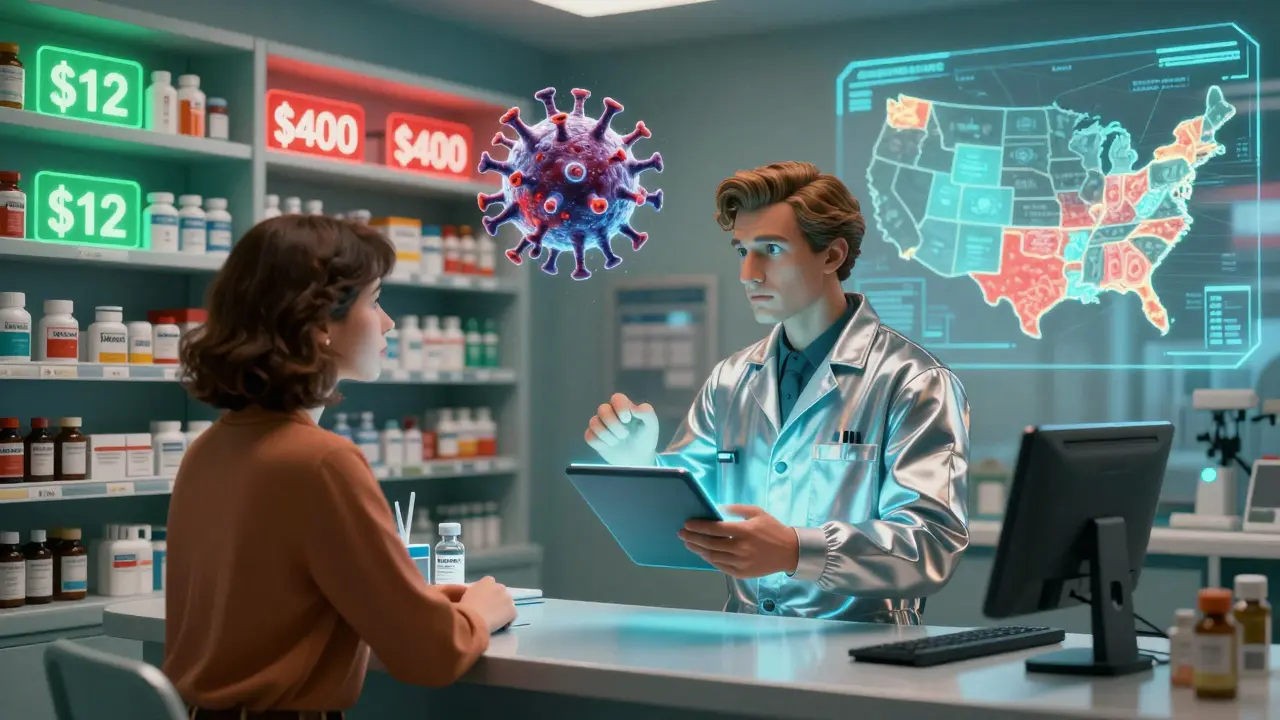
While vaccines get the spotlight, pharmacists are also quietly saving patients thousands of dollars every day through generic prescriptions. A 30-day supply of brand-name Lipitor might cost $400. The generic version, atorvastatin? $12. And pharmacists are the ones who catch the difference.
They don’t just dispense generics - they actively recommend them. When a patient walks in with a prescription for a brand-name drug, pharmacists often ask: "Have you checked if there’s a generic?" They know insurance formularies better than most doctors. They see which drugs are being rejected at the counter. And they’re trained to explain why generics are just as safe and effective.
One study found that pharmacists who proactively suggest generics can reduce out-of-pocket costs by up to 70% for patients on chronic medications. That’s not a small thing. For someone managing diabetes or high blood pressure, switching to a generic can mean the difference between filling a prescription and skipping it.
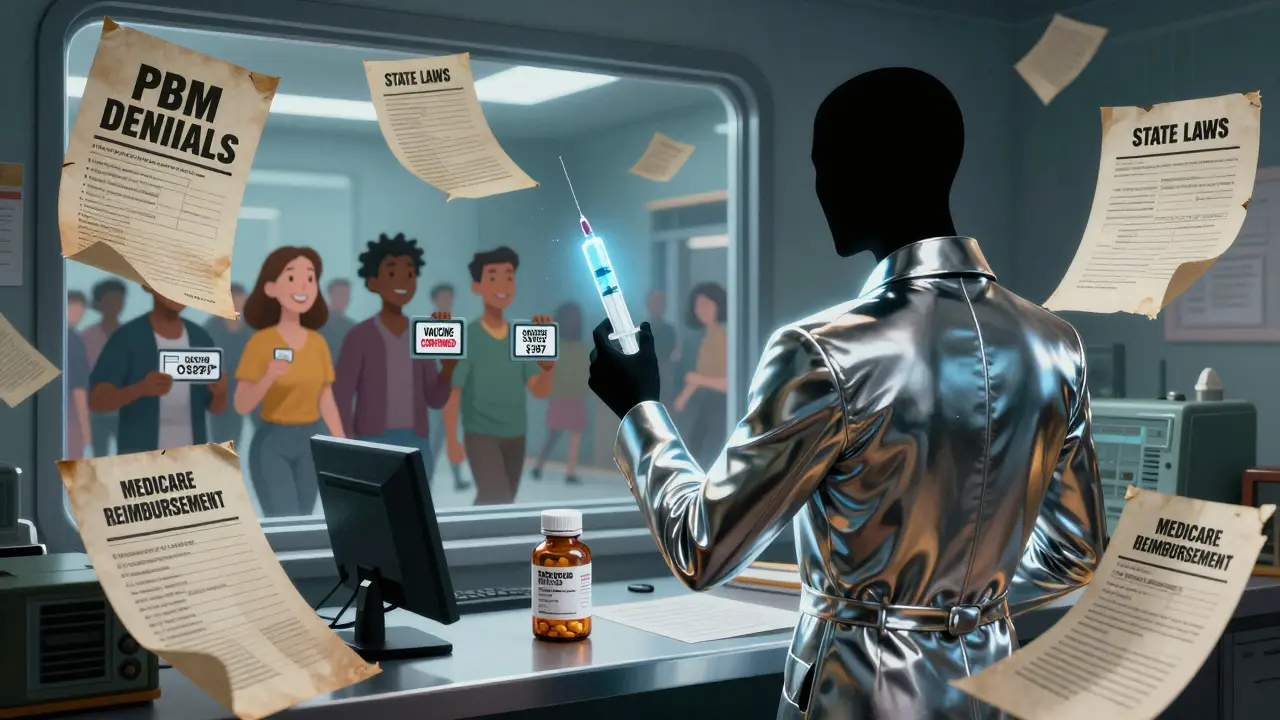
But here’s the catch: Pharmacy Benefit Managers (PBMs) - the middlemen between insurers and pharmacies - often squeeze independent pharmacists. They control reimbursement rates, delay payments, and sometimes force pharmacies to sell generics at a loss just to stay in-network. A 2023 survey found 78% of independent pharmacists say PBM practices have hurt their ability to provide care. That’s why pharmacists are lobbying for reform. They’re not just dispensing drugs. They’re fighting for fair pay so they can keep helping patients afford them.
The Real Barrier: Patchwork Laws and Broken Reimbursement
Despite all the progress, the system is still broken - not because pharmacists aren’t capable, but because rules vary wildly from state to state.
Some states let pharmacists give vaccines to anyone over three. Others only allow it for adults. Some require a physician’s standing order. Others let pharmacists act independently. And then there’s documentation: 34 states demand that pharmacists report every vaccine to the state registry within 72 hours. Sixteen don’t. That inconsistency creates a nightmare for pharmacists who work near state borders. One pharmacist in Texas told me she spends hours every week trying to figure out which forms to fill out for patients from Oklahoma or Louisiana.
And then there’s payment. Medicare Part B reimburses pharmacies just 87% of what it costs to administer a vaccine. For a small pharmacy, that’s a loss. Add in the cost of refrigerated storage - 12% of pharmacies report losing vaccine doses due to temperature issues - and the financial strain grows. Each spoiled dose costs an average of $1,200. That’s money that could’ve gone toward hiring a tech, updating software, or training staff.
Patients notice this, too. A 2022 Consumer Reports survey found 42% had trouble getting insurance to cover vaccines given at pharmacies. Some insurers refuse to pay unless the shot was given by a doctor. Others require pre-authorization. That means pharmacists end up playing phone tag with insurance companies - time they could be spending counseling patients.
How Pharmacists Are Changing Minds About Vaccines
One of the most powerful roles pharmacists play isn’t clinical - it’s conversational.
When a teenager is nervous about their first HPV shot, or a parent is worried about mRNA vaccines, they often turn to their pharmacist. Why? Because pharmacists are there, consistently. They’re not rushed. They’re not wearing a lab coat to a 15-minute visit. They’re the person who remembers your name and your dog’s name.
On Reddit, users share stories of pharmacists spending 7-10 minutes explaining how vaccines work - using simple analogies, showing CDC charts, or even drawing diagrams on a napkin. One pharmacist in Oregon told a mother that the mRNA in the vaccine doesn’t interact with DNA - it’s just a message that tells cells to make a harmless spike protein. The mother cried. She said no doctor had ever explained it that clearly.
Pharmacists also help with vaccine hesitancy by addressing misinformation head-on. They don’t lecture. They listen. They ask: "What are you most worried about?" Then they answer - with science, not slogans. This approach works. Studies show patients who talk to pharmacists about vaccines are 50% more likely to get vaccinated than those who don’t.
The Future: More Power, More Integration, More Need
The trend is clear: pharmacists are becoming central to preventive care. By 2026, experts predict they’ll administer over half of all adult vaccinations in the U.S. That’s not just growth - it’s a transformation.
But for this to work long-term, two things must change:
- Payment must match cost. Medicare, Medicaid, and private insurers need to reimburse pharmacists fairly. No more losing money on vaccines.
- Records must talk to each other. Right now, your doctor’s system doesn’t always know what vaccine you got at the pharmacy. That’s dangerous. If a patient gets two doses of the same vaccine because records don’t sync, it’s a waste - and a risk. The CDC and ASHP are pushing for integrated systems. Pharmacists are ready. The rest of healthcare needs to catch up.
Legislation is moving. In 2023 alone, 27 states expanded pharmacists’ authority. Fourteen removed age restrictions. But progress is slow. The American Pharmacists Association is now lobbying Congress to fix PBM abuses and create national standards for vaccine administration. Their message is simple: pharmacists are already doing this work. Let’s make it sustainable.
What You Can Do
If you need a vaccine or a cheaper prescription, don’t wait for your doctor. Walk into a pharmacy. Ask if they give shots. Ask if there’s a generic. Ask them to explain your medication. They’re trained for this. They want to help. And they’re often the only healthcare provider you’ll see that day.
Pharmacists aren’t asking for special treatment. They’re asking for recognition - and fair pay - so they can keep doing what they’re already doing: saving lives, one conversation at a time.
Can pharmacists give all types of vaccines?
In most states, pharmacists can give all CDC-recommended vaccines for adults, including flu, shingles, pneumonia, and COVID-19. Some states also allow them to give vaccines to children as young as three. However, age limits vary. For example, in some states, pharmacists can’t give vaccines to kids under 12 without a doctor’s order. Always check your state’s rules, but most pharmacies will tell you what’s allowed on the spot.
Are generic drugs really as good as brand names?
Yes. Generic drugs contain the same active ingredients, dosage, and strength as brand-name drugs. The FDA requires them to work the same way in the body. The only differences are in inactive ingredients (like fillers or dyes) and cost. Generics are typically 80-85% cheaper. Pharmacists often recommend them because they’re just as effective - and they help patients stick to their treatment plans.
Why do some insurance plans refuse to cover vaccines given at pharmacies?
Some insurers have outdated policies that only cover vaccines given in doctor’s offices. Others require prior authorization or only pay if the pharmacy is in a specific network. This is changing, but it’s still a problem. If your insurance denies coverage, ask your pharmacist to help you appeal. Many have experience fighting these denials and can submit paperwork or call the insurer on your behalf.
Do I need an appointment to get a vaccine at the pharmacy?
No. Most pharmacies allow walk-ins. You can usually get a flu shot in under 15 minutes. Some even have kiosks where you can check in on a tablet. However, during peak seasons like flu season or after a new vaccine is released, it’s smart to call ahead. Pharmacies often post their vaccination hours online.
How do I know if my pharmacist is certified to give vaccines?
All certified pharmacists have completed a nationally recognized training program, like the APhA Pharmacy-Based Immunization Delivery certificate. They must also have current CPR certification. You can ask to see their certification - most are happy to show it. Many pharmacies also display their credentials on a wall or in a brochure near the immunization area.
Pharmacists are not waiting for permission to help. They’re already doing it - every day, in every town, in every pharmacy you pass. All they need now is for the system to catch up.
Suzette Smith
February 14, 2026 AT 06:35Okay but have you ever tried getting a flu shot at a pharmacy and been told they’re out of stock because the PBM didn’t send enough? Yeah, I’ve been there. They act like heroes but half the time they’re just stuck with expired doses and no support. I’m not anti-pharmacist-I’m anti-system.
Autumn Frankart
February 15, 2026 AT 12:57Let me guess-this is one of those ‘pharmacists are saviors’ propaganda pieces pushed by Big Pharma to distract us from the fact that vaccines are now mandatory surveillance tools. You think they’re just giving shots? They’re scanning your barcode, logging your DNA-adjacent biometrics, and feeding it to the CDC’s central database. And don’t even get me started on generics-they’re not ‘just as good.’ They’re filled with fillers from China that cause silent inflammation. I’ve seen the studies. They’re buried.
Sophia Nelson
February 16, 2026 AT 14:07I went to CVS last week for a pneumonia shot and the pharmacist asked if I wanted the ‘premium’ one. I said no, I just want the one my doctor prescribed. She acted like I was being rude. Then she tried to upsell me on a $150 ‘immune booster’ supplement. So yeah, they’re not healers-they’re salespeople in scrubs. And don’t tell me they’re ‘trained.’ Training doesn’t mean they’re not trying to make a commission.
steve sunio
February 18, 2026 AT 04:17pharmacist are not heroes they are just workers who got lucky cause no one else wanna do this job. also generics? lol u think the fda checks every batch? i seen a guy in nigeria take a generic and his liver turned to mush. u think america is different? nah. its just quieter.
Neha Motiwala
February 18, 2026 AT 17:43Let me tell you what really happens-pharmacists are told by their corporate overlords to push generics regardless of patient history. I had a friend with severe allergies, and the pharmacist switched her medication without asking because the generic was cheaper. She ended up in the ER. And now they want us to trust them with vaccines? Please. They’re not doctors. They’re not nurses. They’re glorified cashiers with a white coat.
athmaja biju
February 19, 2026 AT 10:01As someone from India where pharmacists routinely dispense antibiotics without prescriptions, I find this American idealization of pharmacists amusing. Here, they’re gatekeepers. There, they’re gatecrashers. The system doesn’t change because people are better-it changes because corporations realized it’s cheaper to outsource care to a corner store than hire a physician. Don’t romanticize capitalism disguised as compassion.
Robert Petersen
February 19, 2026 AT 20:30I work at a small pharmacy in rural Ohio, and I can say this-our pharmacist changed my life. My mom had diabetes and couldn’t afford her meds. He didn’t just give her the generic-he called the manufacturer for patient assistance, stayed late to explain how to use the injector, and even helped us fill out the paperwork. He didn’t get paid extra. He did it because he cared. This isn’t about profit. It’s about people showing up when no one else will.
Carla McKinney
February 20, 2026 AT 04:39Let’s not ignore the fact that pharmacists are now legally allowed to prescribe birth control in 23 states. This isn’t about healthcare access-it’s about incremental erosion of medical gatekeeping. Who authorized them to make clinical judgments on reproductive health? Where’s the oversight? The FDA doesn’t oversee them. The AMA doesn’t recognize them. And yet they’re doing things only physicians were ever supposed to do. Slippery slope.
Ojus Save
February 21, 2026 AT 12:01generics work fine. i took one for my blood pressure for 3 years. no issues. also pharmacists are way more chill than docs. they dont rush you. they remember your name. they dont act like you’re wasting their time. just saying.
Jack Havard
February 21, 2026 AT 16:3740% of flu shots given at pharmacies? That’s not progress-that’s abandonment. It means people aren’t seeing their doctors. No one’s tracking their full medical history. No one’s checking for interactions. You think a pharmacist has time to review your 12 medications? They’re scanning barcodes and collecting insurance info. This isn’t care. It’s triage by retail.
Gloria Ricky
February 22, 2026 AT 06:30I’ve been a pharmacy tech for 8 years. I’ve seen moms cry because they finally got their kid’s vaccine without waiting 6 weeks. I’ve seen elderly men get their first shingles shot because their daughter brought them in. I’ve seen pharmacists spend 20 minutes on the phone with an insurance company because a patient couldn’t afford their meds. They’re not perfect. But they’re there. And if you’ve never had to choose between rent and your insulin, maybe you don’t get why that matters.
Rachidi Toupé GAGNON
February 24, 2026 AT 03:22Pharmacists are the unsung heroes of Canadian healthcare too. We’ve had them administering vaccines since 2002. No drama. Just results. You walk in. You get your shot. You leave. No forms. No waiting. Just science and service. America’s stuck in a loop of bureaucracy. Canada? We just… do it. And it works.
Brad Ralph
February 25, 2026 AT 20:37So let me get this straight… we’re celebrating pharmacists because they’re doing the job doctors refused to do? That’s not innovation. That’s failure. The system broke. They patched it with CVS. Now we’re giving them a parade? Maybe we should’ve fixed the system instead of outsourcing care to strip malls.
christian jon
February 26, 2026 AT 22:41WAKE UP PEOPLE! The PBM monopoly is a SCAM! They control the prices, they control the reimbursement, they control the pharmacists! And now they’re using these ‘trusted’ pharmacists to push vaccines and generics while quietly siphoning billions in rebates? It’s not about health-it’s about profit. The CDC? The FDA? All bought off! The real villain isn’t Big Pharma-it’s Big PBM! They’re the ones who make you pay $12 for a generic that cost $1 to produce! And they’re hiding behind ‘pharmacist heroes’ to make it look noble!
Pat Mun
February 27, 2026 AT 17:28I’ve spent the last 12 years working in community health, and I’ve watched pharmacists evolve from order-fillers to frontline clinicians-and honestly, it’s been beautiful to witness. They’re not just dispensing drugs; they’re building trust. I’ve seen a pharmacist in a town of 2,000 people become the only consistent healthcare contact for an entire neighborhood. A single mom with three kids, no car, no insurance-she goes to the pharmacy because it’s open on Sundays, they remember her dog’s name, and they never judge her for being late. They don’t have the resources, sure. They don’t get paid enough, absolutely. But they show up anyway. And that’s not just good service-that’s moral courage. The system is broken, yes. But the people? They’re holding it together. And if we ever want real reform, we need to start by listening to them-not just the lobbyists or the insurance CEOs. They’re the ones who know what’s actually happening on the ground. Not in a boardroom. Not in a study. Right there, behind the counter, in a hoodie and a name tag, making sure someone gets their meds today. That’s not a job. That’s a calling.