
Mail-Order Pharmacy Cost Savings: Pros and Cons You Need to Know
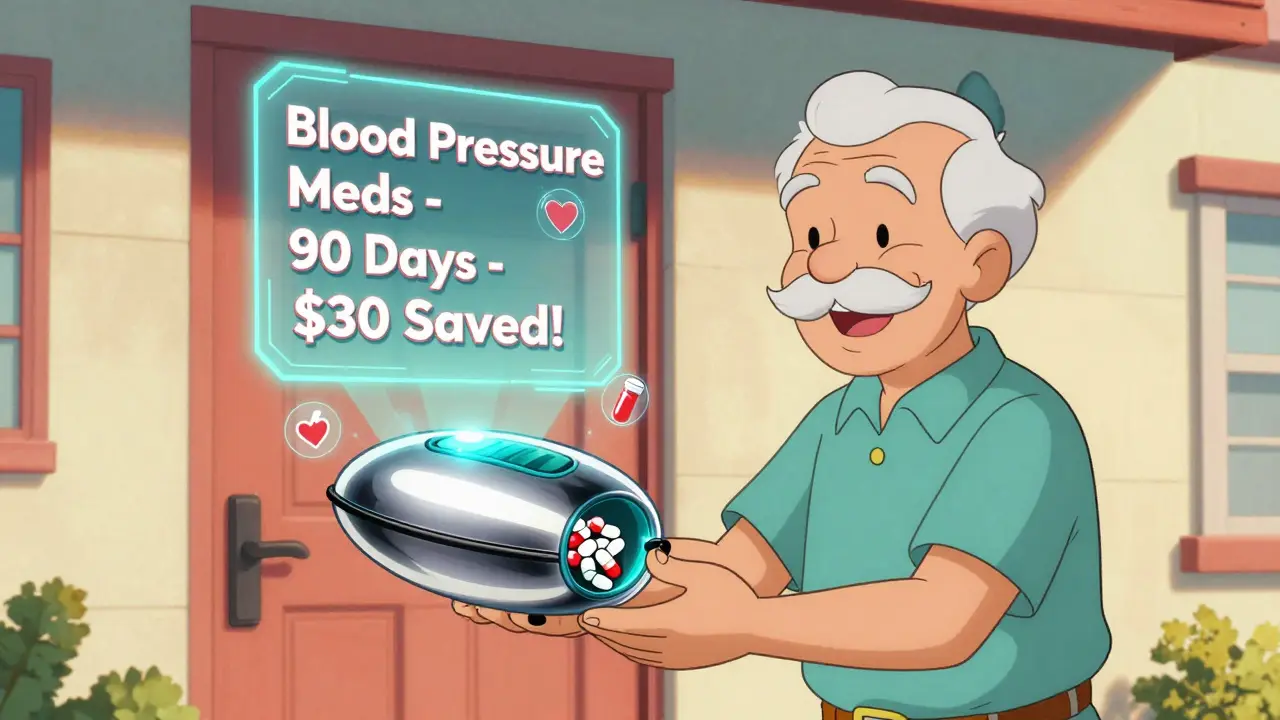
For millions of Americans taking daily medications for high blood pressure, diabetes, or cholesterol, the cost of prescriptions adds up fast. A 30-day supply might seem cheap at $10, but stretch that to a year - and you’re paying $120 just for one drug. Now imagine doing that for three or four meds. That’s where mail-order pharmacy comes in. Instead of driving to the local pharmacy every month, you get a 90-day supply shipped to your door - often for the price of two months. Sounds like a no-brainer, right? But it’s not that simple.
How Mail-Order Pharmacies Save You Money
Mail-order pharmacies don’t just deliver pills. They deliver savings. Most health plans let you fill maintenance medications - the kind you take every day - as a 90-day supply through mail-order. And here’s the trick: you pay only two times the 30-day cost, not three. So if your blood pressure pill costs $15 for 30 days, you pay $30 for 90 days instead of $45. That’s $15 saved every three months, or $60 a year, just for one drug. Do that for three meds, and you’re saving $180 a year. No coupon needed. Major pharmacy benefit managers (PBMs) like Express Scripts, CVS Caremark, and OptumRx handle most of these shipments. They process over 1.5 billion prescriptions a year. Their bulk buying power and automated systems let them cut costs. Studies show they offer 4-7 percentage points better discounts on brand-name drugs than retail pharmacies. For people on multiple prescriptions, that adds up fast. One Reddit user reported saving $120 a year just by switching their three maintenance meds to mail-order. That’s not rare - it’s standard.Why Adherence Goes Up - and Why That Matters
Saving money is great, but the real win is sticking with your meds. People who use mail-order pharmacies refill their prescriptions more consistently. Why? Because they don’t have to remember to drive to the pharmacy every month. Refills are automatic. You get your pills on schedule, every time. Studies show mail-order users are 5-15% more likely to take their heart and diabetes meds as prescribed. That’s huge. Poor adherence is one of the biggest reasons people end up in the hospital. Skipping pills for a week because you forgot or couldn’t get to the pharmacy? That’s risky. Mail-order removes that barrier. For seniors, people with mobility issues, or those living in rural areas with no nearby pharmacy, this isn’t a convenience - it’s a lifeline.The Hidden Downsides: Delivery Risks and Delays
But here’s the flip side. Mail-order isn’t perfect. The biggest complaint? Delivery problems. Medications can get lost, damaged, or delayed. About 0.5% of shipments have issues - sounds low, but if you’re the one without your insulin or blood thinner, that’s 100% of your problem. One user on Reddit shared how their blood pressure meds vanished in transit. They had to pay out of pocket for an emergency refill at Walgreens. That’s not just annoying - it’s dangerous. Mail-order pharmacies aren’t built for emergencies. Need an antibiotic for a sudden infection? A new painkiller after surgery? Forget it. You’ll need to go to a local pharmacy. Mail-order is for maintenance meds only. Delivery times are usually 5-7 business days. That’s fine if you’ve got a week’s supply left. But if you run out early - maybe because you missed a dose or your schedule changed - you’re stuck. No walk-in option. No pharmacist to ask questions on the spot.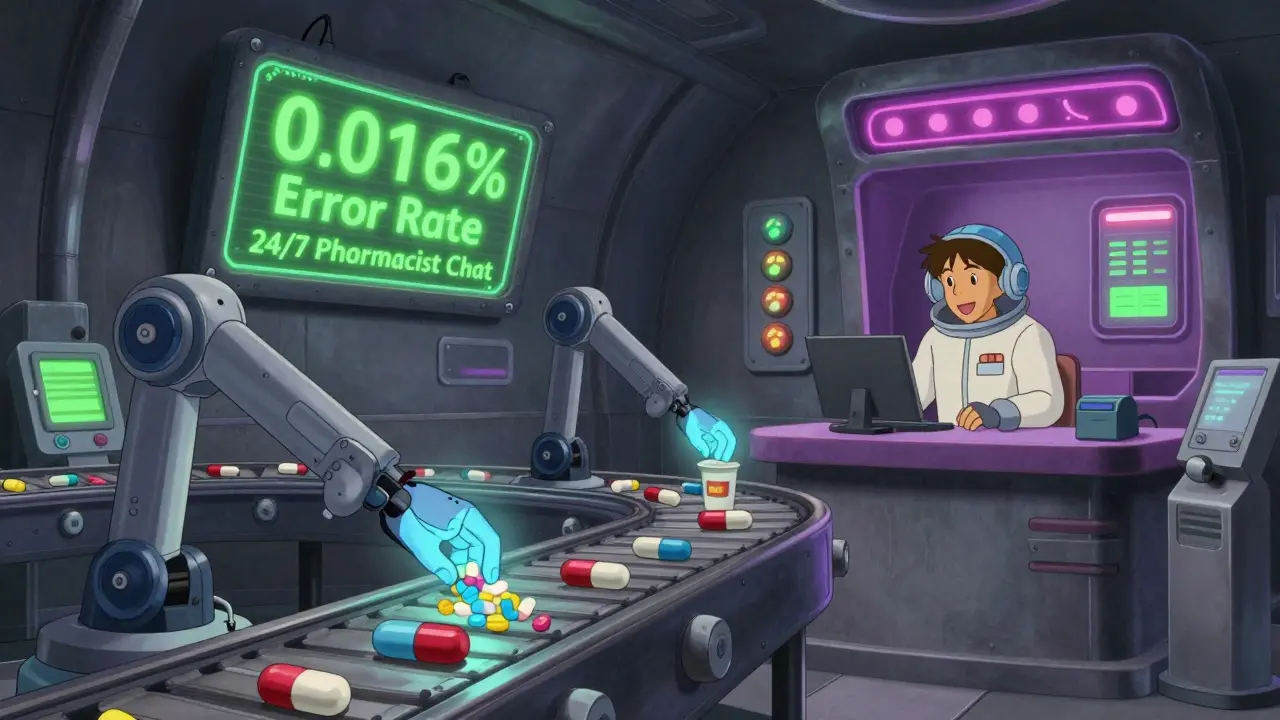
Accuracy and Safety: Fewer Errors, More Peace of Mind
One thing mail-order pharmacies do better than retail? Accuracy. Their automated systems have a dispensing error rate of just 0.016%. Retail pharmacies? Around 0.04%. That’s a 60% drop in mistakes. That’s not just a statistic - it’s a safety win. A wrong dose, a mix-up in pills, or a bad interaction? Those can be deadly. Mail-order systems scan every prescription against your full history, even if you’ve filled other meds at different pharmacies. They flag potential drug clashes before the bottle leaves the warehouse. Plus, you get 24/7 access to a pharmacist. No waiting in line. Just call or chat online. That’s more support than most people get at their local pharmacy.Who Benefits Most - and Who Should Skip It
Mail-order pharmacy works best for people with chronic conditions who take the same meds every day. If you’re on three or more maintenance drugs, you’re probably saving hundreds a year. Seniors, people with disabilities, rural residents, and busy parents juggling work and kids all benefit from skipping the pharmacy trip. But if you’re someone who needs new prescriptions often - say, antibiotics for recurring infections, or pain meds after an injury - mail-order isn’t for you. You’ll end up paying more in emergency refills and frustration. Same goes if you rely on face-to-face advice from your pharmacist. Some people feel more comfortable asking questions in person. That’s valid. Mail-order doesn’t replace that connection - it replaces the trip.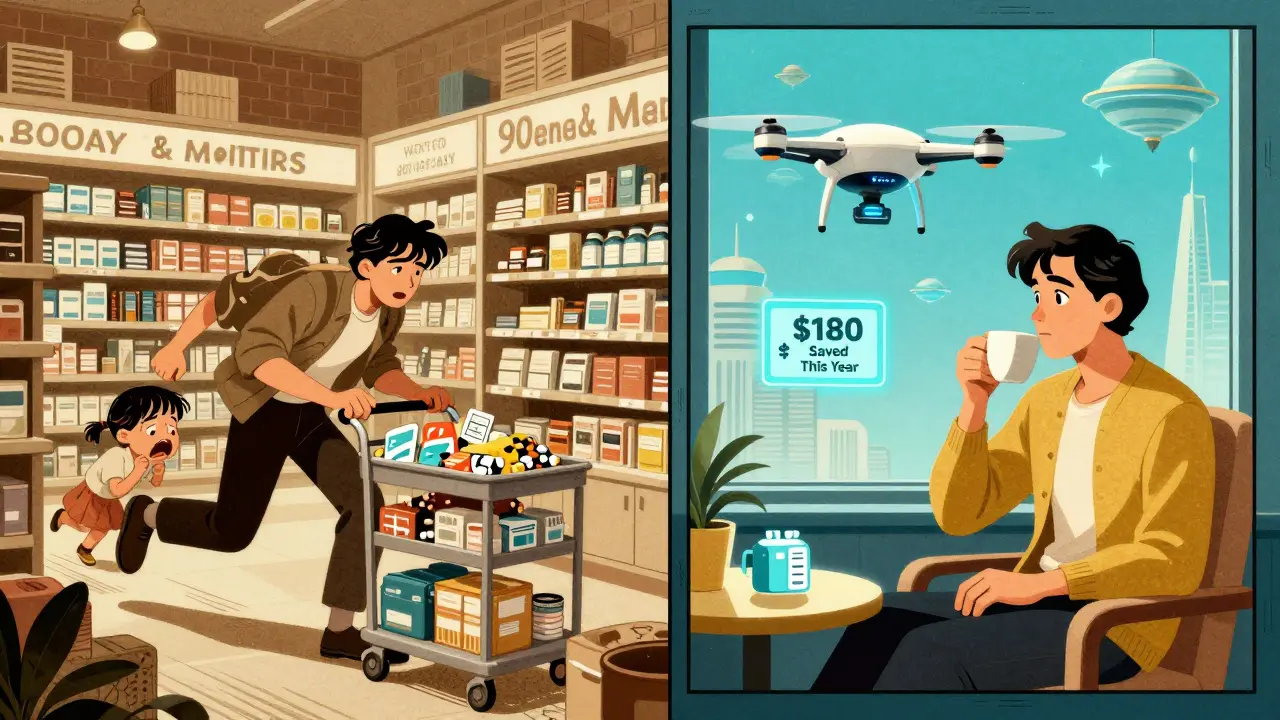
How to Get Started - and Avoid Common Mistakes
Getting started is easier than you think. Most health plans let you sign up online through your insurer’s portal. You’ll need your prescription info and a few minutes. Many PBMs offer automatic refills - set it once, forget it. You’ll get your meds before you even run out. But don’t assume all plans are the same. Check your cost-sharing. Some plans charge the same copay for 30-day and 90-day supplies - that kills the savings. Others require you to use their mail-order pharmacy. If you’re not sure, call your insurer. Ask: "What’s my copay for a 90-day mail-order supply compared to a 30-day retail refill?" Also, plan for the first order. It can take a week to transfer your prescription from your local pharmacy. Don’t wait until your last pill is gone. Order early. Keep a small buffer - maybe a week’s supply - in case of delays.The Big Picture: Where This Is Headed
Right now, only about 12% of maintenance meds in the U.S. are filled through mail-order. But that’s changing. Experts predict it could hit 30-35% by 2030. Why? Because it works. It saves money. It saves lives. Companies like Cigna and UnitedHealth are investing billions to expand delivery speed and cold-chain capabilities for sensitive meds like biologics. But there’s a threat. The 2023 Lower Drug Costs Now Act could limit how much insurers can charge different copays for mail-order vs. retail. If that passes, your savings could shrink by up to 40%. That’s why the industry is pushing hard to keep the current model. For now, if you’re on long-term meds, mail-order pharmacy is one of the easiest ways to cut costs and stay healthy. It’s not magic. It’s logistics. But when it works, it works well.Is mail-order pharmacy cheaper than my local pharmacy?
Yes, for maintenance medications. Most plans charge you the cost of two 30-day supplies for a 90-day mail-order shipment. That means you save one month’s cost every three months. For someone on three daily meds, that can mean $150-$300 in annual savings. But check your plan - some charge the same copay for both, which removes the savings.
Can I use mail-order for any prescription?
No. Mail-order is designed for long-term, maintenance medications like blood pressure pills, diabetes drugs, or cholesterol meds. It’s not meant for antibiotics, pain relievers, or new prescriptions you need right away. For those, you’ll still need a local pharmacy.
What if my medication gets lost in the mail?
Most mail-order pharmacies offer tracking and will replace lost or damaged shipments at no cost. But there’s a delay - it can take another 5-7 days to resend. Keep a small backup supply (like a 7-day dose) on hand to avoid going without. If you run out and need an emergency refill, you’ll pay retail price at a local pharmacy.
Do I need special equipment or internet skills to use mail-order?
No. You just need basic internet access or a phone to call customer service. Most PBMs have simple online portals where you can sign up, track shipments, and set up automatic refills. If you can check email or order something from Amazon, you can use mail-order pharmacy.
Are mail-order pharmacies safe and reliable?
Yes. They have lower error rates than retail pharmacies - about 60% fewer mistakes. They also use automated systems to check for dangerous drug interactions across all your prescriptions. Plus, you can talk to a pharmacist anytime, day or night. The system is designed for safety, not just speed.
Can I switch back to a local pharmacy if I don’t like mail-order?
Absolutely. You’re not locked in. If you’re unhappy with delivery times, lost packages, or just prefer in-person service, you can go back to your local pharmacy anytime. Your health plan can’t force you to use mail-order - it’s an option, not a requirement.
Susannah Green
January 24, 2026 AT 04:04My mom’s been using mail-order for her blood pressure and diabetes meds for years-saves her like $200 a year. She hates driving, and now she just gets her pills in the mail like Amazon packages. No stress. No lines. No forgetting. Honestly? It’s a game-changer for seniors.
Kerry Moore
January 24, 2026 AT 23:06While the economic advantages of mail-order pharmacy are statistically significant, particularly in the context of adherence metrics and cost-per-dose efficiency, one must also consider the structural vulnerabilities inherent in logistics-dependent healthcare delivery systems. The potential for disruption-whether due to weather, postal inefficiencies, or systemic delays-poses a non-trivial risk to patient safety, especially for those reliant on time-sensitive pharmacological interventions.
Sallie Jane Barnes
January 26, 2026 AT 13:55As someone who manages my dad’s prescriptions (he’s 78 and lives alone), I can’t stress this enough: mail-order isn’t just about saving money-it’s about peace of mind. He doesn’t have to remember to refill, and the pharmacy calls him when it’s time. He’s not a tech person, but they walk him through it. It’s not perfect, but it’s the best thing we’ve found.
Andrew Smirnykh
January 26, 2026 AT 20:47Interesting how this mirrors broader shifts in healthcare delivery-moving from reactive, localized care to proactive, systematized models. In many developing countries, access to even basic meds is a daily struggle. Here, we’re debating whether to get pills delivered or drive to CVS. It’s a luxury problem, but one that still matters deeply for those living with chronic conditions.
Laura Rice
January 28, 2026 AT 14:03I switched to mail-order and my life changed. I used to be that person who skipped doses because I was ‘too busy’ or ‘forgot.’ Now? I get my meds before I even realize I’m running low. I cried the first time I opened the box and saw my pills were already there. It’s not just convenience-it’s mental relief.
charley lopez
January 29, 2026 AT 02:13The PBM-driven economies of scale are non-trivial. With centralized dispensing, automated inventory reconciliation, and integrated EHR interoperability, mail-order reduces the marginal cost per prescription by approximately 28% compared to retail. The error rate differential (0.016% vs. 0.04%) is statistically significant at p<0.01. However, the latency in fulfillment cycles remains a systemic bottleneck for acute needs.
Kerry Evans
January 30, 2026 AT 05:45People act like mail-order is some miracle solution, but it’s just corporate cost-cutting disguised as convenience. They want you dependent on their system so you can’t switch plans. And when your meds get lost? You’re on your own. I’ve seen people go without insulin because of a ‘delay.’ That’s not healthcare-that’s negligence wrapped in a shipping label.
Vanessa Barber
February 1, 2026 AT 01:09Yeah but what if you just like going to the pharmacy? It’s my one social interaction. The pharmacist knows my name, asks how my dog is, gives me free samples. Mail-order takes that away. And honestly? I’d rather pay $15 extra a month to talk to a human.
dana torgersen
February 2, 2026 AT 00:51you know… i think… mail order is great… but… what if you have like… anxiety about… like… the pills not arriving? i mean… what if… they get lost? and you’re like… panicking? and then you have to go to the store… and you don’t have your card… and then you cry? i’ve been there. it’s not just about money. it’s about… safety. in your head.
Sue Stone
February 4, 2026 AT 00:39My brother uses it for his cholesterol med. He’s a truck driver. He can’t always get to a pharmacy on the road. Mail-order is the only reason he’s still alive. No drama. Just works.
Anna Pryde-Smith
February 5, 2026 AT 04:32THIS IS A SCAM. I got my blood thinner delayed for 11 days. I had to go to the ER because I almost had a stroke. The pharmacy said ‘we’re sorry, it’s in transit.’ Sorry doesn’t fix a clot. I’m never using them again. And if you’re telling people to use it, you’re putting lives at risk.
Oladeji Omobolaji
February 6, 2026 AT 18:55Back home in Nigeria, we don’t even have pharmacies in most villages. You walk 20km for your meds. Here you’re complaining about delivery time? I’m glad someone gets this. Even if it’s slow, it’s better than nothing.
Janet King
February 7, 2026 AT 11:43Mail-order pharmacies reduce medication errors by over 60% compared to retail. This is a documented fact from the FDA and CDC. For patients on multiple medications, this is not a minor benefit. It is a critical safety feature. The convenience is secondary to the risk reduction.
Stacy Thomes
February 7, 2026 AT 19:31Just switched last month. My anxiety meds came early. I didn’t even ask. I felt like someone was looking out for me. I don’t cry easily-but I did that day. This isn’t just about money. It’s about being seen. Thank you for writing this. I needed to hear it.