
Medication Reconciliation: How to Update Medication Lists Across Care Settings
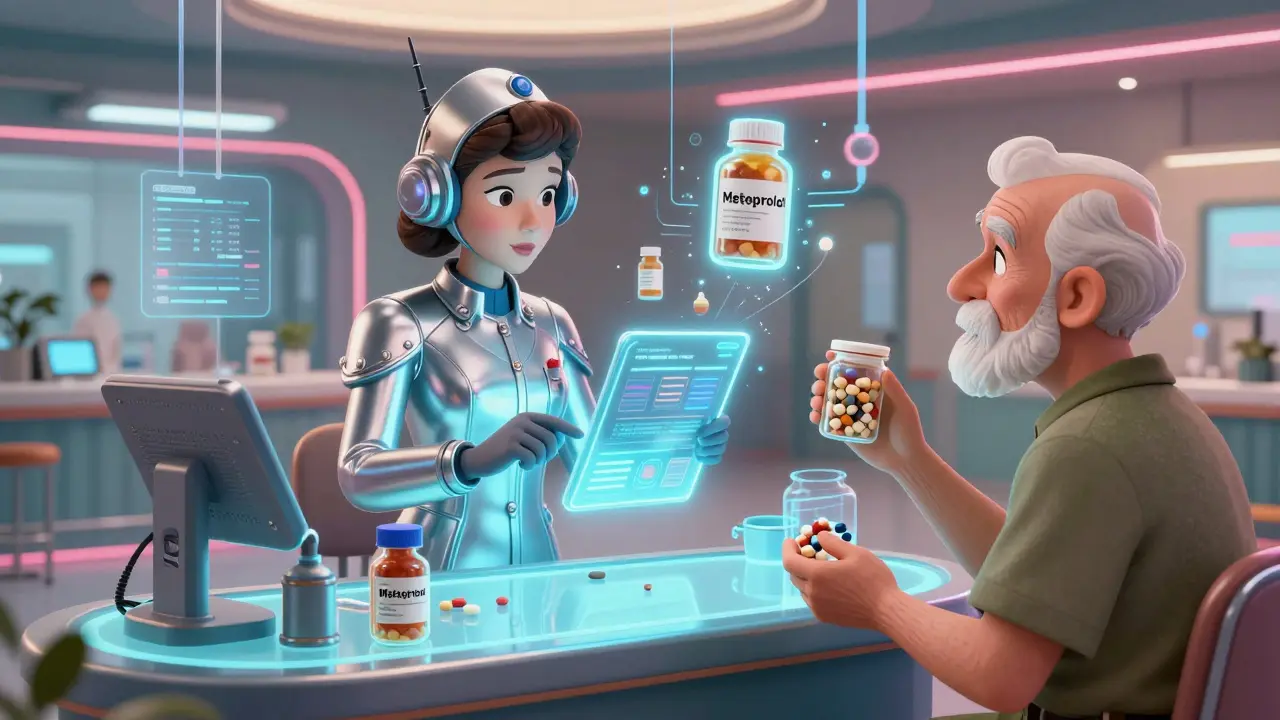
Every year, tens of thousands of patients are harmed because their medication lists don’t match up between doctors, hospitals, and pharmacies. It’s not because someone forgot to write something down-it’s because the system doesn’t talk to itself. Medication reconciliation isn’t just paperwork. It’s the critical checkpoint that stops a patient from getting double the dose of blood pressure medicine, missing their insulin, or mixing pills that could cause a stroke. When done right, it saves lives. When done poorly, it’s one of the most common causes of preventable harm in hospitals.
What Medication Reconciliation Actually Means
Medication reconciliation is the process of making sure the list of medications a patient is taking matches exactly what’s ordered at every point of care. That means comparing what the patient says they’re on, what the pharmacy says they’ve filled, what the doctor prescribed, and what’s recorded in the hospital’s system. It’s not just a form you check off. It’s a safety net. The Institute for Healthcare Improvement defined it in 2005 as the process of finding the most accurate list of all medications-including prescription drugs, over-the-counter pills, vitamins, herbal supplements, and even traditional remedies-and using that list to make sure no mistakes happen when patients move between care settings. The Joint Commission made it a national patient safety goal in 2006 because studies showed that 50 to 70% of patients experience a medication error during transitions like hospital admission or discharge. About 20 to 30% of those errors cause real harm.The Five Steps That Save Lives
There’s a clear, five-step process that works-and it’s used in top hospitals across the country.- Get the Best Possible Medication History (BPMH): This isn’t just asking the patient, “What meds are you on?” That alone is wrong 42% of the time, according to a 2017 study. You need to talk to family members, call the patient’s pharmacy, check electronic records, and review old notes from their primary care doctor. If the patient is elderly or confused, you might need to call their caregiver or even visit their home to see what’s in the medicine cabinet.
- Build the new medication list: Based on the current hospital stay or care plan, write down what medications should be started, stopped, or changed. This list comes from the doctor’s orders, but it must be cross-checked against the BPMH.
- Compare the two lists: Look for mismatches. Is the patient still taking metoprolol but the new order says to stop it? Is there a duplicate? Is a new drug interacting dangerously with an old one? Clinical decision tools flag about 15 to 25% of these issues automatically, but humans still need to review them.
- Make clinical decisions: Don’t just accept the system’s suggestion. A pharmacist or provider must decide whether to continue, stop, or adjust each medication. Sometimes a drug was stopped for a good reason-like kidney issues-and shouldn’t be restarted. Other times, a missing medication is the reason the patient ended up in the ER.
- Communicate the final list: The updated list must go to the patient, the primary care doctor, the pharmacy, and any other provider involved. A printed copy handed to the patient isn’t enough. It needs to be sent electronically through secure systems like Surescripts, which connects 90% of U.S. pharmacies-but still misses 18 to 22% of records.
Why Pharmacists Are the Key
Nurses and doctors are busy. But pharmacists? They’re trained to spot medication problems. The American Society of Health-System Pharmacists says pharmacists are the medication experts and should lead reconciliation. Studies show that when pharmacists run the process, medication errors drop by 47% compared to nurse-only teams. At Mayo Clinic Rochester, a pharmacist-led program cut 30-day readmissions by 18% and prevented over 1,200 adverse drug events each year. At Johns Hopkins, dedicated reconciliation technicians cut medication discrepancies by 72% in 18 months. These aren’t outliers-they’re proof that putting the right person in charge makes a measurable difference.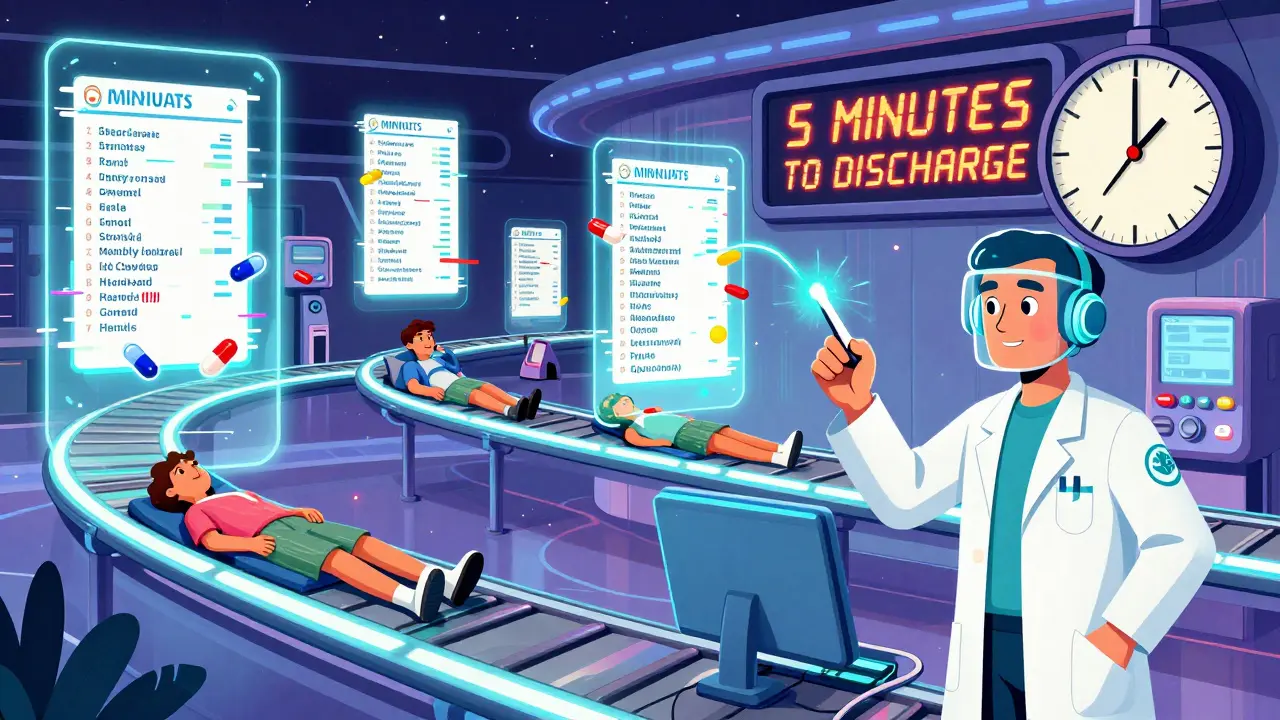
What Goes Wrong-and Why
Even with all the rules, reconciliation often fails. Why?- Fragmented systems: Hospitals use one electronic health record (EHR), the primary care clinic uses another, and the pharmacy uses a third. They don’t talk well. A 2023 survey found 76% of hospitals struggle with this.
- Poor patient knowledge: One in five elderly patients can’t name their own medications. A pharmacist in Texas told a Reddit thread, “I had a 78-year-old woman who said she took ‘the blue pill for her heart’-it turned out to be a leftover blood thinner from a heart attack five years ago.”
- Time pressure: Nurses and doctors are rushed. A 2022 survey found 41% of nurses sometimes skip full reconciliation because they don’t have time. The Institute for Healthcare Improvement recommends 15 to 20 minutes per admission-but most facilities give less than 5.
- Missing data: Only 43% of discharge summaries include a complete medication list, according to CMS audits. And only 33% of hospitals ask patients to bring in their actual pill bottles or use medication diaries-tools that improve accuracy by 27%.
Technology Helps-but Doesn’t Fix Everything
EHRs like Epic have built-in reconciliation modules that cut the time needed by 22%. Standalone tools like MedsReview report 37% higher accuracy in community settings. AI tools, like Google’s DeepMind pilot, can predict discrepancies with 89% accuracy. But here’s the catch: none of these tools work if the data entering them is wrong. A 2021 study in JAMA Internal Medicine warned that many hospitals treat reconciliation like a checkbox. “We’ve automated the form, but not the thinking,” said Dr. Gordon Schiff of Harvard. “The system tells you to stop warfarin, but it doesn’t know the patient just had a knee replacement and needs it for clot prevention.”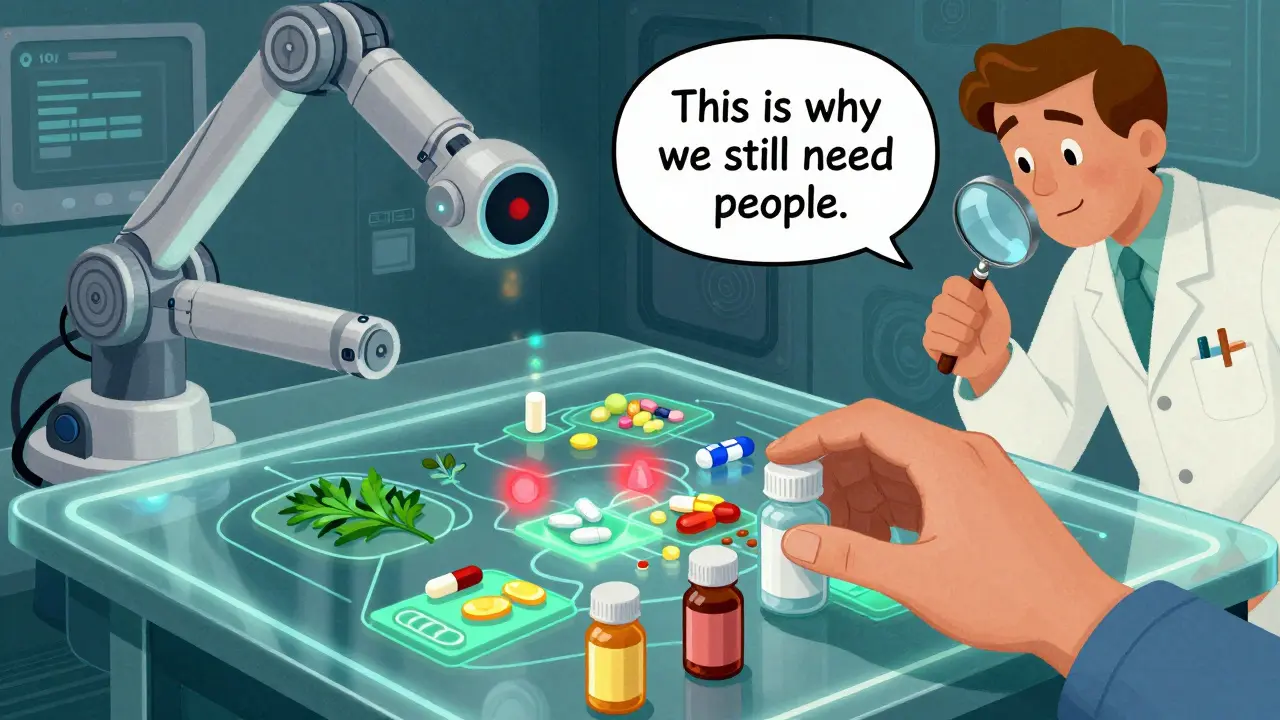
What’s Changing in 2026
Medication reconciliation is no longer optional. It’s tied to money. - CMS increased the weight of the Medication Reconciliation Post-Discharge (MRP) measure from 5% to 8% of Medicare Advantage star ratings in 2023. Hospitals with low scores lose money. - The 21st Century Cures Act requires systems to share medication data across platforms. The new USCDI Version 4, rolled out in January 2023, now includes standardized medication reconciliation fields. - The Joint Commission now requires reconciliation to include herbal supplements and traditional medicines-because 52% of patients use them, and most providers don’t ask. - The FDA’s 2023 Digital Health Innovation Plan is pushing AI tools for medication safety. But the American Hospital Association cautions: “Technology supports, not replaces, clinical judgment.”What You Can Do
If you’re a patient or caregiver:- Bring a list of every pill, patch, cream, vitamin, and herb you take-in writing. Include doses and why you take them.
- Bring the actual bottles to every appointment. Pictures of your medicine cabinet don’t count.
- Ask: “What changed? Why? And what should I do if I feel different?”
- After discharge, call your pharmacy and ask them to review your new list. Many will do it for free.
- Assign a pharmacist to lead reconciliation-not just assist.
- Use patient medication diaries. They’re simple, low-tech, and improve accuracy.
- Don’t rely on EHR alerts alone. Always verify with the patient and pharmacy.
- Document every change with a reason. “Stopped lisinopril due to cough” is better than “meds changed.”
Final Thought: It’s Not About the List. It’s About the Person.
Medication reconciliation isn’t a compliance task. It’s a moment where someone’s life hangs in the balance. A patient who doesn’t know why their blood thinner was stopped might have a stroke. A child who gets the wrong antibiotic dose could end up in the ICU. The list isn’t just data-it’s a promise. A promise that no one will be harmed because the system forgot to check. The tools are better. The rules are clearer. The stakes are higher. But the solution hasn’t changed since 2005: Get the right information, from the right people, at the right time.What’s the difference between medication reconciliation and a medication review?
Medication reconciliation happens only during care transitions-like hospital admission, discharge, or transfer between units. It’s focused on catching errors when the care setting changes. A medication review is a general check-up, usually done during routine visits, to see if current meds are still working or need adjustment. Reconciliation is about safety; review is about effectiveness.
Who is responsible for medication reconciliation in the hospital?
While nurses and doctors may start the process, pharmacists are the gold standard for leading it. Their training in drug interactions, dosing, and patient history makes them best suited to spot and resolve discrepancies. Many hospitals now have dedicated reconciliation pharmacists or technicians to handle this task.
Why do patients often get the wrong meds after leaving the hospital?
The most common reason is poor communication between the hospital and the patient’s pharmacy or primary care provider. Only 43% of discharge summaries include a complete, accurate medication list. Even when the list is sent, patients often don’t understand the changes. Studies show 28% of patients change or stop their meds incorrectly in the first week after discharge because they weren’t clearly told what to do.
Can electronic health records fix medication reconciliation problems?
EHRs help by pulling data from pharmacies and previous visits, but they’re not magic. If the data in the system is outdated or incomplete, the EHR will just repeat the error. Many hospitals still rely on manual entry, and 18-22% of pharmacy records aren’t connected to the EHR. Technology supports the process-but doesn’t replace the need for human verification.
What’s the biggest barrier to successful medication reconciliation?
Time. Most providers don’t have enough of it. A 2022 AHRQ report found 63% of clinicians say they don’t have enough time to do reconciliation properly. Even with automation, gathering accurate medication histories from patients, families, and pharmacies takes effort. Without dedicated staff or reimbursement for the time spent, reconciliation becomes a rushed formality instead of a safety practice.
Are herbal supplements and vitamins included in medication reconciliation?
Yes. Since 2023, The Joint Commission requires reconciliation to include all supplements, herbs, and traditional remedies. About half of all patients use them, and many can interact dangerously with prescription drugs. For example, St. John’s Wort can make blood thinners or antidepressants less effective. Not asking about them is a major safety gap.
Kathy Scaman
January 28, 2026 AT 14:06I had my grandma nearly get poisoned because her hospital didn't check her supplements. She was taking turmeric for 'joint pain' and got put on warfarin. Turns out, turmeric thins blood too. No one asked. She ended up in the ER with a bloody nose for a week. Just bring your pills. Seriously. 🙏
Anna Lou Chen
January 30, 2026 AT 04:37Medication reconciliation is merely the symptomatic palliation of a systemic epistemological collapse in pharmacovigilance architecture. The EHRs are ontologically fragmented, the human agents are alienated from their praxis, and the Joint Commission’s mandates are performative compliance rituals masking deeper infrastructural decay. Until we deconstruct the Cartesian dichotomy between patient and data, we’re just rearranging deck chairs on the Titanic-with beta-blockers.
Bryan Fracchia
January 31, 2026 AT 21:58Man, I love how this post breaks it down. I work in a small clinic and we started having patients bring their pill bottles in. It sounds simple, but it cut our med errors by half. One guy showed up with 17 bottles-turned out he was taking 5 different blood pressure meds because four different docs had prescribed them over the years. We fixed it in 10 minutes. No tech needed. Just listening.
Lance Long
February 1, 2026 AT 17:29Let me tell you about the time I watched a nurse skip reconciliation because ‘the system said it was fine.’ Patient got discharged with two conflicting anticoagulants. Two days later, he had a GI bleed. His wife cried in the hallway. That’s not a mistake-that’s negligence dressed up as workflow. We need pharmacists at every bedside, not just when it’s ‘convenient.’ And yes, I’m mad. You should be too.
Timothy Davis
February 2, 2026 AT 07:19Everyone’s acting like this is some groundbreaking insight. The data’s been out since 2006. 50-70% error rate? We’ve known this. The real issue? Hospitals won’t pay for dedicated reconciliation staff because it doesn’t show up on their quarterly profit margins. And no, AI won’t fix it unless you fix the garbage data going in. You can’t algorithm your way out of human laziness.
fiona vaz
February 3, 2026 AT 20:15Just wanted to add-when I was a med student, our team started using medication diaries. Patients wrote down what they took and when. We scanned them into the EHR. Accuracy jumped from 58% to 85%. It’s low-tech, but it works. And patients feel heard. That matters more than we admit.
Sue Latham
February 4, 2026 AT 16:13Oh honey, if you think your doctor knows what you’re taking, you’ve been watching too many medical dramas. My aunt took St. John’s Wort for ‘anxiety’ and didn’t tell anyone. Then she got prescribed an SSRI. She spent a week hallucinating and yelling at her cat. Turns out, it’s like mixing gasoline and a match. No one asked. No one ever asks. 😒
John Rose
February 4, 2026 AT 22:57This is one of the most important yet overlooked topics in modern healthcare. The fact that we still rely on patients remembering 10+ medications, or on fragmented systems that don’t communicate, is a moral failure. We have the tools. We have the data. What we lack is the collective will to prioritize safety over speed. This isn’t just policy-it’s ethics.
Brittany Fiddes
February 6, 2026 AT 00:00Oh, so now Americans are shocked that their healthcare system is broken? 😂 We’ve had this problem for decades. In the NHS, we have a national medication record system. It’s not perfect, but it connects GPs, pharmacies, and hospitals. You all are still arguing over whether to ask patients about their herbal tea. Meanwhile, we’ve been digitizing since 2010. Honestly, your system is a joke.
Colin Pierce
February 6, 2026 AT 05:56My mom had a stroke last year because her discharge summary didn’t include her new blood thinner. The hospital sent the list to her PCP-but the pharmacy never got it. She took the old one. For three days. I had to call 3 places to fix it. The system isn’t broken-it’s abandoned. Pharmacists should be the ones handing out discharge meds, not nurses rushing between 12 patients.
Mark Alan
February 6, 2026 AT 22:49THIS. 👏👏👏 My cousin got sent home with 14 meds after heart surgery. No one told her half were discontinued. She took them all. Ended up in the ER with a heart rhythm that looked like a seizure. 🤯 Now she has a little notebook. Every pill, every time. And we all check it together. Simple. Human. Life-saving. 💙