
Nosebleeds Linked to Medications: Common Causes and How to Prevent Them
Medication Nosebleed Risk Calculator
This tool helps you assess your risk of nosebleeds caused by medications. Based on your inputs, we'll calculate your risk level and provide personalized prevention recommendations.
It’s not rare to wake up with a little blood on your pillow or notice a drip while blowing your nose. About 60% of people will have a nosebleed at least once in their life, according to the New England Journal of Medicine. Most are harmless and stop on their own. But if you’re taking certain medications, those little bleeds might not be random - they could be a direct side effect.
Why Your Medications Might Be Causing Nosebleeds
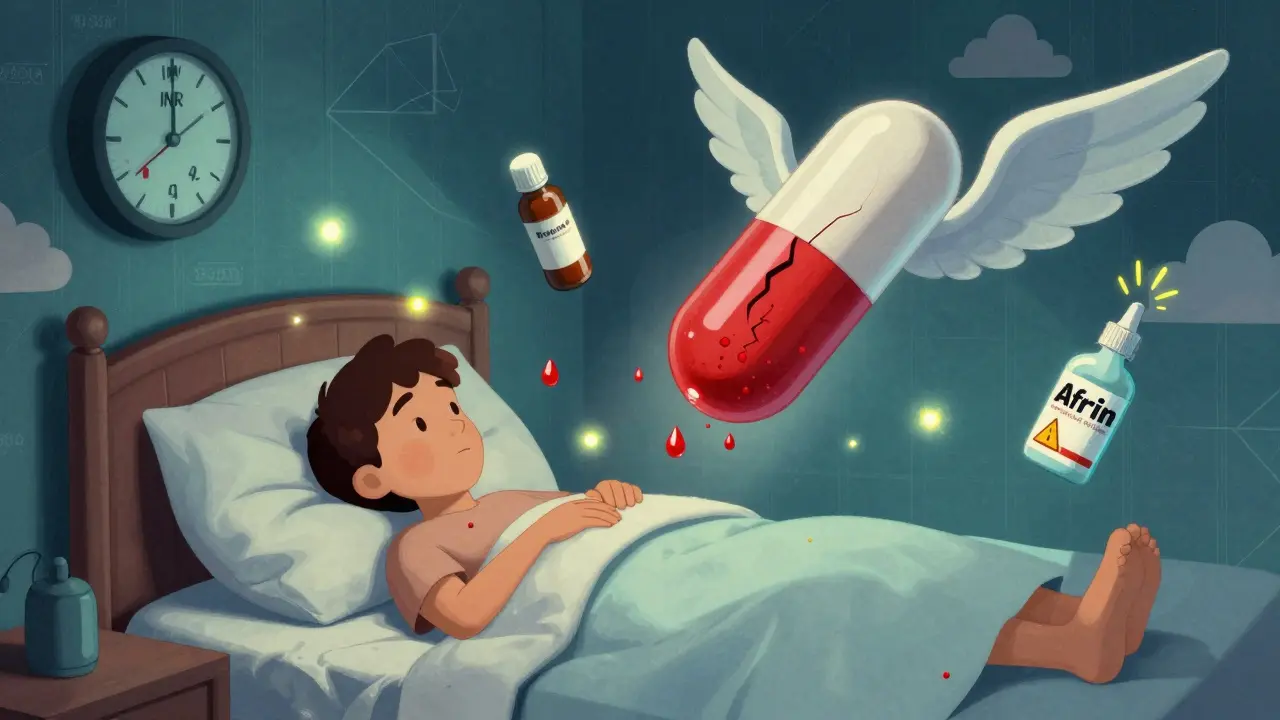
Nosebleeds happen because of fragile blood vessels in the front of your nose, called Kiesselbach’s plexus. These vessels are close to the surface and easy to irritate. When medications interfere with how your blood clots or dry out your nasal lining, those vessels rupture more easily. Two main types of drugs cause this:- Drugs that thin your blood - like aspirin, ibuprofen, warfarin, and clopidogrel - stop platelets from sticking together. Without proper clotting, even a small bump or dry crust inside your nose can lead to bleeding that won’t stop quickly.
- Drugs that dry out your nose - like nasal decongestant sprays (Afrin), antihistamines, and some allergy meds - shrink blood vessels at first, but overuse leads to rebound swelling and cracked, dry tissue. This makes your nose more vulnerable.
Even low-dose aspirin (81 mg), taken daily to protect your heart, can increase your risk. The same goes for NSAIDs like Advil or Aleve. You might think they’re harmless because they’re over-the-counter, but they’re still affecting your body’s clotting system.
Medications Most Likely to Trigger Nosebleeds
Here’s a clear list of common drugs linked to nosebleeds, based on data from the Cleveland Clinic, Dartmouth-Hitchcock, and the Journal of Laryngology & Otology:- Aspirin - even in baby doses
- Ibuprofen (Motrin, Advil)
- Naproxen (Aleve, Naprosyn)
- Warfarin (Coumadin)
- Clopidogrel (Plavix)
- Oxymetazoline (Afrin nasal spray) - especially if used longer than 3 days
- Heparin - can cause a rare but serious condition called HIT, which leads to both clotting and bleeding
It’s not just about what you take - it’s how you take it. Using nasal sprays too often or combining multiple blood-thinning meds can multiply the risk. One study found that patients on both aspirin and warfarin had nearly triple the nosebleed frequency compared to those on one or the other.
Who’s at Highest Risk?
Not everyone on these meds gets nosebleeds. But some groups are more vulnerable:- Adults over 45 - blood vessels naturally become more fragile with age.
- Children - they pick their noses more, and their nasal passages are smaller and more sensitive.
- Pregnant women - increased blood flow and hormonal changes make nasal vessels expand and rupture easier.
- People with high blood pressure or atherosclerosis - these conditions stress the blood vessels already.
- Those on multiple blood thinners - combining even two of these drugs raises bleeding risk sharply.
If you’re on anticoagulants and get a nosebleed, don’t ignore it. Even a small bleed can become dangerous if your blood can’t clot properly.

How to Prevent Medication-Induced Nosebleeds
The good news? You can cut your risk significantly with simple, daily habits.- Switch to acetaminophen - If you need pain or fever relief, choose Tylenol instead of Advil or Aleve. Acetaminophen doesn’t interfere with platelets, so it’s much safer for your nose.
- Moisturize your nose - Apply a thin layer of petroleum jelly (Vaseline) inside each nostril twice a day, especially before bed. Saline nasal gels or sprays work too. Dry air cracks the lining - moisture keeps it flexible.
- Use a humidifier - Especially in winter, indoor air can drop below 30% humidity. A cool-mist humidifier in your bedroom helps keep nasal passages hydrated.
- Never pick or rub your nose - Even gentle rubbing can trigger a bleed. Blow your nose softly, and avoid using tissues too harshly.
- Limit decongestant sprays - Oxymetazoline (Afrin) should never be used for more than 3 days in a row. Longer use damages the nasal lining and makes bleeding worse.
These steps aren’t just suggestions - they’re backed by clinical guidelines from Dartmouth-Hitchcock and Summa Health. Patients who follow them report a 50-70% drop in nosebleed frequency.
What to Do When a Nosebleed Happens
If you start bleeding, don’t panic. Most nosebleeds stop within 10-15 minutes with the right approach:- Sit upright and lean slightly forward - Tilting your head back lets blood flow down your throat, which can make you gag or vomit.
- Pinch the soft part of your nose - Use your thumb and index finger to squeeze the fleshy part just below the bridge. Hold it for a full 10-15 minutes - set a timer. Most people give up too soon.
- Apply a cold pack - Place it on the bridge of your nose or the back of your neck. Cold helps narrow blood vessels.
- Don’t blow or pick - Wait at least an hour after the bleeding stops before touching your nose.
For stubborn bleeds, a single spray of oxymetazoline (Afrin) can help constrict vessels - but only once, and only if you haven’t used it in the past 24 hours. Don’t make it a habit.

When to See a Doctor
Nosebleeds are usually no big deal. But call your doctor or go to urgent care if:- The bleeding lasts longer than 20 minutes despite pressure
- You feel dizzy, lightheaded, or your heart races
- You’re bleeding from other places - gums, urine, or bruising easily
- You’ve had more than three or four nosebleeds in a week
- The nosebleed followed a head injury or fall
- You’re on blood thinners and the bleed doesn’t stop quickly
If you’re on warfarin, your doctor may check your INR (a blood test that measures clotting time). An INR above 4.0 significantly increases bleeding risk. Your pharmacist can help adjust your dose or suggest alternatives.
Don’t Stop Your Meds - Talk to Your Doctor
It’s tempting to quit your blood thinner or pain pill when you start bleeding. But that’s dangerous. Stopping warfarin without medical guidance can lead to a stroke or heart attack. Stopping aspirin after stent placement can cause a clot.The goal isn’t to avoid meds - it’s to manage the side effect. Your doctor or pharmacist can:
- Switch you to a different blood thinner with lower bleeding risk
- Adjust your dose to the lowest effective level
- Recommend nasal moisturizers or humidifiers as part of your treatment plan
- Check for other causes like nasal polyps or high blood pressure
One patient I worked with had weekly nosebleeds for months. She was on aspirin for heart health and used Afrin daily. We switched her to acetaminophen, added saline gel twice a day, and cut out the spray. Within two weeks, the bleeds stopped. Her heart was still protected - and her nose was finally calm.
Final Thoughts
Nosebleeds from medications are common, preventable, and rarely life-threatening - if you know what to do. You don’t have to live with them. Start with the basics: moisturize, avoid picking, switch to Tylenol, and limit sprays. If they keep happening, talk to your doctor. Don’t assume it’s just “dry air.” It might be your meds.Small changes make a big difference. Your nose will thank you.
Can over-the-counter painkillers cause nosebleeds?
Yes. NSAIDs like ibuprofen (Advil, Motrin) and naproxen (Aleve) interfere with platelet function, making it harder for blood to clot. Even regular use of these drugs can lead to frequent nosebleeds. Acetaminophen (Tylenol) is a safer alternative because it doesn’t affect clotting.
Is it safe to use Afrin if I get nosebleeds often?
No. While Afrin (oxymetazoline) can stop a nosebleed temporarily, using it for more than 3 days causes rebound congestion and damages the nasal lining. This makes nosebleeds worse over time. It’s a short-term fix that creates a long-term problem.
Should I stop taking aspirin if I have nosebleeds?
Don’t stop without talking to your doctor. Low-dose aspirin (81 mg) is often prescribed to prevent heart attacks or strokes. Stopping it suddenly can be dangerous. Instead, ask about switching to acetaminophen for pain relief and adding nasal moisturizers to reduce bleeding risk.
Can children get nosebleeds from medications too?
Yes. Children are more prone to nosebleeds overall because their nasal passages are smaller and they pick their noses. But medications like ibuprofen or antihistamines can make it worse. Always check with a pediatrician before giving any OTC meds to a child who has frequent nosebleeds.
When should I go to the ER for a nosebleed?
Go to the ER if the bleeding doesn’t stop after 20 minutes of direct pressure, if you’re feeling faint, if you’re swallowing large amounts of blood, or if the nosebleed followed a head injury. If you’re on blood thinners and bleed for more than 10 minutes, seek help immediately - you could be at risk for serious internal bleeding.
Can humidifiers really help prevent nosebleeds?
Yes. Dry air - especially in winter - dries out the nasal lining, making it crack and bleed. Using a cool-mist humidifier in your bedroom while you sleep keeps the air moist and reduces the chance of nosebleeds. Many patients see a big improvement just by adding one.
Rob Deneke
January 17, 2026 AT 06:29Also stop using afrin like it's candy.
evelyn wellding
January 19, 2026 AT 03:21Chelsea Harton
January 19, 2026 AT 05:28Corey Chrisinger
January 20, 2026 AT 20:14🫂
Bianca Leonhardt
January 22, 2026 AT 02:13Travis Craw
January 22, 2026 AT 04:11Christina Bilotti
January 22, 2026 AT 14:34brooke wright
January 23, 2026 AT 20:14vivek kumar
January 25, 2026 AT 18:26Nick Cole
January 25, 2026 AT 20:22Riya Katyal
January 27, 2026 AT 19:42Henry Ip
January 28, 2026 AT 08:20waneta rozwan
January 28, 2026 AT 10:44