
NSAIDs and Kidney Disease: How to Prevent Acute Kidney Injury
NSAID Kidney Risk Calculator
NSAID Safety Assessment
This calculator estimates your risk of acute kidney injury from NSAID use based on your health factors. Use this tool to make informed decisions with your healthcare provider.
Every year, tens of thousands of people in the U.S. end up in the emergency room because of something they thought was completely safe: an over-the-counter painkiller. NSAIDs - like ibuprofen, naproxen, and aspirin - are everywhere. You grab them for a headache, a sore back, or after a long run. But if you have kidney disease or even just a slightly reduced kidney function, these drugs can quietly damage your kidneys - sometimes in just a few days.
How NSAIDs Hurt Your Kidneys
NSAIDs work by blocking enzymes called COX-1 and COX-2. These enzymes help make prostaglandins, which are chemicals your body uses to control inflammation and pain. But prostaglandins also play a critical role in keeping blood flowing to your kidneys. When NSAIDs shut down prostaglandin production, your kidneys lose their natural safety net.
Normally, your kidneys adjust blood flow based on how much fluid is in your body. If you’re dehydrated or on a diuretic, your kidneys rely on prostaglandins to keep filtering blood. Without them, your kidneys get starved for blood. This can cause acute kidney injury - a sudden drop in kidney function that can happen within 24 to 72 hours of taking NSAIDs.
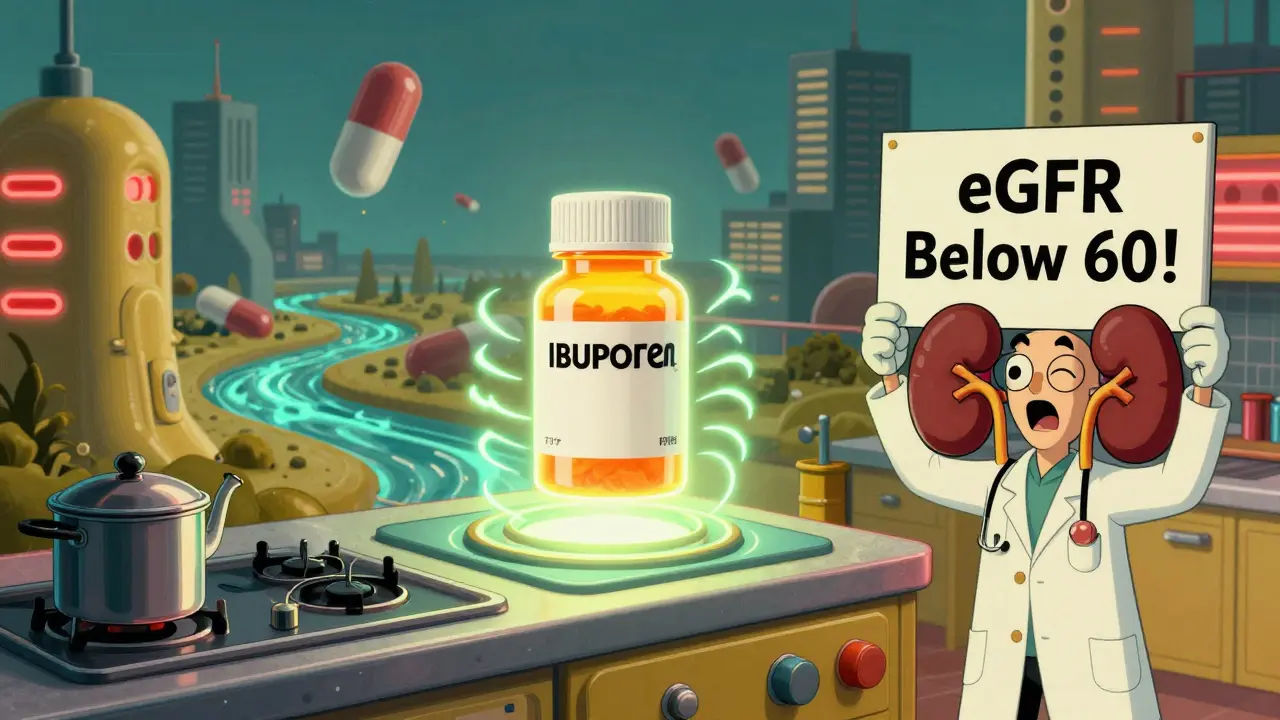
Studies show that NSAIDs are responsible for 1 to 5% of all hospital-acquired acute kidney injuries. That’s not rare. In fact, in people over 65 or those with existing kidney problems, the risk jumps significantly. One large study found that people with an eGFR below 60 mL/min/1.73m² (a sign of early kidney disease) had a 5.8 times higher chance of developing acute kidney injury after taking NSAIDs.
The Triple Whammy: A Dangerous Combination
There’s one combination that’s especially deadly for your kidneys: NSAIDs + ACE inhibitors or ARBs + diuretics. This trio is often called the “triple whammy.”
Here’s why it’s dangerous:
- ACE inhibitors and ARBs lower blood pressure and reduce protein in the urine - good for kidneys - but they also reduce blood flow to the kidneys.
- Diuretics (like furosemide or hydrochlorothiazide) make you pee more, which can lead to dehydration.
- NSAIDs block the prostaglandins your kidneys need to compensate for the reduced blood flow.
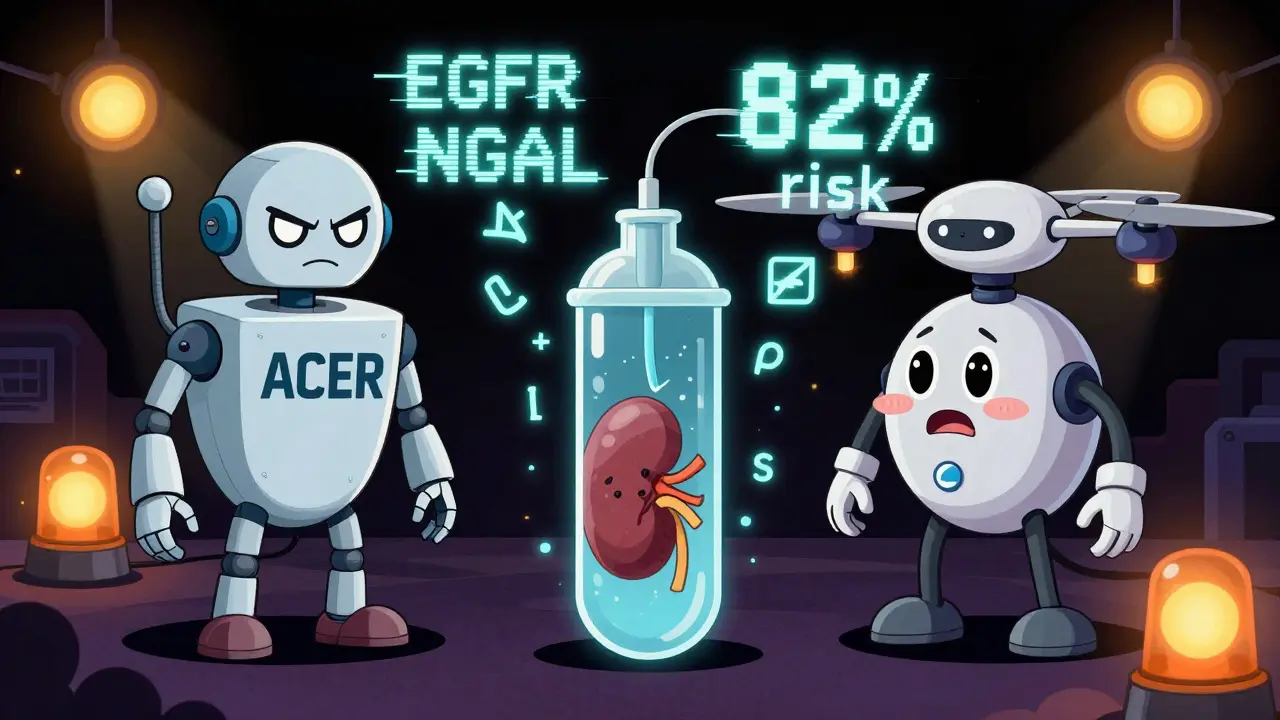
When you put these three together, your kidneys have no way to protect themselves. Research shows this combination increases the risk of acute kidney injury by 31% overall - and up to 82% in the first 30 days of use. Many patients are on all three for high blood pressure, heart failure, or diabetes. Doctors may not realize the danger because each drug is prescribed for a good reason. But together, they’re a ticking time bomb.
Who’s Most at Risk?
Not everyone who takes NSAIDs will get kidney damage. But certain people are far more vulnerable:
- People over 65 - kidney function naturally declines with age.
- Those with chronic kidney disease (eGFR below 60) - even mild kidney damage increases risk.
- People with heart failure, liver cirrhosis, or diabetes - these conditions reduce blood flow to the kidneys.
- Anyone taking diuretics, ACE inhibitors, or ARBs - especially in combination.
- Dehydrated individuals - from illness, heat, or exercise.
- People taking high doses (800 mg ibuprofen or more) or using NSAIDs daily for months.
Here’s a hard truth: many people don’t even know they have early kidney disease. A simple blood test for creatinine and an eGFR calculation can reveal it. But without routine screening, the damage slips under the radar until it’s too late.
What Are the Warning Signs?
Acute kidney injury doesn’t always come with obvious symptoms. That’s why it’s so dangerous.
Some people notice:
- Less urine output - you’re peeing less than usual, or not at all.
- Swelling in ankles, feet, or hands - fluid builds up because kidneys can’t remove it.
- Unexplained fatigue or nausea - toxins pile up in your blood.
- Confusion or difficulty concentrating - a sign of advanced buildup of waste products.
But here’s the catch: up to 30% of early cases show no symptoms at all. Creatinine levels can rise without you feeling anything. That’s why regular monitoring matters - especially if you’re on long-term NSAIDs.
On patient forums like Reddit’s r/kidneybros, dozens of people share stories of being told their symptoms were “just aging” or “dehydration” - until their creatinine hit 4.0 or higher. Many say their doctors never warned them about kidney risks. That’s not just a gap in knowledge - it’s a preventable public health failure.
NSAIDs vs. Alternatives: What’s Safer?
If you need pain relief and have kidney concerns, what can you take instead?
- Acetaminophen (Tylenol) - This is the top alternative. It doesn’t affect kidney blood flow like NSAIDs do. Studies show it carries 40-50% less risk of acute kidney injury. But don’t overdo it - more than 3,000 mg a day can harm your liver.
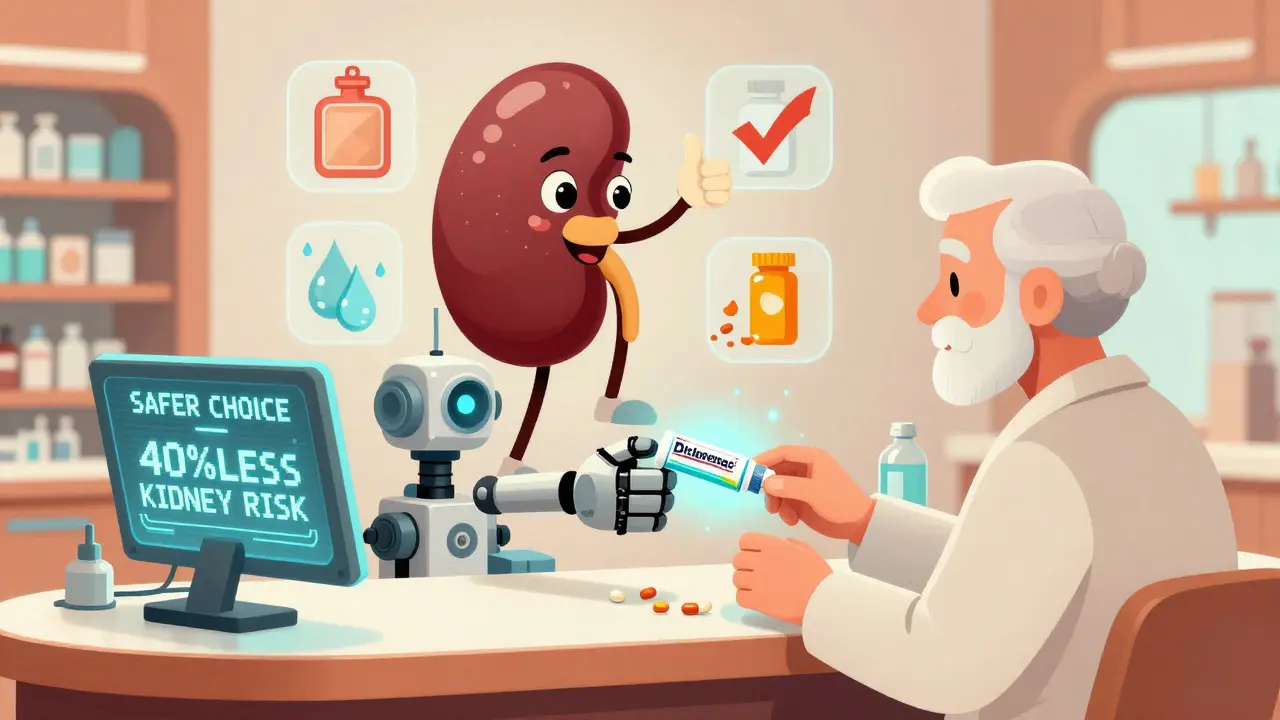
- Topical NSAIDs - Gels, creams, or patches (like diclofenac gel) deliver the drug directly to the sore spot. Only 6-10% gets into your bloodstream. A 2024 JAMA trial showed a 40-50% lower risk of kidney injury compared to pills.
- Physical therapy or heat/cold therapy - For back pain or arthritis, these can reduce reliance on pills.
- Opioids - These don’t hurt your kidneys, but they come with major risks: addiction, constipation, drowsiness. They’re not a long-term solution.
For athletes: Don’t take NSAIDs before or during marathons or long hikes. Dehydration and heat stress already strain your kidneys. Adding NSAIDs can drop kidney blood flow by 50%. A 2006 study of marathon runners found that even though only 0.001% developed kidney injury, every case was linked to NSAID use during intense exercise.
How to Use NSAIDs Safely - If You Must
If you have no kidney disease and are otherwise healthy, occasional use of low-dose NSAIDs is usually fine. But if you’re over 60, have high blood pressure, or take other meds, follow these rules:
- Check your eGFR - Ask your doctor for a blood test. If it’s below 60, NSAIDs are risky. Below 30? Avoid them entirely.
- Avoid the triple whammy - Never combine NSAIDs with ACE inhibitors, ARBs, and diuretics unless your doctor has a clear plan and monitors you weekly.
- Use the lowest dose for the shortest time - No more than 7-10 days for acute pain. Don’t take them daily unless absolutely necessary.
- Stay hydrated - Drink water before, during, and after taking NSAIDs. If you’re sick with vomiting or diarrhea, skip NSAIDs.
- Choose topical over oral - For joint or muscle pain, try a gel first.
- Monitor symptoms - If you notice less urine, swelling, or fatigue, stop the NSAID and call your doctor.
What Doctors Should Be Doing
Experts agree: the current system is failing patients. The American Society of Nephrology now recommends a 4-step prevention plan:
- Test kidney function (eGFR and urine albumin) before starting chronic NSAID therapy.
- Screen for the triple whammy and avoid it.
- Limit NSAID use to 7-10 days without follow-up.
- Check kidney function weekly if used longer than 10 days.
The American Geriatrics Society’s Beers Criteria says NSAIDs should be avoided in people with eGFR under 30 and used with extreme caution in those with eGFR between 30 and 60. Even then, only the lowest dose for the shortest time.
But many primary care doctors don’t know these guidelines. Or they assume patients won’t follow them. That’s why patient education is critical.
What’s Changing in 2026?
New tools are emerging to make NSAID use safer:
- NSAID-RF Risk Calculator - Developed by the American Society of Nephrology, this tool uses 12 factors (age, blood pressure, eGFR, diuretic use) to predict your 30-day risk of kidney injury with 87% accuracy.
- Urinary NGAL - A new biomarker that detects kidney damage before creatinine rises. It’s still in research, but early trials show it can spot injury within hours.
- Topical NSAIDs - Now widely available without prescription in many states. They’re becoming the go-to for older adults with arthritis.
- Genetic testing - Researchers have found gene variants (like PTGS2) that make some people more prone to NSAID kidney damage. Future tests could identify high-risk individuals before they ever take a pill.
The NIH has invested $15.7 million into the NSAID Kidney Safety Initiative to develop better screening and safer drug formulations. One promising trial is testing a new version of ibuprofen combined with acetylcysteine - a compound that may protect kidney tissue from oxidative stress.
Bottom Line: Don’t Assume Safety
Just because a drug is sold over the counter doesn’t mean it’s harmless. NSAIDs are powerful medicines with serious side effects - especially for your kidneys. If you have high blood pressure, diabetes, heart disease, or are over 60, you’re at higher risk. And if you’re taking any of the “triple whammy” drugs, you’re playing with fire.
Before you reach for that ibuprofen bottle again, ask yourself: Do I really need it? Is there a safer option? Have I checked my kidney numbers lately? A simple blood test could save your kidneys - and your life.
Can NSAIDs cause permanent kidney damage?
Yes. While many cases of NSAID-induced acute kidney injury are reversible if caught early, repeated or prolonged use - especially in people with existing kidney disease - can lead to permanent damage. Studies show chronic NSAID users have a 50% higher risk of CKD progression. In some cases, patients end up needing dialysis because the damage wasn’t recognized until it was too late.
Is Tylenol safer than ibuprofen for kidneys?
Yes, acetaminophen (Tylenol) is generally safer for kidneys because it doesn’t affect blood flow to the kidneys like NSAIDs do. Studies show it carries 40-50% less risk of acute kidney injury. However, it doesn’t reduce inflammation, and taking more than 3,000 mg per day can harm your liver. For people with liver disease, even Tylenol can be risky.
Can I take NSAIDs if I have high blood pressure?
It depends. NSAIDs can raise blood pressure and reduce the effectiveness of blood pressure medications like ACE inhibitors and diuretics. If you have high blood pressure and are on these drugs, combining them with NSAIDs increases your risk of acute kidney injury by up to 82%. Talk to your doctor before using NSAIDs. Topical options or Tylenol are often better choices.
How do I know if my kidneys are being affected by NSAIDs?
Symptoms like less urine, swelling, or fatigue can be signs - but up to 30% of people show no symptoms at all. The only reliable way is through blood tests: check your serum creatinine and calculate your eGFR. If your eGFR drops more than 25% from your baseline after starting NSAIDs, you likely have kidney injury. Urine tests for protein or NGAL can also help detect early damage.
Are topical NSAIDs safe for people with kidney disease?
Yes, topical NSAIDs like diclofenac gel are much safer for people with kidney disease because only a small amount enters the bloodstream - about 6-10%. A 2024 clinical trial showed a 40-50% lower risk of kidney injury compared to oral NSAIDs. They’re a great option for localized pain like arthritis in the knee or hand. But avoid applying them to large areas of skin or broken skin, and still limit use to 7-10 days unless directed by a doctor.
Should I stop NSAIDs if I have early kidney disease?
If your eGFR is below 60, you should avoid NSAIDs unless absolutely necessary and under close medical supervision. The American College of Rheumatology and the American Society of Nephrology both recommend avoiding them in this group. For mild pain, try Tylenol, physical therapy, heat, or topical treatments. If you’ve been taking NSAIDs daily for months, talk to your doctor about tapering off and switching to safer alternatives.
venkatesh karumanchi
January 25, 2026 AT 04:14Been taking ibuprofen for my back pain for years, never thought twice about it. Found out last year my eGFR was 58 - doctor looked at me like I’d brought a grenade to a gunfight. Now I use the diclofenac gel and drink water like it’s my job. Small change, huge difference. 🙏
Jenna Allison
January 27, 2026 AT 00:58As a nephrology nurse, I see this every week. The triple whammy is terrifying - and so preventable. Patients often don’t realize their BP med, diuretic, and Advil are working together to sabotage their kidneys. I always ask: ‘Do you take OTC pain meds?’ 80% say ‘no’ - until I ask again, more specifically. Education saves kidneys.
Vatsal Patel
January 27, 2026 AT 11:18Oh wow, so NSAIDs are the new cigarettes? Let me guess - next they’ll ban aspirin because ‘some people’ might accidentally not die of kidney failure while taking it. How about we stop treating adults like toddlers who can’t read labels? If your kidneys are that fragile, maybe don’t take drugs that say ‘may harm kidneys’ on the bottle. 🤷♂️
Sharon Biggins
January 28, 2026 AT 09:24My dad’s on lisinopril and hydrochlorothiazide and takes ibuprofen for his arthritis… I’ve been trying to get him to switch to tylenol for months. He says ‘it doesn’t work as good.’ I showed him this article and he finally agreed to try the gel. Small win. 🥹 Stay hydrated, folks. Water is your best friend.
lorraine england
January 29, 2026 AT 14:07Topical NSAIDs are a game-changer. I’ve been using diclofenac cream for my knee for 6 months now - zero GI issues, no kidney spikes. My doctor was skeptical at first, but my eGFR stayed stable. Also, heat wraps + stretching = magic. Who knew? 😌
Kat Peterson
January 31, 2026 AT 00:00MY KIDNEYS ARE CRYING 😭 I took 800mg ibuprofen for 3 weeks straight after my surgery and didn’t know I had CKD until my creatinine hit 2.1… I almost died. Now I have a little sign on my bathroom mirror: ‘DON’T BE A FOOL. ASK YOUR DOCTOR.’ I’m alive because I read this. Thank you. 🙏💔
Himanshu Singh
February 1, 2026 AT 04:13It’s funny how we treat our bodies like machines you can just keep running on cheap fuel. We’ll drive a car 200k miles with regular oil changes, but we’ll slam ibuprofen like candy and expect our kidneys to hold up. Maybe the problem isn’t the drug - it’s our arrogance. We think ‘natural’ or ‘over-the-counter’ means ‘harmless.’ But biology doesn’t care about marketing.
Our kidneys don’t shout. They whisper. And by the time we hear them… it’s too late.
Elizabeth Cannon
February 2, 2026 AT 21:45Just got my eGFR back - 54. I’ve been taking naproxen for 5 years for my RA. I’m switching to Tylenol today. Also ordering the topical gel. No more excuses. If you’re reading this and you’re over 50 and on meds? Do the blood test. Your future self will thank you. 💪