
Opioid-Induced Hyperalgesia: How to Spot and Treat It
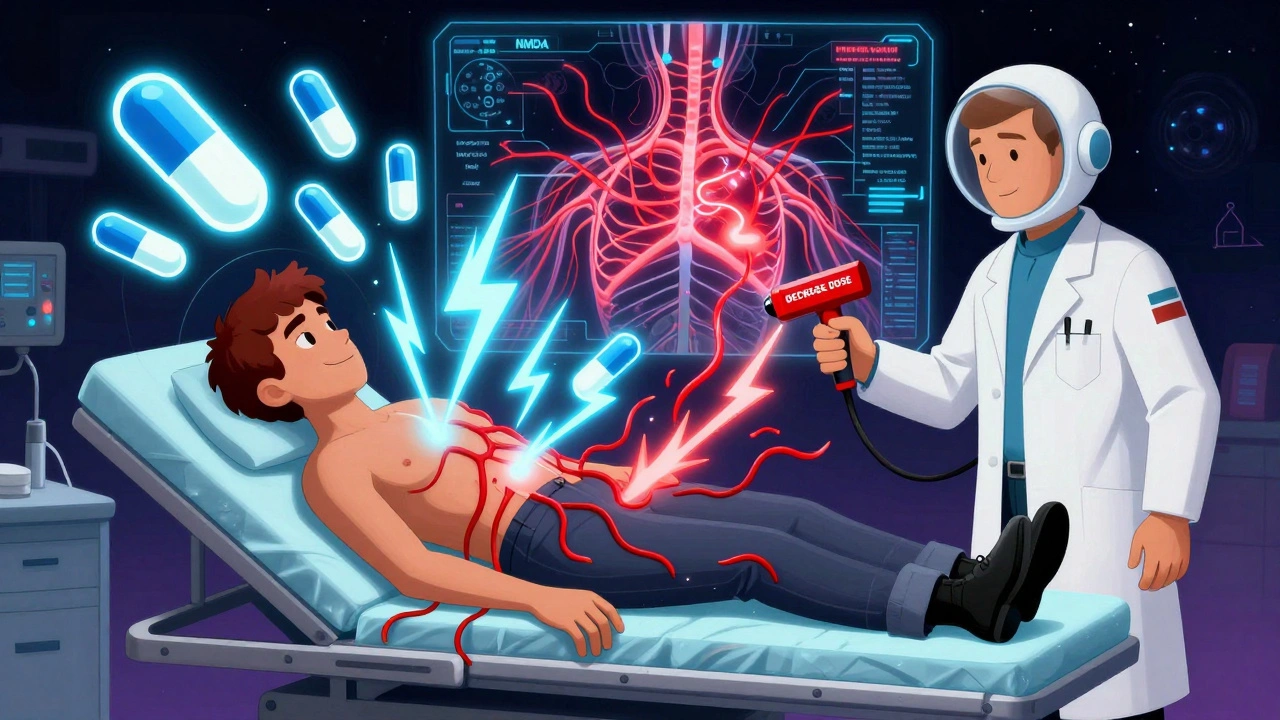
When opioids stop working - and pain gets worse - it’s not because the condition is getting worse. It might be something called opioid-induced hyperalgesia (OIH). This isn’t tolerance. It’s not withdrawal. It’s a strange, counterintuitive reaction where the very drugs meant to dull pain end up making you more sensitive to it. Patients on long-term opioids often report their pain spreading, becoming sharper, or flaring up from light touches that never hurt before. And when doctors respond by increasing the dose, things only get worse.
What Exactly Is Opioid-Induced Hyperalgesia?
Opioid-induced hyperalgesia is when your nervous system becomes overly sensitized because of opioid use. Instead of blocking pain signals, opioids start amplifying them. This isn’t rare. Studies show 2% to 15% of people on chronic opioid therapy develop it. In some clinics, up to 30% of cases once labeled as "tolerance" are now being reclassified as OIH.
It doesn’t take years to develop. In susceptible individuals, symptoms can appear after just 2 to 8 weeks of continuous use. High doses - especially above 300 mg of morphine daily - raise the risk. People with kidney problems are more vulnerable too, because opioid metabolites build up in their system. Morphine-3-glucuronide and hydromorphone-3-glucuronide, common breakdown products, are directly linked to nerve sensitization.
Unlike tolerance - where you need more drug to get the same pain relief - OIH makes pain worse when you take more. You might feel burning, stabbing, or aching pain in areas that never hurt before. Allodynia - pain from something harmless like a light blanket or a breeze - becomes common. The pain often spreads beyond the original injury site, becoming diffuse and unpredictable.
Why Does This Happen? The Science Behind the Pain
The body doesn’t just adapt to opioids - it fights back. Here’s what’s happening inside your nervous system:
- NMDA receptor activation: Opioids trigger glutamate release in the spinal cord, turning on NMDA receptors. These receptors are normally involved in learning and memory - but when overstimulated, they make pain signals louder and longer-lasting. This is why ketamine, an NMDA blocker, can reverse OIH.
- Spinal dynorphin surge: Opioids cause your body to release dynorphin, a natural pain-enhancing chemical. More dynorphin = more pain.
- Descending facilitation: Your brain’s pain-control centers, instead of shutting down signals, start sending more pain signals down the spine.
- Genetic factors: People with certain variations in the COMT gene - which affects how your body breaks down stress chemicals - are more likely to develop OIH.
- Reduced reuptake: Opioids interfere with how your body clears pain-signaling chemicals, leaving them floating around longer and amplifying their effect.
These mechanisms aren’t just theory. They’ve been proven in animal studies and human trials. That’s why giving more opioids is like pouring gasoline on a fire. The solution isn’t stronger drugs - it’s changing how you treat the system.
How Doctors Diagnose OIH (And Why It’s So Often Missed)
OIH is a diagnosis of exclusion. That means you rule out everything else first. Is the original injury healing? Are there new fractures, infections, or nerve damage? Has cancer spread? Is the patient withdrawing? Only after those are ruled out should OIH be considered.
Here’s what clinicians look for:
- Pain gets worse as opioid doses go up
- Pain spreads beyond the original area
- New allodynia appears - skin that hurts when touched
- No other medical reason for worsening pain
- Pain doesn’t improve with dose increases
A validated tool called the Opioid-Induced Hyperalgesia Questionnaire (OIHQ) helps. In a 2017 study, it correctly identified OIH in 85% of cases. Still, many doctors don’t use it. A 2024 survey found that only 65% of pain specialists routinely consider OIH - down from 78% in 2020, because some still think it’s overdiagnosed.
Quantitative sensory testing (QST) can help too. It measures how much pressure, heat, or cold it takes to cause pain. In OIH patients, thresholds drop - meaning less stimulus causes more pain. But QST isn’t widely available outside research centers.
The biggest problem? Patients and doctors both assume more opioids = better pain control. When pain worsens, the reflex is to increase the dose. That’s the trap.
How to Treat Opioid-Induced Hyperalgesia
There’s no magic pill. But there are proven strategies - and they all start with reducing opioids, not increasing them.
1. Taper the Opioid Dose
The most effective first step is lowering the dose by 10% to 25% every 2 to 3 days. This isn’t easy. Many patients panic - they fear the pain will explode. But in clinical practice, pain often improves within 1 to 2 weeks. Complete resolution can take 4 to 8 weeks.
One study from MD Anderson Cancer Center showed that 72% of patients who tapered opioids for OIH reported significant pain reduction, even though they were on lower doses.
2. Switch Opioids
Not all opioids are the same. Methadone is often the best switch because it blocks NMDA receptors - just like ketamine. Buprenorphine is another good option. It’s a partial opioid agonist with a ceiling effect, meaning it doesn’t overstimulate the system like full agonists do. Both are less likely to trigger hyperalgesia.
3. Add NMDA Antagonists
Ketamine - yes, the same drug used in anesthesia - is now a frontline treatment for OIH. At low doses (0.1-0.5 mg/kg/hour), it can reverse pain sensitization in hours. Some clinics use low-dose oral ketamine or nasal sprays for ongoing management. Studies show 60% to 70% of patients respond.
4. Use Other Pain Modulators
- Clonidine: An alpha-2 agonist that calms the nervous system. Dose: 0.1-0.3 mg twice daily.
- Gabapentin or pregabalin: These target nerve hypersensitivity. Dose: 300-1800 mg daily in divided doses.
- Low-dose naltrexone: Emerging evidence suggests even 1-4.5 mg/day can reduce central sensitization without blocking opioid pain relief.
5. Non-Drug Therapies
Medication alone isn’t enough. Physical therapy helps retrain the nervous system. Cognitive behavioral therapy (CBT) teaches patients to manage pain signals without relying on drugs. Mindfulness and graded activity programs have shown strong results in reducing pain catastrophizing - a major driver of chronic pain.
What Happens If You Don’t Address It?
Ignoring OIH leads to a vicious cycle: more opioids → more sensitization → more pain → more opioids. This increases the risk of overdose, addiction, and long-term nerve damage. It also makes future pain management harder - because the nervous system becomes harder to reset.
Patients stuck in this cycle often end up on multiple high-dose opioids, antidepressants, anticonvulsants, and even benzodiazepines. Their quality of life plummets. Many stop working, stop socializing, and become dependent on the system.
Worse, they’re often labeled as "drug-seeking" or "non-compliant." That stigma delays real treatment.
What’s Changing in 2025?
There’s new momentum. The FDA now requires opioid labels to mention OIH as a possible side effect. The National Comprehensive Cancer Network (NCCN) includes OIH protocols in its 2024 pain guidelines. And research is accelerating.
One NIH-funded trial (NCT05217891) is mapping genetic markers linked to OIH susceptibility. Two commercial genetic tests are expected to launch in early 2025 - they’ll check for COMT variants that increase risk. This could help doctors decide who should avoid long-term opioids before they even start.
Pharmaceutical companies are investing more too. Three new NMDA modulators are in Phase II/III trials. One, called NMDA-101, showed 80% pain reduction in early trials without sedation or dissociation - a big step forward.
Final Thoughts: It’s Not About Cutting Opioids - It’s About Fixing the System
OIH isn’t a failure of the patient. It’s a failure of the system. We’ve been taught to treat pain with more drugs. But sometimes, the cure is the cause.
Recognizing OIH means rethinking pain management. It means trusting that less can be more. That reducing opioids doesn’t mean giving up - it means choosing a better path.
If you’re on long-term opioids and your pain is getting worse, ask your doctor: Could this be OIH? Don’t wait for it to get worse. The sooner you address it, the faster your body can heal - and the better your life can be.
Is opioid-induced hyperalgesia the same as tolerance?
No. Tolerance means you need higher doses to get the same pain relief. OIH means your pain gets worse when you take more opioids. You can have both at the same time, but they require different treatments. Tolerance is managed by increasing the dose; OIH is managed by reducing it.
Can you get OIH from low-dose opioids?
Yes. While high doses and long-term use increase risk, OIH can occur at lower doses - especially in people with genetic risk factors or kidney problems. It’s not just about the amount - it’s about how your nervous system reacts over time.
Does ketamine for OIH make you "high"?
At the low doses used for OIH (0.1-0.5 mg/kg/hour), most patients don’t feel euphoria or dissociation. Side effects like dizziness or mild nausea are possible but usually mild and short-lived. It’s not the same as recreational ketamine use.
How long does it take to recover from OIH?
Most patients see improvement within 2 to 4 weeks of reducing opioids. Full recovery - where pain returns to baseline and sensitivity normalizes - usually takes 4 to 8 weeks. Some need longer, especially if they’ve been on high doses for years.
Can I switch to marijuana or CBD instead of opioids for OIH?
CBD and marijuana may help with some types of chronic pain, but there’s no strong evidence they reverse OIH. They don’t block NMDA receptors or reduce central sensitization the way ketamine or methadone do. They can be part of a broader plan, but not a replacement for targeted OIH treatment.
Is OIH a sign of addiction?
No. OIH is a neurobiological change in pain processing - not a behavioral or psychological addiction. People with OIH aren’t chasing euphoria. They’re trying to control pain that’s getting worse. Mistaking OIH for addiction leads to harmful stigma and delays proper care.
What should I ask my doctor if I suspect OIH?
Ask: "Could my worsening pain be due to opioid-induced hyperalgesia?" Request a review of your opioid dose history. Ask if switching to methadone or buprenorphine is an option. Ask about ketamine or gabapentin as adjuncts. And ask if they’ve used the OIHQ questionnaire to assess you.
Kevin Estrada
December 3, 2025 AT 22:15Katey Korzenietz
December 4, 2025 AT 01:11Chris Jahmil Ignacio
December 4, 2025 AT 21:18Paul Corcoran
December 6, 2025 AT 15:34Stacy Natanielle
December 7, 2025 AT 14:57kelly mckeown
December 8, 2025 AT 18:49Tom Costello
December 9, 2025 AT 05:17Justin Hampton
December 9, 2025 AT 15:05Pooja Surnar
December 10, 2025 AT 21:18Sandridge Nelia
December 11, 2025 AT 20:31Mark Gallagher
December 13, 2025 AT 00:20Wendy Chiridza
December 14, 2025 AT 03:02Pamela Mae Ibabao
December 14, 2025 AT 13:03Gerald Nauschnegg
December 15, 2025 AT 11:14