
Out-of-Pocket Costs: What Patients Really Pay for Generic vs Brand-Name Drugs
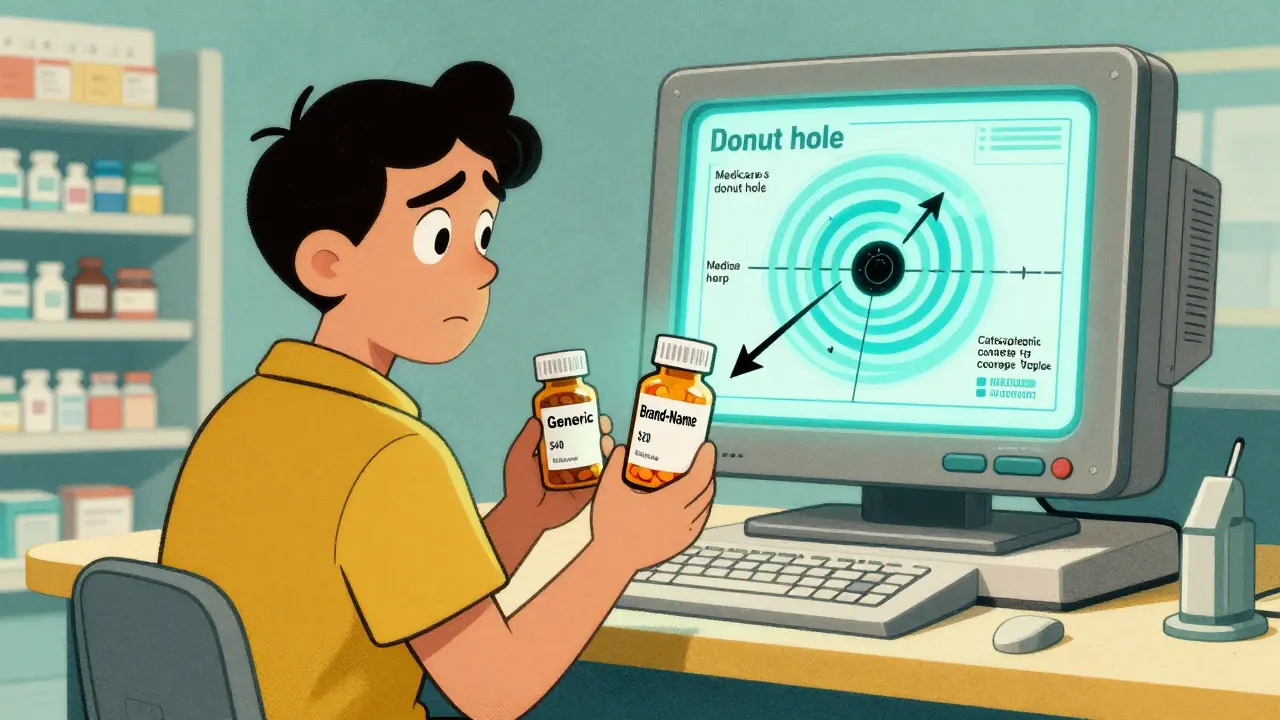
Most people assume that generic drugs are cheaper than brand-name drugs. And they’re right-generic drugs usually cost 80 to 85% less. But what you actually pay at the pharmacy counter isn’t always that simple. For many patients, especially those on Medicare Part D, the out-of-pocket cost for a generic drug can sometimes be higher than for the brand-name version. It sounds backwards, but it’s real-and it’s built into how insurance works.
Why Generics Are Usually Cheaper (And Why That Doesn’t Always Help)
Generic drugs have the same active ingredients as brand-name drugs. The FDA requires them to work the same way in your body. They’re not weaker. They’re not less safe. They’re just cheaper to make because the manufacturer doesn’t have to repeat expensive clinical trials. That’s why nine out of every ten prescriptions filled in the U.S. are for generics. But here’s the catch: just because a drug is generic doesn’t mean your bill at the pharmacy is low. Your out-of-pocket cost depends almost entirely on your insurance plan. If you have a flat $10 copay, then your generic costs $10 whether the drug is $5 or $500. If you’re on a coinsurance plan-say, 25% of the drug’s price-you’ll pay more if the list price goes up, even if the drug is generic. And that’s where things get messy. Brand-name drug prices have been rising faster than inflation for years. In one study, median list prices for brand-name drugs jumped 16.7% over two years. But patients with flat copays didn’t pay more. Patients with coinsurance? They paid the full increase.The Medicare Part D Trap
Medicare Part D is where the system breaks down in the most surprising way. The program has a coverage gap, often called the “donut hole.” Once you and your plan spend a certain amount on drugs, you enter this gap and pay more out of pocket-until you hit catastrophic coverage, where you only pay 5% of the drug’s cost. Here’s the twist: brand-name drug manufacturers are required to give discounts during the donut hole. Those discounts count toward your out-of-pocket spending. Generic manufacturers? They don’t have to. So if you’re taking a high-priced generic drug, you have to spend way more before you reach catastrophic coverage. In 2019, a patient on a brand-name drug needed to spend $982 to get out of the donut hole. A patient on a high-priced generic? They had to spend $3,730-nearly four times as much. That’s not a mistake. It’s policy. And it means patients using generics can end up paying more over time, even if the drug itself is cheaper.Who Pays the Most-and Why
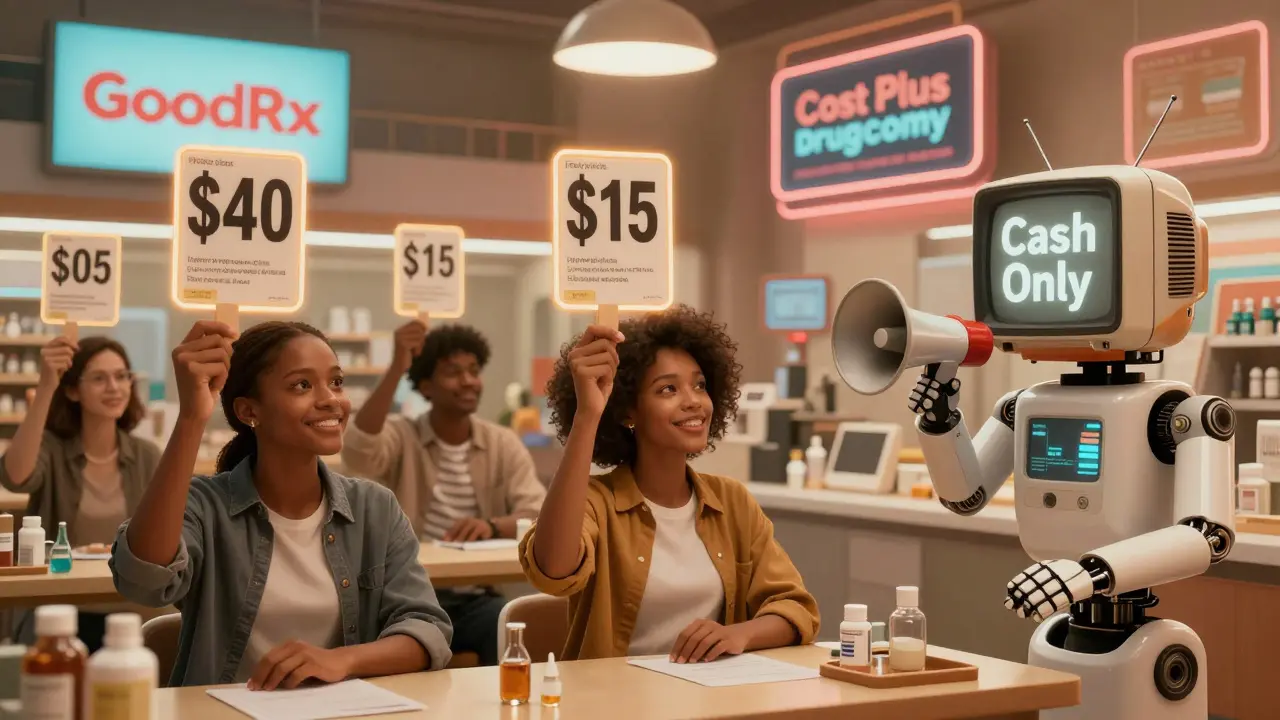
The people who pay the most aren’t always the ones you’d expect. Uninsured patients can sometimes pay less than insured ones by skipping insurance entirely. Cash-only pharmacies like Mark Cuban’s Cost Plus Drug Company let you pay a transparent price without insurance markups. In 2024, patients saved an average of $4.96 per prescription on 11.8% of generic drugs using this model. For uninsured people, the savings were biggest. But if you’re on Medicaid, you won’t save anything by going cash-only. Medicaid already negotiates deep discounts, so there’s no room for better deals. And if you’re on a private plan with a high deductible, you might be paying hundreds of dollars for a generic drug because your plan hasn’t kicked in yet. Even more confusing: some insurers and pharmacy benefit managers (PBMs) profit from opaque pricing. A 2022 analysis found that patients may be overpaying for generics by 13 to 20% because middlemen take a cut without passing savings along. The system isn’t broken-it’s designed to make money for companies, not lower costs for patients.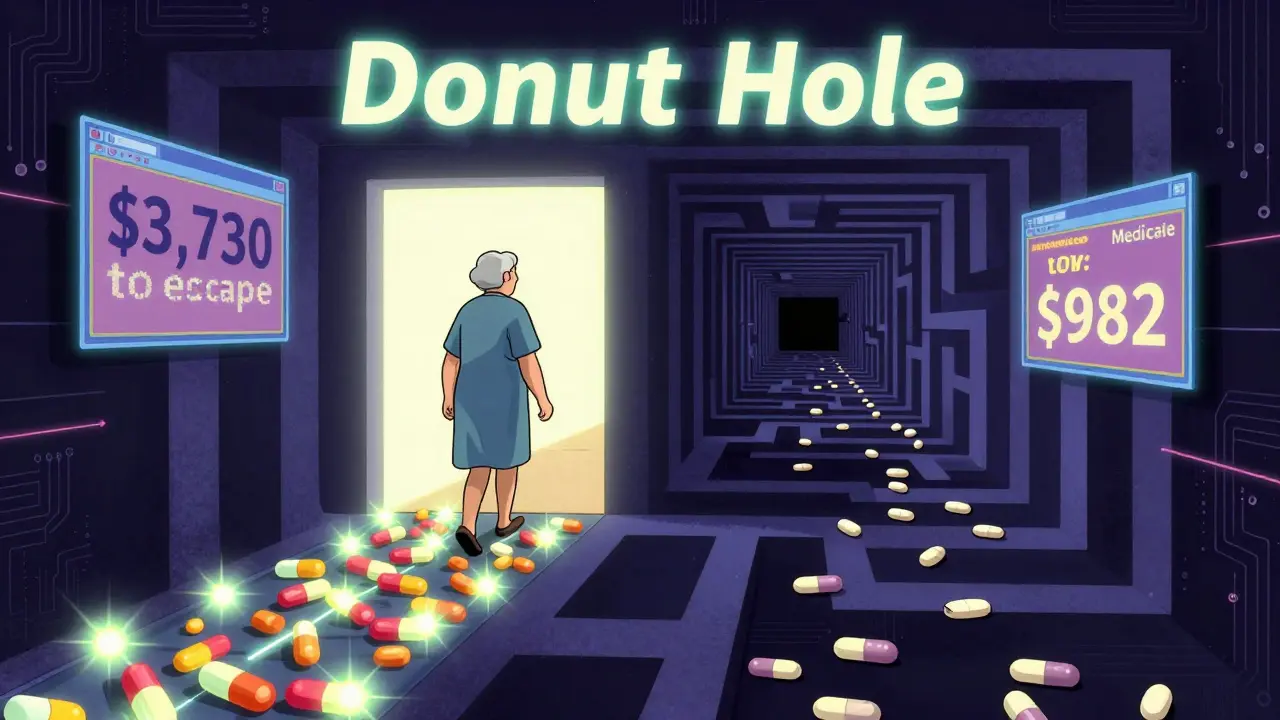
When Brand-Name Drugs Are the Better Deal
It’s rare, but it happens. If you’re on Medicare Part D and your generic drug is expensive, it might actually be cheaper to switch to the brand-name version-even if the brand costs more upfront. Why? Because the manufacturer discount during the donut hole counts toward your out-of-pocket spending. Once you hit catastrophic coverage, you pay just 5% of the price. So if the brand costs $200 but you get a discount that counts toward your cap, you’ll reach catastrophic coverage faster than if you used a $150 generic with no discount. This isn’t advice to always pick the brand. It’s a warning: your plan’s structure matters more than the drug’s label. Ask your pharmacist or insurer: “Does this drug’s price count toward my out-of-pocket maximum?” If the answer is no, you might be paying more than you need to.What You Can Do Right Now
You don’t have to accept whatever bill you get. Here’s what works:- Ask if your prescription can be switched to a lower-cost generic. Not all generics are priced the same-ask your pharmacist to compare prices at different pharmacies.
- Use GoodRx or SingleCare. These apps show cash prices that are often lower than your insurance copay, especially for generics.
- Try cash-only pharmacies like Mark Cuban Cost Plus Drug Company. They’re not for everyone, but if you’re paying over $20 a month for a generic, it’s worth checking.
- Ask your doctor to write “dispense as written” only if you truly need the brand. Otherwise, let the pharmacy substitute the generic.
- If you’re on Medicare, review your plan every year during open enrollment. Your drug costs can change dramatically between years.
The Bigger Picture
Generics saved the U.S. healthcare system $338 billion in 2020 alone. Over ten years, that adds up to nearly $2.4 trillion. But those savings aren’t reaching patients evenly. The system is rigged to reward volume over affordability. PBMs, insurers, and manufacturers all get paid based on list prices, not what patients actually pay. That’s why even though 90% of prescriptions are generics, they make up only about 18% of total drug spending. The rest? Brand-name drugs, priced like luxury goods, with insurance plans that don’t protect patients from the highest costs. The fix isn’t simple. But awareness is the first step. You’re not being lazy or careless if you’re confused. The system is designed to be confusing. The good news? You have more power than you think. You can shop around. You can ask questions. And sometimes, paying cash is the smartest move of all.Common Myths About Generic Drugs
- Myth: Generics are weaker or less effective. Fact: They must meet the same FDA standards for safety and effectiveness as brand-name drugs.
- Myth: If your doctor prescribed the brand, you have to stick with it. Fact: Your doctor can write “dispense as written,” but you can still ask for a generic unless it’s medically necessary.
- Myth: Insurance always gives you the lowest price. Fact: Sometimes the cash price is lower-especially for generics.
- Myth: All generics cost the same. Fact: Two different pharmacies might charge $5 and $40 for the same generic. Always compare.
Why is my generic drug more expensive than the brand-name version?
This usually happens with Medicare Part D. Generic manufacturers don’t provide discounts during the coverage gap (donut hole), while brand-name manufacturers do. Those brand-name discounts count toward your out-of-pocket spending, helping you reach catastrophic coverage faster. So even though the generic costs less upfront, you may have to spend much more to get the same level of coverage.
Should I always choose the generic drug?
Usually, yes-but not always. If you’re on Medicare Part D and your generic is expensive, check whether the brand-name version would cost less overall because of manufacturer discounts. Also, if your insurance has a high deductible, paying cash at a discount pharmacy might be cheaper than using your insurance at all.
Can I use GoodRx with my insurance?
No, you can’t combine GoodRx with insurance. But you can use GoodRx instead of insurance. If the GoodRx price is lower than your insurance copay, pay cash using the coupon. Many people don’t realize they can do this-especially for generic drugs.
Do I need to tell my doctor if I want a generic?
Not necessarily. Pharmacies are allowed to substitute generics unless your doctor writes “dispense as written” or “do not substitute.” But if you’re concerned about cost, ask your doctor at the time of the prescription: “Is there a generic available that’s just as effective?”
Why don’t pharmacies tell me the cash price is lower?
Pharmacies and pharmacy benefit managers make more money when you use insurance, even if it costs you more. They’re not required to tell you about cash discounts. That’s why tools like GoodRx and Mark Cuban’s Cost Plus Drug Company exist-to give you the information they won’t.
Paul Huppert
January 1, 2026 AT 10:32Wow, I had no idea generics could cost more than brand names under Medicare. I always assumed the generic was the smart choice. This changes everything.
Lawver Stanton
January 2, 2026 AT 20:58Let me tell you, I spent three years thinking I was saving money by taking generics-until I got hit with a $400 bill for a $12 pill because my plan didn’t count the price toward the donut hole. The system is literally rigged. I’m not even mad, I’m just… impressed by how efficiently they’ve turned healthcare into a pyramid scheme. I’ve started paying cash for everything now. No more insurance middlemen. No more games. Just price. Simple. Transparent. And yes, I’m still alive.
Sara Stinnett
January 3, 2026 AT 11:33How is it that a nation that prides itself on free-market capitalism has engineered a pharmaceutical ecosystem where the cheapest product is punished by design? This isn’t capitalism-it’s feudalism with a pharmacy receipt. The fact that brand-name manufacturers get to subsidize their own monopolistic pricing while generics are left to rot in the donut hole is not an accident. It’s a feature. The PBM oligarchs didn’t just exploit the system-they built it from the ground up to extract every last dime from the sick and the elderly. And we call this innovation?
Hanna Spittel
January 4, 2026 AT 04:12OMG I JUST REALIZED WHY MY RX WAS $50 😭 I THOUGHT I WAS BEING SO SMART WITH THE GENERIC… 😩💸
Brandon Boyd
January 6, 2026 AT 00:18Hey-this is actually super important info, and you’re not alone in being confused. The system is designed to overwhelm you, but knowledge is power. Start using GoodRx before you even walk into the pharmacy. Compare cash prices. Ask your pharmacist to check three different locations. You’d be shocked how often the same pill costs $3 at one store and $45 at another. Small steps, big savings. You got this.
Branden Temew
January 7, 2026 AT 14:55So let me get this straight: we’ve created a world where the most affordable drug is the most expensive option… because the system rewards complexity over care. We’ve turned healthcare into a riddle wrapped in a mystery inside an insurance form. And the punchline? You’re supposed to be grateful for the coupon. The real tragedy isn’t the cost-it’s that we’ve normalized being fooled.
Frank SSS
January 8, 2026 AT 16:11Okay, I’ve been reading this whole thing and I’m just… emotionally drained. Like, I didn’t even know this was a thing. I thought my $10 copay was my cap. Turns out I’ve been paying $100 a month for a $7 generic because the pharmacy got a kickback. I feel like I’ve been scammed by my own insurance. I don’t even know who to yell at anymore.
Brady K.
January 10, 2026 AT 10:44This isn’t a healthcare issue-it’s a rent-seeking catastrophe. PBMs are the ultimate arbitrage parasites: they negotiate rebates from manufacturers, then pocket the difference while forcing patients to pay list price. The ‘generic discount’ is a myth. The real discount is buried in the fine print, and it’s going to shareholders, not patients. We need to abolish the PBM middleman layer entirely and force transparent, direct pricing. Or better yet-nationalize drug pricing. It’s the only thing that makes sense when the market is this broken.
Kayla Kliphardt
January 11, 2026 AT 21:08I’ve been on Medicare for five years and never realized this. I’m going to call my pharmacist tomorrow and ask if my generic counts toward my out-of-pocket max. Thank you for writing this. I didn’t know I had questions until I read this.
John Chapman
January 13, 2026 AT 11:34THIS IS WHY WE NEED TO FIGHT FOR MEDICARE FOR ALL 😤💊 NO MORE GAMES. NO MORE DONUT HOLES. NO MORE PHARMACY BUREAUCRATS PROFITING OFF OUR SICKNESS. WE DESERVE BETTER. 🙌 #PharmaIsARipoff
Urvi Patel
January 13, 2026 AT 16:00Why do Americans always blame the system when they dont even understand basic economics The generic is cheaper because it has no marketing cost You are paying for the brand name not the drug
anggit marga
January 14, 2026 AT 21:27Why do you think your country is so expensive because you let corporations run everything In my country we have public health and drugs cost less than bread
Joy Nickles
January 15, 2026 AT 22:42Wait wait wait… so if I pay cash I might pay LESS than my copay??? I’ve been doing this wrong my whole life?? 😭 I’m gonna cry in the pharmacy aisle now… also I just realized my pharmacist probably knew this and never told me… why do they even have jobs if they don’t tell you this??
Emma Hooper
January 17, 2026 AT 08:51My mom just got hit with a $1,200 bill for a generic blood pressure med. She’s 72. She’s on Medicare. She cried. And I just read this article and realized… this was avoidable. I’m going to take her to a cash pharmacy this week. I’m so mad I could scream. We’ve been sold a lie for decades.
linda permata sari
January 19, 2026 AT 07:58As someone who grew up in Indonesia where generics are the norm and everyone just pays cash at the local clinic, this feels surreal. In my village, a doctor writes a script, you walk to the pharmacy down the street, pay $1, and leave. No forms. No copays. No donut holes. No middlemen. Just medicine. I didn’t realize how much the U.S. system had twisted the idea of healing into a financial labyrinth. I’m not just shocked-I’m heartbroken for everyone who’s been caught in it.