
Pain and Sleep: How to Break the Insomnia-Pain Cycle for Good
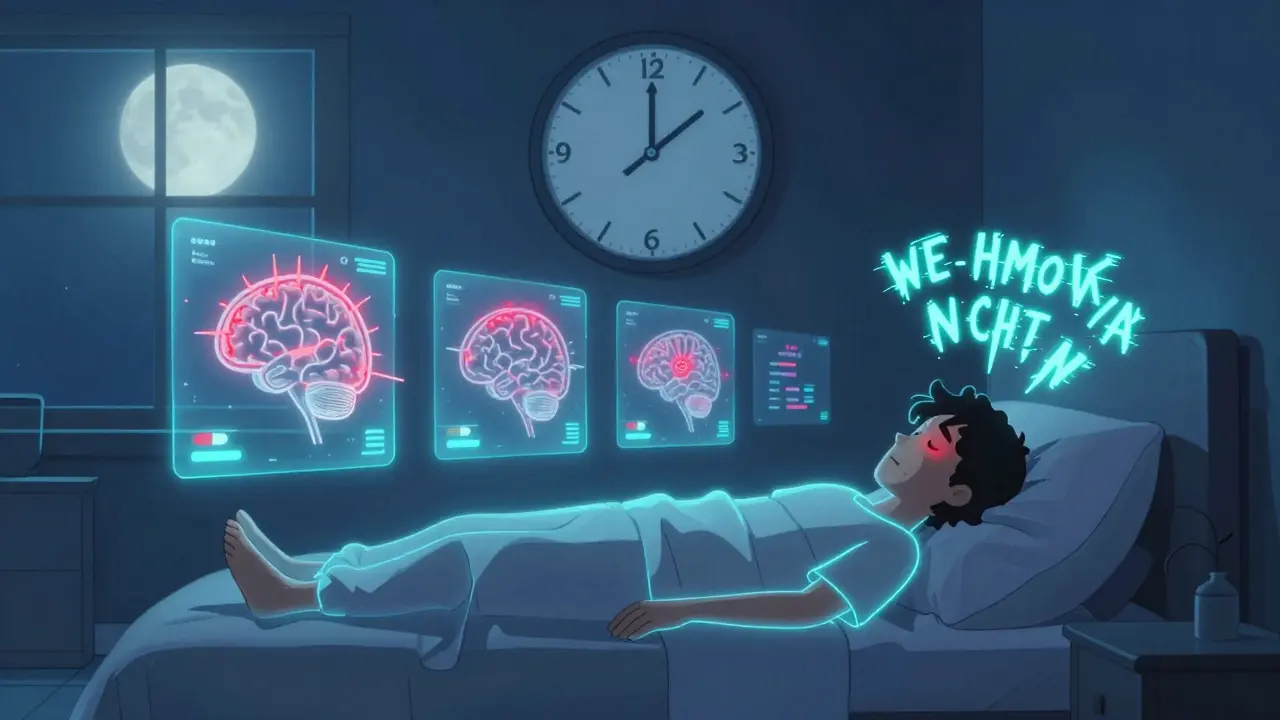
When you’re in constant pain, falling asleep isn’t just hard-it feels impossible. And when you finally do drift off, you wake up every hour, your body stiff, your pain worse than before. By morning, you’re not just tired-you’re more sensitive to pain, more irritable, more drained. This isn’t bad luck. It’s a cycle. And it’s one that traps millions of people with chronic pain every single day.
The Cycle No One Talks About
Pain keeps you awake. But lack of sleep also makes your pain worse. It’s not just one thing causing the other-it’s both, feeding each other in a loop that’s hard to break. Research shows that people with chronic pain who struggle with sleep report pain levels that are 35% to 45% higher than those who sleep well. Their pain lasts longer. Their anxiety spikes. Their ability to move, work, or even enjoy a meal drops by half. And it’s not just in their heads. Brain scans and lab tests prove it. When you don’t sleep enough, your body’s natural painkillers-like endogenous opioids-drop by 30% to 40%. At the same time, inflammation markers like IL-6 rise by 25% to 35%. Your nervous system gets wired to feel pain more easily. Think of it like turning up the volume on a speaker that’s already blaring. Sleep deprivation doesn’t just make pain feel louder-it makes your brain start hearing pain where there wasn’t any before.What Sleep Loss Does to Your Body
If you’ve ever pulled an all-nighter and then stubbed your toe, you know how much worse pain feels when you’re tired. But for people with chronic conditions like fibromyalgia, arthritis, or neuropathy, this isn’t a one-night thing. It’s daily. Studies using objective sleep trackers show that chronic pain patients take 25 to 30 minutes longer to fall asleep. Once asleep, they wake up 40% to 50% more often-and each time, they’re awake for an average of 62 minutes per night. That’s more than an hour of being fully conscious, staring at the ceiling, every single night. Total sleep time? Around 6.2 hours. Healthy adults average 7.1. That’s nearly an hour less sleep, every night, for years. Sleep efficiency-the percentage of time in bed actually spent sleeping-plummets to 8% to 10% lower than normal. And on the Pittsburgh Sleep Quality Index, a standard tool used by doctors, chronic pain patients score an average of 10.5. A score above 5 means poor sleep. So most of them are in the red zone, every night.Why Painkillers Often Make It Worse
It’s tempting to reach for sleep aids when pain keeps you up. But most over-the-counter options-like antihistamines in Tylenol PM or Benadryl-don’t fix the real problem. They just make you drowsy. And that grogginess the next day? It can actually make your pain feel worse. In fact, a 2023 Arthritis Foundation survey found that while 72% of chronic pain patients tried OTC sleep aids, only 35% saw lasting benefit. And 42% said the next-day fog made their pain feel more intense. Even prescription pain meds can hurt sleep. Opioids suppress deep sleep. NSAIDs can cause stomach discomfort that wakes you up. Muscle relaxants leave you feeling hungover. So you’re caught: pain keeps you awake, and the drugs meant to help often make sleep worse.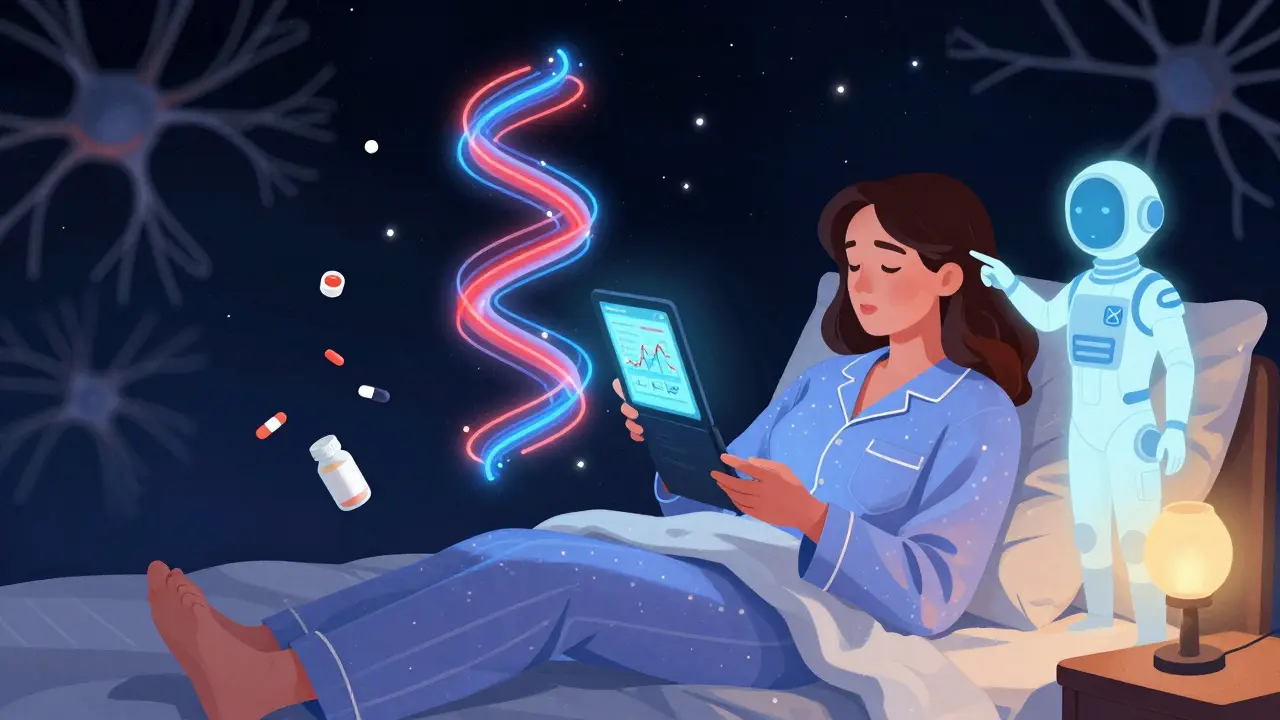
The One Treatment That Actually Works
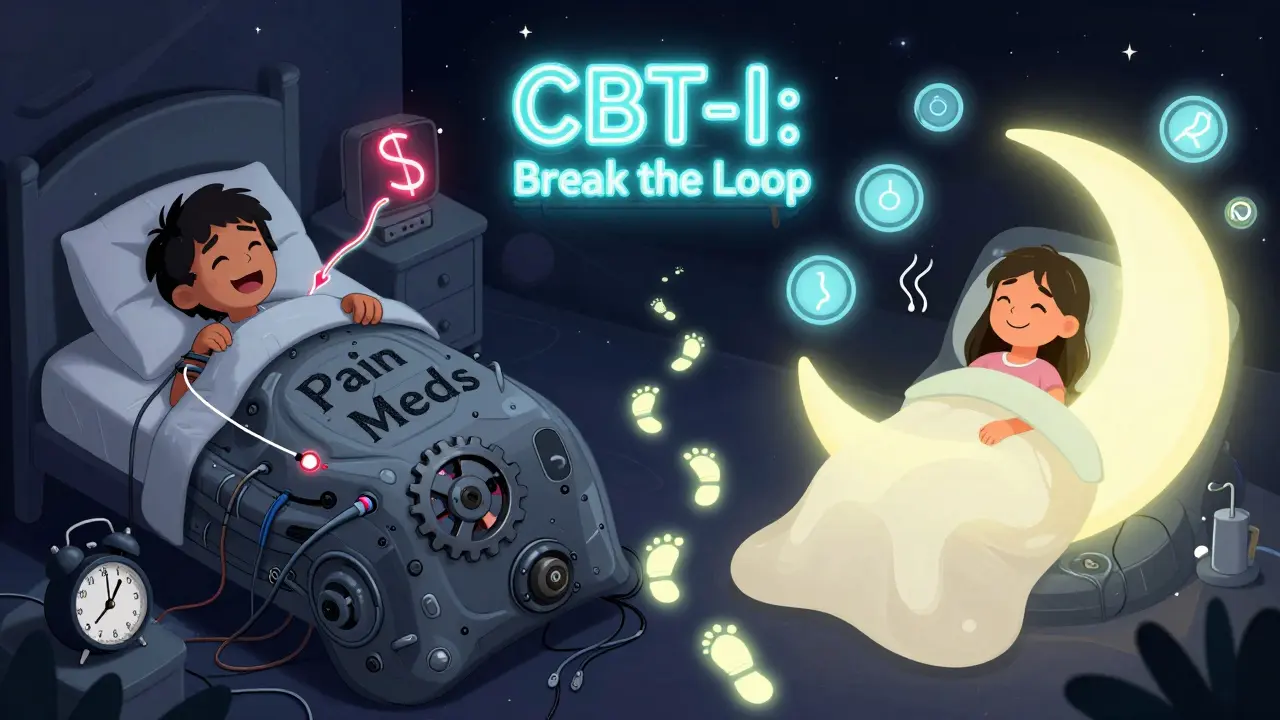
There’s a solution that doesn’t involve pills, needles, or expensive devices. It’s called Cognitive Behavioral Therapy for Insomnia, or CBT-I. And it’s not just for people without pain. It works-really works-for chronic pain patients too. CBT-I isn’t about counting sheep or listening to guided meditations. It’s a structured, evidence-based program that teaches you how to rewire your brain’s relationship with sleep. Over 8 to 10 weekly sessions, you learn:- How to use your bed only for sleep and sex-not scrolling, worrying, or watching TV
- How to reset your internal clock by sticking to a strict wake-up time, even on weekends
- How to reduce the time you spend lying awake by limiting time in bed to match actual sleep
- How to challenge thoughts like “I’ll never sleep” or “If I don’t sleep, my pain will explode”
What CBT-I Looks Like in Real Life
Sarah M., a 52-year-old from Ohio with fibromyalgia, tried everything: acupuncture, massage, nerve blocks, melatonin, magnesium. Nothing stuck. Then she started CBT-I through a telehealth program. Her therapist had her keep a sleep diary for two weeks. She tracked exactly when she got into bed, when she fell asleep, how many times she woke up, and how she felt the next day. She noticed a pattern: the worse her sleep, the more her pain spiked the next day. On days she got under 5 hours, her pain jumped from a 4/10 to an 8/10. It took her two full weeks to recover. Her therapist told her to get out of bed if she was awake for more than 20 minutes. No more lying there frustrated. She started reading in another room until she felt sleepy. She stopped napping. She set her alarm for 7 a.m. every day, no matter what. After six weeks, her sleep onset time dropped from 45 minutes to 18. Her nighttime awakenings went from 6 to 2. Her pain level? Down to a steady 3/10. She didn’t stop her other treatments. But CBT-I was the one thing that broke the cycle.How to Start Breaking the Cycle Yourself
You don’t need a fancy clinic to begin. Here’s how to start today:- Track your sleep and pain for 14 days. Use a notebook or app. Write down: time you got into bed, time you fell asleep, number of awakenings, total sleep time, and your pain level the next morning (on a scale of 1 to 10).
- Set a fixed wake-up time. No exceptions. Even on weekends. This resets your body clock faster than any supplement.
- Only use your bed for sleep and sex. No phones. No TV. No working. If you’re not sleeping, get out of bed.
- Limit time in bed. If you’re only sleeping 5 hours, stay in bed for 5 hours. Gradually add 15 minutes every week as sleep improves.
- Stop checking the clock. Turn your alarm clock away. Watching the time increases anxiety-and anxiety makes pain worse.
What Doesn’t Work (And Why)
You’ve probably tried these:- Melatonin: Helps some people fall asleep, but doesn’t fix the underlying issue of pain disrupting sleep. Often doesn’t help people with chronic pain long-term.
- Valerian root or CBD oil: Some report mild benefit, but no strong evidence it breaks the pain-sleep cycle. Quality varies wildly.
- Heavy alcohol before bed: It may knock you out, but it destroys deep sleep and increases next-day pain sensitivity.
- Just taking more pain meds: More drugs don’t fix sleep. They often make it worse.
The Future Is Integrated Care
A growing number of pain clinics now offer integrated care-where pain specialists and sleep therapists work together. In 2023, 92% of pain clinics started screening patients for insomnia, up from just 35% in 2018. That’s progress. New drugs are also in the works. Researchers at the University of Arizona are testing medications that target kappa opioid receptors-brain receptors linked to both pain and sleep. Early results show a 30% to 35% improvement in sleep quality and a 25% to 30% drop in pain scores. These drugs could be available by 2026. But right now, the best tool you have is CBT-I. It’s low-cost, drug-free, and proven. And it doesn’t just help you sleep better-it helps you live better.When to Seek Help
If you’ve been struggling with sleep and pain for more than three months, it’s time to ask for help. Don’t wait until you’re exhausted, depressed, or unable to work. Look for:- A sleep specialist who understands chronic pain
- A therapist certified in CBT-I (check the American Academy of Sleep Medicine directory)
- A pain clinic that offers integrated treatment-not just pills and injections
Breaking the pain-sleep cycle isn’t about finding the perfect mattress or the strongest painkiller. It’s about changing how you think about sleep-and how your brain learns to rest again.
Can poor sleep cause chronic pain even if I didn’t have it before?
Yes. Studies show people with chronic sleep problems but no prior pain have a 56% higher risk of developing chronic pain within five years. Sleep loss lowers your pain threshold, increases inflammation, and weakens your body’s natural pain control systems. Over time, this can trigger pain where none existed before.
Is CBT-I effective for people with severe chronic pain?
Yes. CBT-I works even for people with fibromyalgia, arthritis, back pain, and neuropathy. Research shows 65% to 75% of chronic pain patients see major improvements in sleep after 8 to 10 sessions. And 30% to 40% report reduced pain intensity-not because the pain disappeared, but because their brain stopped interpreting every sensation as dangerous.
How long does it take for CBT-I to reduce pain?
Most people start noticing better sleep within 2 to 3 weeks. Pain reduction often follows 1 to 2 weeks after that. It’s not instant, but it’s real. The key is consistency. Skipping sessions or going back to old habits slows progress. Stick with it-even on days when pain is high.
Can I do CBT-I online?
Yes. Digital platforms like Sleepio and CBT-I for Pain have shown 60% to 65% effectiveness in chronic pain patients. While in-person therapy has slightly higher success rates, online programs are a great option if you can’t find a local specialist. Just make sure the program is evidence-based and led by licensed therapists.
Why don’t more doctors talk about sleep when treating pain?
Traditionally, doctors focused only on pain relief. Sleep was seen as a side effect, not a cause. But that’s changing. Since 2023, 92% of pain clinics now screen for insomnia. Still, many providers aren’t trained in sleep therapy. If your doctor doesn’t ask about your sleep, ask them. Bring a sleep diary. Say: “I think my sleep is making my pain worse. Can you help me with that?”
Virginia Seitz
December 17, 2025 AT 09:54This changed my life. 🙏 No more 3am panic-staring at the ceiling. CBT-I was the only thing that didn’t make me feel like a zombie the next day. Thank you for writing this.
Chris Van Horn
December 17, 2025 AT 15:51While I appreciate the sentiment, one must acknowledge that the empirical foundation of CBT-I is often overstated in pop-neuroscience circles. The effect sizes are modest at best, and the placebo-controlled trials reveal significant heterogeneity in outcomes, particularly among those with comorbid psychiatric conditions. One cannot simply assume neuroplasticity as a panacea without addressing the biopsychosocial confounders inherent in chronic pain phenotypes.
Peter Ronai
December 18, 2025 AT 01:14Oh please. CBT-I? That’s what you’re pushing? I’ve been on 80mg of gabapentin and 20mg of cyclobenzaprine for five years and I’m still standing. You think some ‘sleep diary’ is gonna fix what pharma can’t? Wake up. This is just another wellness scam dressed up like science.
Brooks Beveridge
December 18, 2025 AT 05:13Hey, I get it - when you’re in pain, it’s hard to believe anything can help. But I’ve seen people go from crying in bed to laughing with their grandkids after CBT-I. It’s not magic. It’s retraining. And yeah, it takes work. But you’re worth the effort. You’re not broken. Your brain just got stuck. And it can un-stick. 💪
Anu radha
December 19, 2025 AT 12:18I have arthritis. I tried everything. This made sense. I start tomorrow. Thank you.
Joe Bartlett
December 20, 2025 AT 19:55CBT-I? Sounds like a British NHS thing. We do things proper in the States - pills, shots, surgery. This is just another ‘think positive’ gimmick.
amanda s
December 22, 2025 AT 05:53Who wrote this? Some woke therapist trying to replace real medicine with journaling? I’ve got real pain, not a ‘sleep hygiene’ problem. If you’re telling me to stop using my bed for Netflix, you clearly haven’t lived with fibro for 12 years. This is tone-deaf nonsense.
Steven Lavoie
December 22, 2025 AT 06:57While the emotional tone of the piece is compelling, the data presentation lacks critical nuance. The 30–40% pain reduction cited from CBT-I studies is often measured via self-report scales (e.g., VAS), which are highly susceptible to cognitive bias and regression to the mean. Moreover, the control groups in many trials are passive (waitlist), not active (e.g., mindfulness or pharmacological). A meta-analysis by Smith et al. (2022) in *Pain Medicine* found that when active controls are used, the effect diminishes to 12–18%. This doesn’t invalidate CBT-I - but it demands more rigorous framing.
Sachin Bhorde
December 24, 2025 AT 00:28Yo, I’m a PT and I’ve seen this 100x. CBT-I ain’t magic, but it’s the only thing that actually rewires the CNS. People think pain = tissue damage. Nah. It’s the brain’s alarm system going haywire. CBT-I turns down the volume. I tell my patients: ‘Your spine ain’t broken, your nerves are screaming.’ Sleep fixes that. Not more pills. 💯
Jigar shah
December 24, 2025 AT 22:25Can you share the link to the University of Arizona study on kappa opioid receptors? I’d like to read the preprint. Also, is there a publicly available CBT-I protocol for chronic pain that’s been peer-reviewed? Thank you.
Michael Whitaker
December 26, 2025 AT 05:08Let me be the one to say what no one else will: this entire post reads like a pharmaceutical marketing brochure disguised as patient advocacy. CBT-I is not a cure. It’s a coping mechanism. And the fact that we’re celebrating a 30% pain reduction - while ignoring that 70% of patients still suffer - is frankly, a moral failure of modern medicine. We’re treating symptoms like they’re solutions. Meanwhile, the real issue - the lack of accessible, multidisciplinary care - remains buried under wellness jargon and sleep diaries.