
Pharmacy Errors with Generics: How to Prevent and Fix Common Mistakes
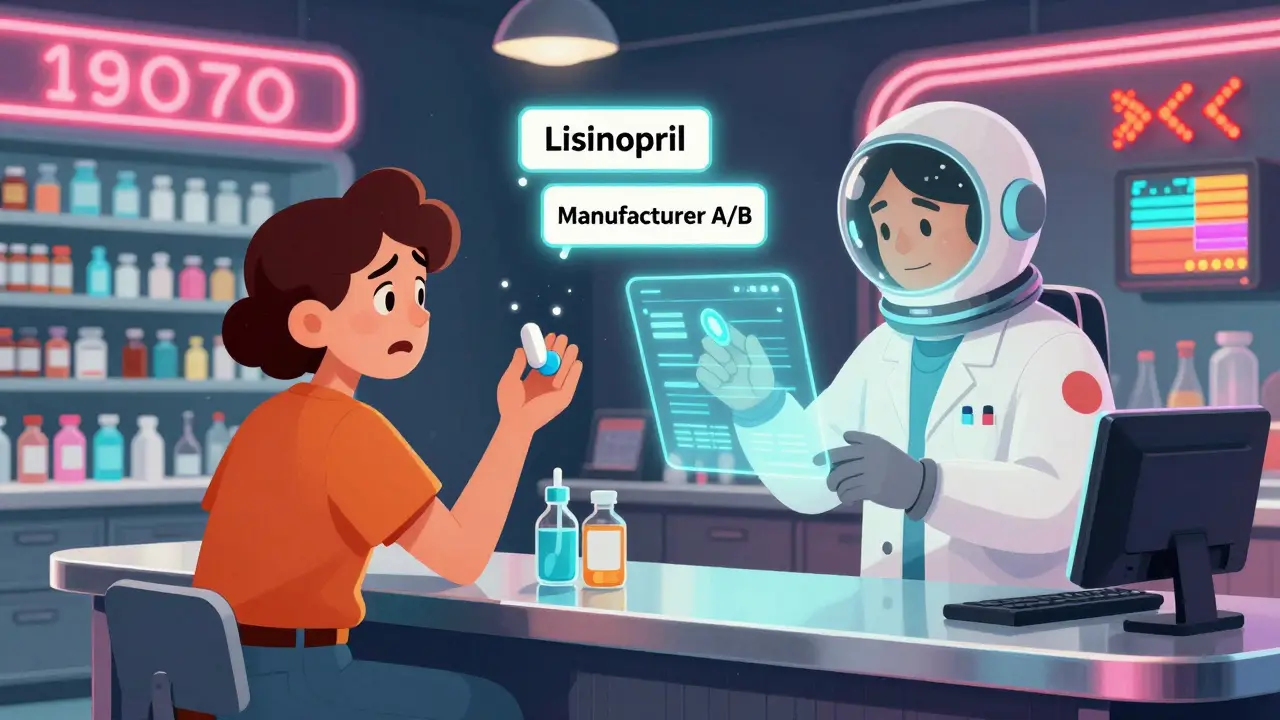
Every year, over 1.5 million people in the U.S. are harmed by medication errors-and a large chunk of those involve generic drugs. You might think generics are just cheaper versions of brand-name pills, but they come with hidden risks that even experienced pharmacists can miss. A patient gets a new prescription for lisinopril, picks it up, and notices the pill looks different. Same drug, different color, different shape. They panic. Did they get the wrong medicine? Or worse-did the pharmacy make a mistake?
These aren’t just patient worries. They’re real, documented errors. In community pharmacies, about 23 out of every 10,000 prescriptions get corrected before being handed over. That’s a lot of close calls. And when it comes to generics, the errors aren’t random. They follow patterns: wrong dosage, wrong strength, wrong manufacturer, wrong label. Sometimes, the pill looks nothing like the last one the patient took-even though it’s the exact same active ingredient. That’s where things fall apart.
Why Generics Are More Error-Prone
Generics are required by the FDA to be bioequivalent to brand-name drugs. That means they deliver the same active ingredient at the same rate and amount. But that’s where the similarity ends. Generics can differ in color, shape, size, taste, and inactive ingredients. One manufacturer’s 10mg metformin tablet is white and oval. Another’s is blue and round. A third is scored, another isn’t. Patients notice. And when they do, they assume something’s wrong.
Pharmacists face another challenge: multiple generics for the same drug. There are over 20 manufacturers of generic amlodipine in the U.S. alone. Most pharmacy systems don’t track which specific manufacturer’s version a patient received last time. So when a refill comes in from a different maker, the system doesn’t flag it. The pharmacist doesn’t know. The patient doesn’t know. But the patient might feel “different” after taking it-even if it’s pharmacologically identical. That’s not a placebo effect. It’s a real psychological trigger that leads to non-adherence or complaints.
Look-alike, sound-alike names are another trap. Generic names are long and complex: levothyroxine vs. levofloxacin. One treats thyroid disease. The other is an antibiotic. Mix them up, and you’ve got a serious problem. Even in electronic systems, these names can be misselected with a single wrong keystroke.
The Most Common Generic Medication Errors
Not all errors are the same. Some happen at the prescribing stage. Others slip through during dispensing. Here are the top five generic-specific mistakes we see in pharmacies:
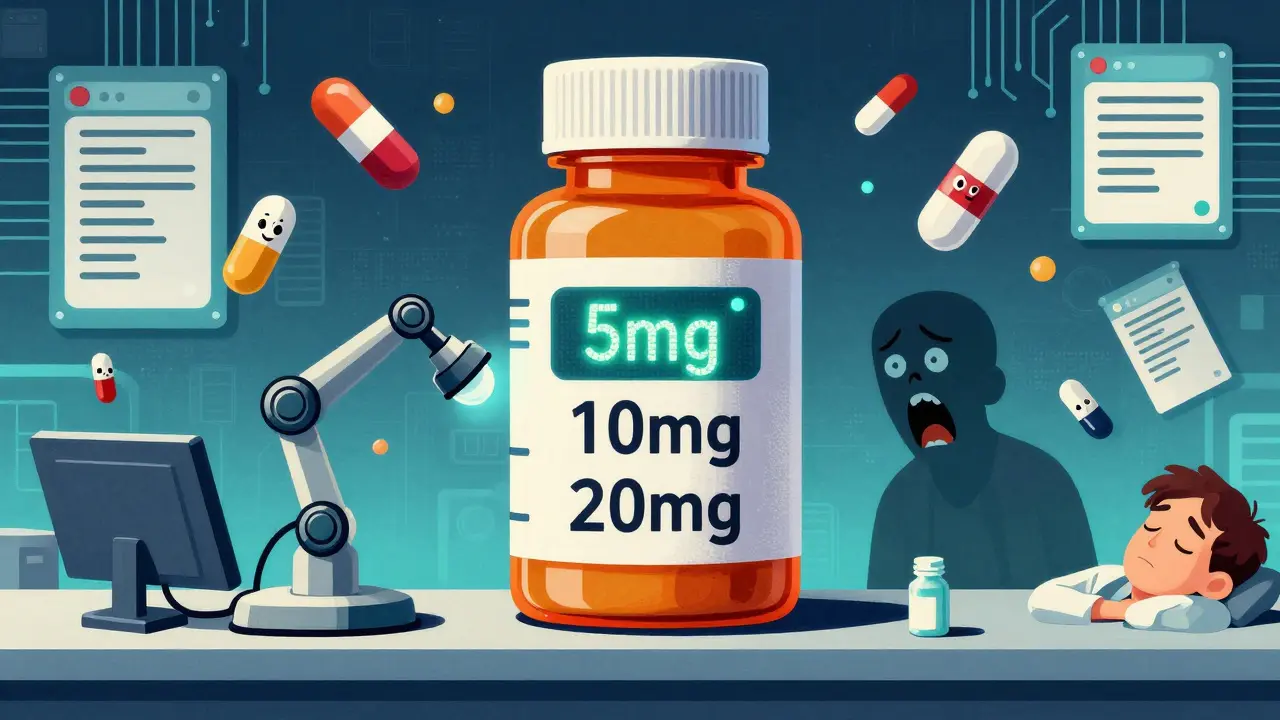
- Dosage and strength confusion - A prescriber writes “10 mg” but the generic comes in 5 mg or 20 mg tablets. Without checking the label, a pharmacist might dispense the wrong strength. This happens in nearly 40% of clinical errors.
- Wrong form or delivery method - A patient needs a liquid form of amoxicillin because they can’t swallow pills. The system defaults to the tablet version. Or worse, the pharmacy dispenses an extended-release generic when immediate-release was prescribed.
- Incorrect manufacturer substitution - The patient has had a bad reaction to a generic from Manufacturer A. But the pharmacy’s system doesn’t store that detail. The next refill comes from Manufacturer B. No warning. No flag. The patient gets sick again.
- Labeling errors - A generic label says “take twice daily” when the prescription says “twice weekly.” This exact error led to an overdose case documented by AHRQ. The patient was on a chemotherapy drug, and the mistake nearly killed them.
- Missing counseling - When a patient gets a new generic for the first time, they need to know: “This looks different, but it’s the same drug.” If the pharmacist doesn’t explain that, the patient might stop taking it-or go to the ER thinking they were poisoned.
How Technology Can Stop These Errors
Technology isn’t magic, but it’s the best tool we have. In hospitals, computerized order entry (CPOE) cuts medication errors by 55%. In primary care, it’s still 48%. But community pharmacies? Only 35-40% use these systems. That’s a gap.
Here’s what works:
- Bar code scanning - When a pharmacist scans the prescription and the bottle, the system checks: Is this the right drug? Right strength? Right patient? This alone reduces adverse events by half.
- Clinical decision support (CDS) - Modern systems can flag look-alike/sound-alike pairs. They can also detect if a patient’s last fill was from a different manufacturer and ask: “Is this substitution intentional?”
- Drug database updates - Outdated databases are a silent killer. 42% of pharmacists say their systems don’t reflect current generic formulations. If your software says “generic metoprolol” but doesn’t list whether it’s tartrate or succinate, you’re flying blind.
One pharmacy in Ohio started using CDS with manufacturer tracking. Within six months, their generic substitution errors dropped by 68%. They didn’t hire more staff. They didn’t change their workflow. They just turned on the alerts.
What Pharmacists Can Do Today (No Tech Needed)
You don’t need a million-dollar system to prevent errors. Start with the basics:
- Use the 8 R’s every time - Right patient, right drug, right dose, right route, right time, right reason, right documentation, right response. Say them out loud. Write them down. Make them a habit.
- Check the physical pill - Don’t just trust the label. Look at the tablet. Match it to the description in your drug reference book. Use Epocrates or Drug Facts and Comparisons. Update them annually.
- Ask about previous generics - When a patient refills, ask: “Last time you got this, it was a white pill. This time it’s blue. Did you notice?” That simple question catches 15-20% of potential issues.
- Counsel on first fills - Mandate a 3-5 minute conversation every time a patient gets a new generic. Explain: “This is the same medicine, just made by a different company. It might look different, but it works the same.”
- Document manufacturer changes - If a patient says, “I had a rash with the green pill,” write that down. Not in your head. In the system. Even if it’s just a note: “Patient reports sensitivity to Manufacturer X.”
Why Patients Are the Missing Link
Most error prevention focuses on the pharmacy. But patients are the last line of defense. If they don’t understand what they’re taking, they won’t speak up-even when something’s wrong.
Studies show that when patients are told upfront that generics are safe and identical, they’re 70% more likely to take them as prescribed. But if they’re handed a new pill with no explanation, they assume it’s a mistake. Some stop taking it. Others buy the brand-name version out of fear-spending $200 a month instead of $10.
Pharmacists need to own the education part. Not just “take this pill.” But “this is why it looks different. This is why it’s cheaper. This is why it’s just as safe.”
One pharmacist in Texas started handing out small cards with each generic: “This is a generic version of [brand name]. Same active ingredient. Same effect. Made by [manufacturer]. If you have questions, call us.” Patient complaints dropped by 40% in three months.
What’s Changing in 2026
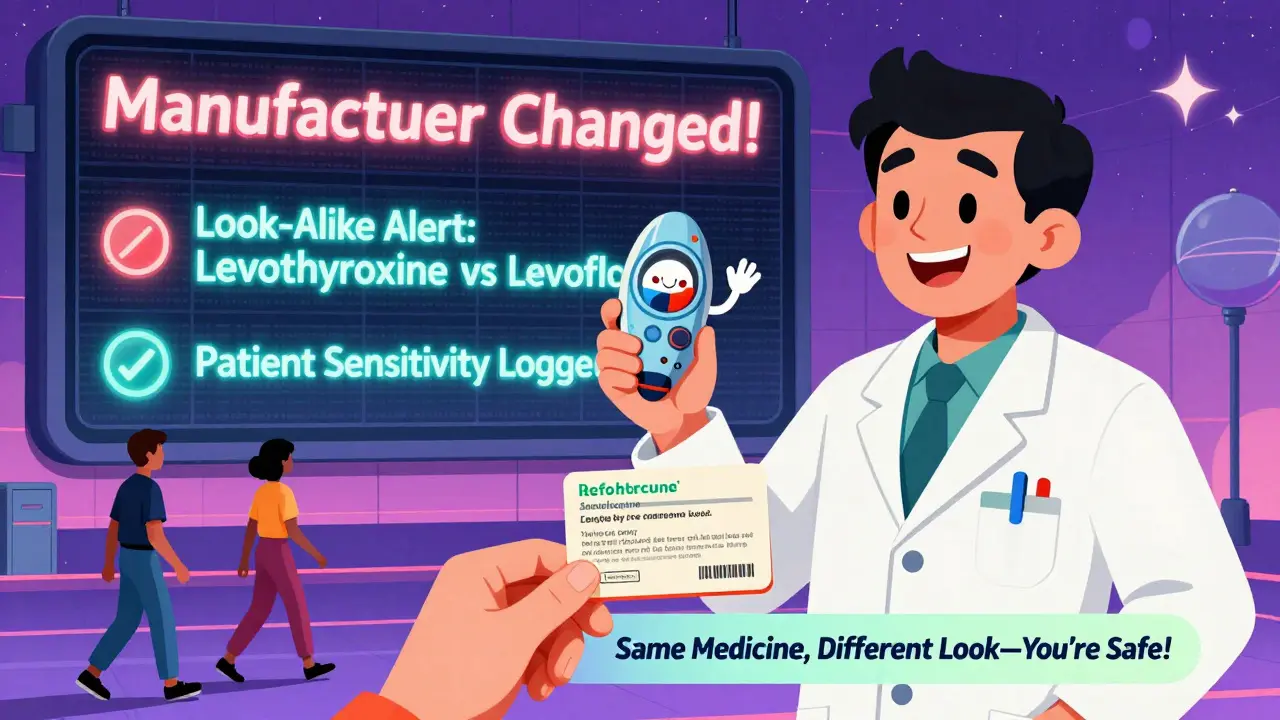
The FDA just updated its Generic Drug User Fee Amendments (GDUFA III) to require better communication about manufacturer changes. That means pharmacies will soon get alerts when a generic switches makers-before the bottle even arrives.
The WHO is pushing for standardized naming rules to reduce look-alike/sound-alike errors. And AI-powered systems are starting to predict which patients might react poorly to certain generics based on their genetic profile. Pilot programs in Texas and California are showing 22% fewer errors when these tools are used.
But the biggest change? More hospitals and insurers are demanding that community pharmacies adopt the same safety standards. The Leapfrog Group now requires tracking of generic substitutions as part of its safety certification. If your pharmacy doesn’t have a system to log which manufacturer’s generic a patient receives, you’re falling behind.
Final Thought: It’s Not About Cost-It’s About Control
Generics save the U.S. healthcare system $300 billion a year. That’s huge. But if we’re not careful, those savings come at the cost of patient safety. The problem isn’t that generics are unsafe. It’s that we treat them like commodities instead of medicines.
Every pill matters. Every label matters. Every patient’s trust matters. The tools are here. The knowledge is here. What’s missing is the discipline to use them consistently.
Stop assuming. Start verifying. Ask questions. Document changes. Counsel patients. Use your systems. And never let a generic pill go out the door without knowing exactly what it is-and why it’s different from last time.