
Professional Liability and Generic Substitution: How Pharmacists Can Reduce Risk
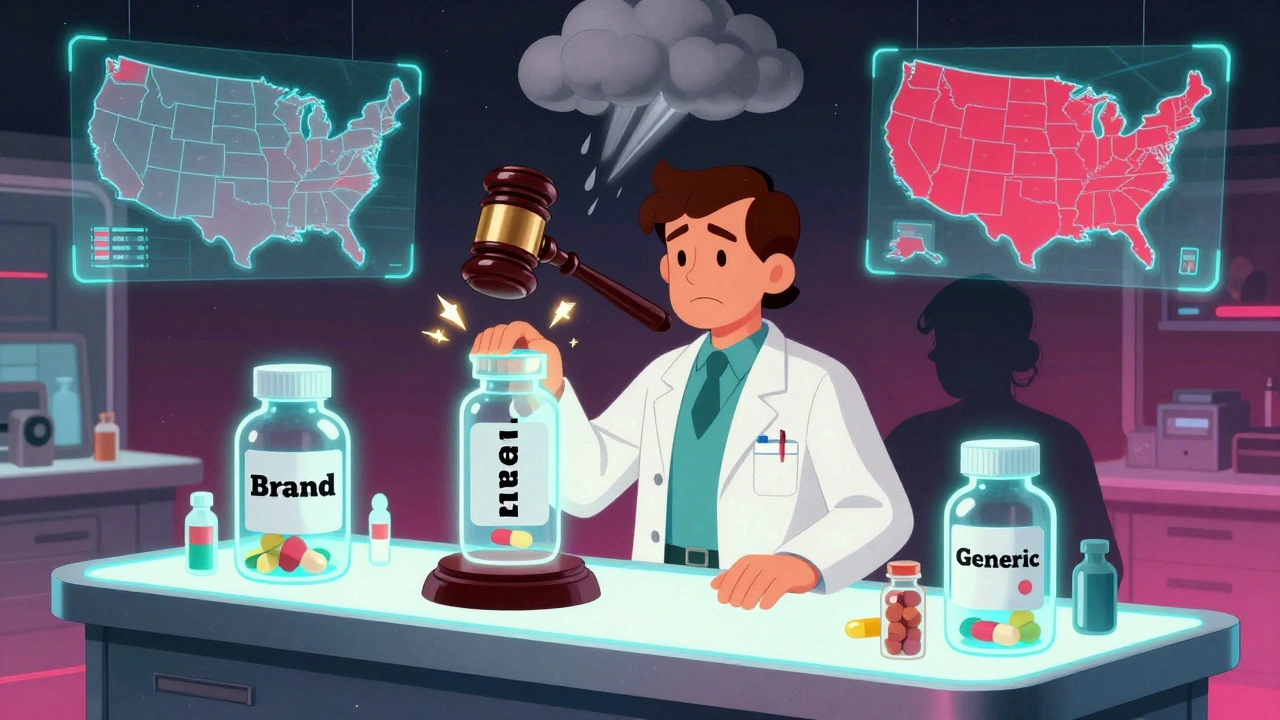
Every day, pharmacists make hundreds of decisions that can mean the difference between healing and harm. One of the most common - and most legally risky - is switching a brand-name drug for a generic. It’s fast, it’s cost-effective, and in most cases, it’s perfectly safe. But when things go wrong, the pharmacist is often the one holding the bag. Federal law protects generic drug makers from lawsuits over warning labels. Patients can’t sue the manufacturer. So who’s left? The pharmacist who dispensed the pill.
Why Generic Substitution Is a Legal Tightrope
The Hatch-Waxman Act of 1984 opened the door for generic drugs by creating a faster, cheaper approval process. The idea was simple: let patients save money without sacrificing quality. And for the most part, it worked. Today, 90% of prescriptions in the U.S. are filled with generics. They cost 85% less than brand-name drugs. That’s $1.67 trillion saved since 2009. But here’s the catch: federal law says generic manufacturers can’t change their drug labels. If the brand-name drug has a warning about a rare side effect, the generic must use the exact same wording - even if new safety data emerges. In 2011, the Supreme Court ruled in PLIVA v. Mensing that generic companies can’t be held liable under state law for failing to update those labels. The logic? They’re legally locked into the brand’s label. So if a patient is harmed, there’s no one to sue. That leaves pharmacists. In many states, pharmacists are the last line of defense. They’re expected to know when a substitution might be dangerous. But they’re not always given the tools - or the legal protection - to do it right.State Laws Vary Wildly - And So Does Your Risk
There’s no national rulebook for generic substitution. Every state sets its own rules. In 27 states, pharmacists are required to substitute generics unless the doctor says no. In 23 others, substitution is allowed but not mandatory. That sounds simple - until you realize what else varies. Some states require pharmacists to notify patients in writing. Others don’t. Thirty-two states let patients refuse substitution. But in states like Connecticut and Massachusetts, pharmacists have no legal shield. If a patient has a bad reaction after a generic switch, the pharmacist could be sued - even if they followed every rule. A 2019 study by the National Community Pharmacists Association found that states with strong liability protections had 32% fewer malpractice claims related to substitutions. States without those protections? 27% more claims. That’s not a coincidence. It’s a pattern.The Real Danger Zone: Narrow Therapeutic Index Drugs
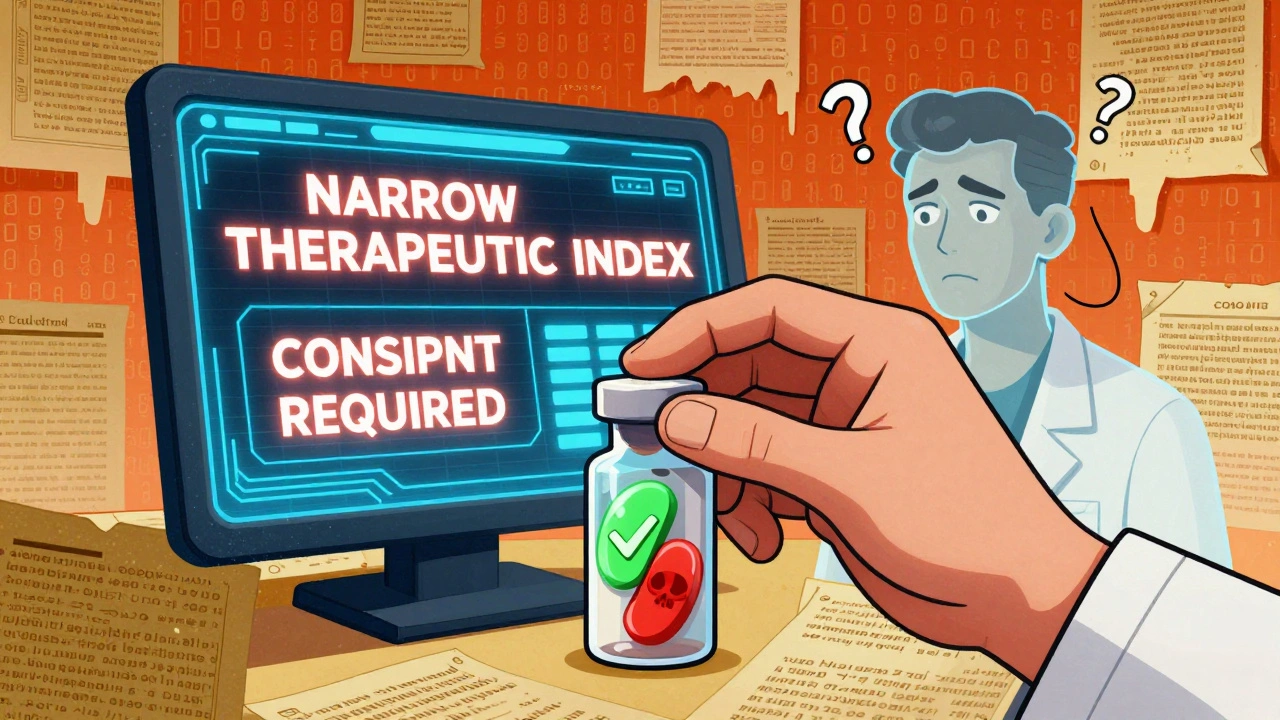
Not all generics are created equal. For most drugs - like statins or blood pressure meds - small differences in absorption don’t matter. The body can handle it. But for drugs with a narrow therapeutic index, even a 5% change in blood levels can cause serious harm. These include:- Warfarin (blood thinner)
- Levothyroxine (thyroid hormone)
- Phenytoin, carbamazepine, and other antiepileptic drugs
What Pharmacists Are Doing to Protect Themselves
Many pharmacists are tired of being the scapegoat. So they’re taking action - even when the law doesn’t require it. A 2022 survey of 452 pharmacists found that 74% have refused to substitute a generic for a narrow therapeutic index drug - even when the law allowed it - because they were afraid of liability. That’s not overcautious. That’s survival. Here’s what works:- Know your state’s laws - and update them every year. The National Association of Boards of Pharmacy keeps a live database. Don’t rely on memory.
- Use EHR alerts - If your pharmacy system flags drugs like warfarin or levothyroxine, pay attention. Set up mandatory pop-ups before substitution.
- Get written consent - Even if your state doesn’t require it, use a simple form. “I understand my prescription has been switched to a generic. I’ve been told the risks. I agree.” Sign it. Date it. File it.
- Document everything - Not just the substitution. The batch number. The manufacturer. The time you spoke to the patient. That paper trail can save your license.
- Talk to the prescriber - If you’re unsure, call the doctor. Most will appreciate you looking out for the patient. Some will say, “Don’t substitute.” Others will say, “I’ve done this before.” Either way, you’ve covered yourself.
- Get extra insurance - Standard malpractice policies often exclude substitution risks. Ask your insurer about supplemental coverage. It costs $500-$1,200 a year. Worth it.
Patients Don’t Know What’s Happening - And That’s a Problem
A 2021 survey by the Patient Advocacy Foundation found that 41% of patients didn’t know their prescription had been switched until they started feeling sick. In states with no notification rules, that number jumps to 62%. Patients assume their pharmacist is just filling the script. They don’t realize the pharmacist has the power to say no. They don’t know they can refuse. And they don’t know that the label on the bottle might not reflect the real risks of the generic version. The American Medical Association wants mandatory patient consent for narrow therapeutic index drugs. So do 87% of pharmacists surveyed by the National Association of Chain Drug Stores. But until that becomes law, the burden falls on you.
The Bigger Picture: Who’s Responsible?
This isn’t just a pharmacist problem. It’s a system failure. Generic manufacturers can’t update labels. Brand-name companies aren’t liable for generics they didn’t make. Regulators are slow to act. Patients are left in the dark. And pharmacists? They’re stuck in the middle. The FDA’s 2023 pilot program for label changes has only processed 217 requests - and only 12% came from generic makers. That tells you everything. The system is broken. Some states are trying to fix it. California and New York introduced bills in 2023 that would require generic manufacturers to adopt new safety labels within 60 days of a brand-name update. That’s a step forward. But it’s not law yet. Meanwhile, the cost of doing nothing is rising. The Congressional Budget Office estimates unaddressed adverse events from generic substitution will cost the system $4.2 billion annually by 2030. That’s not just money. It’s lives.What You Can Do Today
You can’t fix the system overnight. But you can protect yourself and your patients - starting now.- Don’t assume - Just because a drug is generic doesn’t mean it’s safe to swap. Always check the therapeutic index.
- Don’t rely on state law alone - Even in states that protect you, the patient might still sue. Documentation is your best defense.
- Don’t wait for patients to ask - If you’re substituting a high-risk drug, tell them. Even if the law doesn’t require it. Be the one who says, “I’m switching this because it’s cheaper, but I want you to know the risks.”
- Don’t ignore the signs - If a patient says, “This generic doesn’t work like the other one,” listen. It might be placebo. Or it might be real. Either way, document it.
What’s Next?
The future of generic substitution is uncertain. Biosimilars - generic versions of biologic drugs like Humira and Enbrel - are coming fast. Forty-five states already have laws for them. But liability rules are even messier. The same questions will arise: Who’s responsible when a biosimilar fails? Who updates the label? Who tells the patient? The answer won’t come from courts or Congress alone. It will come from pharmacists who refuse to be silent. Who document everything. Who speak up when they see risk. Who put patient safety ahead of convenience. That’s not just good practice. It’s the only way to reduce liability - and save lives.Can a pharmacist be sued for substituting a generic drug?
Yes, in some states. While federal law shields generic manufacturers from lawsuits over warning labels, pharmacists can still be held liable under state law if they fail to follow substitution rules, don’t notify patients when required, or substitute a high-risk drug without proper safeguards. States like Connecticut and Massachusetts offer little legal protection, increasing liability exposure.
Are all generic drugs safe to substitute?
No. Generic drugs must meet FDA bioequivalence standards (80-125% absorption compared to brand), but this doesn’t guarantee therapeutic equivalence for drugs with a narrow therapeutic index - such as warfarin, levothyroxine, and antiepileptics. Studies show higher rates of therapeutic failure and adverse events with these drugs after substitution.
What states require patient notification for generic substitution?
Eighteen states require pharmacists to notify patients directly - either verbally or in writing - when substituting a generic drug. These include California, Florida, New York, and Texas. In other states, notification is optional, leaving patients unaware they received a different medication.
Can patients refuse a generic substitution?
Yes. In 32 states, patients have the legal right to refuse a generic substitution. Pharmacists must honor this request, even if the substitution is allowed by law. Always confirm patient preference before dispensing, and document the refusal.
How can pharmacists reduce liability risk with generic substitution?
Pharmacists can reduce risk by: verifying state laws annually, using EHR alerts for high-risk drugs, obtaining written patient consent, documenting all substitutions (including batch numbers), consulting prescribers when uncertain, and obtaining supplemental malpractice insurance that covers substitution-related claims.
Why aren’t generic manufacturers required to update drug labels?
Federal law, upheld by the Supreme Court in PLIVA v. Mensing (2011), prevents generic manufacturers from changing labels unless the brand-name manufacturer does so first. This creates a legal gap: if new safety data emerges, the generic label stays outdated, and neither the generic maker nor the brand maker can be sued under state law for failing to warn.
Shawna B
December 3, 2025 AT 22:13So pharmacists get sued if a generic makes someone sick but the drug company can't be touched? That's insane.
Robert Altmannshofer
December 5, 2025 AT 00:24I’ve been a pharmacist for 18 years and this post nails it. I’ve refused substitutions for levothyroxine more times than I can count. Patients don’t get it - they think it’s just a different bottle. But when their TSH spikes and they’re exhausted for months? That’s not a coincidence. I document everything. Even the time I scribbled ‘patient refused verbal warning’ on a sticky note. Better safe than sued.
Precious Angel
December 5, 2025 AT 22:46Oh please. Let’s not pretend pharmacists are saints here. You’re all just scared of liability because you didn’t go to med school and now you’re taking out your insecurities on patients who just want to save $12 on their meds. You think I don’t know what happens when you switch my thyroid med? I’ve been on the same brand for 12 years because I’ve seen the chaos. And now you want me to sign a form like I’m agreeing to a blood transfusion? I’m not a child. I’m a grown woman who reads labels. But nooooo - you want me to sign something because you’re too lazy to actually TALK to me. And don’t even get me started on how you treat us like we’re criminals for asking if the generic is from the same batch as last month. You’re not protecting us. You’re protecting your own backsides with paperwork that no one reads.
Lyn James
December 6, 2025 AT 11:40This is the inevitable consequence of commodifying human health. We’ve turned medicine into a spreadsheet. We’ve reduced the sacred act of healing into a cost-per-pill calculation. The FDA doesn’t care. Congress doesn’t care. The pharmaceutical industry is laughing all the way to the bank. And the pharmacist? The pharmacist is the fall guy. The sacrificial lamb. The one who has to look a grieving mother in the eye and say, ‘I followed the law.’ But the law is broken. It’s not just about warfarin or levothyroxine - it’s about the soul of healthcare. When we allow corporations to dictate safety while silencing the people who actually touch the patient, we’ve already lost. And no amount of consent forms or EHR alerts will fix that. The system is rotten. And we’re all complicit.
Craig Ballantyne
December 8, 2025 AT 04:36From a regulatory pharmacovigilance standpoint, the PLIVA v. Mensing precedent creates a structural liability vacuum. The FDA’s ANDA framework, while efficient for market entry, lacks dynamic label harmonization protocols. The absence of a federal duty-to-update mechanism for ANDA holders, coupled with state-level variation in substitution mandates, generates a fragmented risk architecture. The 2022 survey data suggesting 74% of pharmacists self-restrict substitutions reflects institutionalized risk aversion - a de facto regulatory override in the absence of legislative clarity. The proposed CA/NY bills represent a necessary, albeit incremental, step toward functional liability alignment.
Kathleen Koopman
December 8, 2025 AT 20:47My aunt switched to generic levothyroxine and became a zombie for 4 months 😔 I had to drag her to the doctor. She didn’t even know it was switched. Pharmacies need to TELL people. Like, RIGHT ON THE BOTTLE. 🚨
Nancy M
December 9, 2025 AT 22:31In Japan, pharmacists are legally required to consult with patients on every generic substitution - not just for narrow therapeutic index drugs, but for all prescriptions. There’s no form to sign. No pop-up. Just a conversation. And guess what? Adverse events are lower than here. Why? Because trust is built through communication, not litigation. We’ve turned healthcare into a legal minefield instead of a healing space. Maybe it’s time we stop blaming the pharmacist and start rebuilding the system.
gladys morante
December 10, 2025 AT 12:31They’re all just trying to cover their own butts. I’ve been switched to generics my whole life and I’m fine. Stop scaring people for no reason.
Melania Dellavega
December 11, 2025 AT 22:02There’s a quiet dignity in being the one who says no - even when you’re not required to. I’ve worked in rural pharmacies where patients choose between food and meds. I’ve seen them cry because their insulin got switched and they didn’t know why they felt worse. I don’t do it for the paperwork. I do it because I remember the look on their face when they finally understood. That’s not liability. That’s care. And it’s worth every extra minute, every extra form, every extra dollar in insurance. We’re not just filling scripts. We’re holding people together.
Krys Freeman
December 13, 2025 AT 05:13America’s so soft. If you can’t handle a generic, don’t take it. Stop suing everyone. Get tough.
Jerry Ray
December 14, 2025 AT 10:39Wait - so if the brand-name drug’s label is wrong, the generic can’t fix it, and the pharmacist gets sued? That’s not a loophole, that’s a joke. Why not make the brand-name company liable for all versions? They own the original label. Let them fix it. Or let the FDA mandate label updates across the board. This whole thing is a farce.
Bethany Hosier
December 16, 2025 AT 08:27While I appreciate the nuanced legal and clinical analysis presented herein, I must respectfully posit that the current regulatory framework may inadvertently incentivize pharmacists to adopt a risk-averse posture that, paradoxically, may compromise patient autonomy and access to affordable therapeutics. The absence of a federally mandated, dynamic labeling protocol for generic pharmaceuticals - as elucidated in PLIVA v. Mensing - does indeed create a liability asymmetry that disproportionately burdens frontline dispensers. However, the proliferation of documentation protocols and supplemental insurance, while prudent, may unintentionally erode the therapeutic alliance by transforming patient interactions into compliance rituals. A more holistic solution may lie in the establishment of a centralized, real-time adverse event reporting system, accessible to both manufacturers and prescribers, with mandatory label revision triggers upon accumulation of statistically significant clinical data - thereby restoring accountability to the source while relieving pharmacists of their current untenable position as the de facto gatekeepers of pharmacovigilance.