
Provider Education on Generics: Boosting Clinician Confidence and Patient Adherence
Why Doctors Still Hesitate to Prescribe Generics
Most Americans don’t realize that 9 out of 10 prescriptions filled are for generic drugs. Yet, many doctors still reach for brand names first. Why? It’s not because generics are less effective. It’s because many clinicians still have doubts-doubts that aren’t backed by science, but by outdated assumptions, lack of training, or confusion over how generics are approved.
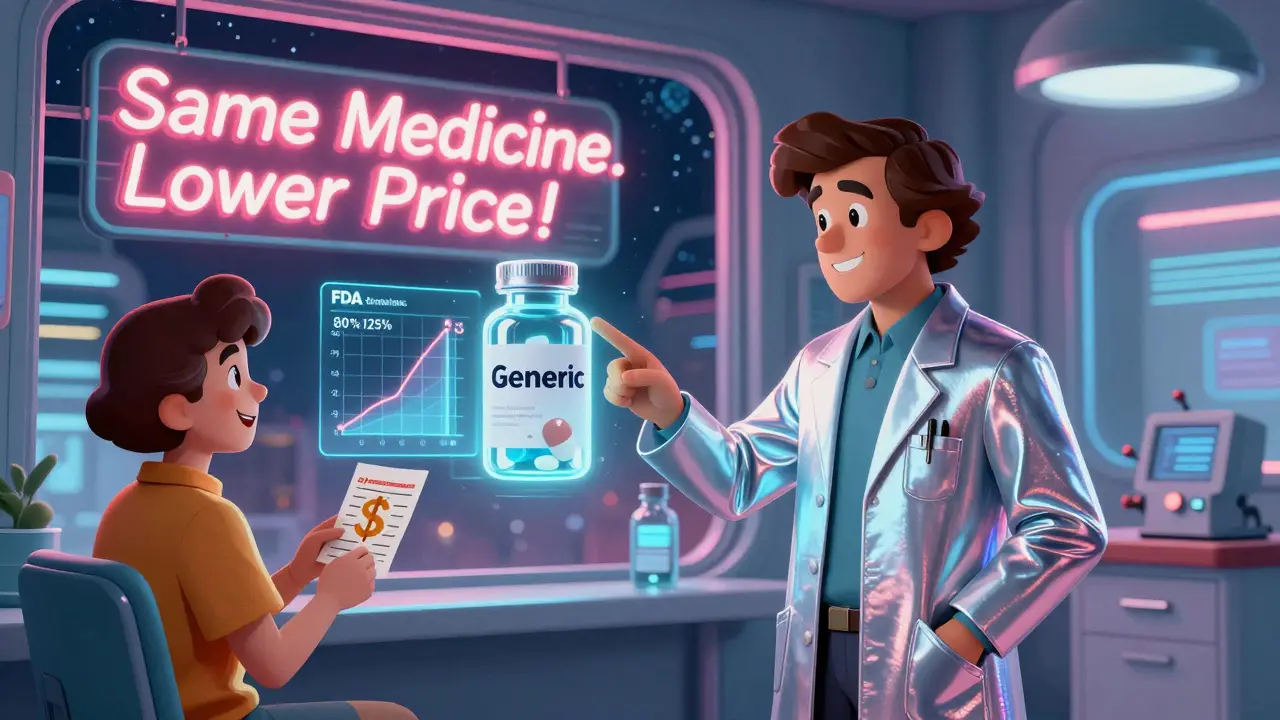
The FDA requires generic drugs to have the exact same active ingredient, strength, dosage form, and route of administration as the brand-name version. They must also prove bioequivalence: their absorption in the body must fall within a strict 80% to 125% range of the brand drug’s levels. That’s not a guess. It’s a lab-tested, statistically validated standard. Yet, a 2020 survey found 27% of prescribers incorrectly believed generics could contain up to 25% less active ingredient. That’s not just wrong-it’s dangerous if it leads to underprescribing or patient mistrust.
The Real Gap: Knowledge, Not Evidence
The problem isn’t that generics are unproven. It’s that providers aren’t trained to explain them confidently. A 2017 study showed 68% of physicians had at least some concern about generic equivalence-even though the FDA’s approval process is just as rigorous as for brand drugs. Many think different inactive ingredients (like fillers or dyes) could change how a drug works. They’re wrong. The FDA allows different inactive ingredients only if they don’t affect safety or effectiveness. And even then, those ingredients are tested for interactions and stability.
Doctors who learned in medical school that generics are "the same" often hear conflicting messages in practice. Attending physicians say "Lopressor" instead of "metoprolol." Nurses say, "The brand is better for heart patients." Patients come in saying, "My cousin had a bad reaction to the generic." Without clear, evidence-based answers, providers default to the familiar-brand names-even when cost and adherence are at stake.
How Education Changes Behavior
When clinicians get the right education, prescribing habits shift. A 2021 study in JAMA Internal Medicine compared two groups: one got a static PDF on generics, the other participated in interactive case-based sessions over several months. At six months, the interactive group retained 42% more knowledge. But more importantly, they prescribed generics 29% more often.
Why? Because education that includes real patient scenarios works. For example: a 62-year-old with hypertension is struggling to afford metoprolol. The provider who understands bioequivalence doesn’t just swap the drug-they explain why it’s safe, why it’s cheaper, and why switching won’t hurt. That conversation matters. Patients are 35% more likely to start a medication when it’s a generic-and they’re more likely to keep taking it if their doctor endorses it.
Harvard research found that when providers explicitly say, "This generic is just as good as the brand," patient-reported side effects drop by 18%. That’s not placebo. That’s the nocebo effect reversed-when fear of change creates real symptoms. Education stops that cycle.
Where Education Falls Short
Not all programs work. A Medicaid initiative in Tennessee spent $1.2 million on provider education in 2020 and saw only an 8% rise in generic use. Why? The materials weren’t integrated into the workflow. Doctors didn’t see them during prescribing. They weren’t reminded at the point of care.
Time is the biggest barrier. Eighty-nine percent of physicians say they don’t have time to learn more about generics during busy clinic days. But the solution isn’t more lectures. It’s smarter integration. Some health systems now embed pop-up alerts in electronic health records (EHRs): "This patient’s statin is on formulary as generic. Consider switching?" One pilot study showed this increased generic acceptance by 24%.
Another failure point? Confusion around biosimilars. Many providers think biosimilars (like those for rheumatoid arthritis or cancer) are the same as generics. They’re not. Biosimilars are complex biologic drugs-made from living cells-so they can’t be exact copies. But they’re still highly effective and much cheaper than the original biologics. Only 31% of providers could correctly explain this difference in a 2023 FDA survey. That’s a gap that leads to missed savings and unnecessary patient costs.
What Works: Real Tools, Real Results
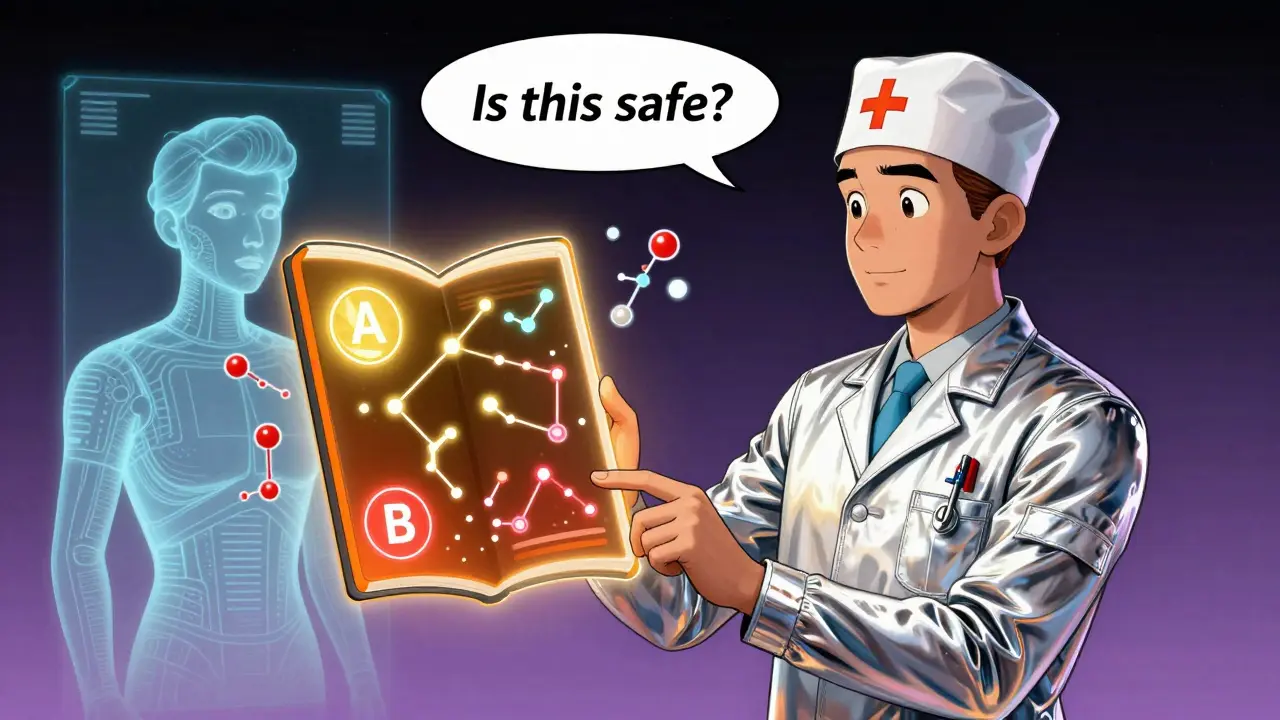
The FDA’s Generic Drug Stakeholder Toolkit is free, evidence-based, and designed for prescribers. It includes printable handouts, talking points for patients, and a guide to the Orange Book-the official list of FDA-approved generics with therapeutic equivalence ratings. An "A" rating means interchangeable. A "B" means not equivalent. Most generics are "A." But few providers know how to read it.
Academic centers are taking it further. UCSF Medical Center launched a targeted program in 2021 that trained all internal medicine residents and attending physicians on generics. Within a year, brand-name statin prescriptions dropped by 37%. The key? They didn’t just send an email. They held 90-minute sessions, followed up with case reviews, and tracked prescribing patterns monthly.
Even simple changes help. One clinic started putting a sticker on all generic prescriptions: "Same medicine. Lower price. Approved by FDA." Patient questions dropped by 40%. When providers make the message clear and consistent, patients listen.
The Future Is Personalized
The next wave of provider education won’t be one-size-fits-all. UnitedHealthcare’s 2024 pilot uses AI to spot doctors who rarely prescribe generics-maybe they write 80% of prescriptions for brand-name antidepressants. Then it delivers targeted content: a 10-minute video, a case study on adherence, or a patient testimonial. The result? A 28% increase in generic prescribing in just six months.
By 2025, Medicare’s Merit-based Incentive Payment System (MIPS) will start factoring in generic prescribing rates as a quality metric. That means hospitals and clinics will be measured not just on outcomes, but on cost-conscious care. Providers who stay informed won’t just help patients-they’ll protect their own reimbursement.
Getting Started Today
You don’t need a big budget or a fancy program to start improving your knowledge. Here’s what to do right now:
- Download the FDA’s Generic Drug Facts Handout (free, 148KB PDF). Read it once. Keep it open on your desktop.
- Learn how to read the Orange Book. Search for your most commonly prescribed drug. See its therapeutic equivalence rating.
- Next time a patient asks, "Is the generic okay?"-don’t say, "Yes." Say, "It has the same active ingredient, same dose, and was tested to work the same way in your body. The only difference is the price."
- Ask your pharmacy to flag when a brand-name drug is being prescribed when a generic is available. Use that as a teaching moment.
- Push for EHR alerts in your clinic. Even a simple pop-up can make a difference.
Generic drugs saved the U.S. healthcare system $2.2 trillion over the past decade. That’s not magic. It’s science, policy, and yes-education. When providers know the facts, patients get better care at lower cost. And that’s the kind of change that sticks.
Frequently Asked Questions
Are generic drugs really as effective as brand-name drugs?
Yes. The FDA requires generic drugs to contain the same active ingredient, strength, dosage form, and route of administration as the brand-name version. They must also prove bioequivalence-meaning their absorption in the body is within 80% to 125% of the brand drug’s levels. This is tested in clinical studies with hundreds of participants. Thousands of generics have been used safely for decades.
Why do some doctors still prefer brand-name drugs?
Many doctors were trained in an era when generics had inconsistent quality, and old habits stick. Others worry about patient complaints or don’t fully understand the FDA’s bioequivalence standards. Some confuse generics with biosimilars. Lack of updated education and time constraints in clinics also play a role. But research shows that when doctors receive clear, evidence-based training, their prescribing habits change quickly.
Can inactive ingredients in generics cause problems?
Rarely. The FDA requires that inactive ingredients (like fillers, dyes, or preservatives) in generics do not affect safety or effectiveness. While a few patients may have allergies to specific dyes or fillers (like lactose or gluten), these are rare and usually known from prior reactions. If a patient has a known allergy, the prescriber can note "dispense as written." But for the vast majority, inactive ingredients make no difference in how the drug works.
What’s the difference between a generic and a biosimilar?
Generics are exact copies of small-molecule drugs (like metformin or lisinopril), made chemically. Biosimilars are highly similar-but not identical-copies of large, complex biologic drugs (like Humira or Enbrel), made from living cells. Biosimilars require more testing than generics but are still approved as safe and effective. Many providers confuse the two, which leads to underuse of cost-saving biosimilars.
How can I learn more about generics as a provider?
Start with the FDA’s Generic Drug Stakeholder Toolkit, which includes free handouts, the Orange Book guide, and patient communication tips. The Generic Pharmaceutical Association (GPhA) offers free online modules. Many medical schools and residency programs now include generic education in their curriculum. Look for CME courses focused on cost-effective prescribing or medication safety. Even 30 minutes a month can build confidence.
Do state laws affect generic substitution?
Yes. Thirty-four states allow pharmacists to substitute a generic for a brand drug without asking the prescriber. Sixteen states require the prescriber to write "dispense as written" to prevent substitution. Some states also require pharmacists to notify the patient or prescriber when substitution occurs. Always check your state’s pharmacy board rules. But remember: even in states where substitution is allowed, the generic must still meet FDA equivalence standards.
Amit Jain
February 2, 2026 AT 12:41Simple truth: generics work. I’ve been prescribing them in rural India for years. Same active ingredient, same results, and patients can actually afford to take them. No magic, no conspiracy-just science and sense.
Mandy Vodak-Marotta
February 4, 2026 AT 06:00Okay but like… have you ever tried to explain this to a patient who’s been on Lipitor for 15 years and suddenly their ‘new’ pill looks like a blue M&M? They panic. I get it. I’ve had people cry because they think the generic is ‘watered down.’ It’s not about the science-it’s about the emotional weight of a pill. We need to stop treating this like a textbook problem and start treating it like a human one. Also, the color change? Totally throws people off. I had a guy refuse his generic metformin because it was ‘too yellow’-turned out he associated yellow pills with ‘weak’ meds from his grandma’s era. We need visuals. We need stories. We need to meet people where they are, not where we wish they’d be.
Harriot Rockey
February 5, 2026 AT 05:30This is SO important!! 🙌 I’m a nurse and I’ve seen patients drop meds because they can’t afford the brand-then end up back in the ER. When we explain, ‘Same medicine, just cheaper,’ it changes everything. One lady told me, ‘I thought generics were for people who couldn’t afford the real stuff.’ I showed her the FDA page and she cried. Not from sadness-from relief. 💙 Let’s normalize this. Generics aren’t ‘second choice.’ They’re the smart choice. And we’re the ones who get to lead that shift.
Demetria Morris
February 6, 2026 AT 18:13Let’s be honest: most doctors don’t care. They’re too busy, too lazy, or too afraid to change. The FDA doesn’t need to educate them-patients need to demand better. If you’re still prescribing brand-name statins when the generic costs $4, you’re not being careful-you’re being expensive. And that’s not professionalism. That’s negligence dressed up as tradition.
Roshan Gudhe
February 7, 2026 AT 05:26There’s a quiet paradox here: we trust science to build our phones, our planes, our satellites-but when it comes to pills, we cling to branding like it’s a sacred ritual. The pill doesn’t care if it’s called ‘Lipitor’ or ‘atorvastatin.’ It only cares if it dissolves correctly. The human mind, however, is a different story. We assign meaning to labels, to colors, to logos. Perhaps the real education isn’t for doctors-but for all of us, to unlearn the myth that price equals quality. A dollar saved on a pill isn’t a loss-it’s a win for dignity, for access, for justice.
Ed Mackey
February 7, 2026 AT 05:53big time this. i work in a clinic and we started using those orange book stickers on scripts. patient questions dropped like crazy. also, one doc kept saying 'the brand is better' and i finally asked him if he’d take a generic airplane if he was flying? he laughed and said no, but then admitted he’d take a generic heart med. point made. lol.
Katherine Urbahn
February 7, 2026 AT 20:49It is, however, a matter of profound concern that, despite the overwhelming, peer-reviewed, FDA-regulated evidence supporting the therapeutic equivalence of generic medications, a non-trivial percentage of prescribers continue to perpetuate misinformation-often rooted in anecdotal experience, cognitive bias, or, frankly, professional laziness. This is not merely a gap in education-it is a systemic failure in clinical ethics. The patient who is denied an affordable, equally effective medication due to a provider’s outdated assumptions is, in effect, being subjected to a form of medical malpractice. The time for passive tolerance of this behavior has expired.
caroline hernandez
February 8, 2026 AT 06:21From a clinical operations standpoint, the real leverage point is EHR integration. If your system isn’t auto-flagging formulary generics at the point of prescribing, you’re leaving 20-30% of adherence gains on the table. We implemented a smart alert in Epic that pops up with the Orange Book rating, cost comparison, and a one-click switch button. Within 6 weeks, our generic rate jumped 22%. It’s not about changing minds-it’s about changing workflows. Behavior follows architecture.
Jhoantan Moreira
February 10, 2026 AT 02:24Love this thread. 🌱 I’ve seen this in the UK too-doctors assume patients won’t take generics, so they don’t offer them. But when you just say, 'This is the same drug, costs less, and is approved by the same agency'-patients say yes 90% of the time. It’s not about convincing them. It’s about just telling them. Simple. Kind. Clear. We’ve got the tools. Let’s just use them.
Joseph Cooksey
February 10, 2026 AT 03:35Let’s cut through the corporate fluff. The pharmaceutical industry doesn’t want you prescribing generics-not because they’re unsafe, but because they’re unprofitable. Brand-name companies spend billions on marketing, detailing, and cozying up to med schools. Meanwhile, generics? They’ve got a PDF and a prayer. And yet, here we are-still letting Big Pharma dictate what doctors think is ‘better.’ If you’re still prescribing brand-name metoprolol over generic, you’re not being cautious-you’re being complicit in a system that profits from patient fear. Wake up. The science isn’t debatable. The money is.
Coy Huffman
February 10, 2026 AT 10:42my resident told me last week she didn't know the orange book existed. i showed her how to search lisinopril and boom-there it was, all the generics with 'A' ratings. she was shocked. we spend so much time on fancy new drugs but forget the basics. 30 mins on the FDA site, and you're 90% of the way there. no degree needed. just curiosity.
Keith Harris
February 10, 2026 AT 12:23Oh please. You think education is the problem? Nah. The problem is that doctors are scared of being sued. If a patient has a bad reaction to a generic, even if it’s unrelated, they’ll get blamed. So they play it safe-brand name, no questions asked. And guess who pays? The system. The patient. Everyone. But no one gets sued for prescribing the brand. So why take the risk? This isn’t about knowledge-it’s about liability. And until we fix that, no amount of handouts will change a thing.