
Pruritus in Cholestasis: Bile Acid Resins and New Treatment Options
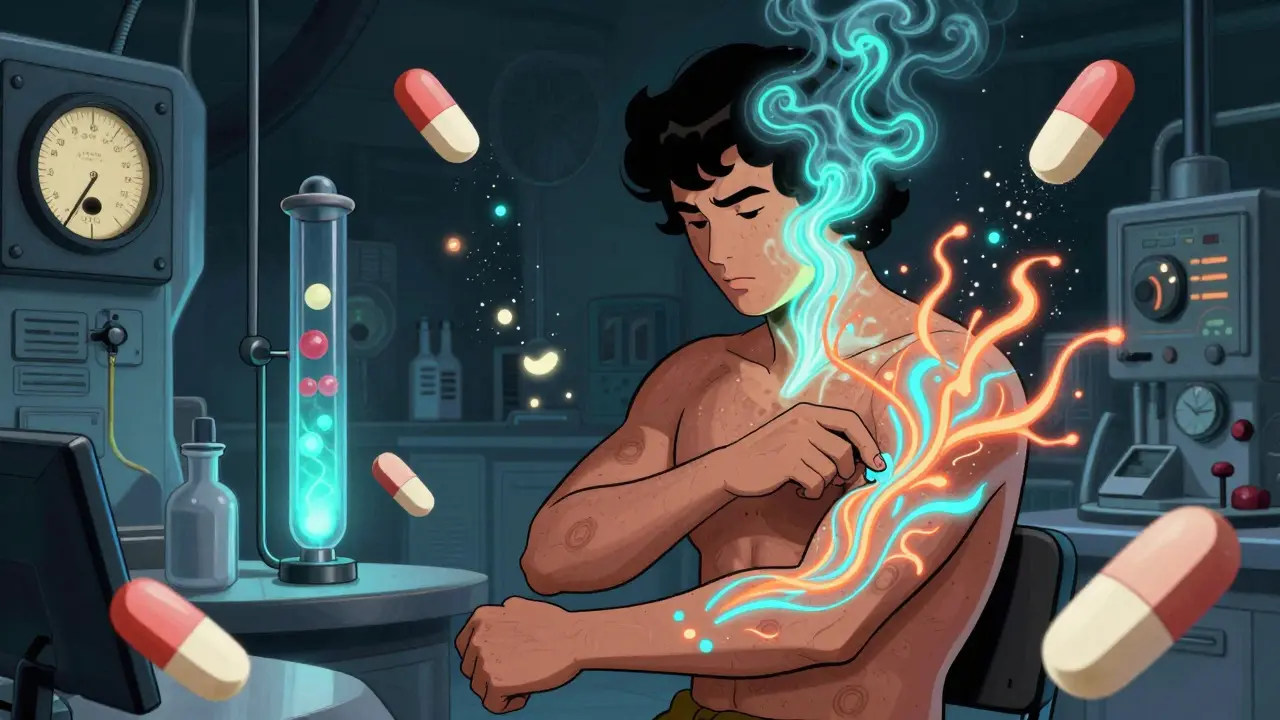
Itching that won’t go away - no matter how much you scratch - is more than just annoying. For people with cholestatic liver disease, it’s a constant, exhausting battle. This isn’t the kind of itch you get from a bug bite or dry skin. It’s deep, persistent, and often worse at night. It’s called cholestatic pruritus, and it affects up to 70% of people with conditions like primary biliary cholangitis (PBC) or primary sclerosing cholangitis (PSC). The good news? We now have better tools than ever to fight it.
Why Does Cholestasis Cause Itching?
When bile doesn’t flow properly from the liver, toxins build up in the blood. For years, doctors thought bile acids alone were to blame. But research has shifted. We now know it’s a mix of substances - bile acids, serotonin, endogenous opioids, and especially lysophosphatidic acid (LPA). LPA is produced by an enzyme called autotaxin, which spikes in cholestasis. This triggers nerve signals in the skin that feel like itching, even though there’s no rash or irritation.
That’s why antihistamines - the go-to for most itches - don’t work here. They block histamine, which has nothing to do with this type of itch. A 2022 AASLD review found that 68% of primary care doctors still prescribe antihistamines first, even though there’s zero solid evidence they help. It’s like using a bandage on a broken bone.
First-Line Treatment: Bile Acid Resins
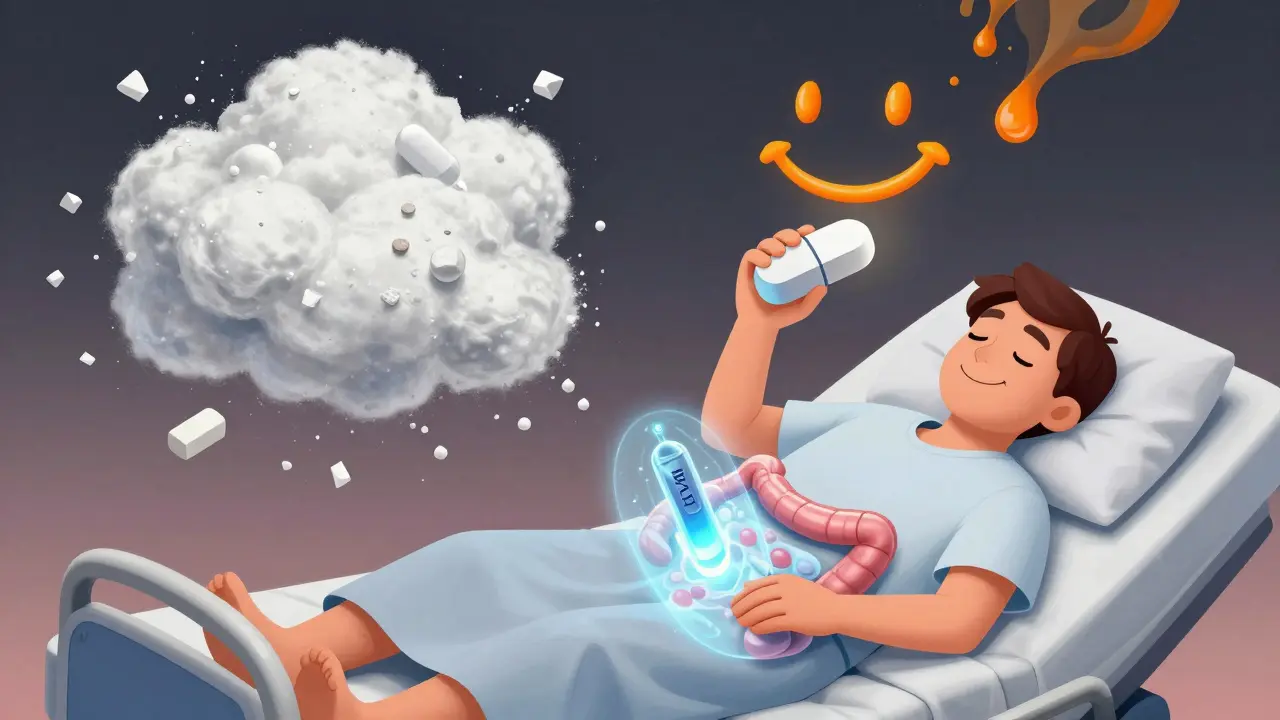
Cholestyramine (brand name Questran) is the oldest and most commonly used treatment. It’s a powder that binds bile acids in your gut, stopping them from being reabsorbed into your bloodstream. Less bile acid in the blood = less itching.
The standard dose starts at 4 grams once a day, slowly increased up to 16-24 grams daily, split into two or three doses. Most people see improvement within a week or two. Studies show it reduces itching by 50-70% in those who respond.
But here’s the catch: it tastes awful. Imagine mixing chalky sand with water. A 2020 survey in Liver International found 78% of patients hated the taste. Another study showed 65% quit within three months because of the gritty texture and bloating. Some patients mix it with apple sauce or juice to make it bearable, but even then, compliance is low.
There’s another issue: cholestyramine binds to other medications. If you take thyroid medicine, blood thinners, or birth control, you need to take them at least 4-6 hours before or after cholestyramine. Otherwise, they won’t work.
Second-Line: Rifampin
If cholestyramine fails or isn’t tolerable, rifampin is next. It’s an antibiotic usually used for tuberculosis, but it works differently here. It boosts liver enzymes that help clear toxins from the blood. In PBC patients, it reduces itching in 70-75% of cases.
The dose is 150-300 mg daily. Many patients notice improvement in just two weeks. One Reddit user wrote: “Rifampin turned my urine orange, but my itching dropped from 8/10 to 3/10.” The orange urine is harmless - just a side effect.
But rifampin isn’t perfect. It can raise liver enzymes in 15-20% of people, which sounds scary but usually isn’t dangerous if monitored. It also interacts with over 50 medications, including statins, birth control, and some antidepressants. Your doctor will need to check your meds carefully.
Third-Line: Naltrexone and Sertraline
When rifampin doesn’t help enough, we turn to drugs that target the nervous system.
Naltrexone blocks opioid receptors in the brain. It turns out, your body makes natural opioids during cholestasis, and they amplify the itch signal. Naltrexone (Revia) at 12.5-50 mg daily helps 50-60% of patients. But the first few days are rough. About 30% of people feel like they’re going through opioid withdrawal - nausea, anxiety, sweating. That’s why doctors start low: 6.25 mg daily, then slowly increase by 6.25 mg each week.
Sertraline (Zoloft), an SSRI antidepressant, is used off-label. It works best in PBC patients with depression or anxiety. Studies show 40-50% improvement in itching. It’s gentler than naltrexone, but doesn’t help much if the itching isn’t tied to mood.
The New Hope: Maralixibat and Beyond
The biggest breakthrough in years is maralixibat (Mytesi). Approved by the FDA in 2021 for Alagille syndrome, it’s now being used off-label for other forms of cholestasis. It blocks a protein in the gut called IBAT, which stops bile acids from being reabsorbed - similar to cholestyramine, but in pill form.
It’s taken once daily. No powder. No taste. No mixing. In the MARCH trial, it reduced itching by 47% on a standard scale - almost as good as cholestyramine - but with a 12% discontinuation rate compared to cholestyramine’s 35%. A 2023 Cleveland Clinic survey found 82% of patients kept taking it after six months.
Other new drugs are coming fast. Volixibat, another IBAT inhibitor, showed 52% itch reduction in a 2023 trial. Then there’s IONIS-AT332-LRx - an antisense drug that shuts down autotaxin production. In a 2023 phase 2 trial, it cut serum autotaxin by 65% and itching by 58%. This is the future: not just masking symptoms, but stopping the root cause.
When Everything Else Fails
For the 10-15% of patients who don’t respond to any medication, liver transplant is the only cure. Post-transplant, 95% of patients say their itching disappears completely. But it’s a major surgery with lifelong risks and costs. It’s reserved for the most severe cases - when itching ruins sleep, causes depression, or leads to skin damage from constant scratching.
For those with extrahepatic obstruction - like a blocked bile duct - stent placement can bring immediate relief. One expert noted that 85% of these patients feel better within days. Yet, it’s still underused.

What Patients Really Say
Online forums are full of stories. On r/liverdisease, 78 posts in 2023 focused on itch management. Common themes: “Cholestyramine worked, but I couldn’t stand it.” “Rifampin made me feel weird, but I’d take it again.” “Maralixibat changed my life - I can finally sleep.”
One patient wrote: “I used to scratch until I bled. Now, after starting maralixibat, I haven’t scratched in two weeks. I feel like I got my life back.”
But cost is a barrier. Maralixibat costs about $12,500 a month. Cholestyramine? $65. Insurance often blocks access to newer drugs unless you’ve tried the older ones first. That creates inequality - those with good coverage get better options; others suffer.
What You Can Do Today
Even before meds, simple steps help:
- Use fragrance-free moisturizers daily - dry skin makes itching worse.
- Take cool showers - heat triggers nerves that cause itch.
- Wear loose, soft cotton clothes - wool and synthetics irritate.
- Avoid hot baths, saunas, and heavy sweating.
- Keep nails short to prevent skin damage from scratching.
And if your doctor prescribes antihistamines? Ask why. There’s no good reason to start there.
What’s Next?
The field is moving fast. In five years, we’ll likely have drugs that target autotaxin or LPA directly - no more guessing, no more trial and error. We’re shifting from treating symptoms to fixing the broken biology behind them.
For now, the step-by-step approach still works: cholestyramine first, rifampin if needed, then naltrexone or sertraline, and maralixibat when available. It’s not perfect, but it’s better than it was five years ago. And with more targeted drugs on the horizon, the future looks brighter than ever for people living with this relentless itch.
Jenny Salmingo
January 1, 2026 AT 20:04I used to scratch my arms raw at night until I found cholestyramine. It tasted like dirt mixed with regret, but it worked. I switched to maralixibat last year and I haven’t slept this well in a decade. No more 3 a.m. clawing sessions. Just peace.
Aaron Bales
January 3, 2026 AT 01:38Antihistamines are useless here. Stop prescribing them. The science is clear: bile acids and LPA, not histamine. If your doc still starts with Benadryl, get a new one.
Lawver Stanton
January 4, 2026 AT 13:24Okay, but let’s be real-this whole system is a scam. Cholestyramine is a powder you mix with water and pretend it’s not swallowing a brick. Rifampin turns your pee orange like a neon sign saying ‘I’m sick.’ And now maralixibat costs more than my car payment? We’re treating a symptom like it’s a luxury subscription. Meanwhile, people in developing countries are just told to ‘scratch less.’ This isn’t medicine-it’s capitalism with a stethoscope.
Sara Stinnett
January 6, 2026 AT 06:48Let’s not romanticize these so-called ‘breakthroughs.’ Maralixibat? It’s just cholestyramine in a pill-same mechanism, same side effects, just with a fancy name and a price tag that could fund a small country’s healthcare system. And don’t get me started on ‘targeting autotaxin’-that’s not a cure, it’s a Band-Aid on a hemorrhage. We’re still treating the aftermath, not the cause. The liver is failing, and we’re giving it lotion.
linda permata sari
January 7, 2026 AT 01:56My cousin in Jakarta has PBC and they don’t even have cholestyramine there. She uses coconut oil and cold compresses. She says it helps a little. I wish we had more access to simple, cheap things instead of billion-dollar drugs. Why can’t we make the old stuff better instead of inventing expensive new ones?
Brandon Boyd
January 8, 2026 AT 12:14If you’re reading this and you’re struggling with this itch-you’re not alone. I’ve been there. I cried in the shower because I couldn’t stop scratching. But I found a rhythm: cool showers, cotton shirts, and maralixibat. It’s not perfect, but it’s enough to breathe again. You’ve got this. Keep fighting. There’s hope on the horizon.
anggit marga
January 9, 2026 AT 02:52Why are we letting American pharma dictate how the world treats liver disease? In Nigeria we use neem leaves and turmeric. It’s cheaper and it works. Why do we need a pill that costs $12k when our grandmothers knew how to heal with plants? This is cultural imperialism wrapped in clinical trials
Joy Nickles
January 10, 2026 AT 11:20Okay so like... I tried rifampin and my urine turned ORANGE?? Like, neon orange?? And I was like, am I dying?? And then I Googled it and it's 'harmless'?? Like... that's not harmless, that's terrifying. And now I'm scared to take anything else because what if the next thing turns my skin purple?? Also, why does everything interact with everything?? I'm on 7 meds already, now I have to plan my pill schedule like a NASA mission??
Emma Hooper
January 11, 2026 AT 22:35Can we talk about how ridiculous it is that the most effective treatment for a chronic, debilitating symptom is a chalky powder that tastes like regret? Meanwhile, we’ve got billionaires flying to space, but people with PBC are choosing between rent and their medication? This isn’t science-it’s a moral failure dressed in white coats.
Martin Viau
January 13, 2026 AT 03:15While the pharmacokinetics of IBAT inhibition are theoretically elegant, the clinical utility remains constrained by the heterogeneity of cholestatic etiologies. The MARCH trial’s primary endpoint was a subjective visual analog scale, which introduces significant measurement bias. Moreover, the absence of longitudinal histologic correlation undermines claims of disease-modifying potential. Until we have biomarker-driven stratification, we’re merely palliating with pharmacologic theater.
Harriet Hollingsworth
January 13, 2026 AT 22:07And yet, people still think scratching is just ‘bad habits.’ No. It’s a neurological signal gone rogue. You don’t choose to scratch until you bleed. You’re not weak-you’re suffering. And if your doctor doesn’t get that, they don’t deserve to hold a stethoscope.