
Quality Assurance Units: Why Independent Oversight Is Non-Negotiable in Production
What Exactly Is a Quality Assurance Unit?
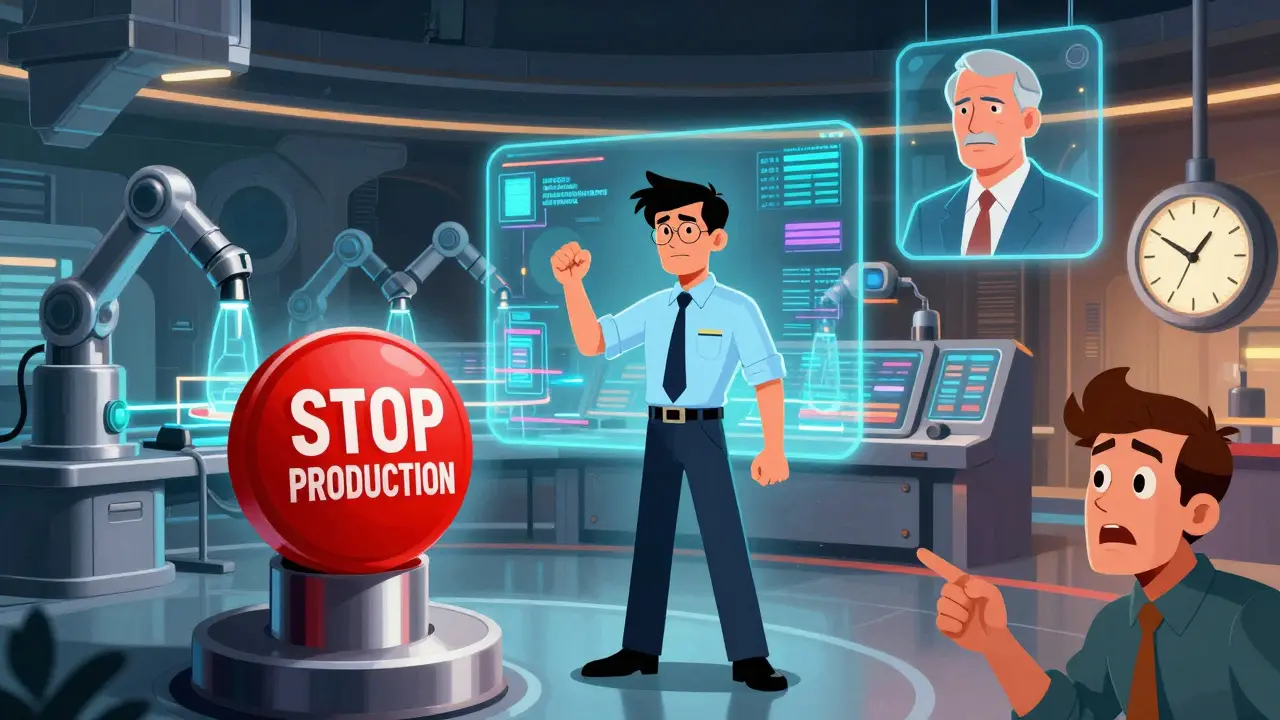
A Quality Assurance Unit (QU) isn’t just another department in a factory or lab. It’s a legally required, independent watchdog with one job: make sure nothing unsafe or out-of-spec leaves the facility. In pharmaceuticals, medical devices, and nuclear manufacturing, this isn’t optional-it’s enforced by regulators like the FDA and IAEA. The QU doesn’t run production. It doesn’t meet production targets. It doesn’t answer to the plant manager. It answers directly to the CEO or Board of Directors. That’s the whole point.
The FDA spelled it out clearly in its 2006 guidance: the QU must remain separate from manufacturing. Why? Because when the same team that’s trying to hit daily output goals is also deciding whether a batch is safe to release, pressure builds. Speed wins. Quality loses. And people get hurt. Independent oversight means someone, somewhere, has the authority to say “no” without fear of losing their job.
How Independence Actually Works in Practice
It’s not enough to just call someone “Quality.” True independence means clear reporting lines, separate budgets, and real power. Under 21 CFR 211.22, the QU has the legal authority to approve or reject every component, container, label, in-process material, and finished product. That includes stopping a production line. That includes holding a batch of life-saving medicine because the humidity in the packaging room was off by 2%.
Look at what happens when this breaks. In 2024, 68% of FDA warning letters cited failures in QU independence. One common pattern? A warehouse manager calls the quality unit directly to “fix” a labeling error instead of going through proper channels. Another? A production manager pressures the QU to sign off on a batch because the customer is waiting. These aren’t rare mistakes-they’re systemic failures.
Successful QUs have three things: direct access to top leadership, documented procedures for quality holds, and the power to investigate without approval from production. Merck’s 2023 case study showed it took nine months to shift culture after restructuring. Production leaders resisted. They didn’t like being told “no.” But once the QU could bypass management to escalate critical issues, critical deviations dropped by 41%.
Regulatory Differences: FDA vs. EMA vs. IAEA
Not all industries or regions treat independence the same way.
In the U.S., the FDA is uncompromising. The QU must be completely separate from manufacturing. No shared managers. No blended KPIs. Even in small facilities with under 50 employees, if the same person handles both production and quality, there must be a second, independent reviewer checking their work every quarter.
The European Medicines Agency (EMA) is slightly more flexible. Under ICH Q10, they allow integrated structures-but only if there are “effective mechanisms” to guarantee quality decisions stay objective. That sounds good in theory, but in practice, it’s harder to prove. FDA inspections of EU-based facilities show 23% more independence-related findings than U.S. sites.
Nuclear facilities take it even further. The IAEA requires four layers of oversight: peer checks, senior management reviews, independent oversight, and external audits by WANO or IAEA itself. Independent inspectors can’t be assigned to areas they’ve worked in. They can’t be evaluated by the teams they’re auditing. This isn’t bureaucracy-it’s risk management. IAEA data shows facilities with this structure have 37% fewer critical compliance failures.
Why Small Companies Struggle the Most
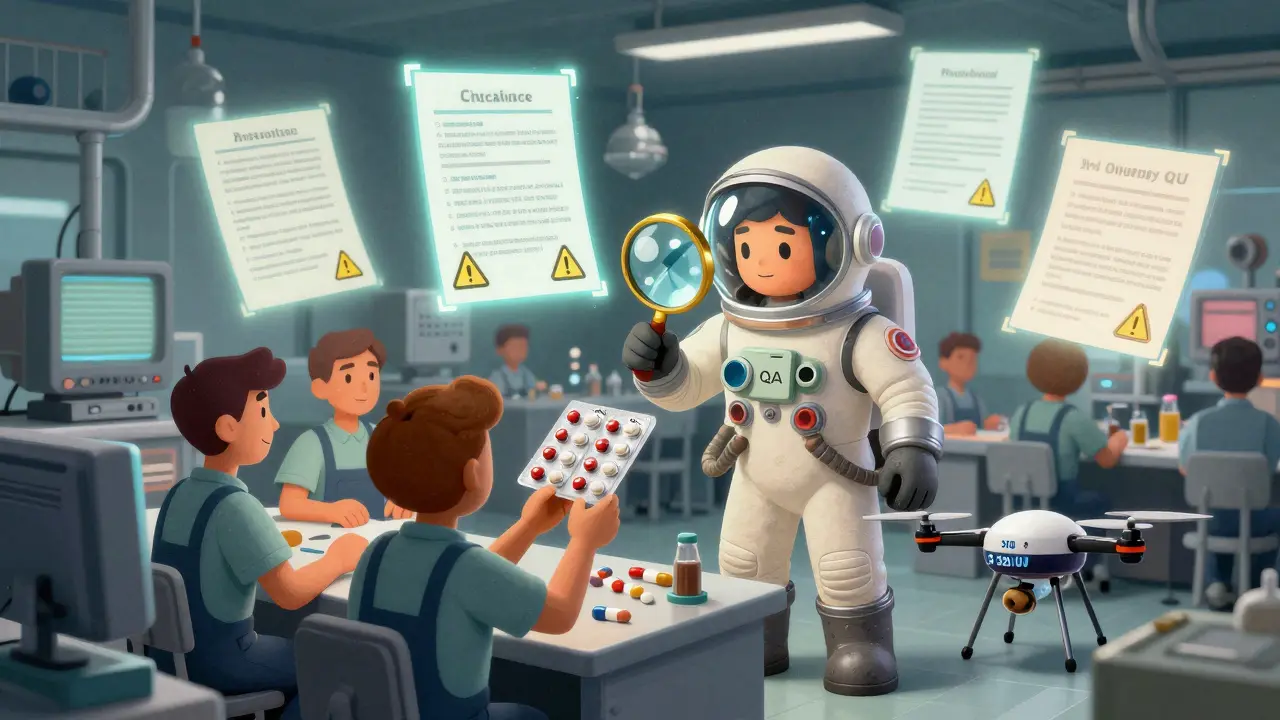
It’s easy to say “just hire a quality team.” But in a facility with 30 people, you can’t afford to pull 4 away from production to sit in an office reviewing paperwork. That’s why 42% of FDA warning letters in 2024 came from companies with fewer than 50 employees.
They try to cut corners. One production manager I spoke with told me his company made the QU manager also responsible for scheduling shifts. Within six months, two batches were released with incorrect expiration dates. The QU didn’t catch it because they were too busy managing the calendar.
There’s a workaround: third-party oversight. More small manufacturers are now outsourcing their QU functions to specialized firms. This market is growing at 14.2% annually. It’s not cheap-but it’s cheaper than a recall, a lawsuit, or a shutdown. One Texas-based medical device maker saved $2.1 million in potential penalties in 2024 by switching to an external QU provider.
The Real Cost of Ignoring Independence
Let’s talk numbers.
Organizations with truly independent QUs resolve critical quality deviations 28% faster than those without. Why? Because when the QU has real authority, problems get fixed at the source, not buried under paperwork. They also have 31% higher first-time inspection success rates. That means fewer surprise audits, less downtime, and lower legal risk.
Conversely, integration failures are behind 63% of FDA warning letters for data integrity violations. That’s not a coincidence. When the same person who’s under pressure to ship product is also the one recording test results, the temptation to tweak numbers grows. FDA data shows QU-to-production staff ratios below 1:15 lead to 3.2 times more repeat deviations. In other words, if you have 100 people on the floor, you need at least 7 dedicated quality staff-not 3.
And the cost isn’t just financial. A single contaminated batch of insulin or a mislabeled chemotherapy drug can kill. Independence isn’t about compliance-it’s about survival.
What Skills Do Quality Unit Staff Really Need?
It’s not just about knowing GMP guidelines. The best QU staff are part investigator, part diplomat, part data analyst.
- 100% need formal GMP training
- 78% must understand statistical process control to spot trends before they become crises
- 65% need conflict resolution skills-because they’ll be the ones telling production they can’t ship
Average QU staff have over 8 years of industry experience. That’s not an accident. New hires can’t handle the pressure. They don’t know how to push back without burning bridges. The best QUs train their people to say, “I understand you need this out today. But if we release this batch, we’re putting patients at risk. Let’s fix it right.”
Organizations like Eli Lilly have started “quality ambassador” programs, where production staff get trained by the QU but don’t report to them. This builds trust without breaking independence. Their internal surveys showed a 40% improvement in quality culture after just one year.
What’s Changing in 2025?
The biggest shift isn’t in regulations-it’s in technology.
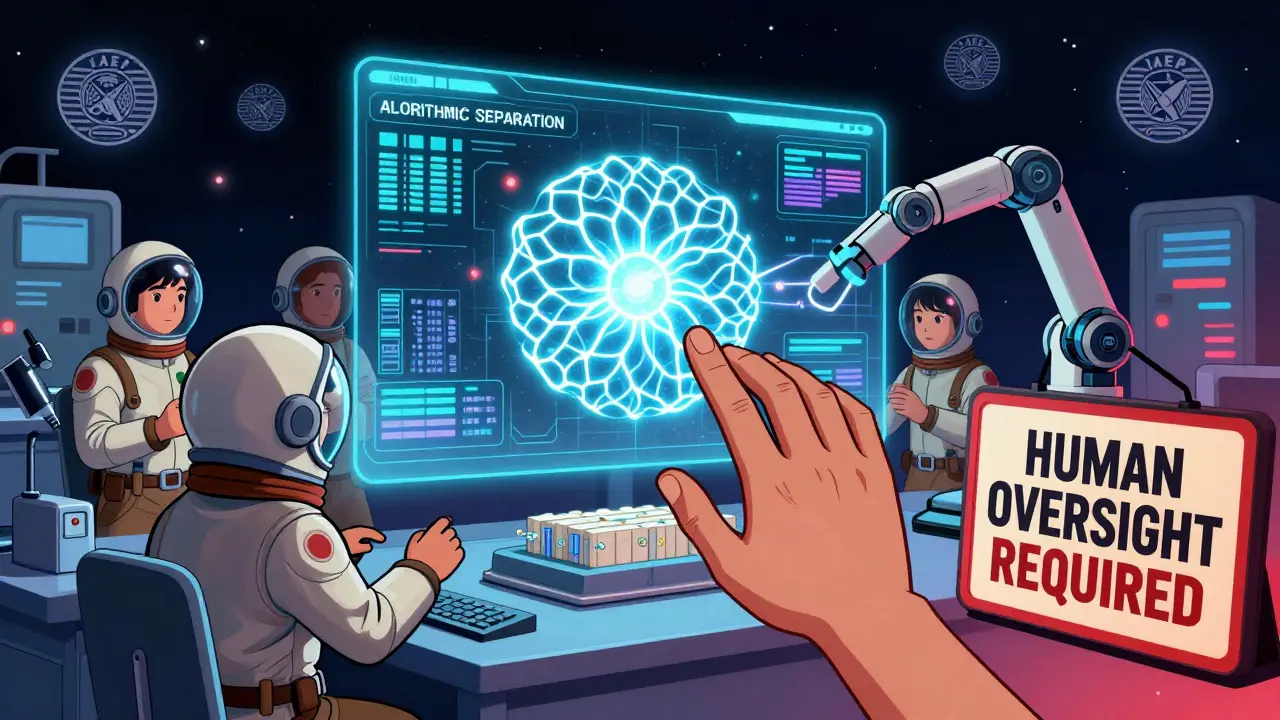
FDA’s January 2025 draft guidance on “Quality Unit Independence in Digital Manufacturing Environments” is a wake-up call. With AI-driven systems making real-time decisions about temperature, pressure, and mixing times, the line between production and quality is blurring. Who’s responsible if an algorithm rejects a batch? Who can override it? The FDA is now asking: can independence be coded?
MIT’s 2025 roadmap suggests the future may lie in “algorithmic separation”-where AI systems are designed to flag quality issues independently of production logic. But even then, human oversight remains essential. No algorithm can explain why a batch should be held when the data looks fine but the operator’s notes say, “Something smelled off.”
Meanwhile, the EU tightened its rules in 2024: quality units can no longer be subordinate to production under any circumstances. That’s a global signal. Independence isn’t going away-it’s becoming more critical.
How to Build a Real Quality Unit
If you’re starting from scratch, here’s what works:
- Designate the QU as a separate department with its own budget and reporting line to the CEO.
- Document authority in writing-every person in the facility must know the QU can stop production.
- Staff the QU at 8-12% of total manufacturing headcount.
- Train QU staff in GMP, statistics, and conflict resolution-not just paperwork.
- Implement a formal “quality hold” procedure that bypasses production management.
- Review QU performance quarterly, not annually-and make sure no production leader is involved in the review.
Don’t wait for an FDA warning letter to act. The cost of fixing independence after a failure is ten times higher than building it right from the start.
Can a production manager also be the quality manager?
No-not in FDA-regulated industries. Even if the company is small, the same person cannot hold both roles unless another qualified individual, completely separate from production, performs a periodic review of quality decisions. This is non-negotiable under 21 CFR 211.22. Violations lead directly to warning letters and potential shutdowns.
What happens if the quality unit doesn’t have enough staff?
When the QU-to-production ratio falls below 1:15, repeat deviations increase by over 300%. Staff become overwhelmed, batch reviews get rushed, and “rubber stamping” becomes common. The FDA sees this as a major compliance risk. The fix isn’t just hiring more people-it’s ensuring those staff have the authority and time to do their job without interference.
Do small manufacturers have to hire a full-time quality team?
Not necessarily. Many small manufacturers use third-party quality oversight services. These firms provide trained auditors and quality experts on contract, ensuring independence without the overhead of a full department. This is growing rapidly, especially in medical device and generic drug manufacturing.
How often should the quality unit be audited?
The QU itself should be audited at least annually by an independent party-ideally someone outside the company. This isn’t about checking their work-it’s about verifying their independence. If the audit finds the QU reports to production or lacks budget control, it’s a red flag for regulators.
Can AI replace human quality units?
No. AI can flag anomalies, predict failures, and automate data collection-but it can’t make ethical decisions, interpret human context, or say “no” under pressure. The FDA’s 2025 draft guidance stresses that human oversight must remain. AI supports the QU; it doesn’t replace it.
What’s the biggest mistake companies make when setting up a QU?
The biggest mistake is treating quality as a cost center instead of a risk shield. Companies try to minimize QU headcount, delay hiring, or let production leaders influence hiring decisions. That’s like hiring a fire marshal and then telling them not to interfere with the kitchen staff. The result? Preventable failures. The fix? Fund the QU like it’s protecting lives-because it is.
Jarrod Flesch
January 21, 2026 AT 03:10Kelly McRainey Moore
January 21, 2026 AT 14:53Steve Hesketh
January 22, 2026 AT 07:24Gerard Jordan
January 23, 2026 AT 15:38Stephen Rock
January 24, 2026 AT 07:24Ben McKibbin
January 24, 2026 AT 23:31Amber Lane
January 25, 2026 AT 18:18Andrew Rinaldi
January 27, 2026 AT 15:48Dee Monroe
January 28, 2026 AT 03:03Philip Williams
January 28, 2026 AT 21:56Melanie Pearson
January 30, 2026 AT 02:21MAHENDRA MEGHWAL
January 31, 2026 AT 20:04