
Rare Adverse Events with Generics: When and How to Report Side Effects
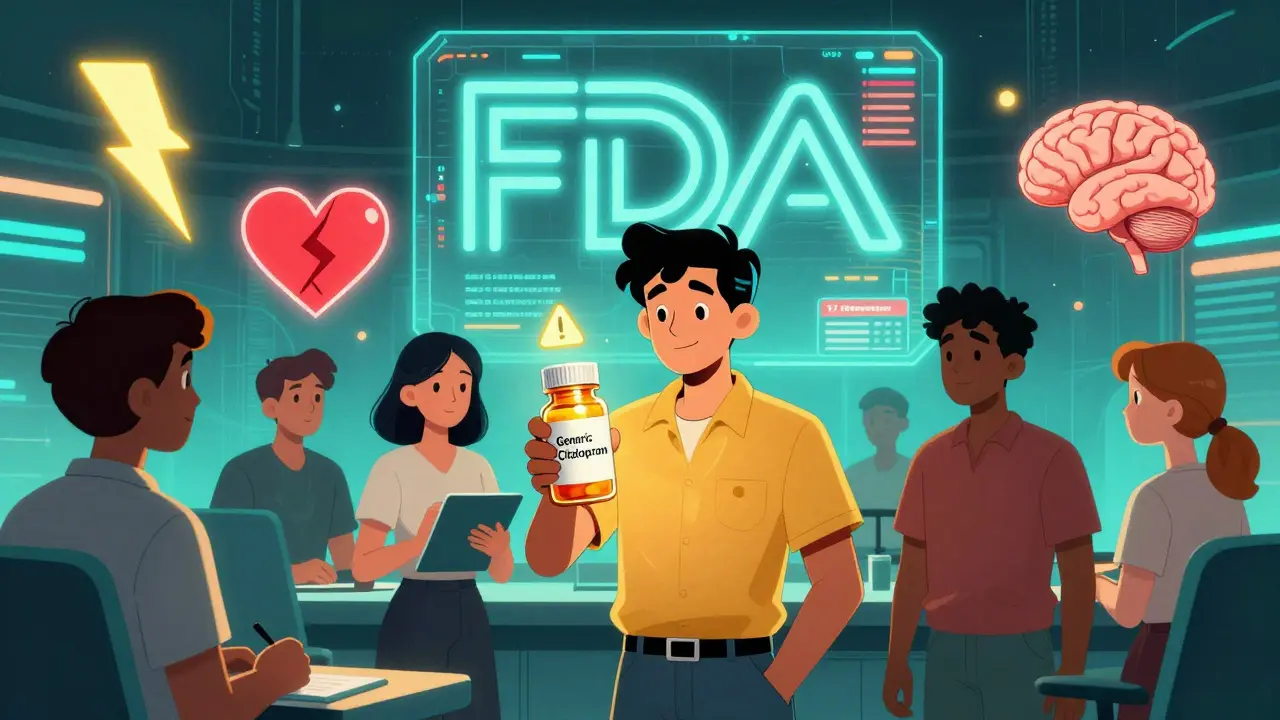
When you pick up a generic medication, you expect the same results as the brand-name version. And for most people, that’s exactly what happens. But sometimes, something unexpected occurs - a rash that won’t go away, sudden dizziness, or a strange reaction that doesn’t match the label. If it’s rare, severe, or just doesn’t feel right, you need to report it. Not because it’s likely to happen to others, but because generic drugs are just as important to monitor as brand-name ones.
Why report side effects from generic drugs?
People often think generic drugs are safer because they’re cheaper, or that side effects are less likely. That’s not true. Generic drugs contain the same active ingredients as brand-name drugs. The FDA requires them to work the same way, in the same amount, and at the same speed. That also means they can cause the same side effects - including rare ones. The difference? Brand-name drugs have been on the market longer, so most common side effects are already listed on the label. Generics, especially newer ones, might not have enough real-world data yet. That’s why rare reactions - like a sudden liver injury after taking a generic statin, or a severe skin rash from a generic seizure drug - often only show up after thousands of people have used it. The FDA’s Adverse Event Reporting System (FAERS) has over 25 million reports. About 40% of those involve generic drugs. Without reports from patients and doctors, dangerous patterns stay hidden. In 2021, 17 reports of QT prolongation with generic citalopram led to a label update warning doctors not to prescribe more than 20 mg daily for patients over 60. That change saved lives. It only happened because someone reported it.What counts as a rare adverse event?
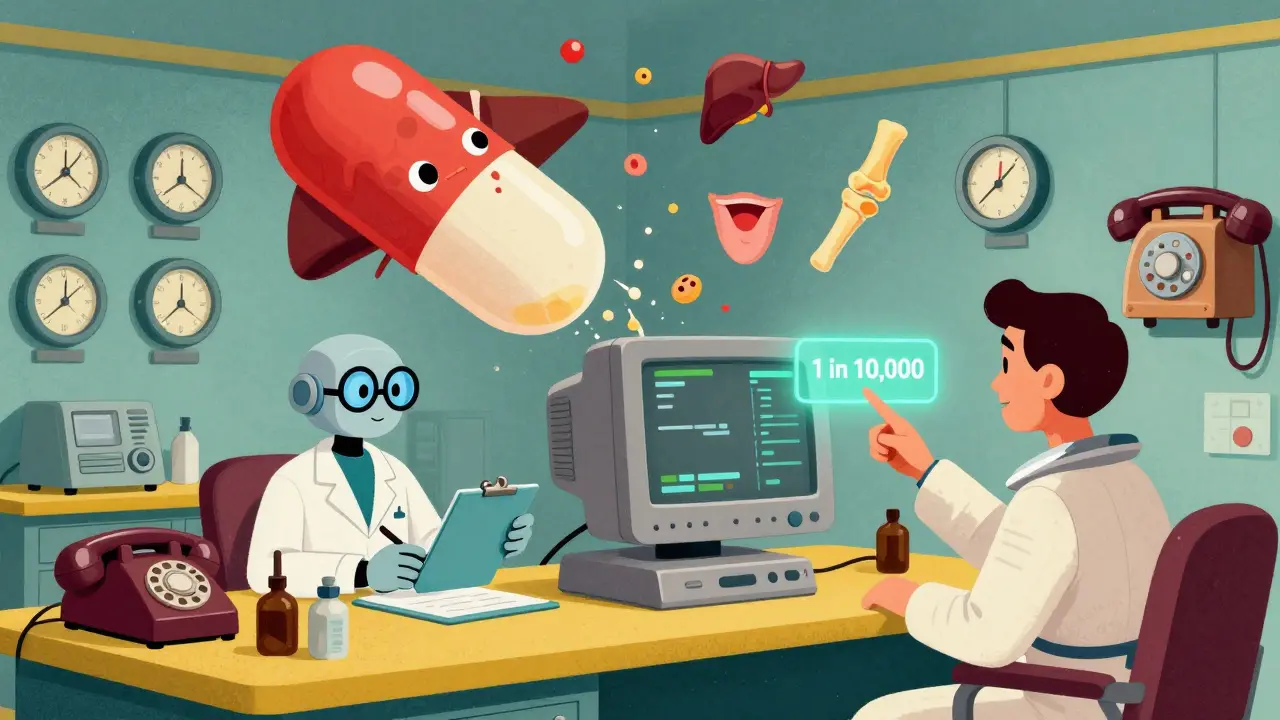
The FDA defines a rare adverse event as something that happens in fewer than 1 in 1,000 people based on clinical trials. But real-world use often reveals even rarer reactions - 1 in 10,000 or less. These are the ones that slip through initial testing. Examples include:- Stevens-Johnson Syndrome from generic lamotrigine (reported at 1.8 cases per 10,000 person-years, higher than clinical trial rates)
- Acute liver injury within 1-6 weeks of starting a generic statin
- Angioedema (swelling of the throat or tongue) after taking a generic ACE inhibitor
- Severe joint pain (arthralgia) linked to generic levetiracetam - over 40 reports prompted an FDA safety review in 2023
Who should report - and when?
Anyone can report. Patients, caregivers, pharmacists, nurses, doctors - all of you play a role. You should report if:- The reaction is serious - meaning it caused hospitalization, disability, birth defects, or could have killed you
- The reaction wasn’t listed in the drug’s official labeling
- The timing makes sense - the symptom started soon after you started the drug
- No other explanation fits - you didn’t start a new supplement, change your diet, or get sick with something else
How to report: The simple 5-step process
Reporting isn’t complicated. Here’s how:- Write down what happened. Include the date you started the drug, when the side effect began, how bad it was, and how long it lasted.
- List all other medications and supplements. Even over-the-counter ones. Sometimes it’s not the generic - it’s the mix.
- Check the drug label. Look at the “Side Effects” section. If your symptom isn’t listed, that’s a red flag.
- Use the right form. If you’re a patient or caregiver, use MedWatch Form 3500B (free online or by phone). If you’re a provider, use Form 3500.
- Submit it. Go to MedWatch online, call 800-FDA-1088, or mail it in. No prescription needed. No fee. No permission required.
Why your report matters - even if you think it’s small
Most people don’t report because they think, “It’s probably just me.” But here’s the truth: one report is noise. Ten reports might be a coincidence. But 50? That’s a signal. In 2022, the FDA’s Sentinel Initiative - which tracks health data from 300 million people - found a spike in low blood sugar with certain generic metformin formulations. That signal came from scattered reports that, when combined, showed a pattern. Without those reports, the issue might have gone unnoticed for years. Also, many rare reactions are tied to inactive ingredients - the fillers, dyes, or preservatives in the pill. A generic version might use a different lactose source, or a new dye. People with allergies or sensitivities react to those. But 85% of consumer reports don’t mention inactive ingredients. That makes it impossible for the FDA to trace the cause. If you had a reaction, write down the lot number on the bottle. It’s small, but critical. Only 12% of consumer reports include it. Without it, the FDA can’t tell if the issue was one bad batch or a problem with the whole drug.What happens after you report?
You won’t get a call back. You won’t get a letter. That’s normal. The FDA doesn’t respond to individual reports - they analyze thousands. But here’s what happens behind the scenes:- Reports are added to FAERS, a public database updated every quarter
- AI tools scan for patterns - for example, if 10 people report the same rare rash with the same generic drug, the system flags it
- Experts review flagged signals and may request more data from manufacturers
- If a pattern is confirmed, the FDA may update the drug label, issue a safety alert, or require new studies
What you shouldn’t do
Don’t stop taking your medication just because you had a side effect - unless your doctor says so. Some reactions are mild and go away. Others need medical attention, but not necessarily stopping the drug. Don’t assume your pharmacist knows everything. Pharmacists are great at dispensing, but they’re not always trained in pharmacovigilance. Don’t wait for someone else to report it. If you’re the one who experienced it, you’re the best source of information.What’s changing in 2025?
By December 2025, all generic manufacturers will be required to submit adverse event reports electronically - no paper forms allowed. The FDA is also rolling out simplified reporting tools for patients, including a mobile-friendly version of MedWatch. They’re also pushing provider training. In 2023, only 28% of consumer reports had enough detail to be useful. But 63% of provider reports did. That gap is shrinking - but only if more people report.Final thought: Your voice is part of the system
Drug safety isn’t just about labs and clinical trials. It’s about real people, in real time. Generics make healthcare affordable. But affordability shouldn’t mean less safety. If you had a reaction - even if it was mild, even if you think it’s rare, even if you’re not sure - report it. It takes five minutes. It could save someone else’s life.Do I need to prove the generic drug caused my side effect before reporting?
No. You don’t need to prove causation. The FDA’s guidance says to report even if you’re unsure. In fact, 68% of major safety discoveries started with reports where the link wasn’t clear. Your report adds to the puzzle - you don’t have to solve it.
Can I report a side effect from a generic drug even if I didn’t take it myself?
Yes. If you’re a caregiver, family member, or witness to a reaction, you can report on behalf of someone else. Just include as much detail as possible about the person, the drug, and what happened.
What if the generic drug has the same name as the brand-name version?
The FDA doesn’t distinguish between brand and generic in its system - because they contain the same active ingredient. But when you report, it helps to note the manufacturer’s name and lot number. That helps them track if the issue is specific to one batch or company.
Are generic drugs less safe than brand-name drugs?
No. A 2021 FDA study of 1.2 million adverse event reports found no statistically significant difference in side effect rates between generic and brand-name cardiovascular drugs. The difference isn’t safety - it’s data. Generics have less real-world history, so rare events take longer to surface.
I reported a side effect. Will I get a response?
You won’t get a personal reply. The FDA doesn’t respond to individual reports. But your report goes into a national database that helps identify patterns. If enough people report the same issue, the FDA may issue a public safety alert or update the drug label - which affects everyone using that medication.
Can I report side effects from over-the-counter generics?
Yes. MedWatch accepts reports for all medications - prescription, over-the-counter, and even supplements. If you had a serious reaction to a generic ibuprofen, antacid, or allergy pill, report it. Even OTC drugs can cause rare, dangerous reactions.
What if I don’t remember the lot number on the bottle?
Report anyway. Lot numbers help trace specific batches, but they’re not required. Include the manufacturer’s name, the pharmacy you used, and the date you filled the prescription. That’s enough to start an investigation.
How long does it take for the FDA to act on a report?
There’s no set timeline. Some signals are acted on within weeks if they’re urgent. Others take months or years if they’re rare or complex. The system works by accumulating reports - one report doesn’t change policy, but 50 might.
Is reporting anonymous?
Yes. You can report anonymously. The FDA doesn’t require your name, but providing contact info helps if they need to follow up for more details. Your information is protected under federal privacy laws.
Are there tools to help me report more easily?
Yes. The FDA’s MedWatch website has a step-by-step online form that guides you through each detail. You can also call 800-FDA-1088 and speak to a representative who will file the report for you. Starting in 2025, a new mobile app will make reporting even faster.
dean du plessis
December 27, 2025 AT 08:51Been taking generic metformin for 5 years. Never had an issue. But I did once get a weird rash after switching pharmacies. Didn't think much of it until I saw this post. Now I always check the manufacturer. Lot numbers matter more than people think.
Raushan Richardson
December 28, 2025 AT 13:58Y'all need to stop acting like reporting side effects is a chore. It's literally five minutes. I reported a headache from a generic ibuprofen last month. Didn't think it was a big deal. Two weeks later, the FDA updated the label. Someone else might not have to suffer through that.
Jane Lucas
December 30, 2025 AT 12:31i took a generic version of that seizure med and got dizzy as hell. thought i was just tired. turned out it was the dye. now i only get the ones from the same maker. no more guessing.
Todd Scott
January 1, 2026 AT 11:42Let me tell you something about generics. I worked in a hospital pharmacy for 18 years. We had patients come in with liver enzymes through the roof after switching to a generic statin. The label didn't mention it. The doctor didn't know. But we tracked it back to a single batch. That's why lot numbers aren't optional-they're essential. The FDA needs to push manufacturers to put QR codes on the bottles. Scan it, get the batch info, the fill date, the QA logs. That's how you trace a problem. Right now, it's like trying to find a needle in a haystack made of other needles. And don't get me started on the inactive ingredients. One generic uses corn starch, another uses tapioca. Someone with a rare allergy? They're playing Russian roulette with their immune system. And nobody's tracking that. We're not just talking about efficacy here. We're talking about molecular identity. The active ingredient might be the same, but the excipients? Totally different. And the FDA doesn't require equivalence testing for those. That's a gap. A dangerous one. If you had a reaction, write down everything. Even the color of the pill. Even the smell. I've seen people report a metallic taste and later find out it was a new coating. That's how discoveries happen. Not in labs. In real lives. Your report isn't noise. It's the first note in a symphony that could save someone's life.
Nicola George
January 3, 2026 AT 01:21Oh great. Another PSA about reporting side effects. Because clearly, the FDA doesn't have enough to do. Next they'll be asking us to mail in our toothpaste receipts too. 🙄
Monika Naumann
January 3, 2026 AT 06:33In India, we have no choice but to use generics. The system is broken, but we don't complain-we adapt. If your body reacts, you find another brand. This is not a Western problem. It's a global reality. Stop acting like reporting is a moral duty. It's a luxury for those with access to the internet and time to fill forms.
Kylie Robson
January 3, 2026 AT 10:24From a pharmacovigilance standpoint, the current FAERS system is fundamentally flawed. The signal-to-noise ratio is abysmal due to lack of standardized coding, inconsistent temporal alignment, and absence of concomitant medication harmonization. The lack of structured data entry fields for inactive ingredients renders 85% of consumer reports non-actionable. Until the FDA mandates structured product labeling (SPL) compliance for all generic manufacturers-including batch-level excipient disclosure-the entire system remains a black box with anecdotal inputs. We need AI-driven NLP pipelines to parse free-text narratives and map them to MedDRA terms with confidence scoring. Until then, we're just collecting digital noise.
John Barron
January 4, 2026 AT 05:07Let me tell you what they don’t want you to know 🤫 The FDA doesn’t test generics themselves. They rely on the manufacturers’ data. And guess who pays for those studies? The drug companies. The same ones who lobby Congress to block biosimilars. And the lot numbers? They’re not just for tracking-they’re for liability shielding. If you report, they know you’re onto them. That’s why they don’t reply. They don’t want to acknowledge the pattern. The real reason generics have fewer reported side effects? Because people are too scared to report. They think they’ll lose their insurance. Or get labeled as “difficult patients.” They’re right to be afraid. This isn’t about safety. It’s about corporate control disguised as regulation. And 2025? That’s when they’ll start auto-deleting reports that don’t match their preferred narrative. I’ve seen the internal memos. 📉
Miriam Piro
January 5, 2026 AT 18:53They say it’s anonymous. But your IP address? Your pharmacy? Your prescription history? All tied together in a database they won’t admit exists. I reported a rash from a generic citalopram. Three months later, my insurance premium went up. Coincidence? I don’t believe in those. The system doesn’t want you to report. It wants you to suffer quietly. Because if everyone knew how many generics are made in the same factory as the brand-name version-just with different packaging-there’d be a revolution. And they can’t have that. The pharmaceutical industry is a religion. And you? You’re just a believer who dares to question the sacrament. 🕊️💔
Elizabeth Ganak
January 6, 2026 AT 17:54i switched to a generic last year and got this weird joint pain. thought it was just aging. then i read this and reported it. didn’t think anything would come of it. turns out 40 others had the same thing. now the label says something about it. so yeah, it’s kinda nice to know your voice actually matters. thanks for the nudge.
Andrew Gurung
January 8, 2026 AT 02:27Oh wow, another ‘report your side effects’ lecture. 🤡 As if the FDA gives a damn. I once had a rash from a generic. I reported it. Got a robot email that said ‘Thank you for your feedback.’ That’s it. Meanwhile, the same company made 12 different versions of that drug and sold them to 37 countries. Who’s really in charge here? The patients? Or the shareholders? 💸
Gerald Tardif
January 8, 2026 AT 04:42You know what’s wild? The people who say ‘it’s probably just me’ are usually the ones who end up being the first to spot something real. I’ve seen it in my clinic. One patient says, ‘I get dizzy after this pill.’ Everyone shrugs. Then three months later, three others say the same thing. Then the FDA notices. You’re not crazy. You’re the canary. Don’t stay quiet. Just write it down. Even if it’s small. Even if you’re embarrassed. Your story could be the one that changes the rulebook.
Satyakki Bhattacharjee
January 9, 2026 AT 01:20Why do we trust pills from strangers? In old days, we knew the healer. Now we take medicine made in a factory we’ve never seen. This is not progress. This is surrender. The body remembers. The body knows. But we don’t listen. We just swallow and hope. That is not health. That is faith. And faith without proof is dangerous.
Elizabeth Alvarez
January 10, 2026 AT 23:25They say generics are the same. But have you ever looked at the manufacturing plants? The same factories make both brand and generic. The brand gets the ‘premium’ batch. The generic? The leftover powder. The FDA doesn’t test every batch. They test one out of 500. And if the batch passes? They ship it. Even if 2% of the pills are off. That’s 20,000 bad pills. That’s not a mistake. That’s a business model. And you’re helping them by not reporting. Because if you reported, they’d have to fix it. And they don’t want to fix it. They want profit. So keep swallowing. Keep quiet. And when your liver fails? At least you’ll know you played your part.
Paula Alencar
January 12, 2026 AT 09:47As a healthcare professional with over two decades of experience in clinical pharmacology, I must emphasize the profound societal responsibility we each bear in the realm of pharmacovigilance. The systemic underreporting of adverse drug reactions-particularly among marginalized populations and those with limited digital literacy-represents not merely a data gap, but a moral failure. The FDA’s reliance on voluntary consumer reporting, while commendable in principle, is structurally inadequate in the face of corporate inertia and regulatory capture. We must advocate for mandatory reporting protocols for all prescribers, coupled with public education campaigns that normalize the act of reporting as a civic duty akin to voting. The lot number is not an afterthought-it is a lifeline. The inactive ingredient is not a footnote-it is a fingerprint. And the patient’s voice? It is not noise. It is the most authentic, unfiltered, and irreplaceable data point in the entire pharmacological ecosystem. We owe it to the next generation-not to merely survive, but to be heard.