
Safe School Medication Guidelines: A Parent's Guide to Administration
Sending your child to school with a prescription or a daily supplement can feel like a gamble. You trust the staff, but you also know how easy it is for a dose to be missed or a timing window to slide. With nearly half of school-aged children taking some form of medication daily, schools have had to move away from "winging it" toward strict, standardized protocols. The goal isn't just to follow rules-it's to stop mistakes before they happen. Proper systems can slash medication errors by up to 75%, which is a massive difference when your child's health is on the line.
The Golden Rules of School Medication
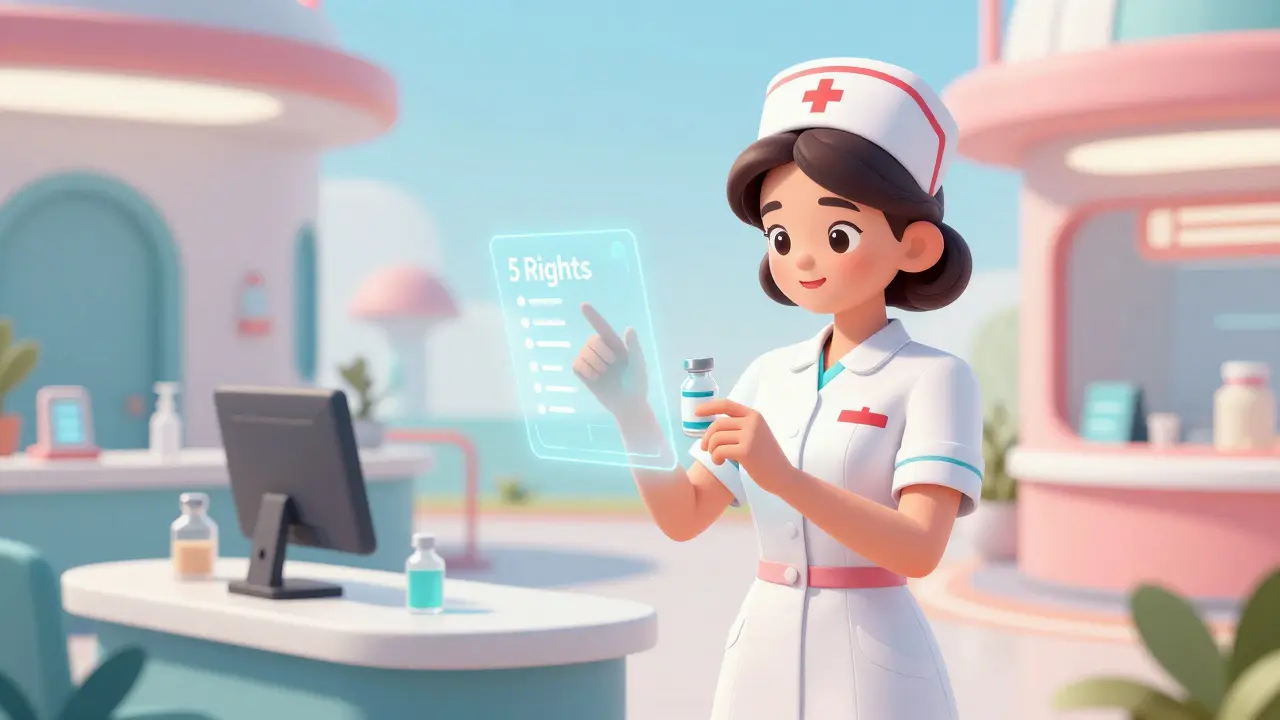
Schools don't just take your word for it when it comes to dosing. They follow a gold standard known as the "5 Rights" of medication administration. This is the same logic used in hospitals to ensure patient safety. Every time a school nurse is about to give a dose, they must verify: the right student, the right medication, the right dose, the right route (like oral or nasal), and the right time.
You might wonder why the process feels so bureaucratic. It's because relying on a bottle label isn't enough. The American Academy of Pediatrics is a professional association of pediatricians that sets health standards for children, and they explicitly warn that a label alone is insufficient for school administration. You need a formal, written order from a healthcare provider to bridge the gap between the doctor's office and the classroom.
| Requirement | What is Needed | Why it Matters |
|---|---|---|
| Container | Manufacturer-labeled and unexpired | Prevents errors from generic or unmarked bottles |
| Doctor's Order | Signed order with license number | Legal verification of the medical necessity and dose |
| Delivery | Parent or guardian delivery | Ensures the medication doesn't get lost in a backpack |
| Storage | Locked, temperature-controlled area | Protects other students and maintains drug potency |
Getting the Paperwork Right
If you want your child to have seamless access to their meds, don't wait until the first day of school. Many districts recommend submitting a Medication Administration Form (MAF) as early as June for the following year. This prevents a gap in care during those first chaotic weeks of September.
For long-term needs-anything lasting more than 30 days-you'll typically need a specific "Request and Authorization" form signed by both you and the doctor. Be incredibly specific on these forms. The school needs to know the exact dosage, the route, and if the med needs to be taken with food. While there is usually a 30-minute window before or after the scheduled time for administration, any stricter requirements must be written explicitly in the medical order.
One often overlooked detail is the delivery process. Most schools will not allow a student to carry medication in their bag for security reasons. You'll need to physically hand the medication to the staff. Budget at least 15 minutes for this; it's not just a hand-off, it's a documented transfer where both you and the nurse sign off on the receipt of the drug.
Managing Chronic Conditions and Self-Administration
Students with asthma or diabetes often have a different set of rules. For instance, some public schools provide free Albuterol is a short-acting beta-agonist used to treat asthma attacks by relaxing airway muscles inhalers, but only if they are documented on a MAF. This ensures that the school isn't just handing out meds, but is doing so under a clinician's supervision.
As children get older, the conversation shifts to self-administration. This isn't a right, but a privilege granted based on competency. Depending on where you live, the rules vary wildly. In some states, a simple release form from a doctor and parent is enough. In others, like California, students must actually prove they can handle the medication through supervised practice sessions before they are allowed to keep it on their person.
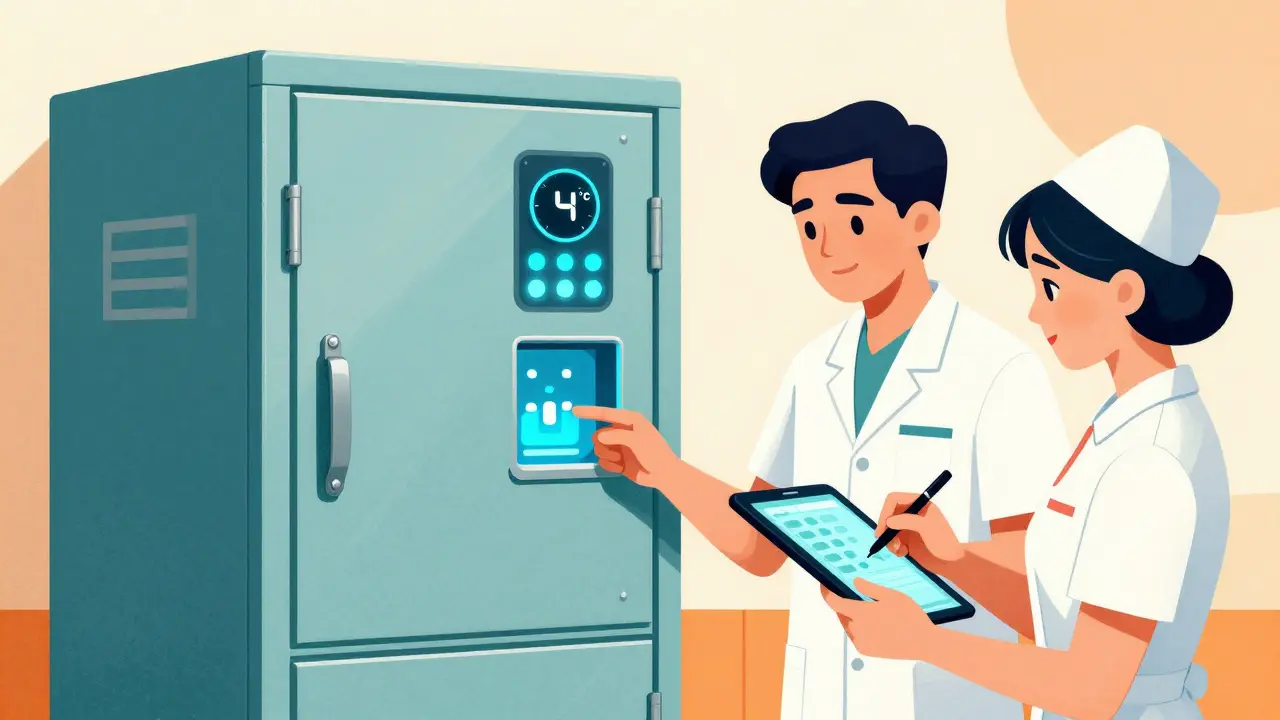
Storage is another critical piece of the puzzle. Medications aren't just thrown in a desk drawer. They are kept in locked cabinets. For those needing refrigeration, the National Association of School Nurses (NASN) specifies a strict temperature range of 2-8°C (36-46°F). Crucially, these must be in dedicated medical units, not a breakroom fridge next to a teacher's sandwich.
The Human Element: Communication and Assent
Numbers show that nearly 68% of medication errors in schools happen because of poor communication between the doctor, the parent, and the school. If you change a dose at home on a Tuesday, the school needs to know by Tuesday morning. Failure to update the school on home changes contributes to about 18% of all errors.
There is also the concept of "student assent." This is different from legal consent. Assent means the child understands why they are taking the medicine and agrees to it. Research shows that when students are active participants in their treatment plan, missed doses drop by about 32%. Instead of just telling your child, "The nurse is going to give you a pill," explain the condition and the benefit of the med. This creates a safety net where the child can alert the nurse if something feels wrong.
Digital Shifts and Future Trends
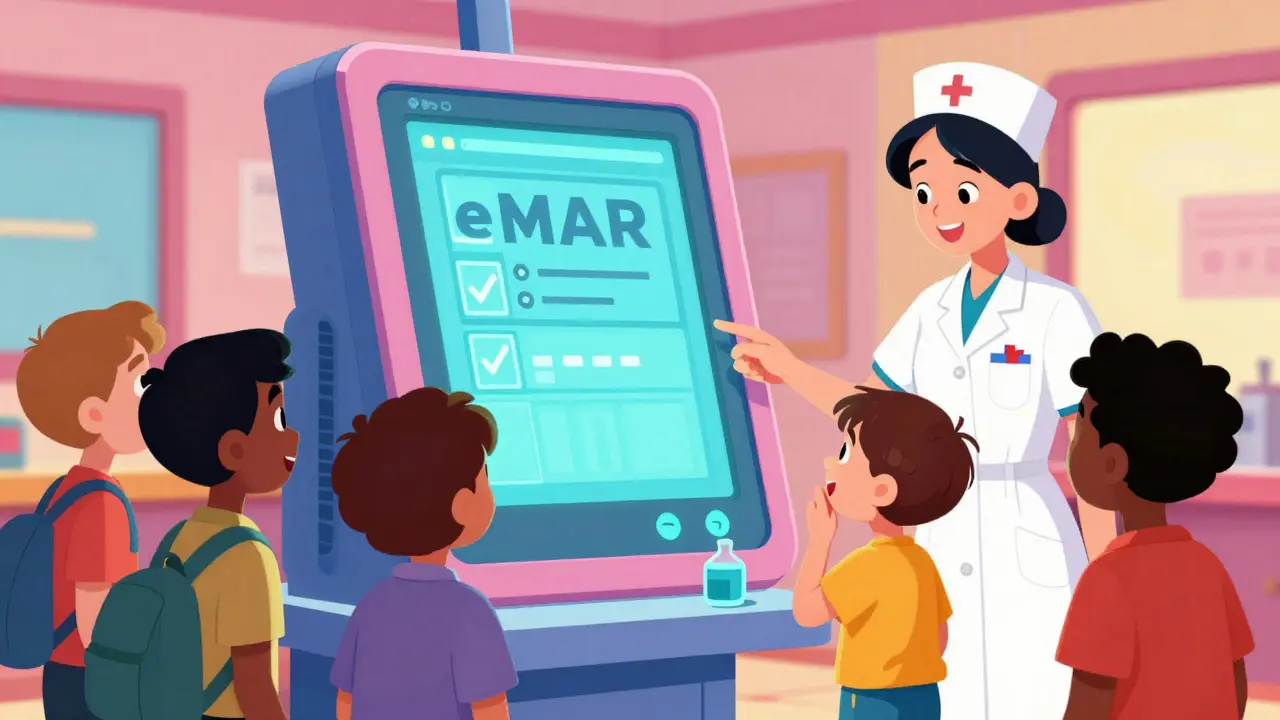
The way schools track meds is changing. We are seeing a massive shift toward eMARs are Electronic Medication Administration Records that digitally track when a student received a dose. Since 2019, the use of these digital logs has jumped from 62% to 89% in public schools, which has effectively reduced documentation errors by 57%.
Looking forward, we can expect even more integration. Some regions are piloting apps that send a push notification to a parent's phone the moment a dose is administered. While this might seem like overkill, it removes the guesswork and reduces the number of "did they take it today?" emails sent to the school office. We are also seeing a rise in requests for psychiatric medications and complex biologics, which means school protocols will have to evolve to handle more than just simple pills and inhalers.
What Happens at the End of the Year?
One of the most common mistakes parents make is leaving medication at school over the summer. Most districts have a zero-tolerance policy for this. If you don't retrieve your child's medication by the end of the term-often by August 31 in states like New York-the school is required to discard it. To avoid wasting expensive prescriptions, mark your calendar for the final week of school to clear out the clinic.
Can my child just keep their medication in their locker or backpack?
Generally, no. For safety and security, most schools require all medications to be stored in the health office in a locked cabinet. The only exception is if the student has a physician-authorized self-administration plan and has demonstrated the ability to use the medication safely.
What happens if my child refuses to take their medication at school?
Schools typically have a protocol where they will not force a student to take medication. If a child refuses, the school nurse or designated staff member will contact the parent immediately to determine the next step and document the refusal.
Does the school accept over-the-counter (OTC) meds like Tylenol?
Yes, but usually only with the same level of documentation as a prescription. You will typically still need a signed authorization form from a parent and, in many districts, a note from a doctor specifying the dose and when it should be given.
How often do I need to renew the medication authorization forms?
In most states, medication orders must be renewed annually. This ensures that the dosage is still appropriate for the child's current weight and health status. Check with your specific school district, as some require updates more frequently for certain high-risk medications.
What if my child's medication requires a specific temperature?
Ensure you notify the school nurse immediately upon delivery. Schools use dedicated medical refrigeration units kept between 2-8°C (36-46°F) to keep these medications stable and separate from food items.
Next Steps for Parents
If your child needs medication this year, start with a quick email to the school nurse to ask for their specific "Medication Administration Form." Once you have the form, schedule a brief call with your pediatrician to ensure the order includes the dose, route, and specific timing. When you deliver the medication, stay for a few extra minutes to walk through the process with the staff and ensure everything is logged correctly in their system.
Sam Hayes
April 5, 2026 AT 06:49just a heads up for everyone that the doctor's orders usually need to be dated within the current school year so dont use last years form even if the dose stayed the same
Joseph Rutakangwa
April 6, 2026 AT 02:09great tips. just check your local laws for self admin too
Will Baker
April 6, 2026 AT 22:16oh wow so we just trust these bureaucratic machines blindly now? i'm sure the 5 rights are just a lovely way to make parents feel like they aren't being ignored while the system slowly swallows their kids' autonomy whole. truly inspiring stuff
The Charlotte Moms Blog
April 7, 2026 AT 23:14The data is... flawed!!! Why is the emphasis on digital records when humans are the ones inputting the data??? Garbage in, garbage out!!!
Rob Newton
April 8, 2026 AT 04:15Over-medicating kids. Sad state of affairs.
HARSH GUSANI
April 8, 2026 AT 08:20This is all very Americanized 🙄 in my country we handle things with way more common sense and trust 🇮🇳 our schools are far superior when it comes to real care not just filling out forms 🇮🇳💪
angel sharma
April 9, 2026 AT 21:27Everyone needs to realize that taking a proactive approach to these medical forms is the absolute best way to ensure our children have a fantastic and safe learning environment because when we align our efforts between the home and the clinic we are basically building a fortress of safety around our kids and it is just so empowering to see a system that actually prioritizes the health of the student over the convenience of the staff which is why I always tell other parents to get those forms in by June and not a day later if they want a stress-free September!
Joey Petelle
April 11, 2026 AT 21:21Imagine thinking a little temperature-controlled fridge is the pinnacle of safety in this godforsaken wasteland of a public school system. It's a quaint little fantasy, really, pretending that a few pieces of paper make us an enlightened society when we're basically just automating the babysitting process with a side of pharmaceutical compliance. Truly a masterpiece of mediocrity
Vicki Marinker
April 12, 2026 AT 19:16The notion that student assent reduces missed doses by 32% is a statistically flimsy claim that likely ignores the baseline desperation of the students involved. It is quite tedious to read such optimistic projections.
Lawrence Rimmer
April 14, 2026 AT 10:15Standardized protocols are just a shield for liability. The philosophy of care has been replaced by the philosophy of the insurance claim.
Aysha Hind
April 15, 2026 AT 23:29Ever wonder who actually monitors these eMAR systems? It's probably some algorithm designed to track our kids' biometric data for some shadowy corporate entity. These 'safety' measures are just a convenient way to get every single prescription logged in a cloud database that we'll never have access to. Wake up people!
Sakshi Mahant
April 17, 2026 AT 09:05It is wonderful to see such a detailed focus on safety. In my community, we always try to balance these formal requirements with a personal touch to make the child feel comfortable with the nurse.
Hudson Nascimento Santos
April 17, 2026 AT 16:15The transition from parental control to student self-administration is an interesting metaphor for the broader journey of adolescent autonomy. It's not just about medicine, but about the trust we place in the next generation to manage their own existence.
Dee McDonald
April 19, 2026 AT 12:14Let's get this sorted! If you're struggling with the paperwork, just reach out to your pediatrician's office and ask them to fax it directly to the school nurse to save time!
I've seen too many parents wait until the last minute and then panic when the school says the form is missing a signature. Be aggressive about your child's health! Don't let a missing line on a form be the reason your kid misses a dose. Get the MAF done, get the doctor to sign off, and follow up with a phone call to the clinic to confirm receipt. There is no excuse for missing the June window when we have email and portals now! Let's make this school year the safest one yet by being organized and relentless with the bureaucracy!