
Safe Storage of Medications: How to Protect Kids and Pets from Accidental Poisoning
Medication Storage Safety Calculator
Your Medication Storage Risk Assessment
Answer these questions to understand your current risk level for accidental poisoning by children or pets.
Every year, 60,000 children under age 5 end up in the emergency room because they got into medications they weren’t supposed to. And it’s not just kids - pets are just as vulnerable. A dog that sniffs out a flavored heartworm pill or a cat that licks a drop of human cream can suffer fatal consequences in minutes. The scary part? Most of these incidents happen in homes where people think they’re being careful.
You leave your pills on the nightstand because you’re tired. You keep your dog’s flea medication next to the cat food because it’s convenient. You store your child’s asthma inhaler in the bathroom cabinet because that’s where the mirror is. None of these seem like big deals - until something goes wrong.
Why Your Current Storage Isn’t Enough
Child-resistant caps sound like a solution, but they’re not. The Consumer Product Safety Commission found these caps stop only 50 to 80% of kids. That means one in five children can still open them - and many do. Toddlers as young as 18 months can climb onto chairs, pull open drawers, and reach countertops. One parent in Austin told me her two-year-old opened a pill bottle while she was in the shower. It wasn’t opioids or insulin - just children’s ibuprofen. Still, it landed her in the ER.
And pets? They’re even better at getting into things. VCA Animal Hospitals tested standard pill vials with dogs. Sixty-five percent opened them within two minutes. Flavored pet meds - banana, chicken, liver - smell like treats. A 5mL dose of veterinary ivermectin can be deadly to a child. That’s not a typo. It’s ten times the toxic amount. And if you store human and pet meds together, the CDC says your risk of mix-ups jumps nearly fivefold.
The Real Rules for Safe Storage
There’s no magic trick. Safe storage comes down to three non-negotiable rules:
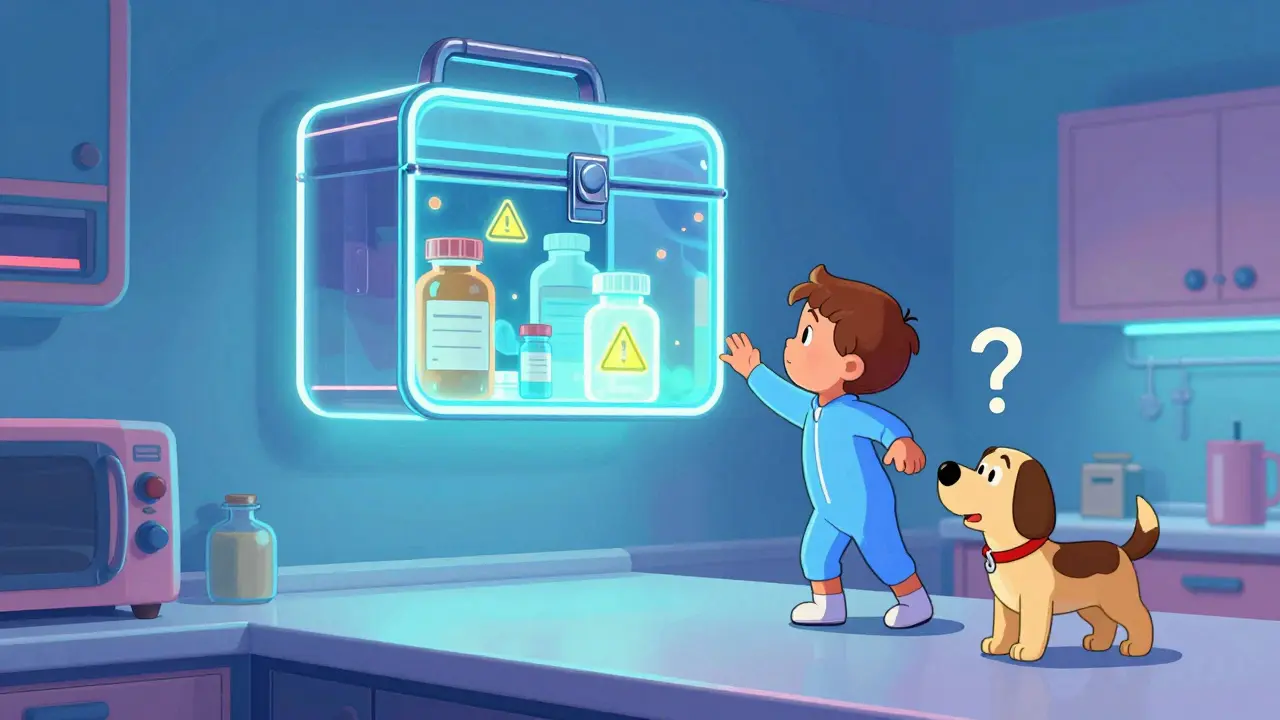
- Lock it. A cabinet with a latch isn’t enough. You need a lock. It doesn’t have to be fancy. A $25 wall-mounted lockbox from a hardware store works. So does an old gun safe. One dad in Texas used a toolbox he already had. His kids never got into meds again.
- Keep it high and out of sight. The CDC says 4 feet off the floor. Nationwide Children’s Hospital says 5 feet. Either way, don’t put meds on nightstands, kitchen counters, or bathroom shelves. Even if your child can’t climb yet, they will. And pets? They don’t need to climb. They’ll knock things over, dig through bags, or jump onto counters.
- Separate human and pet meds. Store them in different rooms. Not different shelves. Different rooms. A study from Nationwide Children’s showed that keeping them at least 15 feet apart cuts mix-up errors by 94%. That means your dog’s heartworm pill should not be in the same drawer as your blood pressure medicine.
Original packaging matters too. If you dump pills into a pill organizer, you’re creating a hazard. The CDC found 35% of medication errors happen because labels are missing. And if you’re using a pill box for your own meds, keep it locked too. A child can’t tell the difference between your vitamins and your antidepressants.
Temperature, Moisture, and What You Didn’t Know
Medications aren’t just dangerous - they’re fragile. The FDA says 70% of pills and liquids need to be stored between 68°F and 77°F. Too hot? Too cold? They lose strength. Moisture is even worse. In a humid bathroom, 40% of meds degrade within 30 days. That’s why storing meds in the bathroom is one of the worst ideas. Your kitchen pantry? Much safer. It’s dry, cool, and less likely to be accessed by kids or pets.
Some meds need refrigeration - insulin, certain antibiotics, liquid children’s meds. Keep those in a locked container inside the fridge. But don’t put them on the top shelf where a curious toddler can reach. Use the bottom drawer. And label it clearly: “Medications - Do Not Touch.”
And here’s a brutal truth: some human topical creams are lethal to cats. A tiny smear of 5-fluorouracil - used for skin cancer - can kill a cat. That’s why it must be stored separately, in a locked cabinet, far from where your cat sleeps or licks surfaces.
What About Pets? The Hidden Risks
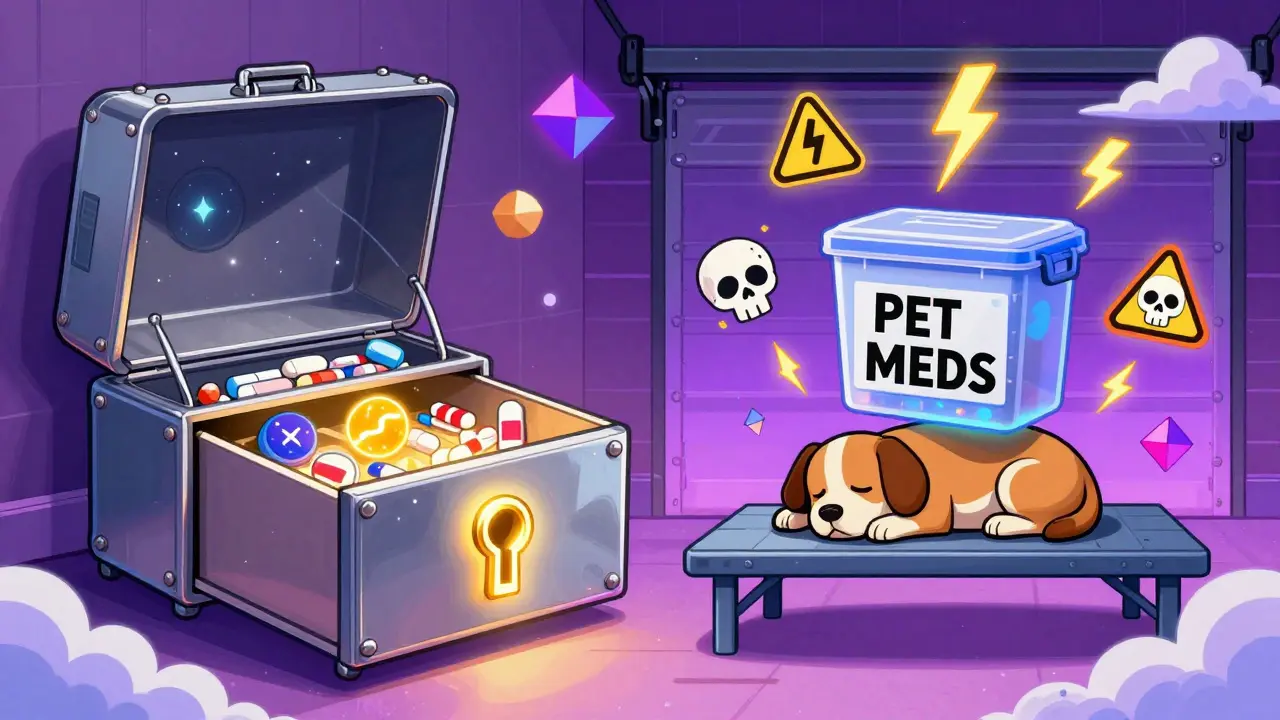
Pet medications are a silent danger. Most owners don’t realize how dangerous they are. Ivermectin, commonly used in dogs for heartworm, is deadly to cats and toxic to children. Permethrin, found in flea sprays for dogs, is fatal to cats. And dewormer paste? It’s sweet, sticky, and smells like peanut butter. Since 2018, the FDA has documented over 200 dog deaths from dogs eating horse dewormer paste left in open drawers.
Flavoring is the problem. Human meds are often tasteless. Pet meds are designed to be irresistible. That’s why 42% of pet meds are flavored with banana, strawberry, or chicken. That’s not marketing - that’s a poisoning risk. If you have both kids and pets, treat every pet med like it’s candy.
One family in Ohio lost their 8-month-old puppy after it ate a bottle of flea medication. The bottle was in the same drawer as their baby’s teething gel. The puppy didn’t survive the night.
What Works - Real Stories
People who get it right use simple, low-cost solutions.
- A grandmother in Florida uses a small gun safe ($40) mounted under her kitchen sink. She keeps all human and pet meds inside. Her grandkids can’t reach it. Her dogs don’t know how to open it.
- A single mom in Seattle uses a timed lockbox ($55) that opens only at 7 a.m. and 7 p.m. - the only times she gives meds. She doesn’t have to remember to lock it. The lock does it for her.
- A veterinary tech in Colorado keeps her own meds in a locked drawer in her bedroom. Her dog’s meds are in a locked bin in the garage. She doesn’t risk a mix-up. Ever.
These aren’t extreme measures. They’re smart ones. And they cost less than a month’s worth of groceries.
What Not to Do
Here’s what most people still get wrong:
- Leaving pills on the nightstand - 68% of parents admit to this.
- Storing pet meds near food bowls - 45% of households do this, according to VCA Hospitals.
- Flushing old meds down the toilet - the FDA says don’t do it. Use a take-back program instead.
- Keeping meds in purses or backpacks - kids and dogs can dig through them.
- Assuming “child-resistant” means “child-proof” - it doesn’t.
A 2023 CDC survey found that 95% of U.S. households have child-resistant packaging. Only 22% use locked storage. That gap kills.
What to Do Next - Simple Steps
You don’t need to overhaul your whole home. Start here:
- Find one locked container you already own - a toolbox, a gun safe, a locked file cabinet.
- Pick one room to store all human meds. Not the bathroom. Not the kitchen counter. A closet, a high cabinet, a bedroom drawer.
- Pick a different room for pet meds. The garage, a basement shelf, a locked cabinet in the laundry room.
- Put all meds back in their original bottles. No pill organizers unless they’re locked.
- Check your meds every week. Toss expired ones at a take-back location. The DEA’s National Take Back Day happens twice a year - next one is October 25, 2025.
It takes 15 minutes. And it’s the most important 15 minutes you’ll spend this year.
It’s Not About Being Perfect - It’s About Being Consistent
You won’t remember to lock the cabinet every single time. That’s normal. But if you make it easy - a lockbox you can reach in one motion - you’ll do it. The CDC found that when people use visual reminders - like a sticky note on the cabinet - compliance jumps from 45% to 92% in 30 days.
And if you have elderly relatives living with you? They might struggle with child-resistant caps. Install a lockbox with a simple key or code. It protects them too - from accidental overdoses.
This isn’t about fear. It’s about control. You control where your meds are. You control who can reach them. And that’s the only thing that keeps your kids and pets safe.
Can I just use a high cabinet without a lock?
No. Children as young as 18 months can climb onto furniture and reach countertops. Even a cabinet at 5 feet can be opened by a determined toddler. Locks are the only reliable barrier. A simple $25 lockbox is far more effective than any unlatched cabinet.
Is it safe to store pet and human medications in the same room?
It’s risky. The CDC says storing them together increases mix-up errors by 4.7 times. Even if they’re on different shelves, a child or pet can still access both. Separate rooms - like keeping human meds in the bedroom and pet meds in the garage - reduce errors by 87-94%.
What should I do with old or expired medications?
Never flush them or throw them in the trash. Use a DEA National Take Back Day collection site - there are over 11,000 across the U.S. You can also check with local pharmacies or police stations. Many offer year-round drop-off bins. This keeps meds out of water supplies and prevents accidental access.
Are child-resistant caps enough to protect my kids?
No. While they slow down some kids, testing shows 20-50% of children under age 5 can open them in under five minutes. Many do it in seconds. Locks are the only proven solution. Child-resistant caps are a backup - not a primary defense.
My pet is on medication. How do I know if it’s dangerous to kids?
Assume all pet meds are dangerous. Ivermectin, permethrin, and 5-fluorouracil (used in some human creams) are deadly even in tiny amounts. Flavored medications - especially those with banana, chicken, or liver flavor - are designed to be tasty. That makes them extra tempting to kids. Always store them separately and treat them like poison.
If you’ve ever worried your child might find your pills - or your dog might eat your cat’s medicine - you’re not alone. But worry without action is useless. Lock it. Separate it. Check it. Your family’s safety doesn’t need a fancy system. It just needs you to make one simple change today.
Rebekah Cobbson
January 14, 2026 AT 00:37Just installed a $20 lockbox under my kitchen sink after reading this. My toddler was climbing on chairs to reach the nightstand meds. No more nightmares. This post saved my sanity.
Sonal Guha
January 14, 2026 AT 08:42People still storing meds in bathrooms lmao. Moisture ruins pills and toddlers open everything. Lock it or lose it
TiM Vince
January 15, 2026 AT 02:34I’m from the Midwest and we don’t talk about this enough. My cousin’s kid got into his dad’s blood pressure pills last year. Just ibuprofen. Still ended up in the ER. Lockboxes aren’t extreme. They’re basic parenting. And pets? My dog ate a flea pill once. We were lucky. Don’t wait for that moment.
Jay Powers
January 16, 2026 AT 20:06My grandma used to keep all her meds in a locked toolbox in the garage. She didn’t have a fancy safe just a regular one she used for nails and wrenches. Her grandkids never touched anything. I did the same when I had kids. Simple works. No need to overthink it. Just lock it and move on. Also separate pet meds. My cat almost died because I left the heartworm pill next to the cat food. Don’t be that person
Lawrence Jung
January 17, 2026 AT 02:53You think a lockbox is the answer but really you’re just enabling fear culture. Kids are resilient. Pets survive on instinct. The real problem is lazy parenting and overmedicalization. Stop treating every pill like a bomb. Teach your kids not to touch things. Teach your dog to leave it. That’s real responsibility not a $25 box
Alice Elanora Shepherd
January 17, 2026 AT 05:20Thank you for this. So many people underestimate the danger. I’m a pharmacist and I see the aftermath every week. The CDC data is terrifying. And the bathroom storage? It’s the worst place. Humidity degrades medication, and children are drawn to mirrors. I recommend a locked cabinet in the bedroom, above eye level, with original packaging. Also, if you’re using a pill organizer, lock that too. Children don’t know the difference between vitamins and antidepressants. And for pets? Separate rooms. Not shelves. Rooms. One family I worked with lost their cat because the vet’s paste was stored in the same drawer as the baby’s teething gel. It was heartbreaking. Please, just lock it. It’s not about paranoia. It’s about prevention.
Sona Chandra
January 18, 2026 AT 19:03Why do Americans make everything so complicated? In India we just keep meds on the shelf and teach kids not to touch. If your child opens a pill bottle then you’re a bad parent. No lockbox needed. Also why are you storing pet meds at all? Just give them once and forget. Stop overthinking. This post is fearmongering
Cassie Widders
January 20, 2026 AT 10:59My mom used to hide her insulin in the bottom drawer of the fridge. Labeled it ‘DO NOT TOUCH’. We never touched it. Simple. Effective. No drama. Just a drawer and a sticky note. That’s all it takes.
Konika Choudhury
January 21, 2026 AT 23:10Lockbox? In India we use a steel box tied with rope. Same thing. But why are you storing pet meds in the house at all? Just give them at the vet. Why bring poison home? This is a Western problem. We don’t need your lockboxes. We need better healthcare systems.