
Seborrheic Dermatitis: How Medicated Shampoos Stop Scalp Flaking

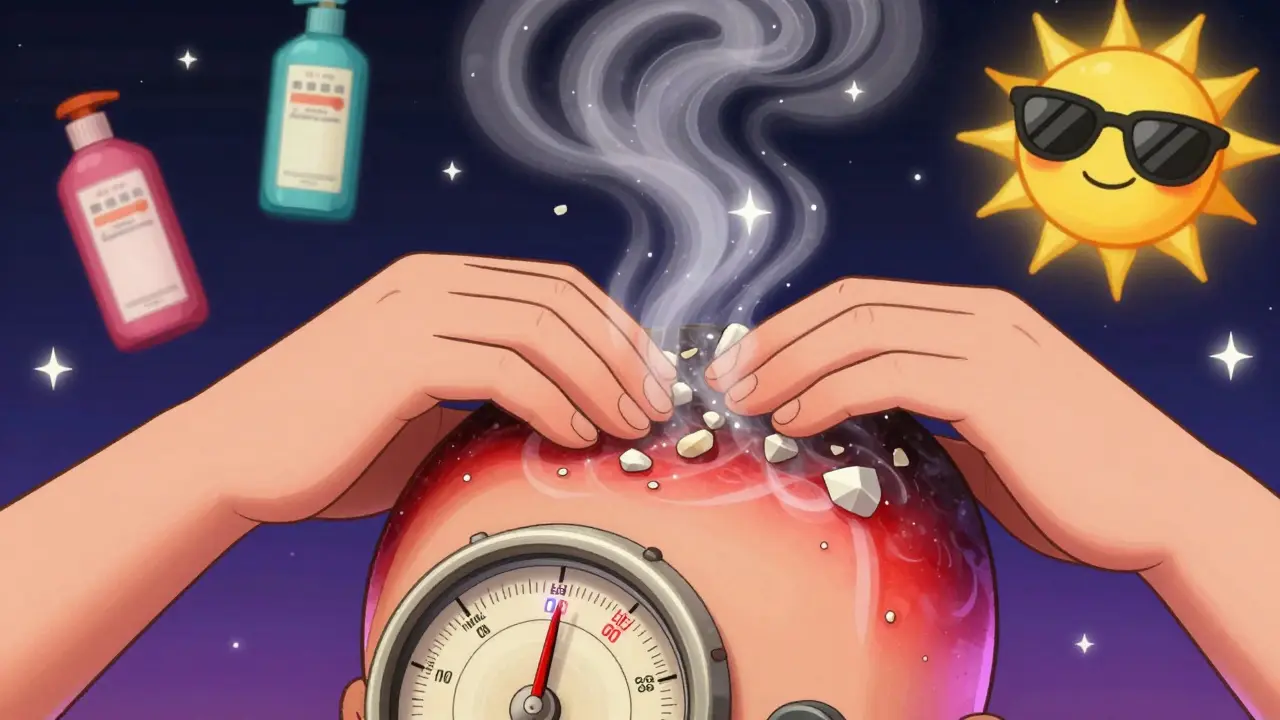
Flakes on your scalp that won’t wash off, even after using your favorite shampoo? It’s not just dry skin. If you’ve got greasy, yellowish scales, redness, and itching that keeps coming back-especially in winter-you’re likely dealing with seborrheic dermatitis. This isn’t poor hygiene. It’s not contagious. And it’s not something you’ll outgrow. But it is something you can control-with the right shampoos and a realistic plan.
What’s Really Going On Under Your Scalp?
Seborrheic dermatitis isn’t caused by dirt or stress alone, though stress can make it worse. At its core, it’s an overreaction of your skin to a yeast called Malassezia. This yeast lives on everyone’s skin-it’s normal. But in some people, it grows too fast, especially where there’s lots of oil: the scalp, eyebrows, nose creases, and chest. When it overgrows, it breaks down oils into irritants that trigger inflammation. That’s what causes the flaking, redness, and itch.Studies show about half of all adults will deal with this at some point. It’s more common in men, tends to flare in cold, dry weather, and can be worse if you have Parkinson’s disease, obesity, or a weakened immune system. And yes-your favorite hair gel or heavy pomade might make it worse by trapping oil and yeast on the scalp.
Why Regular Shampoo Doesn’t Work
Most drugstore shampoos clean oil and dirt, but they don’t touch the yeast or the inflammation. That’s why you wash, flake comes back in two days, and you feel like you’re stuck in a loop. You need something that does three things at once: kills the yeast, slows down the rapid skin cell turnover, and calms the redness.That’s where medicated shampoos come in. They’re not fancy. They’re not expensive. But they work-when used right.
The Top 6 Medicated Ingredients That Actually Help
Not all medicated shampoos are created equal. Here’s what’s proven to work, based on dermatology guidelines and real-world use:- Ketoconazole (2%): A powerful antifungal that targets Malassezia directly. It’s available both over-the-counter and by prescription. Most effective for moderate to severe cases.
- Zinc Pyrithione (1-2%): Gentle enough for daily use. Great for mild cases or maintenance. Found in Head & Shoulders Clinical Strength and Neutrogena T/Gel Therapeutic.
- Selenium Sulfide (2.5%): Slows skin cell turnover and reduces yeast. Can discolor light-colored hair if left on too long, so rinse well.
- Ciclopirox (1%): Antifungal and anti-inflammatory. Often prescription-only but very effective for stubborn cases.
- Coal Tar (0.5-5%): Slows down the fast-growing skin cells that cause flaking. Smells strong and can stain, but works wonders for thick scales. Dermax and Neutrogena T/Gel are common brands.
- Salicylic Acid (1.8-3%): A keratolytic-it softens and lifts off the dead skin flakes. Best used in combination with antifungals.
There’s no single “best” ingredient. What works for your neighbor might do nothing for you. That’s normal.
How to Use Medicated Shampoos Right (The 5-Minute Rule)
Most people wash their hair, rinse, and move on. That’s why they don’t see results. These shampoos need time to work.Here’s the correct method:
- Wet your scalp thoroughly.
- Apply the shampoo directly to the scalp-not just the hair.
- Massage gently for 30 seconds to spread it around.
- Leave it on for 5 to 10 minutes. Set a timer. Don’t rush.
- Rinse completely.
Do this every other day for the first 2-4 weeks until the flakes and redness fade. Then cut back to once or twice a week to keep it under control. Skipping steps or rinsing too fast cuts effectiveness by half.
What to Do When One Shampoo Stops Working
It happens. After a few months, your favorite shampoo might seem less effective. That’s not your imagination. Yeast can adapt. Your skin can get used to it.Instead of switching brands randomly, rotate ingredients. Try this pattern:
- Monday: Ketoconazole shampoo
- Wednesday: Zinc pyrithione
- Friday: Coal tar
Rotate every 2-3 weeks. This keeps the yeast from getting comfortable. A 2023 survey by the National Eczema Society found that 45% of people needed to try 2-3 different types before finding a combo that worked long-term.
Don’t use more than one medicated shampoo in a single wash. It can irritate your scalp. Stick to one at a time.
When to Add a Topical Steroid
If your scalp is really red, swollen, or burning, a low-strength hydrocortisone cream (0.5% or 1%) can help calm the inflammation fast. Apply it sparingly to the affected areas after shampooing, no more than 2-3 days in a row. Don’t use it daily-it can thin your skin over time.Hydrocortisone is available over the counter. It’s not a cure, but it’s a useful tool for flare-ups. Think of it like a fire extinguisher, not a sprinkler system.
What About Natural Remedies?
Tea tree oil, apple cider vinegar, coconut oil-they’re popular online. But there’s no strong evidence they fix seborrheic dermatitis. Some people swear by them, but they don’t target the yeast the way ketoconazole or selenium sulfide do.And some natural oils (like coconut or olive oil) can actually feed the yeast and make flaking worse. If you want to try them, use them as a conditioner, not a treatment. Never leave oil on your scalp overnight.

Long-Term Management: It’s a Lifestyle, Not a Cure
Here’s the hard truth: there’s no cure for seborrheic dermatitis. But you don’t need one. You need a routine.Once your scalp clears up, keep using a medicated shampoo once or twice a week-even if you feel fine. Stop using it, and flakes usually return within 2-4 weeks. That’s not failure. That’s biology.
Keep stress in check. Sleep well. Avoid harsh hair products. Wash your pillowcase twice a week. Use a humidifier in winter. These aren’t optional extras-they’re part of the treatment.
When to See a Dermatologist
You don’t need to see a specialist right away. But if:- Nothing works after 8 weeks of consistent use
- Your scalp is bleeding, oozing, or crusty
- The rash spreads to your face, ears, or chest
- You’re losing hair in patches
Then it’s time to get help. A dermatologist can prescribe stronger antifungals, topical calcineurin inhibitors (like pimecrolimus), or even oral treatments if needed. They can also rule out psoriasis or fungal infections that look similar.
Real Talk: What Users Actually Say
On forums like Reddit, people share what really works:- “Ketoconazole cleared my scalp in 3 weeks. But my hair got dry. I started using a light conditioner only on ends.”
- “Coal tar stinks and stains my towels. But it’s the only thing that stopped the flakes after 5 years.”
- “I rotate ketoconazole, zinc pyrithione, and salicylic acid every 10 days. No flaking in 8 months.”
- “I thought it was dandruff. Turns out I had seborrheic dermatitis on my eyebrows too. I didn’t even notice.”
The common thread? Patience. Rotation. Consistency.
Final Checklist: Your 3-Step Plan
1. Start with ketoconazole or zinc pyrithione shampoo. Use it every other day for 3 weeks, leaving it on for 5-10 minutes each time. 2. Once flakes are gone, switch to once or twice a week. Rotate ingredients every 2-3 weeks to prevent resistance. 3. Use hydrocortisone cream sparingly for redness. Never use it daily. Stop if you don’t see improvement in 5 days.Seborrheic dermatitis isn’t going away. But it doesn’t have to control your life. With the right shampoos and a steady routine, you can have a clean, flake-free scalp-and the confidence that comes with it.
Is seborrheic dermatitis the same as dandruff?
Dandruff is a mild form of seborrheic dermatitis that only affects the scalp. Seborrheic dermatitis can also show up on your eyebrows, nose, ears, and chest. Dandruff usually just causes white flakes without redness or itching. Seborrheic dermatitis includes greasy, yellowish scales and often causes discomfort.
Can stress make seborrheic dermatitis worse?
Yes. Stress triggers inflammation in the body, which can cause the yeast overgrowth to flare up. About 60% of people report worse symptoms during high-stress periods. Managing stress through sleep, exercise, or mindfulness can help reduce flare-ups.
Why does my scalp get worse in winter?
Cold, dry air strips moisture from your skin, making your scalp more sensitive. Less sunlight also means less natural antifungal UV exposure. About 75% of people with seborrheic dermatitis say their symptoms worsen in winter. Using a humidifier and sticking to your shampoo routine helps.
Can I use medicated shampoo every day?
Yes-during the initial treatment phase. Daily use for 2-4 weeks is common to get symptoms under control. Once your scalp clears, reduce to once or twice a week to maintain results. Daily use long-term can dry out your hair, so switch to gentler formulas like zinc pyrithione if needed.
Will my hair fall out because of seborrheic dermatitis?
Seborrheic dermatitis itself doesn’t cause permanent hair loss. But constant scratching or inflammation can lead to temporary thinning. Once the condition is controlled, hair usually grows back. If you’re losing clumps of hair, see a dermatologist-it could be something else like alopecia.
Are there any side effects from medicated shampoos?
Yes. Common ones include dryness, itching, or hair that feels brittle. Coal tar can stain skin and light-colored hair. Selenium sulfide may discolor blonde or gray hair if left on too long. If your scalp burns or swells, stop using it and consult a doctor. These side effects usually improve once you find the right product and frequency.
Can children get seborrheic dermatitis?
Yes-infants often get it as cradle cap, which looks like thick, yellow scales on the scalp. It’s harmless and usually clears up by 6-12 months. Gently massage mineral oil or baby oil to loosen scales, then wash with a mild shampoo. Avoid strong medicated shampoos unless a pediatrician recommends them.
How long does it take to see results?
Most people notice improvement in 1-2 weeks. Full control usually takes 4-8 weeks. Don’t give up if it doesn’t work immediately. The yeast takes time to respond, and your skin needs to reset its turnover cycle. Consistency beats speed.