
SGLT2 Inhibitors and Fournier’s Gangrene: What You Need to Know Now

Fournier's Gangrene Risk Assessment Tool
URGENT: SEEK EMERGENCY CARE NOW
If you selected ANY symptoms, especially discoloration or severe pain, you MUST go to the ER immediately. Fournier's gangrene progresses rapidly and can be fatal if not treated within hours.
Call 911 or go to your nearest emergency room now. Don't wait or call your doctor first. Tell them you're taking an SGLT2 inhibitor and suspect Fournier's gangrene.
If you’re taking a drug like canagliflozin, dapagliflozin, empagliflozin, or ertugliflozin for type 2 diabetes, you’ve likely heard about their heart and kidney benefits. But there’s a rare, dangerous side effect you need to recognize-Fournier’s gangrene. It’s not common, but when it happens, every hour counts.
What Are SGLT2 Inhibitors?
SGLT2 inhibitors are oral diabetes medications that work by making your kidneys flush out extra sugar through urine. That lowers blood glucose without causing low blood sugar or weight gain. They’re used widely because they also reduce the risk of heart failure and slow kidney damage in people with diabetes. The four approved in the U.S. are canagliflozin (Invokana), dapagliflozin (Farxiga), empagliflozin (Jardiance), and ertugliflozin (Steglatro). Since 2013, millions of people have used them safely.
But in 2018, the FDA added a boxed warning-the strongest type-to all these drugs after 12 cases of Fournier’s gangrene were reported in patients using them. Since then, more cases have been documented globally. The risk is low-about 1.9 cases per 100,000 patient-years-but the consequences are severe.
What Is Fournier’s Gangrene?
Fournier’s gangrene is a fast-spreading, life-threatening infection that kills tissue in the genitals, perineum, or anus. It’s caused by a mix of bacteria-often E. coli, Klebsiella, or anaerobes-that invade deep layers of skin and fat. The infection destroys blood vessels, cuts off oxygen, and turns tissue black. It can spread to the abdomen or bloodstream in hours.
Historically, it mostly affected older men with diabetes, obesity, or poor hygiene. But now, cases are showing up in women and younger patients on SGLT2 inhibitors-even those without classic risk factors. About one-third of reported cases in Europe were in women, which surprised many doctors.
Why Do SGLT2 Inhibitors Increase the Risk?
The connection isn’t fully understood, but the evidence points to three key factors:
- Glucose in urine: These drugs make your urine sweet. Bacteria love sugar. This creates a perfect breeding ground near the urethra and genital skin.
- Tissue stress: High sugar levels in urine may cause osmotic changes that weaken the skin barrier, making it easier for bacteria to invade.
- Immune disruption: Diabetes already weakens immune response. Some research suggests SGLT2 inhibitors might slightly alter local immune defenses, though this is still being studied.
Most patients who developed Fournier’s gangrene while on these drugs also had poor blood sugar control (HbA1c above 9%). That suggests the combination of high glucose levels and the drug’s effect may be the real trigger-not the drug alone.
Early Warning Signs You Can’t Ignore
This isn’t a rash or a yeast infection. Fournier’s gangrene starts fast and gets worse fast. If you’re on an SGLT2 inhibitor and notice any of these, go to the ER immediately:
- Sudden, severe pain in the genitals, anus, or inner thighs-worse than any bruise or bump
- Redness, swelling, or warmth in the genital area that spreads quickly
- Dark, purple, or black patches of skin-this means tissue is dying
- Fever, chills, or feeling extremely unwell
- Foul-smelling discharge from the genital area
- Difficulty urinating or pain during urination
One patient described it as "feeling like my scrotum was on fire," even though there was no visible cut or injury. Another said she thought it was a bad UTI-until she woke up with black skin around her labia. Both were hospitalized within 12 hours.

What Happens If You Wait?
Delaying treatment by even 24 hours increases your chance of death by up to 40%. Each hour of delay raises the risk of dying by about 9%. Why? The infection spreads faster than antibiotics can work. Once it reaches the bloodstream, organs start to shut down.
Survival depends on three things:
- Stopping the SGLT2 inhibitor right away
- Starting broad-spectrum IV antibiotics within hours
- Getting emergency surgery to cut out dead tissue
Doctors call this the "triple threat" protocol. Without all three, survival drops sharply. Some patients need multiple surgeries. Others lose genital tissue or require reconstructive procedures. A few don’t survive.
Who’s at Highest Risk?
Not everyone on SGLT2 inhibitors is at equal risk. These factors raise your chances:
- Poor blood sugar control (HbA1c above 9%)
- History of recurrent genital yeast or bacterial infections
- Obesity or poor hygiene
- Immune system problems (like HIV, chemotherapy, or steroid use)
- Being male (though women are also at risk)
Even if you don’t have these, you’re not immune. The FDA and European regulators say this is a class-wide risk-meaning all SGLT2 inhibitors carry it. That’s why warnings apply to all four drugs.
What Should You Do?
Don’t stop your medication unless your doctor tells you to. The benefits for heart and kidney protection are real and life-saving for most people. But here’s what you need to do right now:
- Know the warning signs. Talk to your doctor and write them down. Keep them on your phone.
- If you notice any unusual pain, swelling, or skin changes in your genital area-go to the ER. Don’t wait. Don’t call your doctor first. Go.
- Tell the ER staff you’re on an SGLT2 inhibitor. Say "Fournier’s gangrene" if you can. That gets you seen faster.
- Ask your doctor if you should switch to another diabetes drug if you’ve had repeated genital infections.
- Keep your blood sugar under control. That’s the single biggest thing you can do to lower your risk.
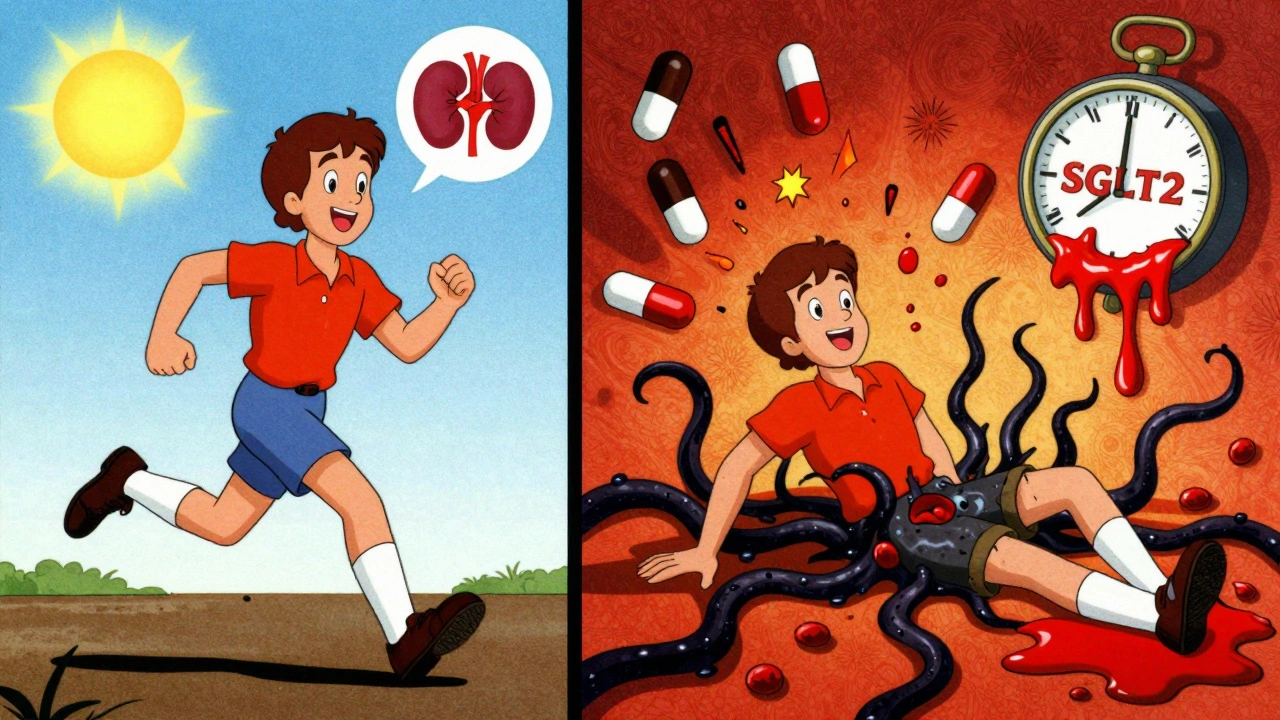
What About the Benefits?
Yes, these drugs reduce heart failure hospitalizations by up to 30% and slow kidney disease progression. For many, they’re the best option. The American Diabetes Association still recommends them as first-line for patients with heart or kidney disease.
The key is balance. For most people, the risk of Fournier’s gangrene is far lower than the risk of having a heart attack or needing dialysis. But for the small number who develop it, the outcome can be devastating. That’s why awareness matters.
Regulators Are Watching
The FDA, EMA, and UK’s MHRA all continue to monitor cases through their safety databases. As of 2024, more than 100 cases have been reported worldwide. New research is looking at whether we can predict who’s most at risk-using factors like HbA1c levels, infection history, and even urine glucose concentration.
For now, the message is clear: Don’t panic. Do stay alert. Know the signs. Act fast.
Can Fournier’s gangrene happen to women taking SGLT2 inhibitors?
Yes. While most early reports were in men, about one-third of cases in Europe and the U.S. have occurred in women. The infection affects the labia, perineum, or anal area in women, and symptoms are the same: sudden pain, swelling, fever, and darkening skin. Women should not assume they’re protected.
Should I stop taking my SGLT2 inhibitor because of this risk?
No-not unless your doctor advises it. The risk of Fournier’s gangrene is very low (about 1 in 10,000), and the benefits for heart and kidney health are significant. Stopping the drug without medical guidance can raise your risk of heart attack, stroke, or kidney failure. Talk to your provider if you’re concerned, especially if you’ve had recurrent genital infections.
How quickly does Fournier’s gangrene develop?
It can progress from mild discomfort to life-threatening infection in under 24 hours. Early symptoms like pain or redness may start mildly, but they worsen rapidly. If you notice swelling or skin discoloration, treat it as an emergency. Don’t wait to see if it gets better.
Are there safer diabetes drugs without this risk?
Yes. Medications like metformin, GLP-1 agonists (such as semaglutide), and DPP-4 inhibitors don’t carry this specific risk. If you’ve had repeated genital infections or are at higher risk, your doctor may consider switching you. But these alternatives don’t offer the same heart and kidney protection as SGLT2 inhibitors.
What should I tell the ER doctor if I go in with symptoms?
Say: "I’m taking an SGLT2 inhibitor for diabetes, and I have sudden genital pain and swelling. I’m worried about Fournier’s gangrene." That phrase tells them exactly what to check for. Bring your medication list. Don’t assume they’ll know the connection-it’s rare, and not all ER staff are familiar with it.
Can I get Fournier’s gangrene even if my diabetes is well-controlled?
Yes, but it’s much less likely. Most cases occurred in people with HbA1c above 9%. Good blood sugar control reduces the amount of sugar in your urine, which lowers the chance of bacterial overgrowth. Still, no one is completely risk-free. Stay alert to symptoms regardless of your HbA1c level.
Final Takeaway
SGLT2 inhibitors save lives. But they come with a rare, deadly risk that’s easy to miss if you don’t know what to look for. The good news? You can prevent disaster by knowing the signs and acting fast. Don’t wait for a doctor’s appointment. If your genitals hurt like nothing you’ve felt before, go to the ER. Your life might depend on it.
ian septian
December 8, 2025 AT 19:39Don’t ignore genital pain. If it feels wrong, go to the ER. No excuses.
Larry Lieberman
December 8, 2025 AT 23:34Bro I just started Jardiance last month 😳 I’m gonna keep this page bookmarked. My wife is gonna print this out and tape it to the bathroom mirror. 🚨🩸
Jennifer Blandford
December 10, 2025 AT 10:00I’m a nurse in Philly and I’ve seen two cases in the last year-both women, both on SGLT2s, both thought it was ‘just a yeast infection.’ One lost her labia. The other didn’t make it past 36 hours. This isn’t scare tactics. This is life or death. Please, please, please-don’t wait. Go to the ER. Say the words. They’ll listen.
Stacy Tolbert
December 11, 2025 AT 12:17I’ve been on Farxiga for 3 years and my HbA1c is 5.8… but I’ve had three yeast infections this year. I’m terrified. I feel like my body’s betraying me. Why does it have to be this complicated? I just want to live without constant worry.
Ryan Brady
December 12, 2025 AT 06:56So now we’re blaming the drug because some lazy Americans won’t wipe properly? 🤦♂️ Get a shower, stop eating sugar, and stop whining. This is why America’s healthcare is broke.
Delaine Kiara
December 12, 2025 AT 15:38Okay but let’s be real-this is just Big Pharma’s way of pushing you toward GLP-1s. They make way more money on semaglutide. The FDA’s warning? Totally staged. Look at the timeline: drug hits market, sales boom, then boom-suddenly ‘rare side effect’ appears. Coincidence? I think not. 🤔
Noah Raines
December 13, 2025 AT 06:24My doc told me to watch for this. I printed the symptoms and put them on my fridge next to my insulin. If I feel even a twinge, I’m calling 911. No drama. No ‘maybe it’ll go away.’ This ain’t a blog post-it’s a countdown clock. 💥
Gilbert Lacasandile
December 13, 2025 AT 22:01Just wanted to say thanks for writing this. I’ve been on Invokana for 2 years and didn’t know any of this. I’m gonna schedule a chat with my endo next week. Maybe we’ll switch. I’d rather be safe than sorry.
Taya Rtichsheva
December 13, 2025 AT 23:20so like… if u have diabetes and ur pee is sweet… is that… normal? 😅 like… i thought that was just how it worked? guess not
Christian Landry
December 14, 2025 AT 03:19My cousin’s on Jardiance and got it last year. He’s 42, healthy, no obesity, HbA1c 6.1. He had surgery, lost a testicle, and now uses a catheter. He said the pain started at 2am, he thought it was a pulled muscle. By noon? Black skin. He’s alive because his wife is a nurse. Don’t be like my cousin. Act. Now.
Katie Harrison
December 15, 2025 AT 04:51Thank you for this. I’m a diabetic woman. I’ve been told by doctors before that genital infections are ‘common’ and ‘not a big deal.’ This article changed my mind. I’ve printed it. I’ve shared it. I’ve told my sister. And I’ve scheduled my appointment to discuss alternatives. This isn’t fear-it’s responsibility.