
State Laws on Generic Drug Substitution: A Patchwork of Regulations Across the U.S.
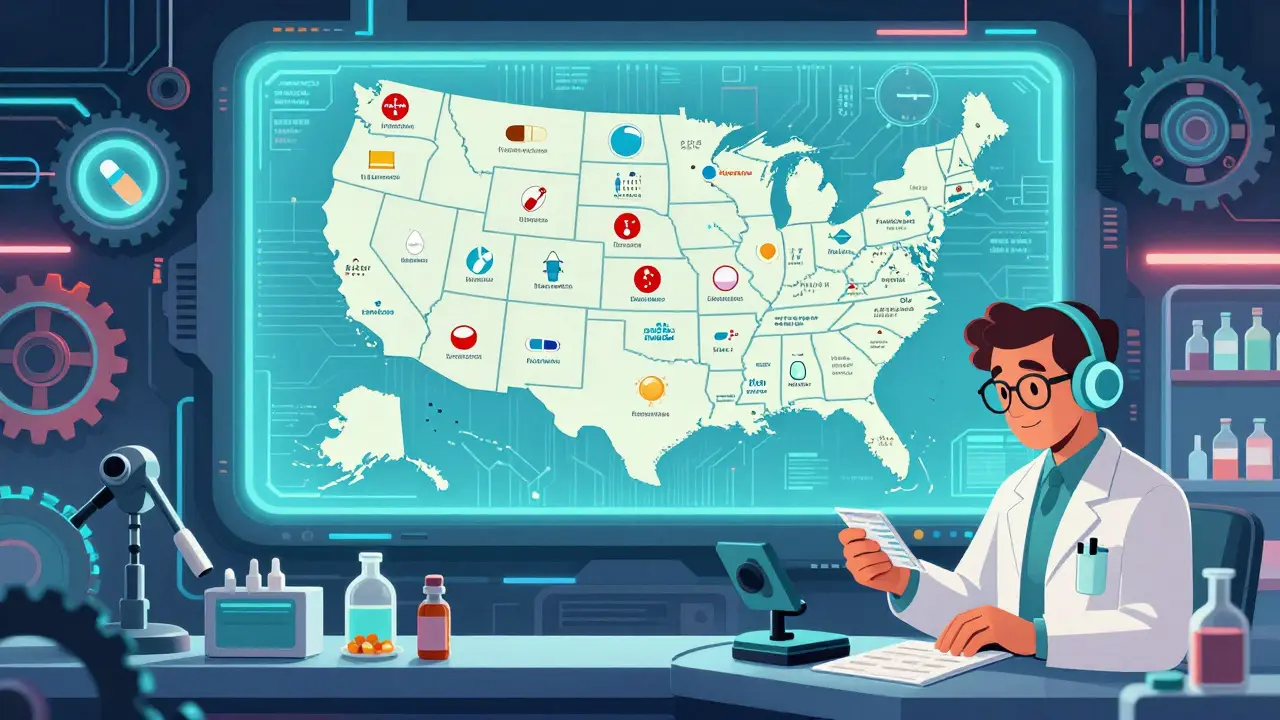
Every Year, 6 Billion Prescriptions Fill a Patchwork of Rules
Every year, 6 billion prescriptions are filled in the United States. But here’s the catch: pharmacists can’t always handle generic drug substitution the same way in every state. Why? Because each state has its own rules about when and how generic drugs can replace brand-name medications. This patchwork of regulations affects everything from your out-of-pocket costs to your safety. Let’s break down how these state laws work-and why they matter.
How State Laws Differ on Generic Substitution
State laws on generic drug substitution aren’t uniform. All 50 states and Washington, DC have their own rules, creating a confusing maze for pharmacists and patients. These laws originated from the federal Hatch-Waxman Act of 1984, which set up the modern generic drug approval process. But states took it further. Some require pharmacists to automatically substitute generics unless told otherwise. Others let pharmacists decide. Some states even require patients to explicitly agree before a substitution happens. This variation isn’t just paperwork-it directly impacts how you get your medications.
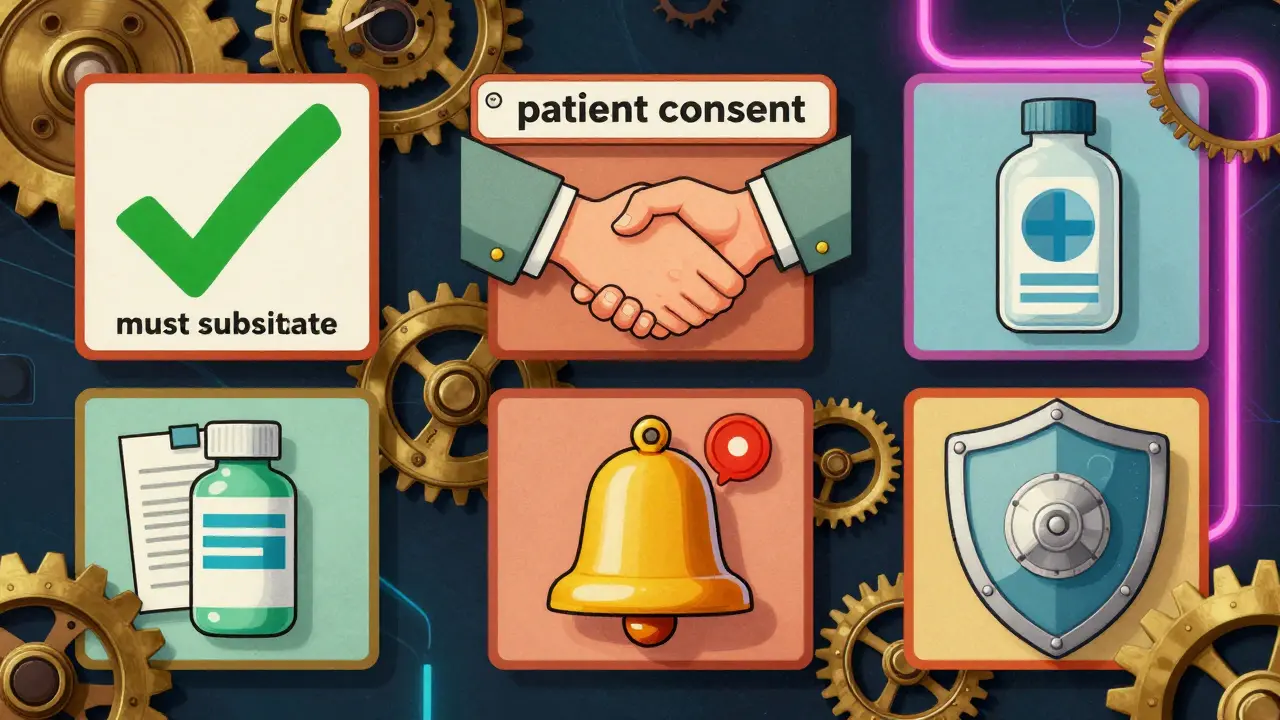
Key Dimensions of State Substitution Rules
Four main dimensions define how states regulate generic substitution. First, the pharmacist’s duty to substitute. In 22 states, pharmacists must substitute generics unless the prescriber or patient says no. In 28 states plus DC, substitution is optional. Second, patient consent. Thirty-two states use "presumed consent," meaning substitution happens automatically unless the patient objects. Eighteen states require "explicit consent," where you must say yes before the switch. Third, notification requirements. Forty-one states force pharmacists to tell patients after substitution. Fourth, liability protections. Thirty-seven states shield pharmacists from lawsuits if they follow the rules correctly.
Take Kentucky for example. The state keeps a special list of narrow therapeutic index drugs that can’t be substituted without extra caution. This includes drugs like digitalis glycosides and certain antiepileptic medications. Meanwhile, Hawaii has some of the strictest rules. For antiepileptic drugs, pharmacists need both the doctor’s and patient’s permission before switching to a generic. Oklahoma is another outlier-it bans substitution unless the prescriber or patient authorizes it.
Real-World Impact on Patients and Pharmacists
States with mandatory substitution laws see higher generic usage. A 2018 Health Economics study found these states had 12.3% more generic fills for statins compared to permissive states. But it’s not all smooth sailing. Pharmacists spend an average of 12.7 minutes per prescription checking state rules. That’s time they could spend counseling patients. "In my New York store, I must ask every patient if they want the generic, but in neighboring New Jersey, I automatically substitute unless they opt out-it confuses patients who live near state borders," says a pharmacist on Reddit.
Patients also face challenges. Between 2020-2022, the FDA Adverse Event Reporting System received 217 reports about issues after generic substitution. Most involved levothyroxine (89 cases) and warfarin (53 cases). These are Narrow Therapeutic Index drugs where even small differences can cause problems. A Minnesota case documented adverse events from warfarin substitution despite FDA equivalence ratings.
Economic Benefits and Hidden Costs
The upside? Generics save money. From 2009-2019, generic substitution saved $1.7 trillion. In 2023, 92.5% of U.S. prescriptions were for generics, saving $313 billion annually. States with mandatory substitution laws average 94.1% generic fill rates versus 88.3% in permissive states. Medicaid programs save about $1.2 billion yearly thanks to mandatory substitution, per a 2018 Health Economics study.
But there are hidden costs. When states have different rules, pharmacy benefit managers (PBMs) face complexity. A 2022 survey by the American Pharmacists Association found 78% of pharmacists get confused processing prescriptions across state lines. This confusion can lead to errors, like giving a brand drug when a generic was allowed, or vice versa.
The Future of Generic Substitution Laws
Efforts are underway to harmonize these laws. The Uniform Law Commission drafted a Model State Biologics and Biosimilars Act in 2023 to standardize rules for Biosimilars. The FDA Orange Book’s 2023 update added 17 new therapeutic equivalence ratings specifically for biosimilars, prompting reviews in 23 states. Meanwhile, the Congressional Budget Office estimates harmonizing state laws could save $8.7 billion more by 2028. But patient advocacy groups warn against over-standardization, especially for rare diseases requiring narrow therapeutic index drugs.
What is the FDA Orange Book?
The FDA Orange Book is a publication by the U.S. Food and Drug Administration that lists drug products with therapeutic equivalence evaluations. It’s used by pharmacists to determine if a generic drug can safely replace a brand-name drug. The Orange Book uses "A" or "B" ratings to show therapeutic equivalence. "A" means the generic is fully interchangeable, while "B" means there are potential issues. This system is critical for ensuring safe substitutions across state lines.
How do states differ in patient consent for generic substitution?
States split on patient consent. Thirty-two states use "presumed consent," where substitution happens automatically unless you say no. Eighteen states require "explicit consent," meaning you must actively agree before a switch. For example, New York requires pharmacists to ask each patient if they want the generic, while New Jersey automatically substitutes unless you object. This difference confuses patients living near state borders and can lead to medication errors.
Why are narrow therapeutic index drugs treated differently?
Narrow Therapeutic Index drugs like warfarin or levothyroxine have very small windows for safe dosing. Even slight changes in blood concentration can cause serious side effects or treatment failure. Because of this, 15 states maintain special lists of these drugs where substitution is restricted. Kentucky, for example, bans automatic substitution for antiepileptic drugs without extra checks. The FDA acknowledges that some patients may experience differences with these drugs despite meeting equivalence standards.
What happens if a pharmacist makes a substitution error?
Liability depends on the state. Thirty-seven states protect pharmacists from lawsuits if they follow substitution rules correctly. But in states without these protections, pharmacists could face legal consequences. For example, if a pharmacist substitutes a drug when the prescription says "dispense as written," they might be held responsible for any resulting harm. That’s why pharmacies now use management systems that automatically check state laws before dispensing-reducing errors by 64%, according to Drug Topics in 2023.
Are biosimilars handled differently than traditional generics?
Yes. Biosimilars are more complex than traditional generics because they’re made from living cells. As of 2023, 49 states and DC have specific rules for biosimilar substitution, but Hawaii has the strictest requirements. Florida requires pharmacies to establish a formulary ensuring substitutions "would not pose a threat to health and safety," while Iowa’s Board of Pharmacy explicitly uses the FDA Orange Book for determining equivalence. These differences mean pharmacists must track separate rules for biologic drugs versus traditional generics.
Katharine Meiler
February 5, 2026 AT 20:50State laws on generic drug substitution create a fragmented regulatory landscape across the U.S. The Hatch-Waxman Act of 1984 set the foundation, but states have implemented varying rules. Currently, 22 states require pharmacists to substitute generics unless the prescriber or patient objects. In contrast, 28 states plus DC allow pharmacists discretion.
Patient consent mechanisms differ significantly-32 states use presumed consent where substitution occurs automatically unless the patient objects, while 18 require explicit consent. Notification requirements are also inconsistent; 41 states mandate post-substitution patient notification. Liability protections vary too, with 37 states shielding pharmacists from lawsuits when following protocols.
For drugs with narrow therapeutic indices like levothyroxine or warfarin, some states like Kentucky maintain special lists requiring extra verification steps. Hawaii enforces strict rules for antiepileptic drugs, needing both physician and patient approval. The FDA Orange Book's therapeutic equivalence ratings are pivotal for substitution decisions but state interpretations differ.
A 2018 Health Economics study found mandatory substitution states had 12.3% higher generic fill rates for statins. However, pharmacists spend an average of 12.7 minutes per prescription verifying state rules, reducing counseling time. Pharmacy benefit managers face complexity when processing prescriptions across state lines, leading to potential errors.
Patient advocacy groups warn against over-standardization for rare diseases requiring precise dosing. Harmonizing these regulations could save $8.7 billion by 2028 but must preserve flexibility for high-risk medications. This patchwork of laws impacts both healthcare costs and patient safety daily.
Samantha Beye
February 6, 2026 AT 16:51Thanks for the detailed breakdown. It's clear how much inconsistency affects both pharmacists and patients. I've seen this firsthand in my practice.
Rene Krikhaar
February 8, 2026 AT 04:13I've worked in pharmacies for 15 years and the state differences are a nightmare. Pharmacists have to check each state's rules before dispensing. Its time-consuming and prone to errors. Many patients don't realize their meds might change based on location. For example crossing state lines can lead to different generics. This causes confusion and sometimes adverse effects. We need better systems to handle this. A centralized database would help. Also clearer communication with patients about substitutions. Its not just about cost but safety. The FDA Orange Book is key but states interpret it differently. For narrow index drugs like warfarin small changes matter. But current rules vary too much. Some states have good practices others not. We need more collaboration between states. This affects patient outcomes daily.
Matthew Morales
February 9, 2026 AT 08:54yeah totally agree! 🤯 the state rules are such a mess. like in my pharmacy we get confused all the time. also, the FDA Orange Book isnt always updated. 😅
one hamzah
February 11, 2026 AT 02:44This is so important! 🌍 India has similar issues but with differnt regulations. The generic substitution laws vary a lot. Some states like California have clear rules but others are chaotic. The FDA Orange Book is key but needs more updates. For narrow therapeutic index drugs, extra care is needed. 🤔
Diana Phe
February 12, 2026 AT 23:58The government is using these state laws to control the population. They want people dependent on brand-name drugs so they can charge more. Big Pharma is behind this. It's all a scheme to keep us sick. The FDA is part of the conspiracy. They don't care about patients. They just want profits.
Carl Crista
February 14, 2026 AT 14:16Exactly. FDA corrupt. Ignore safety data. Orange Book fake. Big Pharma owns all. No one safe. Planned.
Andre Shaw
February 16, 2026 AT 09:26Whoa, this is such a load of BS. States should just standardize everything. But no, they love to create chaos. Pharmacists are overcomplicating things. It's not rocket science. Just let them substitute generics and move on. Stop with all this bureaucracy. It's a joke.
Tehya Wilson
February 17, 2026 AT 17:15While I appreciate the sentiment standardization is not feasible. Each state has unique healthcare needs. The current system allows for flexibility. Your argument lacks nuance. This is a complex issue requiring detailed analysis.
Pamela Power
February 18, 2026 AT 13:21Most people don't understand the intricacies of pharmaceutical regulations. This post oversimplifies everything. Real experts know the nuances. The FDA Orange Book is not the final word. Some states have better systems, others are incompetent. It's a disgrace how poorly managed this is.
Cole Streeper
February 18, 2026 AT 23:58States need to standardize now.