
Strep Throat: How to Diagnose, Treat with Antibiotics, and Know When You're Recovered
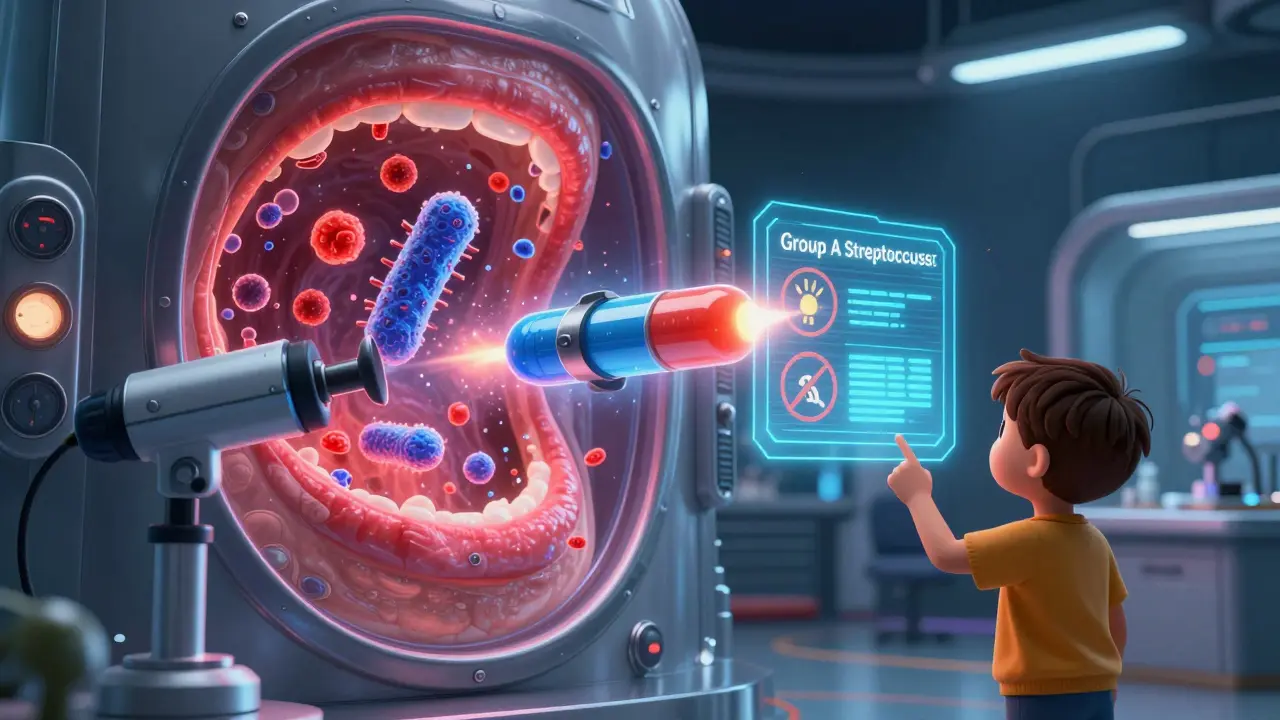
Strep throat isn’t just a bad sore throat. It’s a bacterial infection caused by Group A Streptococcus (a bacterium called Streptococcus pyogenes) that can turn a simple sore throat into something serious if left untreated. Unlike viral colds, strep throat doesn’t come with a runny nose or cough - and that’s actually one of the biggest clues. If you or your child suddenly has a painful throat, fever, and swollen tonsils - but no cough - it might be strep. And timing matters. Getting the right diagnosis and starting antibiotics fast can stop complications like rheumatic fever, which can damage the heart.
How Do You Know It’s Strep and Not Just a Cold?
Most sore throats are viral. They come with a runny nose, hoarse voice, or red eyes. Strep throat is different. It hits fast. One day you’re fine, the next you can’t swallow without wincing. According to data from the Mayo Clinic (2024), 95% of confirmed strep cases start with sudden, severe throat pain. Fever above 100.4°F (38°C) shows up in 85% of cases. You might notice white patches on your tonsils, swollen lymph nodes under your jaw, or tiny red spots on the roof of your mouth called palatal petechiae.
The absence of cough is the most telling sign. A study from UC Davis Health (2024) found that if you have a cough, there’s a 90% chance it’s not strep. Kids under 3 rarely get it - their immune systems don’t react the same way. Adults get it less often than kids, but it still happens. About 1 in 7 adult sore throats is strep, compared to 1 in 3 in kids aged 3 to 9.
Doctors use the Centor criteria (a scoring system that checks for fever, no cough, swollen lymph nodes, and tonsil exudate) to guess the likelihood. If you score 3 or higher, testing is recommended. But guessing isn’t enough. You need a test.
How Is Strep Throat Actually Diagnosed?
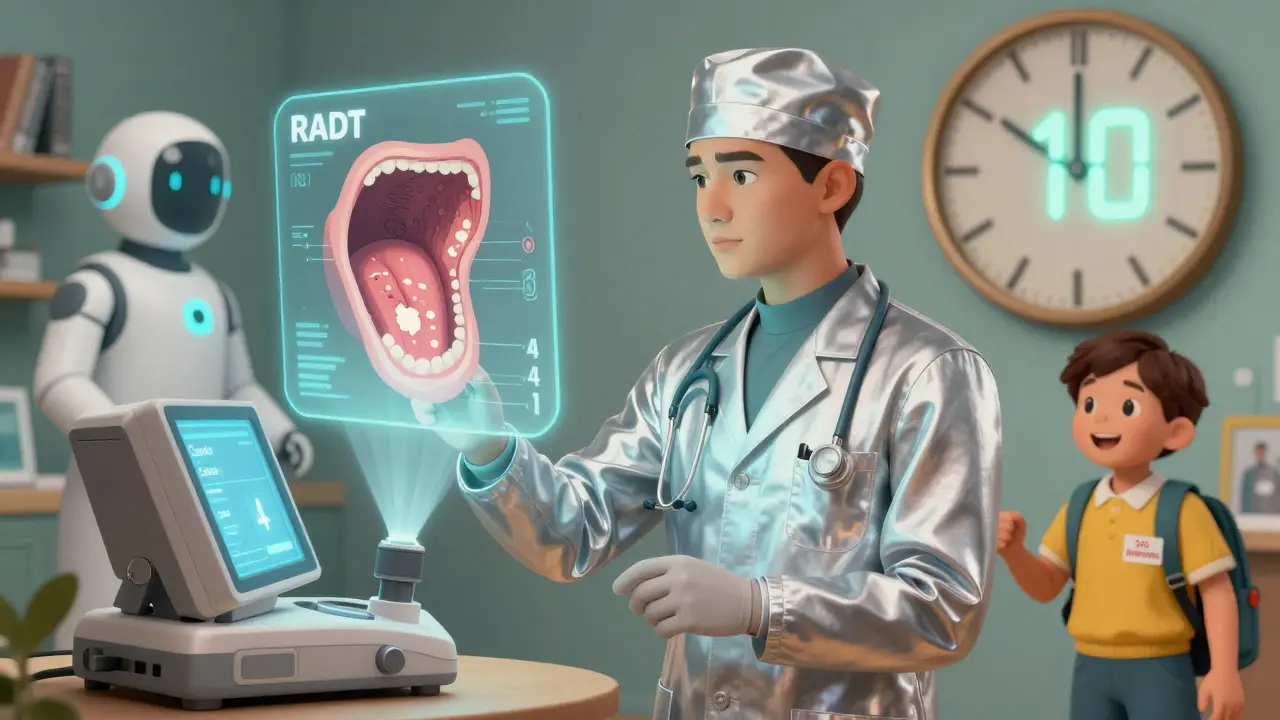
There are two main tests. The first is the rapid antigen detection test (RADT) (a throat swab that gives results in 10 to 30 minutes). It’s fast, accurate, and widely used. Sensitivity is 85-95%, meaning it catches most cases - but not all. About 5-15% of strep infections get missed, especially in young children with lower bacterial loads.
If the rapid test is negative in a child or teen, the CDC recommends a throat culture (a lab test that grows the bacteria over 18-48 hours) to confirm. It’s slower, but it’s the gold standard - 90-95% accurate. In adults, if the rapid test is negative and the Centor score is low, doctors often skip the culture because the risk of complications is lower.
A newer option is PCR testing (a molecular test that detects bacterial DNA). It’s more sensitive than the rapid test (95-98% accuracy) and is becoming more common in urgent care centers. A new FDA-approved test called Strep Ultra (released in March 2024) gives results in 15 minutes with 98% sensitivity - it could replace older rapid tests soon.
Don’t rely on home tests or online symptom checkers. They’re not reliable. Only a lab-confirmed test can tell you for sure.
Which Antibiotics Work Best for Strep Throat?
Antibiotics don’t cure strep throat faster because they’re strong - they work because they stop the bacteria from multiplying. The goal is to prevent complications, reduce contagiousness, and shorten symptoms by about a day.
The first-line treatment (recommended by the Infectious Diseases Society of America (IDSA) in 2022) is either penicillin V (500 mg twice daily for adults, 250 mg twice daily for kids) or amoxicillin (a more palatable option for children, often given once daily). Both are taken for 10 days. They’re cheap - generic penicillin costs as little as $4 - and they’re still 95% effective at clearing the infection.
If you’re allergic to penicillin, alternatives include cephalexin (a first-generation cephalosporin), clindamycin (used for resistant cases), or azithromycin (a 5-day course, but less effective). Resistance to azithromycin is rising - up to 15% in some areas - so it’s not the first choice unless you have no other options.
Don’t use leftover antibiotics from past illnesses. That’s one of the top reasons resistance grows. A CDC survey in 2023 found 12% of adults had used old antibiotics for a new sore throat. That’s dangerous. And never share your prescription. Reddit users reported 8% of adults have shared antibiotics with family members - a practice that can lead to incomplete treatment and stronger bacteria.
How Long Does It Take to Feel Better?
With antibiotics, most people start feeling better within 24 to 48 hours. Fever drops, swallowing gets easier, and energy returns. But feeling better doesn’t mean you’re cured. You must finish the full 10-day course. Stopping early is the #1 reason strep comes back. A 2023 study in JAMA Pediatrics (found 40% of parents stopped antibiotics early when symptoms improved). That increases relapse risk by 3-5 times.
Complete recovery usually takes 7 to 10 days. Without antibiotics, symptoms last about the same time - but you’re contagious longer. You can spread strep to others for up to 2 weeks without treatment. After 24 hours of antibiotics, you’re no longer contagious. That’s why kids can return to school after one full day of antibiotics - as long as the fever is gone and they’re feeling okay.
But if you’re not improving after 48 hours on antibiotics, call your doctor. It could mean the strain is resistant, you have a complication like a peritonsillar abscess (a pus-filled pocket near the tonsil, occurring in 1-2% of cases), or it wasn’t strep at all.
What Happens If You Don’t Treat It?
Most people recover fine without antibiotics - but some don’t. The biggest risk is rheumatic fever (a condition that can inflame the heart, joints, skin, and brain). It happens in about 3% of untreated cases, according to the CDC. It can lead to permanent heart damage - called rheumatic heart disease - which affects 325,000 children worldwide every year, according to the IDSA.
Other rare but serious complications include kidney inflammation (post-streptococcal glomerulonephritis) (affects the kidneys), scarlet fever (a rash that can follow strep), and abscesses around the tonsils. These are uncommon, but they’re preventable with timely treatment.
Antibiotics reduce the risk of rheumatic fever by more than 80% if started within 9 days of symptoms. After that, the benefit drops sharply.
What Should You Do at Home?
Antibiotics are the key, but comfort matters too. Drink plenty of fluids - water, broth, or electrolyte drinks. Avoid acidic drinks like orange juice if your throat is raw. Gargle with warm salt water (½ teaspoon salt in 8 oz water). Use over-the-counter pain relievers like acetaminophen or ibuprofen for fever and pain. Rest. Don’t go back to work or school until you’ve been on antibiotics for at least 24 hours and your fever is gone.
Replace your toothbrush after 24 hours of starting antibiotics. Bacteria can linger on bristles and cause reinfection. Don’t kiss or share utensils until you’re no longer contagious.
There’s no proven home remedy that kills strep. Honey soothes, salt water helps, but only antibiotics eliminate the bacteria. Don’t waste time on garlic, apple cider vinegar, or essential oils - they won’t stop the infection.
When Should You Worry?
Call your doctor if:
- Symptoms don’t improve after 48 hours on antibiotics
- You develop a rash, joint pain, or swelling
- You have trouble breathing or swallowing
- You’re drooling because you can’t swallow
- You have a high fever that comes back after improving
These could signal complications. In children, watch for abdominal pain or vomiting - they’re common but often mistaken for stomach bugs. In adults, headaches or ear pain might be signs of spreading infection.
What’s Changing in Strep Treatment?
Doctors are starting to question whether 10 days of antibiotics is always needed. The IDSA is running a trial (NCT05678901) to see if a 5-day course works just as well. Early results may come in mid-2025. If proven, it could reduce side effects and improve compliance.
Resistance is rising slowly. Penicillin is still nearly 100% effective. But macrolides like azithromycin are failing more often - up to 15% resistance in some U.S. regions. Clindamycin resistance is also creeping up. That’s why doctors are being more careful about prescribing alternatives.
A vaccine is still years away. The bacteria has over 200 different strains, making it hard to target. Until then, diagnosis and timely treatment remain the best defense.
Every year, strep throat causes 15 million doctor visits in the U.S. and costs $350 million. Most of that could be avoided with better testing and adherence to full antibiotic courses. The CDC spends $15 million annually tracking resistance - because we can’t afford to lose penicillin’s power.
Can you get strep throat without a fever?
Yes, but it’s rare. Fever is present in about 85% of confirmed cases. If you have a sore throat with no fever, it’s more likely viral. However, some people - especially older adults or those with weakened immune systems - may not run a fever even with strep. If other symptoms match (sudden pain, no cough, swollen glands), testing is still recommended.
Is strep throat contagious after 24 hours of antibiotics?
No. Once you’ve taken antibiotics for at least 24 hours and your fever is gone, you’re no longer contagious. This is why kids can return to school after one full day of treatment. But you still need to finish the full 10-day course to prevent relapse or complications.
Can you test negative for strep and still have it?
Yes. Rapid tests miss about 5-15% of strep cases, especially in young children. If symptoms strongly suggest strep and the rapid test is negative, a throat culture should be done to confirm. This is standard practice for children and teens because the risk of rheumatic fever is higher in this group.
Why do doctors sometimes skip testing for adults?
Because adults rarely develop serious complications like rheumatic fever, and strep is less common in adults than in kids. If an adult has a low Centor score (few symptoms), a negative rapid test, and clear signs of a virus (cough, runny nose), testing is often skipped. But if symptoms are strong or the person has a history of rheumatic fever, testing is still done.
Can you get strep throat more than once?
Yes. Having strep once doesn’t give you lasting immunity. You can get it again, especially if exposed to someone else with the infection. Some people are more prone due to family history, school exposure, or weakened immune response. If you get strep more than three times a year, your doctor might consider a tonsillectomy.
Do I need to see a doctor for every sore throat?
No - but you should if you have sudden throat pain, fever, swollen glands, and no cough. If you have a runny nose, hoarse voice, or red eyes, it’s likely viral and doesn’t need antibiotics. If you’re unsure, call your doctor. They can help you decide whether testing is needed based on your symptoms and risk factors.
anthony martinez
January 11, 2026 AT 16:16Ritwik Bose
January 13, 2026 AT 06:19Paul Bear
January 14, 2026 AT 06:59lisa Bajram
January 14, 2026 AT 16:39Jaqueline santos bau
January 15, 2026 AT 05:21Aurora Memo
January 17, 2026 AT 03:09Jay Amparo
January 17, 2026 AT 10:13Lisa Cozad
January 19, 2026 AT 07:44Saumya Roy Chaudhuri
January 19, 2026 AT 21:39Ashlee Montgomery
January 21, 2026 AT 05:57neeraj maor
January 21, 2026 AT 10:52Faith Edwards
January 22, 2026 AT 17:24Ian Cheung
January 24, 2026 AT 02:53Mario Bros
January 25, 2026 AT 21:53