
Switching from Brand to Authorized Generic: Practical Tips for Saving Money Without Compromising Care
When your prescription switches from a brand-name drug to a generic, you might panic. Is it the same? Will it work? Will you feel different? These fears are normal-but they’re often based on confusion, not facts. If you’re being switched to an authorized generic, you’re getting the exact same medicine you’ve been taking, just without the brand name on the bottle.
What Exactly Is an Authorized Generic?
An authorized generic is not a copy. It’s the real thing. Same active ingredients. Same inactive ingredients. Same factory. Same pills. The only difference? No brand name on the label. The brand-name drug company itself makes the authorized generic. They just sell it under a different name-often through a subsidiary or a partner. The FDA requires these to be identical to the original. No testing for bioequivalence is needed because they’re made under the same approval (NDA) as the brand. That’s why they’re called authorized-they’re officially sanctioned by the original maker. This isn’t the same as a regular generic. Regular generics go through a separate approval process (ANDA) and can have different fillers, colors, or shapes. Authorized generics? They look and act just like the brand. Sometimes, they even come in the exact same pill shape and color-just with a plain label.Why Do Authorized Generics Exist?
They exist because of the Hatch-Waxman Act of 1984. That law gave brand companies patents and also created a path for generics to enter the market. But it also gave brand companies a loophole: they could launch their own generic version during the 180-day exclusivity period that’s supposed to belong to the first generic company. Why would they do that? Because it’s smart business. If they don’t, a cheaper generic enters and takes market share. But if they launch their own authorized generic, they can still make money-while driving prices down. The result? You pay less. The Federal Trade Commission found that when an authorized generic enters the market, prices drop 8% to 18% right away. For a $150 monthly pill, that’s $12 to $27 saved every month. Over a year? That’s $144 to $324 back in your pocket.How to Know If You’re Getting an Authorized Generic
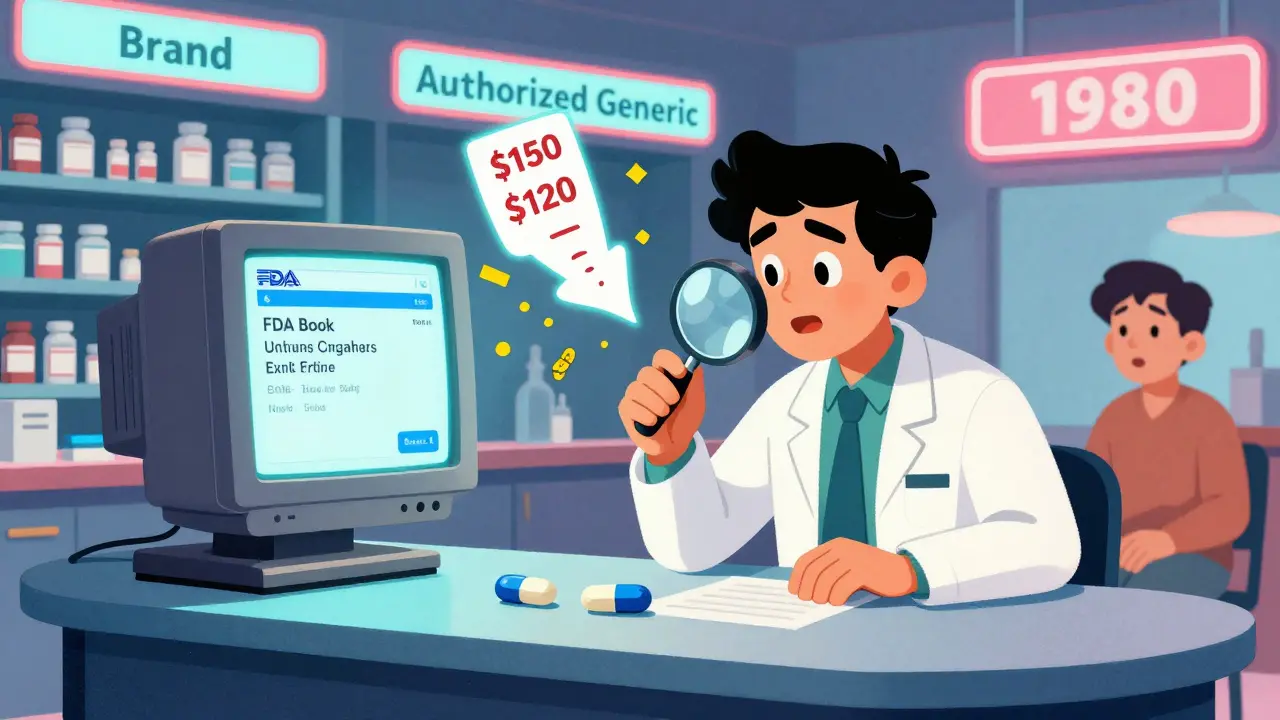
Not every generic is an authorized generic. And not every pharmacy will tell you. So how do you check? Go to the FDA’s Orange Book. It’s free. Search for your drug. Look for the brand name. If there’s an authorized generic listed under it, that’s your confirmation. The FDA updates this list every quarter. You can also ask your pharmacist: “Is this an authorized generic?” They’ll know. Most pharmacists can pull up the manufacturer and check if it’s the same company that makes the brand. Pro tip: Look at the pill. If it looks identical to your brand pill-same shape, same color, same imprint-it’s likely an authorized generic. Regular generics often change appearance. Authorized ones usually don’t.What to Expect When You Switch
Most people don’t notice a difference. That’s the point. A 2018 study in the National Center for Biotechnology Information tracked patients switching from brand to authorized generic. Results? No change in hospitalizations. No increase in missed doses. No drop in adherence. Medication continuation rates stayed at 85%, the same as if they’d kept the brand. But here’s what does happen:- Your copay drops-often by $15 to $30 per prescription.
- Your insurance plan may automatically switch you. Many plans require it.
- You might get a different-looking bottle. No brand logo. Plain white or yellow label.
- You might be confused when you see the same pill but a different name on the box.
Insurance and Coverage: What You Need to Know
Most insurance plans, including Medicare Part D, will automatically switch you to an authorized generic if one exists. Why? Because it’s cheaper for them-and they pass the savings to you. In 2022, 80% to 90% of prescriptions for drugs with authorized generics were filled as the generic version. That means unless you specifically ask for the brand, you’re getting the authorized generic. But there’s a catch: some high-cost specialty drugs require prior authorization. If your plan doesn’t cover the brand, and you want to stay on it, you’ll need to appeal. But if you’re okay with the generic, you won’t need to do anything. The pharmacy will handle it. Always check your plan’s formulary. You can find it online. Search for your drug. If you see “AG” next to it, that’s an authorized generic. You’re covered.Common Myths and How to Debunk Them
Myth: “Generics aren’t as strong.”Fact: Authorized generics are exact copies. No difference in strength, absorption, or effect. Myth: “I’ll feel weird if I switch.”
Fact: If you’ve been on the brand for years and suddenly feel off after switching to an authorized generic, it’s likely psychological-or something else. Studies show no clinical difference. Myth: “Authorized generics are only for big pharma drugs.”
Fact: They’re used across the board: blood pressure meds, antidepressants, diabetes pills, even birth control. About 42% of the top 200 brand-name drugs launched an authorized generic within six months of generic competition. Myth: “It’s a trick to make me pay more.”
Fact: It’s the opposite. Authorized generics are the cheapest option available. They’re not a marketing ploy-they’re a price-reducing tool.
What to Do When You’re Switched
Step 1: Don’t panic.Step 2: Check the label. Is the manufacturer the same as the brand? If yes, it’s an authorized generic. If no, it’s a regular generic. Ask your pharmacist to confirm. Step 3: Compare the pill. Does it look the same? Same color? Same imprint? If yes, you’re good. If it looks different, that’s normal for regular generics-but not for authorized ones. Step 4: Call your insurance. Ask: “Is this authorized generic covered under my plan?” If they say yes, you’re set. If they say no, ask why-and if you can get it covered. Step 5: Tell your doctor if you have concerns. Most doctors don’t know the difference between authorized and regular generics. But if you’ve had issues with allergies or sensitivities in the past, it’s worth mentioning. Authorized generics have the same inactive ingredients as the brand, so if you’re sensitive to a dye or filler, you’ll know.
When to Stay on the Brand
There are rare cases where staying on the brand makes sense:- You have a known allergy to an inactive ingredient in the generic version (rare, but possible).
- You’re on a complex regimen and switching causes confusion or missed doses.
- Your doctor has documented that the brand works better for you personally-though this is uncommon.
Where to Find Reliable Info
The FDA’s Orange Book is your best friend. It’s updated every quarter. Search by drug name. See if an authorized generic is listed. It’s free. No login needed. Your pharmacist is your second best resource. They see this every day. Ask them: “Is this an authorized generic? How do I know?” Avoid relying on random forums or social media. Reddit or Facebook groups might have stories-but they’re not scientific. Stick to the FDA, your pharmacist, and your doctor.Final Thought: It’s Not a Compromise. It’s a Win.
Switching to an authorized generic isn’t settling. It’s smart. You’re getting the same medicine, at a lower price, with no loss in effectiveness. Millions of people do it every year. The science backs it. The data confirms it. If you’ve been paying full price for a brand-name drug, and now you’re being switched to an authorized generic-you’re not losing anything. You’re gaining. Ask your pharmacist to explain it. Check the FDA list. Compare the pill. If it’s the same, take it. Save the money. Keep taking your meds. Your body won’t notice. Your wallet will.Are authorized generics the same as brand-name drugs?
Yes. Authorized generics contain the exact same active and inactive ingredients as the brand-name drug. They’re made in the same factory, using the same process, under the same FDA approval. The only difference is the label-no brand name.
Why does my pill look different after switching?
If you’re switching to a regular generic, the pill may look different because it’s made by a different company. But if it’s an authorized generic, it should look identical to the brand. If it doesn’t, ask your pharmacist to confirm it’s truly an authorized generic. Some brand companies license their product to others, which can result in different appearances.
Will my insurance cover an authorized generic?
Yes, almost always. Most insurance plans, including Medicare Part D, automatically prefer authorized generics because they’re cheaper. In fact, 80-90% of prescriptions for drugs with authorized generics are filled as the generic version unless you specifically request the brand.
Can I ask my doctor to keep me on the brand?
Yes. If you have a medical reason-like an allergy to an inactive ingredient, or a documented history of instability after switching-you can ask your doctor to write “dispense as written” on the prescription. But unless you have a clear reason, there’s no benefit to paying more for the brand.
How do I check if my drug has an authorized generic?
Go to the FDA’s Orange Book website and search for your drug. If an authorized generic is listed under the brand name, it’s available. The FDA updates this list every quarter. You can also ask your pharmacist to verify the manufacturer-authorized generics are made by the same company as the brand.
Do authorized generics work as well as brand-name drugs?
Yes. Studies show no difference in effectiveness, safety, or patient adherence between authorized generics and their brand-name counterparts. A 2018 study found identical rates of hospitalization and medication discontinuation. The only difference is the price.
Aron Veldhuizen
January 9, 2026 AT 18:29Let me break this down for you, because I’ve seen this exact same script from Big Pharma for 20 years. They don’t care about your wallet-they care about maintaining monopoly profits under a new name. Authorized generics? Sure, technically identical. But ask yourself: why does the same company that charges $300 for a pill suddenly offer it for $40? Because they’ve already extracted every dime they could from the brand. Now they’re milking the generic wave while pretending to be the hero. This isn’t savings-it’s strategic surrender disguised as generosity.
Micheal Murdoch
January 10, 2026 AT 06:46I get why people freak out when the pill looks different. I did too-until I learned the real story. I was on a brand-name statin for years, paranoid about switching. Then I found out my pharmacy was giving me the authorized generic-same manufacturer, same exact tablet, just no fancy logo. I checked the imprint, compared photos online, even called the manufacturer’s hotline. It was identical. I saved $240 a year. No side effects. No weird feelings. Just… cheaper. Honestly? If your body reacts differently, it’s probably anxiety, not chemistry. Your mind is the only thing that changed.
Drew Pearlman
January 11, 2026 AT 06:06Hey, I just want to say-this is actually one of the most empowering pieces of health info I’ve read in years. I used to feel guilty for switching generics, like I was settling. But knowing that an authorized generic is literally the same pill, made by the same people, in the same factory? That’s not a compromise. That’s a win. And the fact that your insurance pushes it? That’s them finally doing something right. I’m telling my mom about this. She’s on a $180/month med and has been terrified to switch. This gives her permission to save without fear. Thank you for making it so clear. You’ve helped more people than you know.
Jacob Paterson
January 11, 2026 AT 09:44Wow. What a feel-good fairy tale. You really believe people don’t notice differences? I’ve been on the same antidepressant for 12 years. Switched to ‘authorized generic’-suddenly I couldn’t sleep, felt like I was underwater, and my anxiety spiked. Took me three months to figure out it wasn’t stress-it was the filler. The brand had cellulose. The ‘authorized’ one had corn starch. I’m not crazy. I’m just allergic. And no, the pharmacist didn’t tell me. The FDA doesn’t require disclosure of inactive ingredients across labels. So thanks for the propaganda. Next time, maybe mention that ‘identical’ doesn’t mean ‘safe for everyone’.
Phil Kemling
January 11, 2026 AT 17:00The real question isn’t whether authorized generics are identical-it’s why the system forces the switch at all. If they’re the same, why not let patients choose? Why is autonomy replaced with cost-efficiency as the default? The answer is capitalism. The pill doesn’t change. But the power dynamic does. You’re no longer a patient making an informed decision-you’re a consumer in a supply chain optimized for profit. The science says they’re the same. The system says you have no choice. That’s the tension beneath all this.
tali murah
January 12, 2026 AT 09:07Oh, so now we’re supposed to be grateful that pharmaceutical giants let us have the exact same drug they already made, just without the logo? How noble. Let’s not forget they spent billions marketing that brand name, then turned around and undercut it with their own generic-while still controlling the supply. This isn’t consumer empowerment. It’s monopolistic theater. And you? You’re just the sucker who thinks ‘same pill’ means ‘fair deal.’ Wake up. They’re not giving you a discount. They’re harvesting your compliance.
Diana Stoyanova
January 12, 2026 AT 16:04Okay, real talk-I used to be terrified of generics. I thought they were ‘cheap junk.’ Then I got switched to an authorized generic for my blood pressure med. Same pill. Same size. Same imprint. Same manufacturer (I checked the bottle-same as the brand). My BP? Perfect. My wallet? So much happier. I started telling everyone I know. My sister switched her anxiety med and cried because she’d been overpaying for years. My dad’s diabetes med? Same thing. It’s not magic. It’s just transparency. If you’re scared, ask your pharmacist. Look up the manufacturer. Compare the pill. If it’s the same, take it. Your body won’t miss a beat. Your bank account will thank you. Seriously-do it. You’ve got nothing to lose and hundreds to gain.
Elisha Muwanga
January 13, 2026 AT 03:29This is why America is falling apart. We’re so obsessed with saving a few bucks that we forget quality matters. I’ve seen people switch to generics and end up in the ER because they ‘felt off.’ You think the FDA’s approval means everything? That’s a bureaucratic checkbox. Real medicine is about consistency. Real medicine is about trust. You think your body doesn’t know the difference? It does. And now you’re telling people to just accept it because it’s cheaper? That’s not progress. That’s surrender. And it’s not American.
RAJAT KD
January 13, 2026 AT 17:46My father switched to authorized generic for his cholesterol drug. Same pill, half the price. No side effects. No issues. Just saved $300/month. Simple. No drama. Just facts. Check the label. Ask the pharmacist. Done.