
API Quality Control: Ensuring Safe, Effective Medications
When you take a pill, the active pharmaceutical ingredient, the chemical compound that actually treats your condition is the reason it works. But that ingredient—called an API, the core substance in every medicine that produces the intended effect—doesn’t just appear out of nowhere. It’s made in factories, often overseas, and shipped across borders before it ends up in your bottle. That’s where API quality control, the system of tests and standards that verify every batch of active ingredient meets strict safety and potency rules comes in. Without it, you could be getting a pill with too little medicine, too much, or even dangerous contaminants. This isn’t theory—it’s what stops bad batches from reaching you.
Think of API quality control as the gatekeeper between raw chemicals and your body. It checks for purity, strength, and consistency using methods like chromatography, spectroscopy, and microbial testing. These aren’t just lab tricks—they’re required by global standards like GMP, Good Manufacturing Practices, the set of rules that ensure drugs are consistently produced and controlled according to quality standards. A single batch of faulty API can lead to recalls, hospitalizations, or worse. That’s why companies test every lot, not just one sample. And it’s why your pharmacist can trust that the generic version of your levothyroxine or metformin is just as reliable as the brand name. Even small differences in impurities can change how a drug is absorbed—like how proton pump inhibitors interfere with thyroid meds, or how genetic flaws in TPMT can turn azathioprine deadly. Quality control catches those risks before they reach you.
It’s not just about the chemistry. It’s about the chain: who made it, where it was stored, how it was transported. Fake drugs, like those caught in packaging scams or sold through shady online pharmacies, often have no API at all—or the wrong one. That’s why verifying authenticity isn’t just a consumer concern—it’s built into the system. From barcode scans to UV labels, the tools to spot fakes are part of the same quality control framework that keeps real meds safe. And when a drug like metronidazole can cause nerve damage after prolonged use, or garlic supplements can boost bleeding risk with blood thinners, knowing the API is pure isn’t optional—it’s life-saving.
What you’ll find below are real stories from the front lines of medication safety: how pharmacists reduce liability when switching generics, how labs catch counterfeit drugs before they hit shelves, why genetic testing prevents deadly reactions, and how automated refills and insurance rules tie into the bigger picture of trust in medicine. This isn’t about jargon or bureaucracy. It’s about the quiet, relentless work that keeps every pill you take exactly what it claims to be.
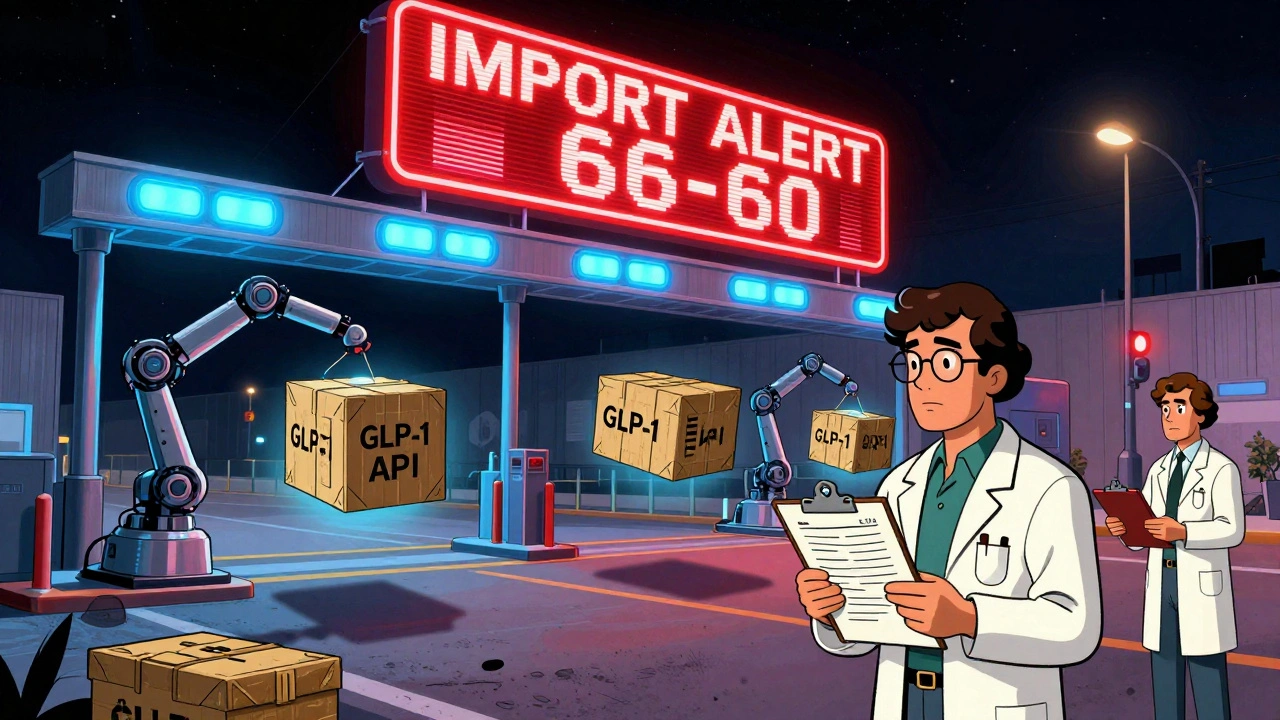
Import Alerts: How the FDA Blocks Drugs from Non-Compliant Manufacturers
The FDA uses Import Alerts to block drugs from manufacturers with poor quality practices. Learn how the Green List, DWPE system, and new GLP-1 enforcement are reshaping global pharmaceutical supply chains and what it means for patients and producers.