
Immunosuppressants: What They Are, How They Work, and What You Need to Know
When your immune system goes too far, it can attack your own body—or a new organ you just received. That’s where immunosuppressants, drugs that reduce the activity of the immune system to prevent rejection or autoimmune damage. Also known as anti-rejection drugs, they’re essential for transplant patients and people with conditions like lupus or rheumatoid arthritis. But these aren’t gentle supplements. They lower your body’s defenses, making you more vulnerable to infections, cancers, and other complications. You don’t just take them—you manage them.
Immunosuppressants don’t work the same way. Some, like cyclosporine, a drug that blocks T-cell activation, commonly used after kidney or liver transplants, have been around for decades. Others, like tacrolimus, a more potent alternative to cyclosporine with fewer long-term side effects, are now preferred in many cases. Then there’s mycophenolate, a drug that stops immune cells from multiplying, often paired with other agents for better control. These aren’t interchangeable. Each has its own risks, monitoring needs, and interactions. Taking garlic supplements with these drugs? That’s a bad idea—it raises bleeding risk. Mixing them with alcohol? Could damage your liver. Even common antibiotics like metronidazole can cause nerve damage if used too long alongside them.
People on these drugs need more than just prescriptions—they need awareness. Lab monitoring calendars help track kidney function and drug levels. Support groups reduce the isolation that comes with lifelong medication. And knowing which medications to avoid—like certain herbal supplements or even high-dose caffeine—can prevent hospital visits. This collection doesn’t just list drugs. It shows you how real people live with them, what goes wrong, and how to stay safe when your body’s defenses are turned down on purpose. What you’ll find here isn’t theory. It’s what works, what doesn’t, and what no one tells you until it’s too late.
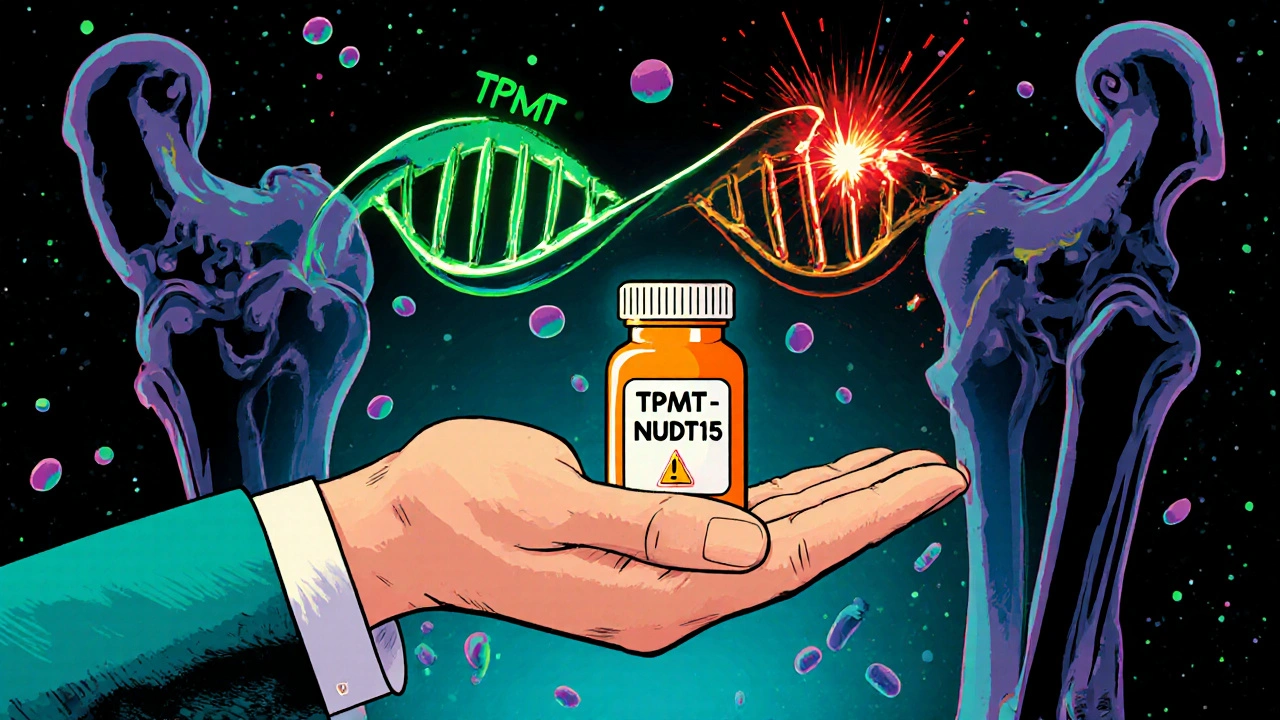
Azathioprine and TPMT Testing: How Genetic Screening Prevents Life-Threatening Side Effects
Azathioprine is an affordable immunosuppressant, but up to 1 in 300 people have a genetic flaw that makes it dangerous. TPMT and NUDT15 testing can prevent life-threatening blood cell loss before it starts.