
Potassium for Kidney Disease: What You Need to Know
When you have kidney disease, a condition where the kidneys can’t properly filter waste and fluids from the blood. Also known as chronic kidney disease, it changes how your body handles potassium, a mineral that helps nerves and muscles work, including your heart. It’s also called serum potassium, and when your kidneys fail to remove the extra, it builds up dangerously. Too much potassium can cause irregular heartbeat, muscle weakness, or even cardiac arrest—especially if you’re on dialysis or taking certain blood pressure meds.
People with renal failure, the late stage of kidney disease where kidney function drops below 15% need to be extra careful. Their bodies can’t flush out potassium like healthy ones do. That’s why doctors track electrolyte balance, the mix of minerals like sodium, calcium, and potassium that keep your cells working right through regular blood tests. You might not feel anything until it’s too late, which is why monitoring matters more than symptoms. Foods high in potassium—like bananas, potatoes, spinach, and oranges—aren’t off-limits forever, but portion control and cooking methods (like leaching) can help lower the load.
Some meds make potassium levels harder to manage. ACE inhibitors, ARBs, and certain diuretics are common in kidney patients, but they can raise potassium too high. That’s why lab monitoring calendars, like the ones covered in our posts, help people stay ahead of trouble. You don’t need to guess what’s safe. Real data from blood tests, paired with diet logs and medication schedules, gives you control. And if you’re worried about side effects from your meds, knowing where to find trusted info—like FDA labels or VigiAccess—can make all the difference.
What you’ll find below isn’t just theory. These are real guides from people living with kidney disease, managing their potassium, tracking labs, comparing meds, and avoiding hidden risks in everyday treatments. Whether you’re new to this or have been at it for years, the posts here give you clear, no-fluff advice that matches what your doctor sees in the chart—and what actually works in daily life.
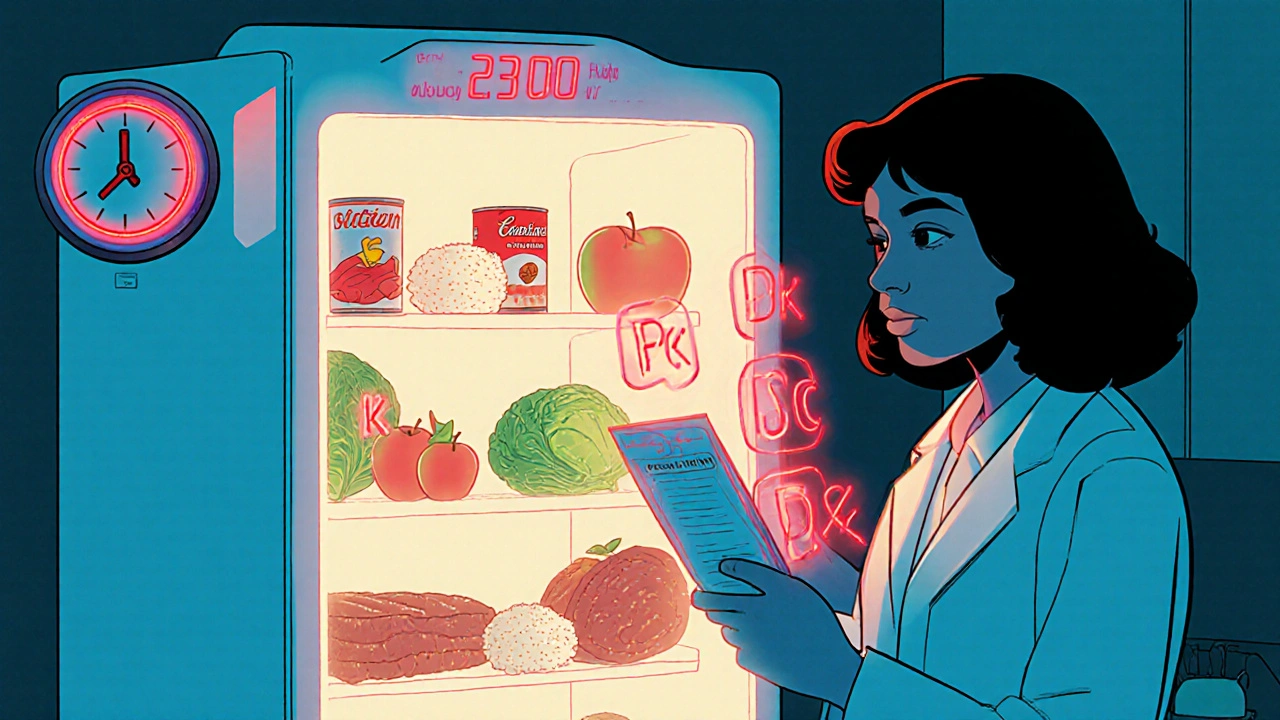
Renal Diet Guide: How to Manage Sodium, Potassium, and Phosphorus with Chronic Kidney Disease
Learn how to manage sodium, potassium, and phosphorus in a renal diet for chronic kidney disease. Practical food swaps, portion tips, and expert-backed guidelines to protect your kidneys and heart.