
TPMT Testing: What It Is and Why It Matters for Medication Safety
When you take drugs like azathioprine, an immunosuppressant used for autoimmune diseases and organ transplants or 6-mercaptopurine (6-MP), a chemotherapy and immune-modulating agent, your body breaks them down using an enzyme called TPMT, thiopurine methyltransferase, a liver enzyme that processes thiopurine drugs. But not everyone has the same amount of this enzyme. Some people have very low or even no TPMT activity—and if they take standard doses of these drugs, they can develop severe, sometimes fatal, bone marrow suppression. That’s where TPMT testing comes in. It’s not a fancy scan or a complex procedure. It’s a simple blood or saliva test that tells your doctor whether your body can handle these medications safely.
TPMT testing isn’t optional for certain treatments—it’s standard care. If you’re being prescribed azathioprine for Crohn’s disease, ulcerative colitis, or lupus, or 6-MP for leukemia, your doctor should check your TPMT status before you start. Without it, you’re guessing. With it, you’re protected. People with low TPMT activity might need 10% of the normal dose—or even avoid the drug entirely. And it’s not just about avoiding side effects. Getting the dose right means the drug actually works. Too little, and the disease flares up. Too much, and your blood counts crash. TPMT testing bridges that gap. It’s one of the clearest examples of personalized medicine in everyday practice.
What you’ll find in this collection are real, practical guides on how TPMT testing fits into broader medication safety. You’ll read about how drug metabolism affects outcomes, why some people react badly to common prescriptions, and how to spot hidden risks in treatments you might assume are harmless. You’ll learn about lab monitoring for high-risk drugs, how supplements can interfere with metabolism, and what to do if you’re on long-term immunosuppressants. These aren’t theory pieces. They’re tools for people who take these meds, care for someone who does, or work in healthcare and need to get it right. Whether you’re wondering why your doctor ordered a blood test before your next prescription or you’re trying to understand why a loved one had a bad reaction, the articles here give you the facts without the jargon.
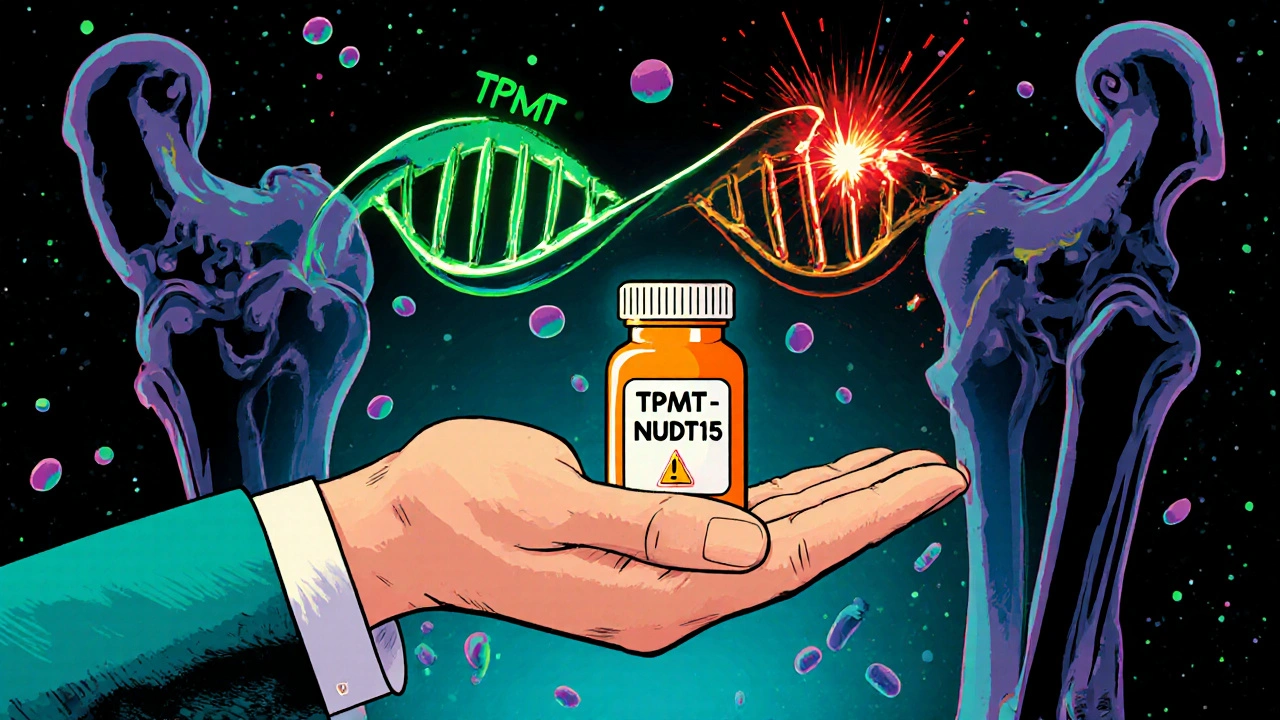
Azathioprine and TPMT Testing: How Genetic Screening Prevents Life-Threatening Side Effects
Azathioprine is an affordable immunosuppressant, but up to 1 in 300 people have a genetic flaw that makes it dangerous. TPMT and NUDT15 testing can prevent life-threatening blood cell loss before it starts.