
The Science of Medication Safety: Risk, Benefit, and Evidence
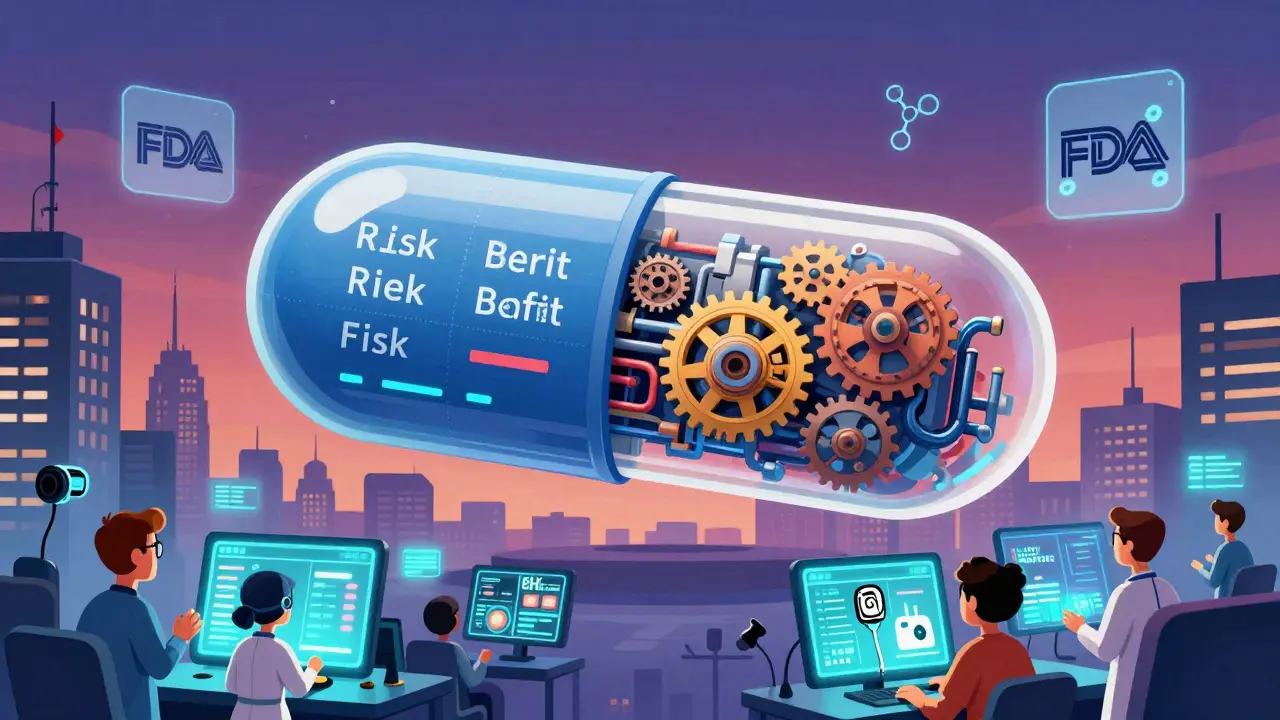
Every time you take a pill, there’s a silent calculation happening - one that balances the chance it will help you against the risk it might hurt you. This isn’t guesswork. It’s science. And it’s more complex than most people realize.
Medication safety isn’t just about reading the label or avoiding interactions. It’s about understanding how drugs behave in real people, not just in clinical trials. The drugs you take today were tested on a few thousand volunteers over months or a couple of years. But millions of people use them for decades. That’s where the real story begins - and where things can go wrong.
What Happens After the Clinical Trial Ends?
Clinical trials are designed to prove a drug works. They’re tightly controlled. Participants are screened, monitored, and often given pills at exact times. But real life? It’s messy. People forget doses. They take over-the-counter painkillers on top of prescriptions. They have other health conditions. And some side effects? They only show up after years of use - or in 1 out of every 10,000 people.
That’s why the FDA now requires post-market studies for 37% of new drugs approved between 2015 and 2020. These aren’t optional. They’re mandatory. And they rely on data from sources like Medicare claims, electronic health records from Kaiser Permanente (covering over 12 million members), and the FDA’s Sentinel Initiative, which tracks over 190 million patients.
One study using this data found that a common heart medication increased the risk of internal bleeding in older adults - a risk so rare it was missed in the original trial. That discovery changed prescribing guidelines across the country.
The Tools of the Trade: How Scientists Track Drug Risks
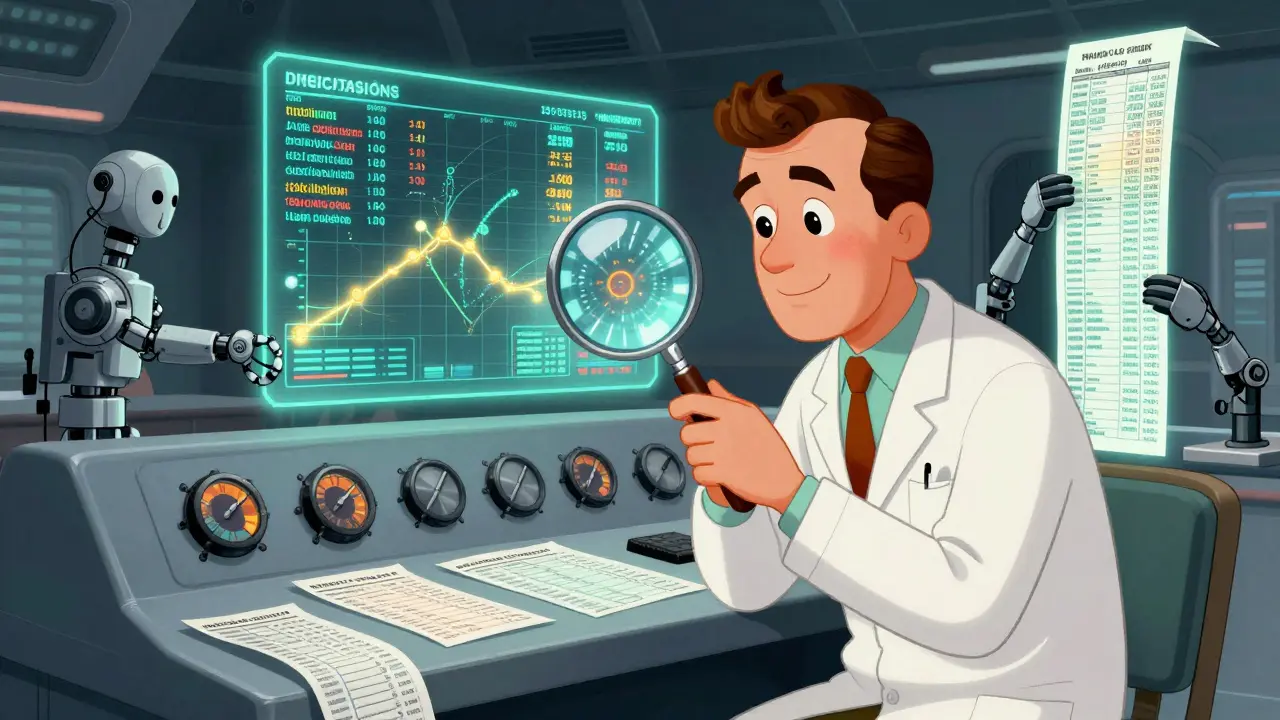
Researchers don’t just guess. They use proven methods to find hidden dangers. The most common? Observational studies. These aren’t randomized. They look at what people actually do in real life.
- Cohort studies follow groups of people over time - say, everyone who took Drug A versus Drug B - and see who ends up in the hospital.
- Case-control studies start with people who had a bad reaction and work backward to see what they took.
- Self-controlled case series (SCCS) compare each person to themselves - before and after taking a drug. This cuts out a lot of noise from other health factors.
These methods aren’t perfect. They can’t prove cause like a randomized trial can. But they’re powerful. In fact, 78% of FDA safety alerts between 2015 and 2022 came from observational data.
One example: a study using SCCS found that a common flu shot increased the risk of Guillain-Barré syndrome - a rare nerve disorder - in about 1 in 1 million recipients. That’s too rare to catch in a trial of 10,000 people. But with millions of records? It stood out.
When the Data Lies: The Hidden Biases
Here’s the catch: observational studies can be fooled. If people who take a certain drug are sicker to begin with, any bad outcome might look like the drug’s fault - even if it’s not.
That’s called confounding. And it’s a big problem. Studies show residual confounding explains 15% to 30% of what looks like a drug effect. Researchers fight this with statistical tools like propensity score matching. This technique pairs people who took the drug with others who didn’t - but who are nearly identical in age, health, income, and other factors. Done right, it balances out 85% to 95% of those differences.
Still, it’s not foolproof. Over-the-counter drugs like ibuprofen or melatonin often go unreported. People don’t tell their doctors. And EHRs? They’re full of gaps. One study found that 20% of medication records in administrative databases had errors - wrong doses, missing dates, or completely missing entries.
And then there’s alert fatigue. Hospitals have systems that warn doctors about dangerous drug combinations. But in one emergency room study, prescribers ignored 89% of those alerts - especially for common drugs. Why? Too many warnings. Too many false alarms. Eventually, your brain tunes them out.
Real-World Wins: When Science Saves Lives
It’s not all problems. When done right, medication safety science saves lives.
At Kaiser Permanente Washington, doctors noticed that patients with alcohol withdrawal were having too many severe seizures and hallucinations. They reviewed the evidence and created a simple protocol: give phenobarbital instead of benzodiazepines. Within a year, severe withdrawal events dropped by 42% across 12 hospitals.
In another case, researchers found that older adults on certain blood pressure meds were at higher risk for falls. They redesigned the prescribing guidelines, added reminders to check for dizziness, and trained nurses to ask about balance. The result? A 27% drop in fall-related ER visits over 18 months.
These aren’t flukes. They’re the direct result of linking data to action.
Who’s Driving the Change?
This field doesn’t run on guesswork. It’s built on institutions.
- The U.S. Food and Drug Administration (FDA) mandates safety studies and runs the Sentinel System - the largest real-time drug safety network in the world.
- The National Institutes of Health (NIH) funds research into why certain drugs harm certain populations - like Black patients or people with kidney disease.
- The Patient-Centered Outcomes Research Institute (PCORI) asks patients what matters most - like whether a drug causes fatigue or memory loss, not just whether it lowers blood pressure.
- And places like Kaiser Permanente Washington Health Research Institute are turning data into practice, one hospital at a time.
Meanwhile, pharmaceutical companies are investing heavily. The global pharmacovigilance market is projected to hit $11.7 billion by 2028. Why? Because regulators demand it. And because patients - and their families - are demanding transparency.
The Future: AI, Wearables, and Patient Voices
The next wave of medication safety is already here.
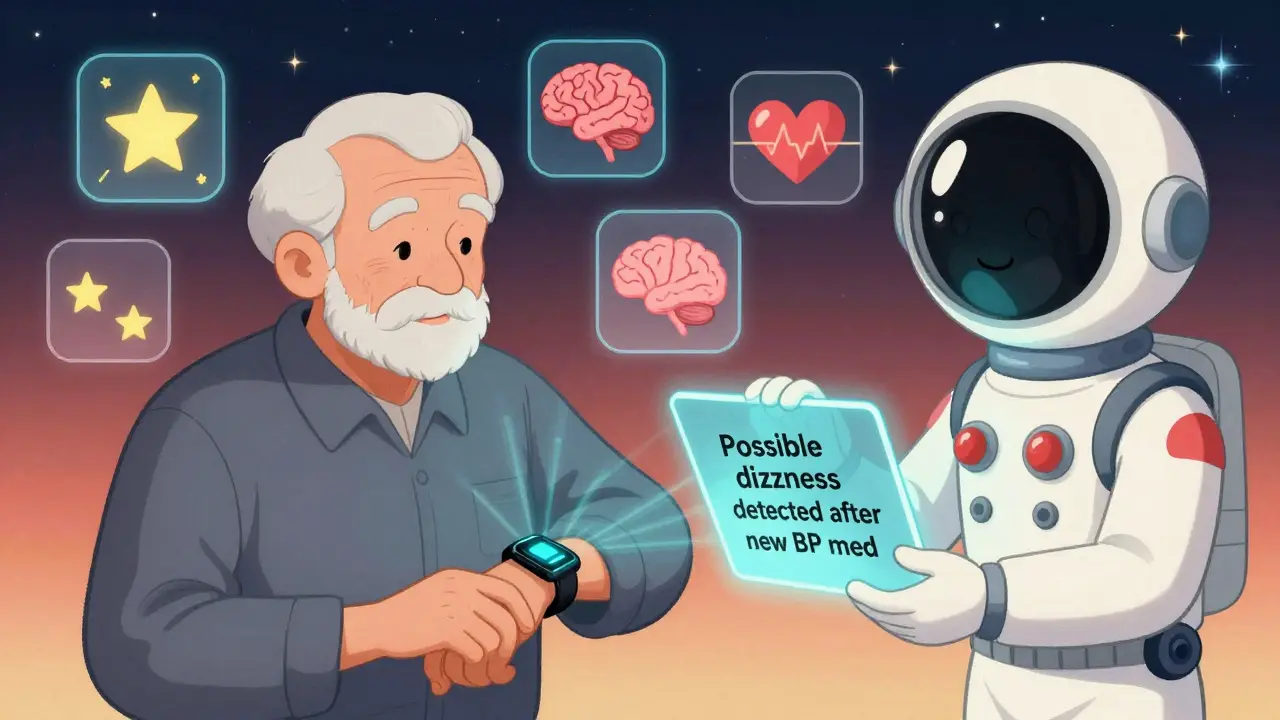
The FDA’s 2025 roadmap includes using data from smartwatches - heart rate spikes, sleep patterns, activity levels - to detect early signs of adverse reactions. Imagine a device that notices your heart is beating irregularly after you start a new medication… and alerts your doctor before you even feel sick.
AI is also stepping in. Early models are predicting which patients are most likely to have an adverse event - not just from their meds, but from their history, lab results, and even social factors like housing instability. One pilot program cut high-alert medication errors by 35% in just six months.
And patients? They’re no longer just subjects. They’re partners. PCORI-funded studies now ask people: What side effects matter most to you? For some, it’s weight gain. For others, it’s brain fog. That feedback is changing how drugs are labeled - and how doctors talk to patients.
The Bottom Line: It’s Not About Perfection - It’s About Progress
No drug is 100% safe. No system catches everything. But we’re getting better.
The old model - approve a drug, hope for the best - is gone. Today, safety is built into every stage: from trial design, to post-market monitoring, to frontline clinical decisions. And it’s working.
Take opioids. In 2022, 80,000 Americans died from opioid overdoses. That number dropped 15% in two years after states implemented real-time prescription monitoring, stricter prescribing limits, and better access to addiction treatment. That’s medication safety in action.
It’s not glamorous. It doesn’t make headlines. But every time a doctor avoids a dangerous combo, every time a nurse catches a dosage error, every time a patient learns their medication might be linked to dizziness - that’s science making a difference.
Medication safety isn’t about eliminating risk. It’s about understanding it. And then using that knowledge to make smarter choices - for you, and for millions of others.
How do researchers find rare side effects that clinical trials miss?
They use large, real-world datasets from millions of patients - like Medicare claims, electronic health records, and pharmacy databases. By comparing people who took a drug with those who didn’t, and using statistical methods like self-controlled case series, they can spot patterns that only appear after years of use or in very small subgroups. A side effect that happens in 1 in 10,000 people won’t show up in a trial of 5,000 patients - but it will in a dataset of 100 million.
Are observational studies reliable? Can’t they be wrong?
Yes, they can be misleading if not done well. Observational studies can’t prove cause like randomized trials can. About 22% of associations found in observational studies were later contradicted by RCTs. But when they’re designed carefully - using techniques like propensity score matching and within-individual comparisons - they’re incredibly powerful. They’re not perfect, but they’re the best tool we have for detecting real-world risks that trials can’t see.
Why do hospitals have so many drug alerts, and why do doctors ignore them?
Hospitals use clinical decision support systems to warn about dangerous drug interactions. But they often flood providers with too many alerts - including ones for low-risk combinations. One study found prescribers override 89% of alerts, especially for common drugs like antibiotics or painkillers. This is called alert fatigue. The goal now is smarter alerts: only flagging high-risk, high-likelihood interactions, and letting doctors know why it matters.
What’s being done to improve medication safety for older adults?
Older adults are the biggest group at risk - 15% of Medicare beneficiaries have a preventable adverse drug event each year. Programs are now targeting three areas: reducing polypharmacy (taking five or more meds), avoiding drugs that cause falls or confusion (like certain sleep aids), and improving communication between doctors, pharmacists, and caregivers. Some hospitals now use AI tools to flag risky combinations before prescriptions are even written.
Is medication safety getting better over time?
Yes - and faster than most realize. Since 2010, the number of preventable adverse drug events has dropped by 30% in U.S. hospitals, thanks to better EHRs, clinical decision support, and pharmacist-led safety teams. The FDA now requires post-market studies for nearly 40% of new drugs. And with AI, wearables, and patient-reported data entering the mix, we’re entering an era where safety isn’t just monitored - it’s predicted.
Tom Sanders
March 10, 2026 AT 02:29Scott Easterling
March 11, 2026 AT 02:39Philip Mattawashish
March 11, 2026 AT 12:00Jazminn Jones
March 12, 2026 AT 00:13Erica Santos
March 13, 2026 AT 05:40George Vou
March 14, 2026 AT 18:31Stephen Rudd
March 15, 2026 AT 13:46Mantooth Lehto
March 16, 2026 AT 23:19Melba Miller
March 17, 2026 AT 22:03