
Topical vs. Oral Meds: Systemic Absorption and Safety

When you’re dealing with joint pain, muscle soreness, or localized inflammation, you’ve probably faced the choice: topical meds or oral pills? Both promise relief, but they work in completely different ways-and the difference isn’t just about how you apply them. It’s about what happens inside your body, how much of the drug actually gets into your bloodstream, and whether you’re trading short-term comfort for long-term risk.
How Topical Meds Work (And Why They Don’t Always Go Far)
Topical medications-gels, creams, patches, and sprays-are designed to stay put. They’re meant to hit the pain where it lives: in your knee, your shoulder, your lower back. When you rub on diclofenac gel or apply a lidocaine patch, the drug doesn’t leap into your blood. Instead, it sneaks through the top layers of your skin, targeting nerves and inflamed tissue right where it’s applied. Studies show that for most topical NSAIDs, less than 5% of the dose ends up in your bloodstream. That’s why you can use them for weeks without the stomach upset, kidney strain, or bleeding risks that come with swallowing pills. But here’s the catch: not all topical products are the same. A basic cream might only penetrate 0.5 millimeters into your skin. A newer gel with penetration enhancers, like the FDA-approved Diclonate P, can go three times deeper. And if you’re applying it over a large area-say, both knees and your lower back-or if your skin is cracked or thin from age or eczema, absorption can spike. There are documented cases where patients using large amounts of topical diclofenac ended up with blood levels close to what you’d see from an oral dose. That’s not a bug-it’s a risk.Oral Meds: The Full System Ride
Take an oral NSAID like ibuprofen or naproxen, and you’re sending a drug on a long, rough journey. It has to survive your stomach’s acid, avoid being broken down by liver enzymes, and still make it into your bloodstream in enough quantity to do its job. Even then, only about 70-90% of the dose actually gets absorbed. The rest? Gone. And that’s before the real problem starts. Once absorbed, oral drugs circulate everywhere. That’s fine if you need whole-body pain relief. But if your pain is just in one spot, why force your liver, kidneys, and gut to handle a full-body dose? The numbers don’t lie. Clinical trials show that 15% of people taking oral NSAIDs regularly develop gastrointestinal issues-heartburn, ulcers, bleeding. For people over 65, that risk jumps. The American Geriatrics Society says this is serious enough to recommend topical NSAIDs as the first choice for older adults. And it’s not just stomach problems. Oral NSAIDs can raise blood pressure, strain the kidneys, and interfere with heart medications. In 2022, the FDA recorded over 18,000 hospitalizations linked to oral NSAID complications. Topical versions? Just 127.Where Topical Meds Fall Short
Topical meds aren’t magic. They’re great for localized pain, but they’re useless for infections, systemic inflammation, or conditions that need drug levels throughout the body. You can’t treat a sinus infection with a cream on your nose. You can’t manage rheumatoid arthritis with a gel on one joint. And here’s the kicker: only 12% of the 200 most commonly prescribed medications are even available in topical form. Why? Because most drug molecules are too big to slip through the skin’s barrier. The rule of thumb? If the molecule weighs more than 500 Daltons, it’s not going to make it past your outer skin layer. Even when the drug can penetrate, absorption varies wildly between people. One study found that two patients using the exact same dose of topical diclofenac had absorption rates that differed by 400%. Skin thickness, hydration, temperature, and even how much you move after applying it all affect how much gets in. That’s why some people swear by their topical gel-and others say it does nothing. It’s not placebo. It’s physics.
Real People, Real Experiences
In a 2023 survey of over 2,400 people with osteoarthritis, 68% got good pain relief from topical NSAIDs. That’s only 4% less than the 72% who said oral meds worked. But here’s what matters: 89% of those who tried both preferred the topical version. Why? Because 89% of them didn’t have stomach problems. On Reddit’s chronic pain forums, people raved about finally sleeping through the night without acid reflux. But they also complained about the mess, the smell, and how slow it worked in cold weather. One user wrote: “I wait 20 minutes after applying it just to put on socks. If I move too soon, it rubs off.” And then there’s adherence. A 2023 study tracking Medicare patients found that 37% more people stuck with topical meds long-term than oral ones. Why? Because they didn’t have to worry about side effects. The biggest reason people quit oral NSAIDs? “My stomach couldn’t take it.” The biggest reason they quit topicals? “It just didn’t work for my pain.”Safety Isn’t Just About Side Effects
The safety advantage of topical meds isn’t just about fewer stomach ulcers. It’s about reducing the total drug burden on your body. When you take pills every day, your liver and kidneys are constantly processing chemicals. Over time, that adds up. Topical meds let your organs rest. That’s especially important for older adults, people with kidney disease, or anyone on multiple medications. But safety also means knowing when not to use them. If you’ve got open wounds, infections, or severely damaged skin, topical drugs can absorb unpredictably. And don’t assume “OTC” means “harmless.” Many topical NSAIDs are available without a prescription-but they still carry warnings. The FDA found that nearly 60% of OTC topical products don’t clearly explain how much to use, how often, or what to avoid. You can’t just slap it on like lotion. Use too little, and it won’t work. Use too much, and you risk systemic effects.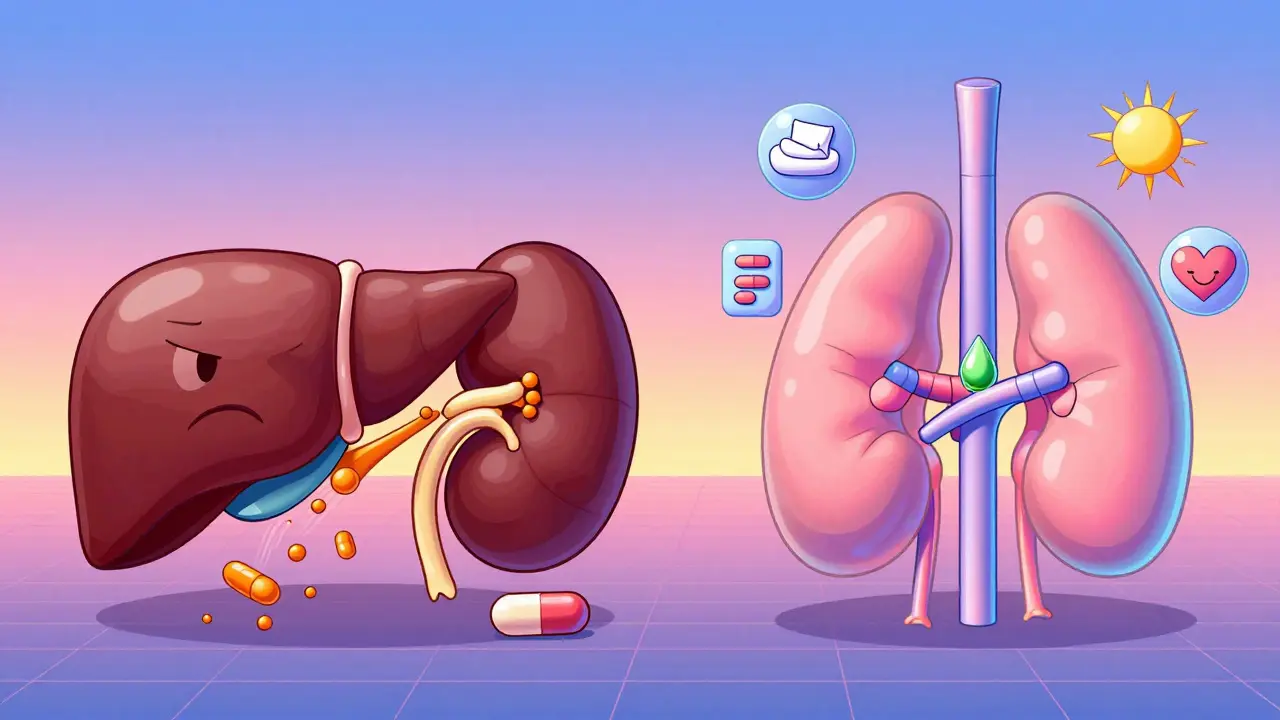
What’s Next? The Future of Delivery
The pharmaceutical industry is betting big on topical delivery. In 2023, Johnson & Johnson spent nearly half a billion dollars on research. Novartis shifted funds from oral NSAID development to transdermal patches. Why? Because the numbers add up. Topical drug sales hit $52 billion last year, growing 7.2% annually-twice as fast as oral meds. Insurance companies are catching on too: Medicare now covers 82% of topical NSAID prescriptions versus 67% for oral ones. Emerging tech is pushing boundaries. Microneedle patches-tiny needles that dissolve into the skin-are in late-stage trials. They could deliver drugs like osteoporosis meds that currently require pills, with 45% bioavailability. That’s not just topical anymore-it’s targeted systemic delivery without the oral toll.How to Choose
So what should you do?- If your pain is in one spot-knee, elbow, wrist-start with a topical NSAID. Apply the right amount (usually a 4-6 inch ribbon), wait 30 minutes before covering it, and avoid sun exposure on the area.
- If you’re over 65, have a history of ulcers, or take blood thinners, topical is almost always the safer bet.
- If you need full-body relief-like from arthritis flare-ups or chronic inflammation-oral meds may still be necessary. But talk to your doctor about the lowest effective dose and shortest duration.
- If you’ve tried topical and it didn’t work, don’t assume it’s broken. Ask about newer formulations. Your skin might just need a better delivery system.
The bottom line? Topical meds aren’t a replacement for oral drugs-they’re a smarter alternative for the right situation. They offer the same pain relief with a fraction of the risk. And in a world where medication safety is more important than ever, that’s not just convenient. It’s critical.
Are topical NSAIDs as effective as oral ones?
For localized pain like osteoarthritis in the knee or hand, topical NSAIDs are just as effective as oral ones in most people. Clinical studies show pain relief rates between 18% and 92% for topical, compared to 70-90% for oral. The key difference isn’t effectiveness-it’s how many people can tolerate the side effects. About 90% of users prefer topicals because they avoid stomach problems, even if the pain relief is slightly slower.
Can topical meds cause systemic side effects?
Yes, but it’s rare and usually avoidable. Most topical NSAIDs result in less than 5% systemic absorption. However, if you apply them over large areas (like your entire back), use them more than recommended, or have damaged skin, absorption can jump. Cases have been documented where patients developed high blood pressure, kidney issues, or GI bleeding from excessive topical use. Always follow the label. If you’re on blood pressure meds or have kidney disease, talk to your doctor before using topicals.
Why do some people say topical meds don’t work for them?
It’s not always about the drug. Absorption varies by skin thickness, temperature, and how you apply it. Cold skin slows absorption. Applying too little or rubbing it in too fast can reduce effectiveness. Also, newer formulations (like permeation-enhanced gels) work better than older creams. If one product didn’t help, try another brand or a patch. And remember: topicals work best for mild-to-moderate pain. Severe joint damage may still need oral meds or other treatments.
Is it safe to use topical and oral NSAIDs together?
Not without medical supervision. Combining them increases your total NSAID exposure, which can raise your risk of side effects-even if the topical seems "local." The FDA warns against this practice. If you’re using both, you’re essentially doubling your dose. Always tell your doctor what you’re using, even if it’s over-the-counter. There’s no benefit to stacking them unless you’re under close monitoring.
Why are topical meds more expensive than oral ones?
They’re not always. Generic oral NSAIDs like ibuprofen cost less than $5 a month. But many topical gels are still brand-name or have limited generics. However, insurance coverage is shifting. In 2023, Medicare covered 82% of topical NSAID prescriptions versus 67% for oral. Out-of-pocket costs for topicals averaged $12.40 per prescription, while oral generics were $9.80. The price gap is narrowing as more insurers recognize the long-term savings from avoiding hospitalizations.
Kevin Y.
March 25, 2026 AT 15:57Really appreciate this breakdown. I’ve been using diclofenac gel for my knee osteoarthritis for over a year now, and the difference in my stomach health alone has been life-changing.
Used to take ibuprofen daily - ended up with chronic heartburn and a GI scare last year. Switched to topical, and within weeks, no more bloating, no more midnight acid reflux. Pain relief isn’t instant, but it’s steady. And honestly? I’d rather wait 20 minutes than risk another ulcer.
Also, the newer non-greasy formulas are a game changer. No more sticky hands or stained clothes. Just apply, wait, go about your day. Simple, effective, and safe. More people need to know this.
Aaron Sims
March 26, 2026 AT 10:39Oh, so now we’re trusting ‘studies’ that say ‘less than 5%’ gets absorbed? Wow. What a coincidence that the same companies selling the pills also fund the ‘topical is safer’ research.
Ever heard of the ‘bioavailability loophole’? The FDA lets them call it ‘topical’ as long as it’s under 10% - which is still enough to fry your kidneys if you’re using it on your back, your shoulders, AND your knees… all at once. Which, let’s be real - people do.
And don’t get me started on ‘patches.’ That’s just a slow drip IV with a label that says ‘natural relief.’
They’re not safer. They’re just more expensive… and easier to market to the gullible.
Agbogla Bischof
March 27, 2026 AT 04:20As a pharmacist in Lagos, I’ve seen this firsthand. Topical NSAIDs are underutilized in low-resource settings - not because they don’t work, but because patients assume ‘if it’s not a pill, it’s not real medicine.’
The science is solid: localized delivery reduces systemic load. For elderly patients with hypertension or CKD, this is a lifesaver. But adherence is tricky. Many apply too little because they don’t trust the effect. Others apply too much because they think ‘more is better.’
Education matters. A simple 2-minute counseling session at the pharmacy increases correct usage by 70%. Also - avoid sun exposure. Topical NSAIDs + UV = nasty chemical burn risk. This is rarely mentioned in U.S. marketing.
Elaine Parra
March 29, 2026 AT 01:38Let’s be honest - this whole ‘topical is safer’ narrative is corporate propaganda dressed up as science.
Who benefits? Pharma. They’re phasing out generic ibuprofen and pushing $50-a-month gels that are just branded diclofenac with a fancy delivery system.
And don’t tell me about ‘reduced hospitalizations’ - that’s cherry-picked data. What about the people who used topicals and still had heart attacks because they didn’t know the absorption spiked after sweating? Or the ones who used it on broken skin and got liver toxicity?
It’s not safer. It’s just more profitable.
And yes - I’ve seen the FDA reports. They’re written by lobbyists with MDs.
Natasha Rodríguez Lara
March 30, 2026 AT 14:34I’m from Mexico City, and I’ve been using topical ketoprofen for my lower back pain for 5 years. My mom, who’s 72, switched from oral naproxen to a patch after a GI bleed - and she hasn’t had a single issue since.
But I’ve also noticed something interesting: cultural attitudes toward pain management vary wildly. In the U.S., people want fast, strong relief - pills are king. In Latin America and parts of Asia, people are more patient with slower, gentler methods. There’s wisdom in that.
Maybe the real issue isn’t the drug - it’s how we’ve been trained to expect instant results. Topical meds require patience. And that’s okay.
peter vencken
April 1, 2026 AT 05:12man i tried that diclofenac gel and it was a total bust. i put it on my knee like 3x a day for 2 weeks and felt nothing. i thought maybe i was doing it wrong so i rubbed it in real good - ended up with a weird rash and my sock stuck to my leg. then i took a naproxen and boom, pain gone in 20 mins.
so yeah maybe it works for some people. for me? nah. and the smell? like chemicals and old gym socks. no thanks.
Rama Rish
April 2, 2026 AT 16:24For me, it’s about consistency. I use the patch on my shoulder every night. No stomach issues. No dizziness. Just quiet relief. I used to take pills, but I’d wake up with nausea every morning. Now I sleep fine.
Don’t overthink it. If it works for your pain, stick with it. If it doesn’t, try another brand. Not all gels are equal. And don’t give up because one didn’t work. Try the patch. Or the spray. There’s options.
Kevin Siewe
April 3, 2026 AT 04:50One thing that’s often overlooked: topical meds are easier to taper off. With oral NSAIDs, stopping suddenly can cause rebound inflammation. With topicals, you can just reduce application frequency - apply every other day, then twice a week, then once a week. It’s gentler on the body’s adaptation system.
That’s huge for long-term pain management. It’s not just about avoiding side effects - it’s about sustainable habits. Small steps. Consistency. That’s what really changes outcomes.
Chris Farley
April 3, 2026 AT 10:42Let me get this straight - we’re being told that putting a gel on your skin is safer than swallowing a pill? That’s the pinnacle of modern medicine? We’ve gone from penicillin to… lotion?
And the FDA? They’re fine with it. Because they’re bought and paid for by Big Pharma. They don’t care about safety - they care about patents.
Meanwhile, real pain - the kind that comes from hard work, old injuries, or systemic disease - is being treated like a cosmetic issue. ‘Just rub it on.’
It’s pathetic. And it’s a distraction from real solutions: physical therapy, diet, movement, sleep. Not chemicals. Any kind.
Darlene Gomez
April 4, 2026 AT 10:06I’ve been both the person on oral NSAIDs and the person on topical - and I can say this: the emotional toll of side effects is just as heavy as the physical ones.
When you’re on pills, you live in fear. Will I get sick today? Will I need an endoscopy? Will my kidneys give out? It’s constant anxiety.
With topicals, I don’t think about it. I apply it, I move on. There’s peace in that. Not because it’s perfect - but because it’s quiet. It doesn’t scream at your body. It whispers. And sometimes, that’s enough.
Katie Putbrese
April 5, 2026 AT 05:38Who even approved this? People are slathering NSAID gel on their kids’ muscles like it’s sunscreen. My neighbor let her 10-year-old use it after soccer practice. TEN YEARS OLD.
There are no long-term studies on pediatric absorption. None. Zero. And yet, it’s sold over the counter like candy.
And don’t get me started on the environmental impact - all these plastic tubes, patches with backing, packaging. It’s a waste crisis disguised as ‘health innovation.’
Stop selling false comfort. Real healing doesn’t come from a tube.
Jacob Hessler
April 6, 2026 AT 15:23i used the gel and it dint work so i got mad and used more. then my arm went numb. went to er. doc said i absorbed too much. told me to stop. i was like ‘but the bottle said use 4 inch ribbon’ - he said ‘yeah but you used 8 and rubbed it on your whole arm.’
so yeah. its not safe if you dont read. and most people dont. they just slap it on and go.
Amber Gray
April 7, 2026 AT 21:57Topical = no stomach issues 😌
Oral = acid burn 😩
My choice is obvious. I don’t care if it takes 30 mins. I’ll wait. My gut is worth it.
Danielle Arnold
April 9, 2026 AT 15:58Wow. A 12-page essay on gel. Did we run out of actual medical breakthroughs or something?
James Moreau
April 9, 2026 AT 19:32Just wanted to add - if you’re using topicals and still having pain, consider whether it’s actually inflammation or nerve pain. Topical NSAIDs don’t touch neuropathic pain. That’s a different beast. Gabapentin, pregabalin, or even low-dose antidepressants might be what you need.
Don’t blame the gel. Blame the diagnosis.