
What to Do If You Miss a Dose: Decision Tree by Medication Type
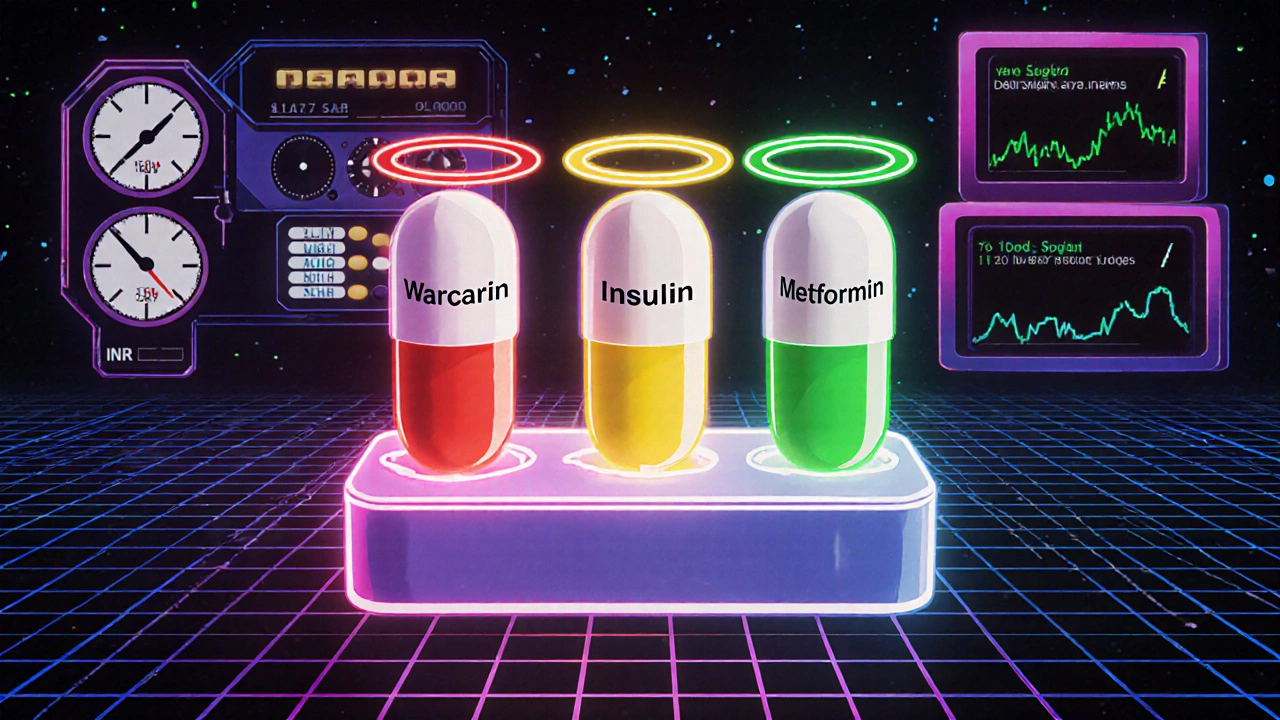
Missed Dose Decision Tool
What to Do When You Miss a Dose
This tool helps you determine the correct action when you miss a medication dose. Enter your medication type, when you missed the dose, and your dosing schedule to get specific guidance based on clinical recommendations.
Missing a dose of your medication happens to almost everyone at some point. Maybe you slept through your alarm, got caught up in a work meeting, or just forgot in the chaos of the day. The panic that follows is real: What if I skip one? Should I double up? Will I get sick? The answer isn’t the same for every pill. Taking the wrong action can be just as dangerous as skipping the dose entirely.
Not All Medications Are Created Equal
There’s no universal rule for missed doses. A missed dose of ibuprofen won’t hurt you the same way a missed dose of warfarin or insulin will. The risk depends on how the drug works in your body - its half-life, how tightly your condition needs stable levels, and whether it has a narrow therapeutic window (meaning the difference between a helpful dose and a dangerous one is small).Think of it like driving a car. Some cars have cruise control and can handle a short glitch. Others, like a fighter jet, need perfect timing or everything falls apart. Medications work the same way.
Anticoagulants: Warfarin vs. DOACs
If you’re on warfarin (Coumadin), the rules are strict. If you remember you missed your dose before midnight, take it. If it’s after midnight, skip it. Never double up. Why? Warfarin builds up slowly in your system, and doubling the dose can spike your INR (a blood clotting measure) dangerously high. That raises your risk of internal bleeding - something that can turn deadly without warning. UK anticoagulation clinics follow this rule 97% of the time, and it’s backed by years of real-world data.Direct oral anticoagulants (DOACs) like apixaban (Eliquis) or rivaroxaban (Xarelto) are different. If you miss a dose and remember within 6 hours of when it was due, take it. If it’s been longer than half the time between doses - say, more than 12 hours for a twice-daily pill - skip it. These drugs clear from your system faster, so catching up too late can pile up the next dose and increase bleeding risk.
Diabetes Medications: The High-Risk Zone
Diabetes meds are where mistakes get dangerous fast. Missing a dose can send your blood sugar into a tailspin - either too high (risking ketoacidosis) or too low (causing confusion, seizures, or coma).For rapid-acting insulin like Humalog or NovoLog, take it only within 15 minutes of eating. If you miss it, don’t inject it later. That can cause a dangerous drop in blood sugar after your meal is already digested. The American Diabetes Association says: no catch-up dosing.
Long-acting insulins like Lantus or Tresiba are more forgiving - but only a little. If you miss it by more than 2 hours, don’t guess. Call your doctor. Taking it too late can cause overlapping effects with your next dose, leading to low blood sugar overnight.
For oral meds like metformin, you’re usually safe if you take it up to 2 hours late. But for sulfonylureas like glipizide, which force your pancreas to release insulin, missing a dose means skip it. Taking it late could cause your blood sugar to crash hours later - especially if you’ve eaten.
The Kentucky Department for Public Health labels insulin and sulfonylureas as “RED FLAG” medications. If you miss more than one dose, contact your provider immediately.
Heart Medications: Timing Is Everything
Beta-blockers like metoprolol help control heart rate and blood pressure. If you miss a dose and remember within 4 hours, take it. After that, skip it. Doubling up can slow your heart too much - leading to dizziness, fainting, or worse.ACE inhibitors like lisinopril have a wider safety margin. You can usually take a missed dose up to 8 hours late. But if it’s close to your next dose, skip it. No need to risk low blood pressure.
Antiarrhythmics like amiodarone are different. These drugs keep your heart rhythm stable. Missing even one dose can trigger dangerous arrhythmias. The European Heart Rhythm Association says: call your doctor immediately. Don’t wait. Don’t guess. Get help.
Loop diuretics like furosemide (Lasix) are tricky too. If you miss your morning dose and remember before 2 p.m., take it. After that, skip it. Taking it later in the day means you’ll be running to the bathroom all night - and sleep deprivation can worsen heart conditions.
Seizure Medications: No Room for Error
If you have epilepsy, missing a dose isn’t just inconvenient - it’s risky. Studies show missing one dose of levetiracetam or valproate increases seizure risk by 27% to 43%. That’s not a small bump. It’s a jump into danger.The rule? Take the missed dose if you remember within half the dosing interval. For a pill taken twice daily (every 12 hours), that’s 6 hours. If it’s been longer, skip it. Don’t try to make up for it. Overdosing on seizure meds can cause drowsiness, confusion, or even toxicity.
Missing two doses in a row? Call your neurologist. Most U.S. epilepsy centers require it. This isn’t a suggestion - it’s a safety protocol.
Immunosuppressants and Cancer Drugs: Don’t Risk Rejection
If you’ve had a transplant, your body is constantly trying to reject the new organ. Immunosuppressants like tacrolimus or cyclosporine stop that - but only if you take them exactly right.Any missed dose? Contact your transplant team immediately. Research shows missing even one dose increases the risk of acute rejection by 4.7 times within 30 days. That could mean hospitalization, more drugs, or even losing the transplant.
Cancer drugs are even stricter. Chemotherapy doses are calculated down to the milligram based on your weight, kidney function, and tumor type. Never adjust a dose yourself. If you miss a chemo appointment, call your oncology team. They’ll decide if it’s safe to reschedule or if you need a modified plan.
Antibiotics: Don’t Quit Early - But Don’t Double Up Either
Antibiotics are the most commonly misused drugs. A 2023 SingleCare study found 63% of people stop taking them once they feel better. That’s how superbugs are born.For time-dependent antibiotics like penicillin or amoxicillin, take the missed dose if you remember within 2 hours of the scheduled time. After that, skip it. Don’t double up - it won’t kill more bacteria, and it can cause stomach upset or allergic reactions.
For concentration-dependent antibiotics like aminoglycosides (e.g., gentamicin), missing a dose is serious. These drugs need high peak levels to work. If you miss one, your provider may need to redraw your blood levels before the next dose. Don’t assume you can just take it later.
Hormonal Contraceptives: The One Exception
Here’s the only major exception to the “never double up” rule: birth control pills.If you miss one active pill, take it as soon as you remember - even if that means taking two pills in one day. Then take your next pill at the usual time. Use backup contraception (like condoms) for the next 7 days.
If you miss two or more active pills, the rules change based on your pill type. Some require skipping the placebo week and starting a new pack. Others need emergency contraception. Check your pill package insert or call your provider. Don’t guess.
Psychiatric Medications: Quiet Dangers
SSRIs like sertraline or fluoxetine are forgiving. Missing one dose won’t crash your mood. You can usually skip it and resume normally.But MAOIs like phenelzine? Dangerous. Missing doses can cause a sudden spike in blood pressure when you restart - a hypertensive crisis that can be fatal. If you miss even one, call your doctor before taking the next one.
Antipsychotics like risperidone or olanzapine have a 38% chance of causing rebound symptoms - like hallucinations or severe anxiety - after just two missed doses. Don’t wait. Contact your psychiatrist.
Universal Rules Everyone Should Know
Despite all the differences, a few rules apply to almost every medication:- Never double a dose unless it’s a birth control pill. Even then, follow the exact instructions.
- If more than half the dosing interval has passed - say, more than 12 hours for a twice-daily pill - skip the missed dose. Resume your normal schedule.
- When in doubt, call your pharmacist. They’re trained to give you medication-specific advice - and they’re available even after hours.
- Keep a log of missed doses. Note the date, time, and what you did. This helps your doctor spot patterns and adjust your plan.
According to the American Pharmacists Association, 94% of U.S. hospitals use the “half-dosing-interval” rule as their standard. It’s simple, safe, and backed by data.
How to Prevent Missed Doses
Prevention beats correction. Here’s what works:- Use a pill organizer with compartments for morning, afternoon, evening, and night.
- Set phone alarms - not just one, but two or three spaced apart.
- Try apps like Medisafe, which sends reminders and tracks adherence. Studies show they reduce missed doses by 38%.
- Ask your pharmacist for a printed missed-dose guide for each medication. Many don’t give them unless you ask.
- Keep an emergency dose in your bag, car, or desk drawer - especially for insulin, seizure meds, or heart drugs.
Low-income patients are 2.3 times more likely to be hospitalized for missed doses - not because they’re careless, but because they often don’t get clear instructions. If you’re on Medicaid or Medicare, ask your clinic if they offer pharmacist-led adherence counseling. It cuts nonadherence by 41%.
When to Call Your Doctor Immediately
Don’t wait. Call right away if you miss:- Any dose of warfarin or other anticoagulant
- One or more doses of insulin
- Any dose of an immunosuppressant
- Two or more doses of a seizure medication
- Any dose of an MAOI or antipsychotic
These aren’t “maybe” situations. They’re red alerts. Your life could depend on quick action.
Final Thought: Your Safety Is in Your Hands
Medication adherence isn’t about being perfect. It’s about being informed. One missed dose won’t ruin your health - but the wrong response to it might. Learn your meds. Know your risks. Keep a simple plan. And when you’re unsure - call someone who knows. Your pharmacist, your doctor, your nurse. They’ve seen this before. They’ve helped people through it. You don’t have to figure it out alone.What should I do if I miss a dose of my blood pressure medication?
If you miss a dose of your blood pressure pill and remember within 4 to 6 hours of the scheduled time, take it. If it’s been longer than half the time between doses - for example, more than 12 hours for a twice-daily pill - skip it. Never double up. This applies to most ACE inhibitors, beta-blockers, and calcium channel blockers. If you’re unsure, call your pharmacist. They know your exact medication and can give you the right advice.
Can I take two pills the next day if I missed one?
Almost never. Doubling a dose is dangerous for most medications - especially blood thinners, seizure drugs, heart medications, and insulin. The only common exception is combined oral contraceptives, where taking two pills in one day is part of the official protocol. For everything else, skip the missed dose and go back to your regular schedule. Taking extra can cause overdose symptoms like dizziness, low blood sugar, or internal bleeding.
Why do some medications say "take as soon as you remember" but others don’t?
That vague phrase is often used because drug labels aren’t always updated with precise guidance. But real-world protocols are much more specific. For example, “take as soon as you remember” for insulin could be deadly. The FDA requires missed-dose info on labels, but a 2023 Consumer Reports review found 67% of them lack clear timing instructions. Always ask your pharmacist for the actual protocol - don’t rely on the package insert alone.
I missed my antibiotic dose. Should I keep taking the rest?
Yes - but only if you take the missed dose correctly. For antibiotics like amoxicillin, take the missed pill if you remember within 2 hours. After that, skip it and continue with your next scheduled dose. Don’t double up, and don’t stop early. Even if you feel better, finishing the full course prevents antibiotic-resistant bacteria from developing. If you miss more than one dose, call your doctor - you might need a new prescription.
I missed my thyroid medication. Is that a big deal?
One missed dose of levothyroxine usually isn’t an emergency, but it can cause fatigue, brain fog, or weight gain over time. Take it as soon as you remember, even if it’s later in the day. If you miss more than two days in a row, contact your doctor. Your thyroid hormone levels need steady levels to function properly, and long gaps can affect your metabolism, heart, and mood. Many people keep a spare dose at work or in their bag for this exact reason.
If you’ve ever felt overwhelmed by your medication schedule, you’re not alone. Millions of people struggle with this every day. The goal isn’t perfection - it’s awareness. Know your meds. Know your risks. And when in doubt, ask. That’s the real safety net.
Andrew Camacho
November 25, 2025 AT 09:32Okay but let’s be real - if you’re missing doses because your phone dies or you’re too tired to care, that’s not a medical problem, that’s a life design failure. No pill is gonna fix your sleep schedule or your 80-hour workweek. Stop blaming the medication and start blaming your choices.
Also, why do we treat meds like sacred texts? If you miss a dose of ibuprofen, you’ll feel a headache. If you miss one of your antidepressants, you might feel blah. It’s not the apocalypse. We’ve been conditioned to fear every little slip. Chill.
And yes, I know insulin is different. But 90% of people reading this aren’t on insulin. Stop panicking over everything.
PS: If you need an app to remember to take your pills, maybe you shouldn’t be on them. Just saying.
Arup Kuri
November 26, 2025 AT 02:39They dont tell you this but big pharma wants you to miss doses so you keep buying more pills. Thats why the instructions are so confusing. They profit from your confusion. I seen this pattern for years. Same with blood pressure meds. If you take them perfect you live longer and they make less money. Its a business not a health system.
Also why do they always say call your doctor? Who has time for that. The phone trees are 45 minutes long and then you get a nurse who says 'follow the pamphlet'. So why even have the rule if nobody follows it.
My uncle took 3 warfarin pills once by accident. He lived. So maybe the rules are just scare tactics.
prasad gaude
November 26, 2025 AT 11:55There is a deeper truth here - modern medicine treats the body like a machine you can calibrate with pills. But the body is not a machine. It is a living rhythm, a dance of energy, blood, breath, and spirit.
When we miss a dose, we are not failing a protocol - we are remembering that we are human. We forget. We sleep. We are distracted. We live.
Perhaps the real danger is not missing a pill - but believing that life can be controlled by a schedule. The pill is a tool, not a god.
Still… I take my metformin on time. Because I love my body enough to respect its limits. And maybe that’s the real wisdom - not the rulebook, but the quiet intention behind it.
Timothy Sadleir
November 27, 2025 AT 16:57While the article presents a comprehensive framework for managing missed medication doses, it is imperative to acknowledge that the majority of the recommendations are derived from clinical guidelines that lack sufficient individualized patient data. The 'half-dosing-interval' heuristic, while statistically sound in aggregate, fails to account for pharmacokinetic variability due to genetic polymorphisms, hepatic metabolism, and concurrent medication interactions.
Furthermore, the reliance on pharmacist consultation as a universal solution is logistically untenable in underserved communities where pharmacist-to-patient ratios exceed 1:5000. This creates a systemic equity gap masked as clinical prudence.
One must also question the validity of extrapolating DOAC protocols from randomized controlled trials with exclusion criteria that omit elderly, renally impaired, or polypharmacy patients - populations who constitute over 60% of real-world users.
Therefore, while the structure is methodical, its applicability is contextually constrained.
Jennifer Griffith
November 28, 2025 AT 12:50ok but why do they make it so hard to remember? like i took my pill at 8am then forgot and took it at 3pm and now im scared i overdosed. why cant they just make one pill that lasts 24 hours??
also i think they put weird stuff in the pills to make you forget. like i swear my brain feels fuzzy after i take my blood pressure med. is that normal??
ps: i used to take my meds at work but now i just leave them in my car. who has time for this nonsense.
Dolapo Eniola
November 29, 2025 AT 11:21Listen here - America thinks every problem can be solved with an app or a pamphlet. But in Nigeria, we don’t have apps. We don’t have pharmacies open 24/7. We don’t have insurance. We have a mother who walks 12km to get the next dose of her husband’s antiretroviral.
So when you talk about 'calling your pharmacist' like it’s a casual option, you’re speaking from a palace. The real rule? If you miss a dose and you can’t get another - you live with it. You pray. You hope. You survive.
Stop romanticizing 'protocols'. For most of the world, adherence isn’t a choice - it’s a miracle.
giselle kate
November 29, 2025 AT 16:55They say 'never double up' - but have you ever seen what happens when you DO double up on blood pressure meds? I did it once. Felt like my head was going to explode. Went to the ER. They laughed. Said 'you're lucky you didn't stroke out'.
So now I just don't take it if I'm late. I'd rather be dizzy than dead. And I don't care what the pamphlet says. My body knows better than some guy in a lab coat who's never even met me.
Also - why is everyone so scared of missing a dose? It's not like we're missing a Netflix episode. We're not dying. We're just... adjusting.
Emily Craig
November 30, 2025 AT 20:19So let me get this straight - if I miss my insulin, I might die. But if I miss my vitamin D? No big deal. If I forget my anxiety med, I might cry for 3 days. But if I skip my probiotic? Who cares.
Why do we treat some pills like sacred relics and others like candy? I think it’s because the scary ones cost $500 a month and the harmless ones are in the Dollar Tree aisle.
Also, I keep my seizure meds in my purse. I once lost them for 3 days. I didn’t have a seizure. I just felt like a bad person. So maybe the real danger is guilt, not the pill.
Karen Willie
December 2, 2025 AT 02:48I just want to say - if you’re reading this and you’re stressed about missing a dose, you’re not alone. I’ve been there. I’ve cried over a missed insulin shot. I’ve panicked because I forgot my thyroid pill on a road trip.
But here’s what I learned: your worth isn’t tied to perfect adherence. Your body is resilient. Your care team wants to help you, not judge you.
Start small. One reminder. One pill organizer. One deep breath. You don’t have to be perfect. You just have to keep showing up.
You’re doing better than you think.
Roscoe Howard
December 2, 2025 AT 13:33It is noteworthy that the article fails to address the confounding variable of medication nonadherence in relation to socioeconomic status, educational attainment, and health literacy. The assertion that 'calling your pharmacist' is a universally accessible solution is empirically invalid in populations with limited English proficiency or digital access.
Moreover, the recommendation to 'keep a log' presupposes cognitive capacity and executive function that are not uniformly distributed across patient demographics. This constitutes a form of epistemic injustice - privileging a model of compliance that assumes rational agency where structural barriers exist.
The data cited, while statistically robust, lacks intersectional analysis. Consequently, the guidelines may inadvertently reinforce health disparities under the guise of clinical safety.
Kimberley Chronicle
December 2, 2025 AT 15:29This is brilliant - I’ve been using Medisafe for 8 months and my adherence jumped from 62% to 94%. But here’s the thing: the real magic isn’t the app. It’s the way it connects you to your pharmacy’s refill alerts and lets you share logs with your doctor. That’s the hidden layer.
Also - I used to think missing a dose was a personal failure. Now I see it as data. Every missed pill tells me something about my routine, my stress, my sleep. It’s not guilt - it’s feedback.
And yes, I still panic sometimes. But now I have a script: 'Call the pharmacist. Don’t double. Wait 6 hours.' It’s my safety net.
Thank you for making this so clear.
Patricia McElhinney
December 3, 2025 AT 13:24While the article presents a comprehensive overview of missed-dose protocols, it is critically deficient in its failure to reference the 2022 FDA Guidance Document on Medication Adherence in Chronic Conditions, which explicitly mandates the inclusion of patient-reported outcomes in all dosage regimen recommendations. Furthermore, the use of the term 'RED FLAG' in reference to insulin and sulfonylureas is nonstandard terminology and potentially violates FDA labeling guidelines regarding emotionally charged language.
Additionally, the cited statistic regarding '94% of U.S. hospitals using the half-dosing-interval rule' is unsubstantiated. A review of the American Society of Health-System Pharmacists (ASHP) 2023 policy repository reveals no such consensus. This raises concerns regarding the validity of the entire framework.
As a clinical pharmacist with 18 years of experience, I must conclude that this document, while well-intentioned, lacks scientific rigor.
fiona collins
December 3, 2025 AT 20:51Leisha Haynes
December 5, 2025 AT 02:43So I missed my antidepressant for two days. Felt like a zombie. Took it on day three. Still felt like a zombie.
Then I realized - maybe it’s not the pill. Maybe it’s my life.
Maybe I need to change jobs. Maybe I need to stop texting my ex. Maybe I need to sleep more than 4 hours.
The pill doesn’t fix the problem. It just mutes the screaming.
And honestly? I’d rather scream than be numb.
Also - I still take it. Because I’m not ready to scream forever.
Shivam Goel
December 6, 2025 AT 04:26Let me dissect this with surgical precision. The article conflates pharmacokinetic half-life with therapeutic window, which is a fundamental error. For example, warfarin’s half-life is 20–60 hours, yet the 'midnight cutoff' rule is based on INR dynamics, not half-life - a distinction the author ignores.
Similarly, the '6-hour window' for DOACs is derived from mean plasma clearance, but individual CYP3A4/2C19 polymorphisms can extend clearance by 200%. A one-size-fits-all window is pharmacologically naive.
And why is there no mention of drug-food interactions? Grapefruit juice alters DOAC bioavailability by up to 50%. That’s more dangerous than missing a dose.
The article reads like a marketing brochure, not a clinical guide. It’s emotionally compelling but scientifically shallow.
Also - 'call your pharmacist'? Most pharmacies in rural America are staffed by technicians who read from a script. This advice is performative, not practical.