
Where to Store Your Medications at Home Safely: The Ultimate Guide
The goal here isn't just to hide your pills; it's about creating a system that prevents accidental poisoning, keeps kids safe, and ensures your meds actually work when you need them. If you're storing your prescriptions in the bathroom or on a bedside table, you're likely dealing with two big problems: accessibility and degradation. Let's look at how to fix that.
The Biggest Mistake: The Bathroom Cabinet
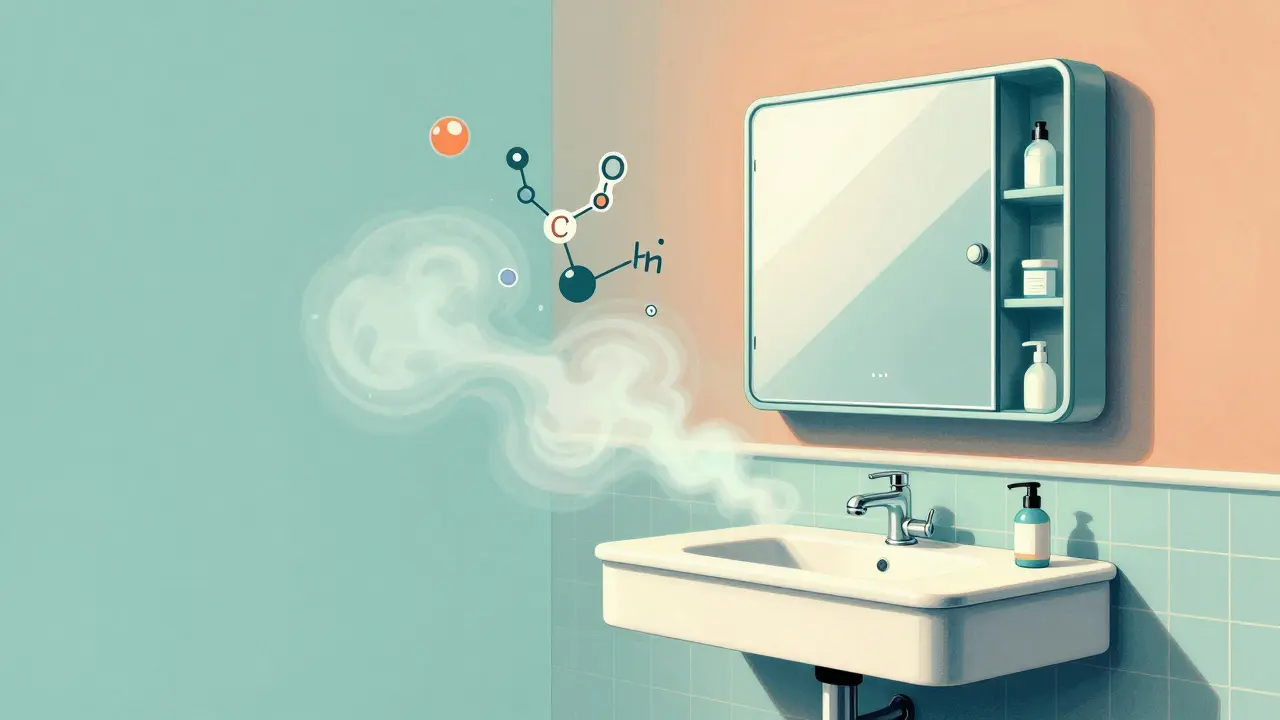
It seems logical to keep medicine in the bathroom, but it's actually one of the worst places for them.
Humidity is the enemy of stability. When you take a hot shower, the humidity in that small room can spike above 80%. This moisture seeps into bottles and tablets, causing them to break down chemically. In fact, some experts note that up to 67% of common medications can degrade within just 30 days if kept in a damp bathroom environment.
Beyond the chemistry, bathrooms are often the first place children explore. If your meds are in a standard cabinet, you're essentially leaving them in a reachable zone. To keep your drugs effective, you need a cool, dry place-think a dedicated drawer in a bedroom or a locked box in a hallway closet-where the temperature stays between 68-77°F (20-25°C) and humidity remains below 60%.
Why "High Shelves" Aren't Enough
A lot of parents believe that putting meds on top of the fridge or a high shelf is a foolproof plan. Here's the reality: children are natural climbers. Data from the Washington State Department of Health shows that kids as young as two years old can climb up to reach a 48-inch shelf. If a child can see it or imagine it's there, they'll find a way to get to it.
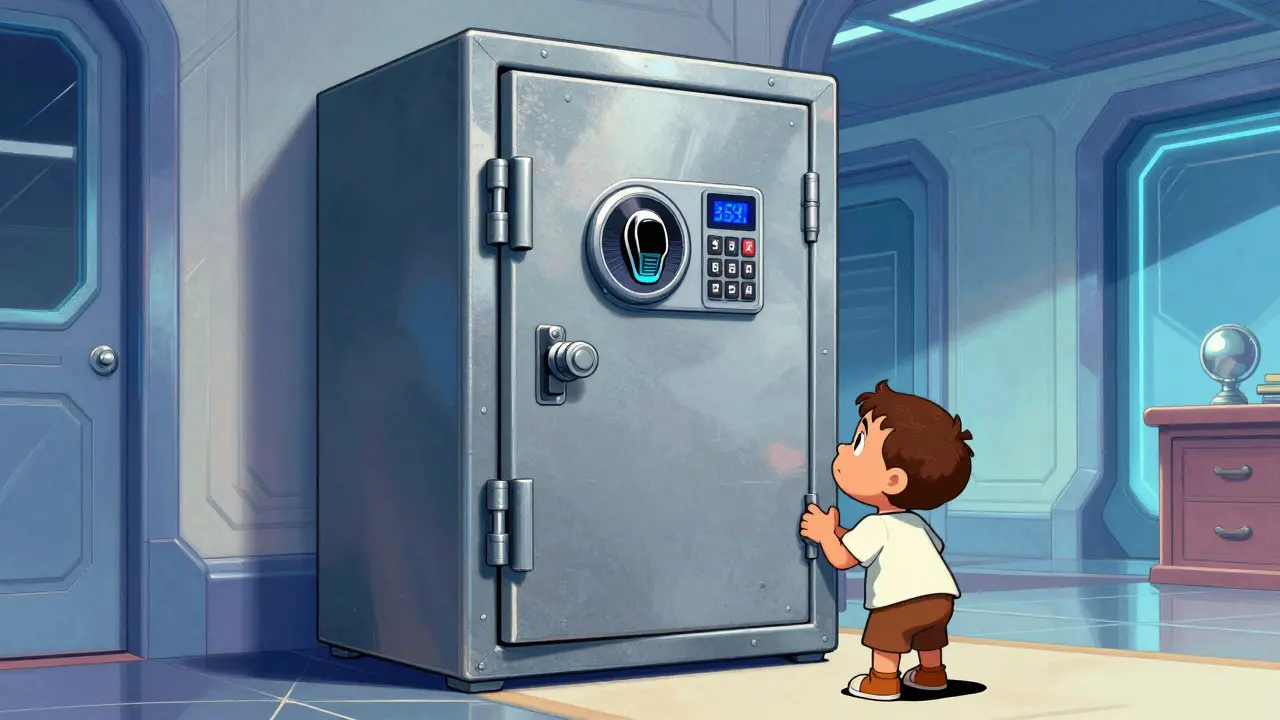
The only real gold standard for safety is locked storage. Dr. Susan Whittier from Columbia University points out that medications in unlocked cabinets increase the risk of pediatric poisoning by a staggering 300%. Whether it's a dedicated
Medicine Safe or a sturdy lockbox, the goal is to create a physical barrier that requires a key or a code. Even if you use child-resistant caps, remember that about 50% of children can figure those out by age five. The cap is a backup, not the primary defense.
Choosing the Right Storage Solution
You don't need to spend a fortune to secure your home. Depending on who lives in your house and what you're storing, different tools work better. For most people, a simple lockbox from a big-box store is plenty. If you're dealing with high-risk prescriptions, like opioids, you might want something more robust.
| Storage Type | Security Level | Best For | Main Drawback |
|---|---|---|---|
| Lockable Plastic Bin | Low-Medium | Over-the-counter vitamins, basic meds | Easily broken by determined kids |
| Steel Medicine Safe | High | Prescription painkillers, psychiatric meds | Higher initial cost |
| Biometric Dispenser | Very High | High-risk medications, elderly care | Requires power/batteries |
| Refrigerated Lockbox | High | Insulin, certain biologics | Limited space |
Handling Temperature-Sensitive Meds
Not all medications follow the same rules. If you use
Insulin or other biologics, the fridge is non-negotiable. However, the fridge door is a high-traffic area and often lacks security.
The trick is to use a locked container inside the refrigerator or a dedicated medical fridge. Keep these items between 36-46°F (2-8°C) and, most importantly, separate them from food. This prevents accidental ingestion and ensures the medication doesn't freeze, which can ruin its effectiveness. If you're traveling, use an insulated cooling pouch, but get the meds back into a secure, temperature-controlled environment as soon as you arrive.
The "Danger Window" and Daily Habits
Even the best safe in the world won't help if the medicine is sitting on the counter for twenty minutes. The National Association for Children of Alcoholics warns that 42% of pediatric poisonings happen in that small window after a parent gives a dose but before they put the bottle away.
Make it a rule: Store it immediately. Don't leave the bottle on the nightstand "just for a few minutes." Also, be wary of "transit" storage. Many accidents happen when grandparents leave pills in a purse or a coat pocket while visiting. If you're visiting family or they are visiting you, keep your medications in a travel lockbox rather than a loose bag.
A Special Note on Elderly Care and Dementia
Safety looks different when you're caring for someone with dementia. While locking everything away is great for kids, it can be dangerous for a senior who forgets to take a life-saving heart medication. In these cases, you have to balance safety with accessibility.
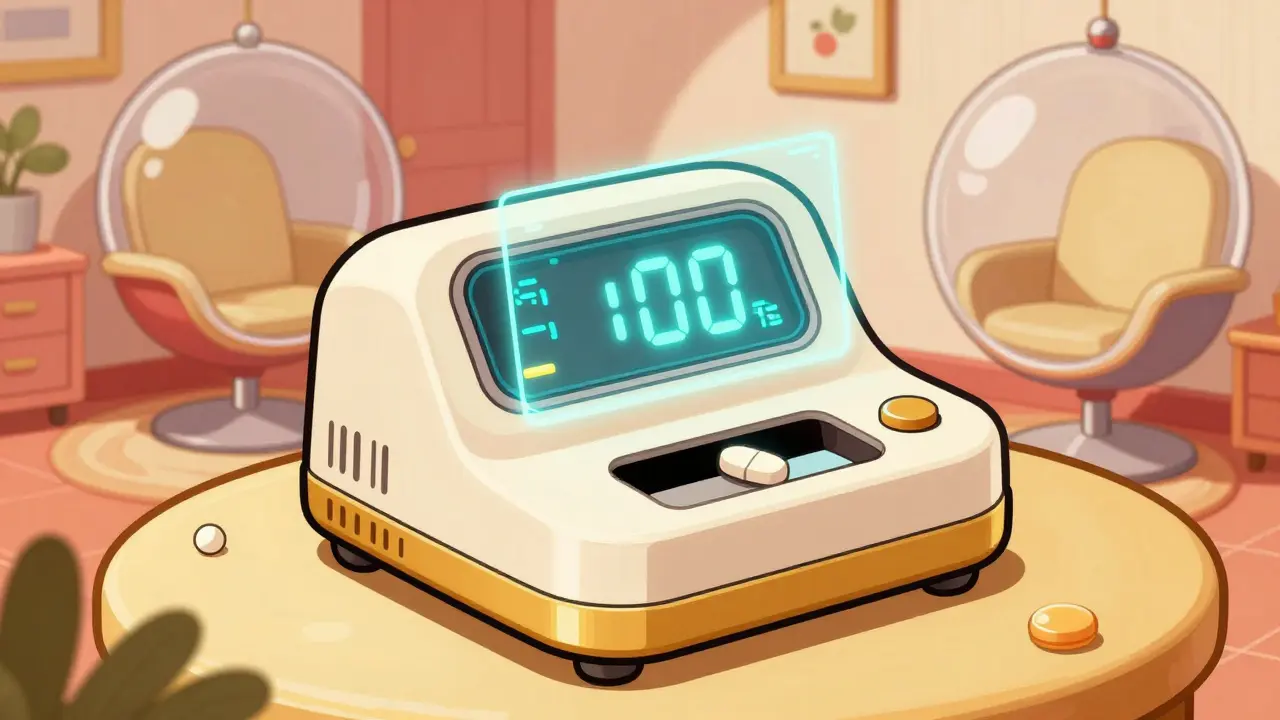
Instead of a locked safe that the patient can't open, look into
Digital Medication Dispensers. These can be programmed to release the correct dose at a specific time and alert a caregiver if the dose is missed. It removes the need for the patient to have a full bottle of pills accessible at all times while ensuring they get their treatment.
Quick Safety Checklist for Your Home
If you're not sure where to start, go through your house today and check these points:
- Move all meds out of the bathroom and kitchens into a cool, dry area.
- Test your "high shelves"-could a determined 3-year-old reach them? If yes, move them.
- Audit your containers. Are they original FDA-approved bottles with clear labels?
- Identify your "high-risk" meds (opioids, stimulants) and place them in a locked steel safe.
- Set up a designated "return to safe" habit to eliminate the 5-10 minute danger window.
Can I just use a high shelf if I don't have a safe?
While better than a low table, high shelves are not secure. Children are surprisingly good at climbing furniture. The only way to truly prevent unauthorized access is through a locked compartment that resists tampering.
Why can't I keep my meds in the bathroom?
Bathrooms are too humid. Steam from showers can degrade the chemical stability of your medication, making it less effective or even inactive over time.
Do child-resistant caps mean I don't need a lockbox?
No. Child-resistant caps are a helpful second layer of defense, but many children as young as five can open them. A lockbox is the primary barrier.
What is the ideal temperature for medication storage?
For most room-temperature meds, aim for 68-77°F (20-25°C). For refrigerated items like insulin, keep them between 36-46°F (2-8°C).
Where is the safest place to store medications in a multi-generational home?
In homes with both children and seniors, a centralized, locked steel safe is best. It prevents kids from accessing the meds while allowing caregivers to manage doses for seniors.
Next Steps for Your Home
If you've realized your current setup is risky, start by auditing your meds. Separate them into "daily use," "as needed," and "temperature sensitive." Buy a basic lockbox for your daily prescriptions and a heavy-duty safe for high-risk medications. If you have a child or a pet, do a "floor-level sweep" to make sure no stray pills have fallen under the couch or dresser. A few small changes in where you put your bottles can literally save a life.