
Anticoagulants: What They Are, How They Work, and What You Need to Know
When your blood starts clotting too easily, anticoagulants, medications that slow down the blood clotting process to prevent dangerous clots. Also known as blood thinners, they don’t actually thin your blood—they just make it harder for clots to form. These drugs are critical for people with atrial fibrillation, deep vein thrombosis, or artificial heart valves, but they’re not harmless. Even a small mistake in dosing can lead to serious bleeding.
Anticoagulants like warfarin, an older but still widely used anticoagulant that requires regular blood testing demand careful tracking. Unlike newer options like rivaroxaban or apixaban, warfarin reacts with food, alcohol, and other meds—so your INR levels must be checked often. That’s why lab monitoring calendars, personalized schedules for tracking blood tests and side effects are so important. People on these drugs need to know when to test, what numbers mean, and when to call their doctor. Missing a test isn’t just a paperwork issue—it’s a safety risk.
Many of the risks around anticoagulants come from what else you’re taking. Herbal supplements like garlic or ginkgo can make bleeding more likely. Even something as simple as switching from one painkiller to another—say, from ibuprofen to acetaminophen—can change how your body handles the drug. And if you’re on anticoagulants and suddenly start a new antibiotic, antidepressant, or even an HIV treatment like nevirapine, you could be in danger. That’s why knowing your full medication list and checking for interactions isn’t optional—it’s life-saving.
Some people think if a drug is old, it’s outdated. But warfarin is still used because it’s cheap, well-studied, and works when newer drugs can’t be used. Still, newer anticoagulants like apixaban have fewer food restrictions and don’t need weekly blood tests. The right choice depends on your health, lifestyle, and what else you’re taking. If you’re on one of these drugs, you’re not just taking a pill—you’re managing a system. That means knowing your numbers, watching for signs of bleeding (like unusual bruising, dark stools, or headaches), and staying in touch with your care team.
Below, you’ll find real-world guides on how to track side effects, avoid dangerous interactions, verify your meds aren’t fake, and understand what to do when things go wrong. Whether you’re on warfarin, taking a newer anticoagulant, or just worried about how these drugs affect your body, these posts give you the facts—not the fluff.
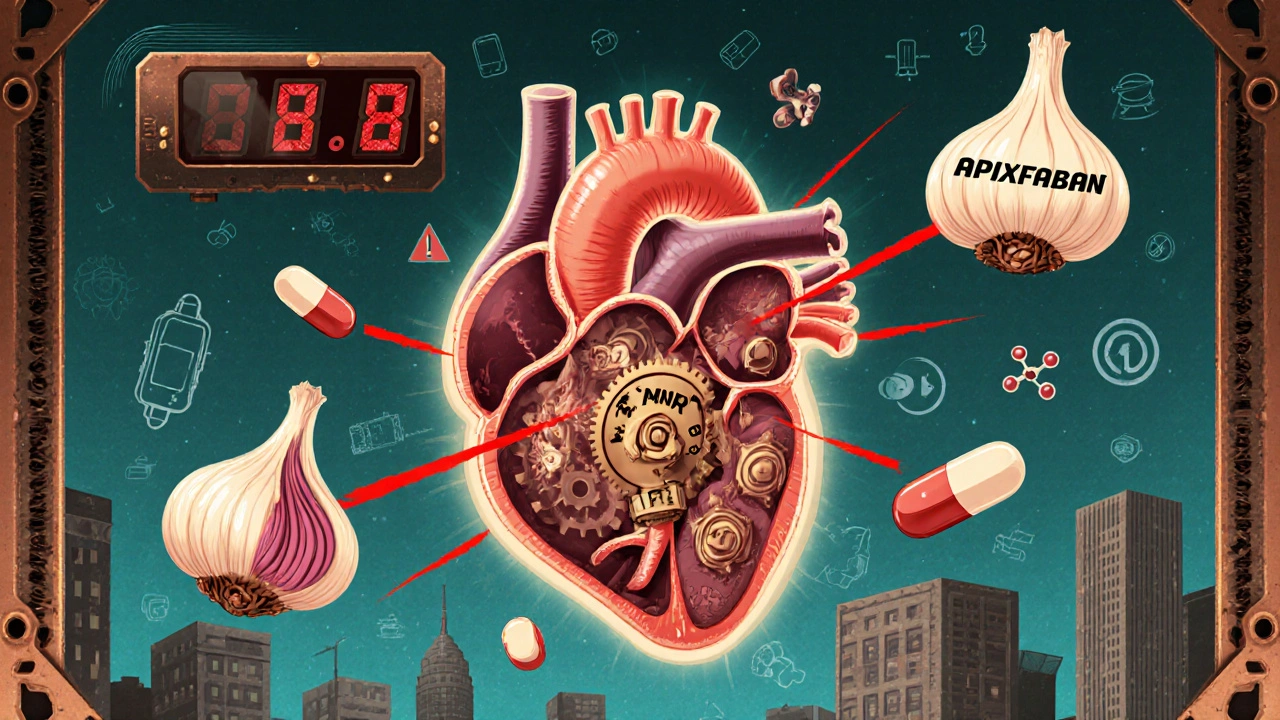
Garlic Supplements and Anticoagulants: What You Need to Know About Bleeding Risk
Garlic supplements can dangerously increase bleeding risk when taken with blood thinners like warfarin or apixaban. Learn why, who's at risk, and what to do to stay safe.