
Dapagliflozin: What It Is, How It Works, and What You Need to Know
When you hear dapagliflozin, a prescription medication used to lower blood sugar in type 2 diabetes and also reduce the risk of heart failure and kidney decline. Also known as Farxiga, it works by making your kidneys flush out extra sugar through urine instead of reabsorbing it back into your bloodstream. This isn’t just another sugar-lowering pill—it’s one of the first drugs shown to actually protect your heart and kidneys, even in people without diabetes.
Dapagliflozin belongs to a class called SGLT2 inhibitors, a group of diabetes drugs that block a specific kidney transporter to remove glucose. Unlike insulin or metformin, it doesn’t rely on your pancreas or liver to work. That’s why it’s often added when other meds stop doing enough. It’s also used for heart failure, a condition where the heart can’t pump blood well enough, even if you don’t have diabetes. Studies show it cuts hospital visits and lowers the risk of dying from heart problems. And for people with chronic kidney disease, a slow loss of kidney function over time, dapagliflozin slows down the damage—something few other drugs can claim.
But it’s not without risks. You might get more yeast infections or urinary tract issues because sugar in your urine creates a breeding ground for bacteria. Dehydration is another concern—especially if you’re on diuretics or don’t drink enough water. And while it helps with weight loss, it’s not a weight-loss drug. It’s a tool for long-term protection, not quick fixes.
People on dapagliflozin often take it with other meds like metformin, insulin, or blood pressure pills. That’s why knowing about interactions matters. For example, combining it with diuretics can drop your blood pressure too low. And if you’re on a low-carb diet or fasting, your risk of ketoacidosis—even with normal blood sugar—goes up. That’s rare, but serious.
The posts below cover real-world issues tied to dapagliflozin: how it affects your kidneys, what to watch for when switching meds, how it fits into heart failure treatment, and even how to manage side effects like frequent urination or dehydration. You’ll also find advice on drug interactions, what to do if you miss a dose, and how to tell if your pharmacy gave you the right version. This isn’t theory—it’s what people actually deal with when taking this drug every day.
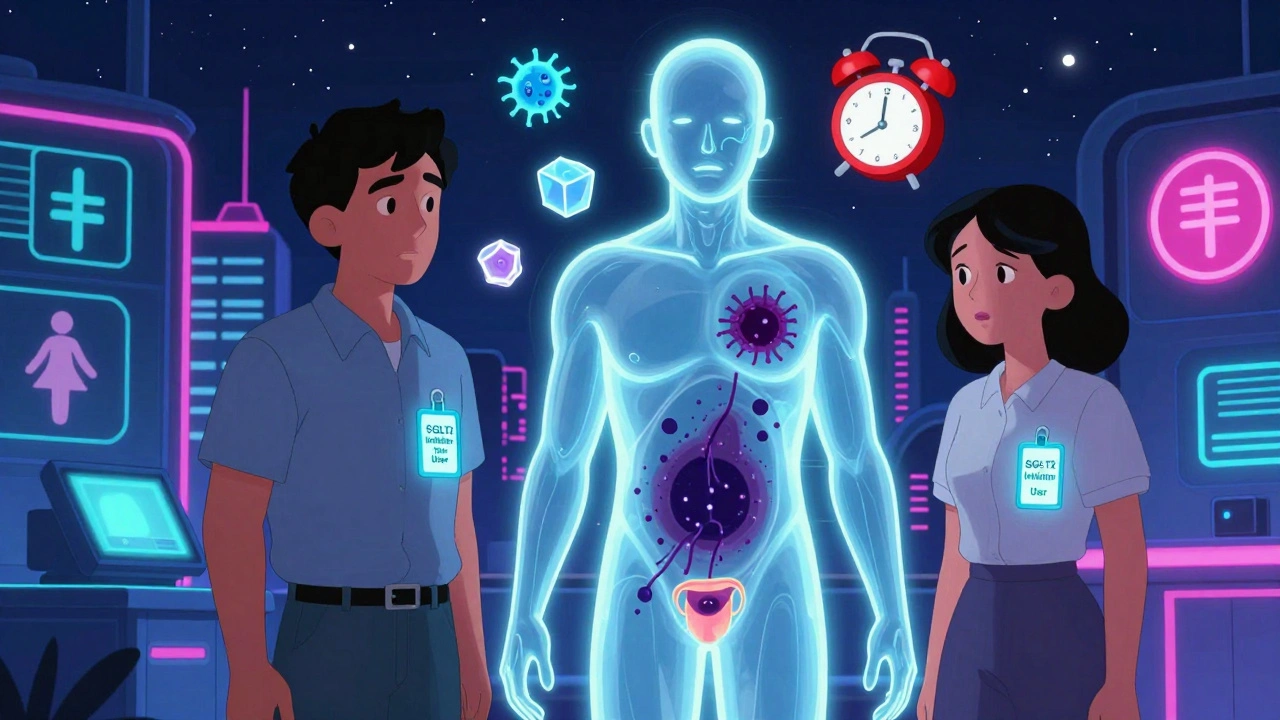
SGLT2 Inhibitors and Fournier’s Gangrene: What You Need to Know Now
SGLT2 inhibitors help manage diabetes and protect the heart and kidneys, but they carry a rare risk of Fournier’s gangrene. Learn the early warning signs and what to do immediately if you notice them.