
Diabetes Drugs: Types, Risks, and What You Need to Know
When you’re prescribed diabetes drugs, medications used to control blood sugar levels in people with type 1 or type 2 diabetes. Also known as antihyperglycemic agents, these drugs are some of the most commonly used in the world — but they’re not all the same, and mixing them wrong can be dangerous. Whether you’re on insulin, metformin, or something newer like GLP-1 agonists, each one works differently and carries its own set of risks.
Insulin, a hormone therapy required for type 1 diabetes and sometimes used in advanced type 2. Also known as injectable glucose-lowering agent, it’s powerful but can drop your blood sugar too fast — especially if you drink alcohol or skip meals. Then there’s metformin, the first-line oral drug for type 2 diabetes that reduces liver sugar production. Also known as biguanide, it’s cheap, widely used, and generally safe — but it can cause stomach issues and, rarely, a serious condition called lactic acidosis if your kidneys aren’t working well. These aren’t the only options. Newer drugs like SGLT2 inhibitors and GLP-1 receptor agonists help with weight loss and heart protection, but they’re pricier and can cause infections or nausea.
What most people don’t realize is that diabetes drugs don’t work in isolation. They interact with other meds — like proton pump inhibitors that mess with absorption, or antibiotics that can spike or crash your glucose. Even something as simple as garlic supplements or caffeine can change how your body responds. And if you’re on multiple drugs, missing a dose or taking them at the wrong time can lead to real danger — like hypoglycemia that feels like just being tired, but could send you to the ER.
That’s why the posts below aren’t just about what drugs exist. They’re about how to use them safely. You’ll find real advice on what happens when alcohol meets metformin, how to spot early signs of nerve damage from certain meds, and why some people need genetic tests before taking certain drugs. You’ll see how insurance blocks access, how pharmacies track refills, and how to avoid counterfeit versions that look real but don’t work. This isn’t theory — it’s what people actually deal with every day.
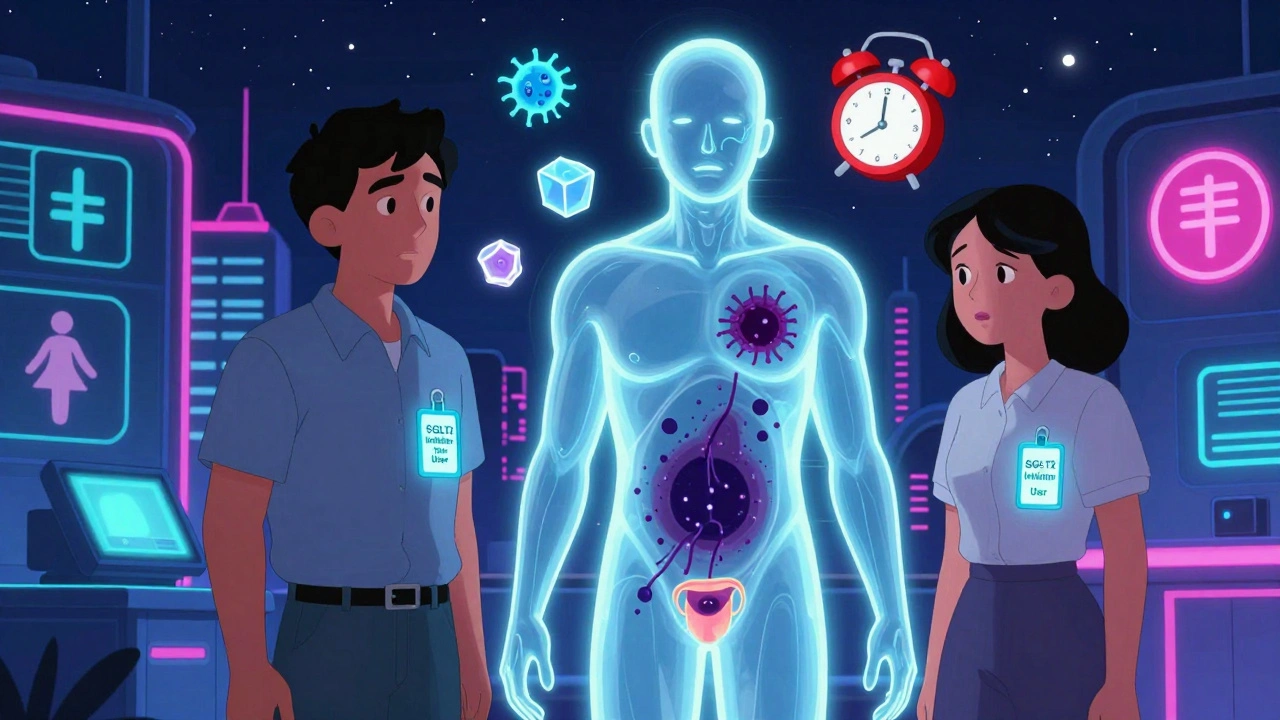
SGLT2 Inhibitors and Fournier’s Gangrene: What You Need to Know Now
SGLT2 inhibitors help manage diabetes and protect the heart and kidneys, but they carry a rare risk of Fournier’s gangrene. Learn the early warning signs and what to do immediately if you notice them.