
Travel Meds: What to Pack and How to Stay Safe on the Road
When you’re heading abroad, travel meds, medications you carry for health needs during trips. Also known as travel pharmacy, it’s not just about packing pills—it’s about making sure they’re legal, effective, and safe where you’re going. A lot of people think if it’s legal at home, it’s fine to take overseas. That’s not true. Countries like Japan, Australia, and even some European nations have strict rules about what drugs you can bring in—even common ones like Adderall, codeine, or certain sleep aids. The FDA doesn’t protect you once you cross the border. Customs officers don’t care if your doctor wrote the script. They care about their own laws.
That’s why knowing your prescription travel, the process of carrying controlled or regulated medications across international borders matters. If you’re on thyroid meds like levothyroxine, blood thinners, or diabetes drugs, you’re usually fine—but you still need the original bottle with your name on it. For controlled substances, you might need a letter from your doctor or even a special permit. Some countries require you to declare every pill you bring. Skip this step, and you could face fines, confiscation, or worse. And don’t assume your pharmacy’s refill system works overseas. Automated refills? Not a thing abroad. You need enough for the whole trip, plus a little extra in case your flight gets delayed.
Then there’s medication safety, the practices that prevent errors, interactions, and loss when managing drugs away from home. Heat, humidity, and time zones can mess with your meds. Insulin can spoil in a hot car. Antibiotics lose potency if left in a backpack in the sun. And mixing alcohol with diabetes meds or sleeping pills? That’s a bad idea no matter where you are. You also need to watch for interactions with things you didn’t think about—like garlic supplements, caffeine, or even herbal teas sold at tourist spots. A lot of the posts here cover these exact risks: how garlic boosts bleeding risk with blood thinners, how alcohol crashes blood sugar, how caffeine amps up ADHD meds. These aren’t just home problems—they’re travel problems too.
And don’t forget international drug rules, the legal and regulatory frameworks that govern which medications are allowed in different countries. Some places ban opioids entirely. Others allow them only with a special form. The EU, Canada, and the UK have different rules than the U.S. Even the way your meds are packaged can raise flags—blister packs are fine, but loose pills in a ziplock? That looks like smuggling. If you’re flying, keep your meds in your carry-on. Checked luggage gets lost. And if you’re on a long trip, know where to get replacements. Some countries sell common drugs over the counter, but others require a local prescription. You don’t want to be stuck without your heart med because you didn’t check the local pharmacy rules.
This collection of posts gives you the real talk on what actually happens when meds go on the road. You’ll find how to spot fake generics, how to handle missed doses while traveling, how to transfer prescriptions between pharmacies if you’re extending your trip, and why some drugs like metronidazole can cause nerve damage if you take them too long—even if you’re just on vacation. There’s also info on insurance, prior auth, and how to prove your meds are legitimate if you’re questioned. You won’t find fluff here. Just the facts you need to keep your health on track, no matter where your next flight takes you.
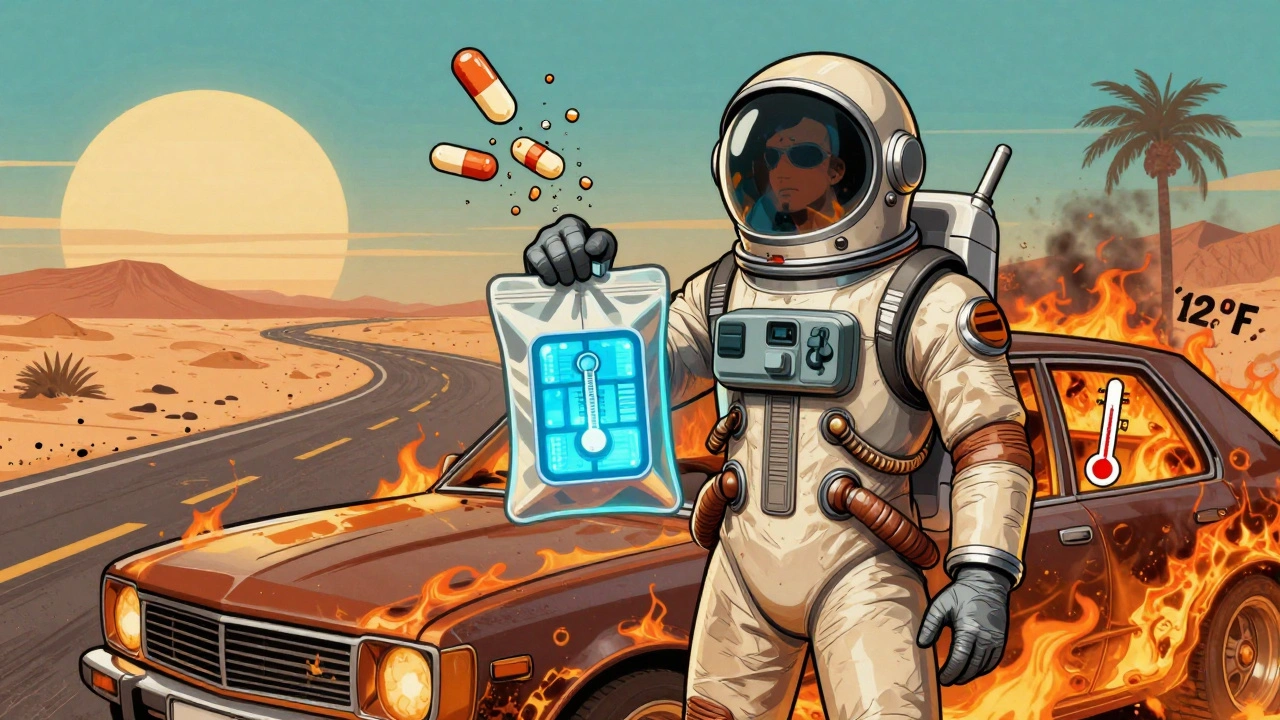
How to Store Medications Safely in Hot Climates While Traveling
Learn how to store medications safely in hot climates while traveling. Avoid heat damage to insulin, EpiPens, birth control, and other critical drugs with proven storage methods and smart gear.